News
Rich project cases across industries, showing real implementation and proven technical strength.In the landscape of industrial material handling, adipic acid stands as a critical intermediate for nylon production, polyurethanes, and various plasticizers. However, its fine crystalline structure, hygroscopic nature, and tendency toward caking present constant challenges for manufacturers who demand reliable, safe, and efficient conveyance. Pneumatic conveying systems tailored specifically for adipic acid are no longer a luxury but a necessity for facilities aiming to maintain consistent throughput, minimize product degradation, and comply with evolving workplace safety regulations. This article provides a comprehensive, technically grounded exploration of adipic acid pneumatic conveying equipment system solutions, addressing both the fundamental engineering principles and the practical implementation considerations that plant managers and process engineers must evaluate. By examining system configurations, component selection, dust control strategies, and integration with downstream processes, we aim to deliver actionable insights that support capital investment decisions and operational optimization. As the global adipic acid market continues to expand—projected to exceed USD 8.5 billion by 2026 according to industry benchmarks—the need for robust, low-maintenance conveying infrastructure becomes increasingly central to competitive manufacturing. This discussion is built around real-world engineering challenges, with an emphasis on how proper system design can reduce energy consumption by up to 20%, lower particle attrition rates, and extend equipment service intervals. Whether you are retrofitting an existing plant or designing a greenfield facility, understanding the nuances of dense-phase versus dilute-phase transport, the role of rotary valves and diverters, and the importance of material characterization will directly impact your return on investment. The following sections break down the key technical pillars of adipic acid pneumatic conveying, offering a reference that combines industry best practices with forward-looking trends such as IIoT-enabled monitoring and predictive maintenance.
Successful pneumatic system design begins with accurate material characterization. Adipic acid, with a bulk density typically ranging from 0.75 to 0.95 g/cm³ and a median particle size between 100 and 300 microns, exhibits moderate flowability when dry. However, its hygroscopicity means that even small changes in ambient humidity can lead to moisture absorption, causing the particles to become sticky and prone to bridging or blocking. The angle of repose for dry adipic acid generally falls between 35° and 45°, but this can increase significantly if moisture content exceeds 0.3%. Additionally, the material has a mild acidic nature, which requires that all contact surfaces be constructed from stainless steel (304L or 316L) or specially coated carbon steel to prevent corrosion and product contamination. Aeration behavior also differs: adipic acid does not fluidize as easily as some granular materials, meaning that careful air distribution and velocity control are essential. For pneumatic conveying system designers, these properties dictate the selection of conveying mode, air-to-material ratio, and pipeline diameter. Standard tests such as shear cell analysis, permeability measurement, and attrition testing should be conducted on representative samples before finalizing the system architecture. The headpowder team has developed a proprietary material testing protocol that captures these variables with high repeatability, enabling precise sizing of blowers, filters, and feeding devices (咨询热线:156-6277-7102).
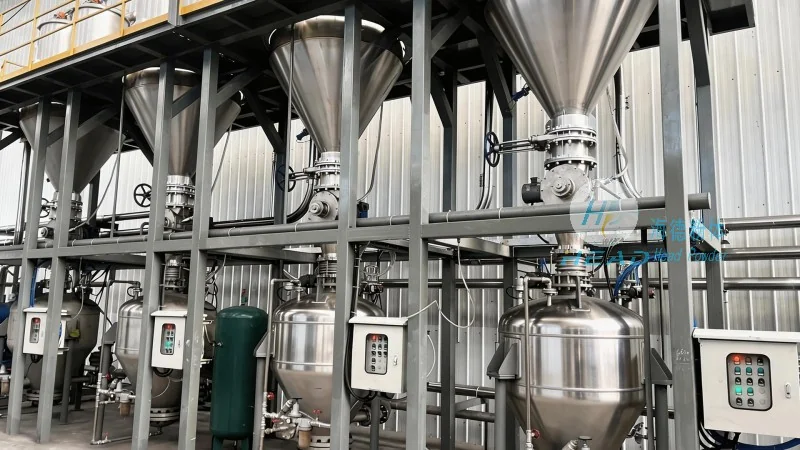
For adipic acid, the choice between dense-phase and dilute-phase conveying is not trivial and must be based on both preserving particle integrity and minimizing energy input. Dilute-phase systems operate at high velocities (typically 15–25 m/s), which can cause particle breakage, dust generation, and erosion of pipe bends. Given that adipic acid crystals are relatively friable, excessive impacts can lead to an increase in fines content, potentially compromising downstream polymer quality. Dense-phase conveying, operating at lower velocities (3–8 m/s) with higher material-to-air ratios, is generally recommended for this application. Pressure dilute-phase systems, while sometimes used for short distances, often fail to provide the gentleness required. Modern dense-phase solutions utilize either fluidized gravity conveyors (air slides) for short horizontal transfers or plug-flow pneumatic conveyors for longer routes. When distances exceed 100 meters, a combination of positive pressure dense-phase with booster valves strategically placed along the pipeline can maintain stable slugs of material without over-aerating. The pressure drop calculation must account for the material's compressibility and the tendency for adhesive forces to increase frictional resistance. System designers should also incorporate pipeline bends with a radius at least 8–12 times the pipe diameter to reduce localized wear. Field data from plants already running adipic acid at capacities between 5 and 40 tons per hour indicate that dense-phase operation reduces fines generation by roughly 30% compared to dilute-phase alternatives, while also consuming 15–18% less compressed air per ton of material conveyed.
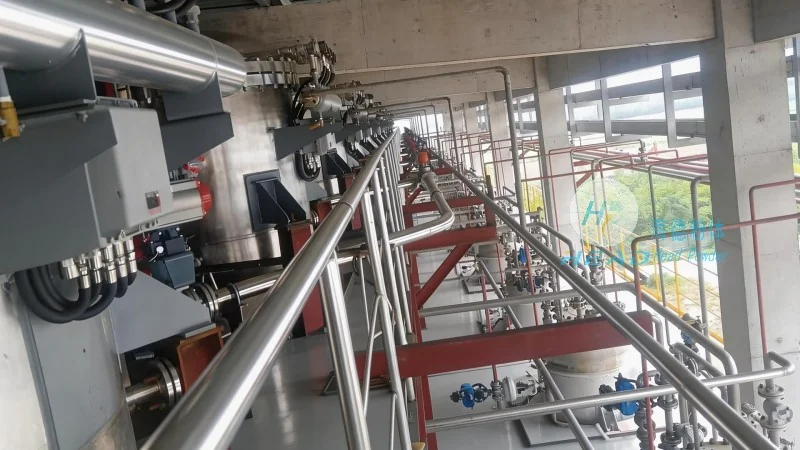
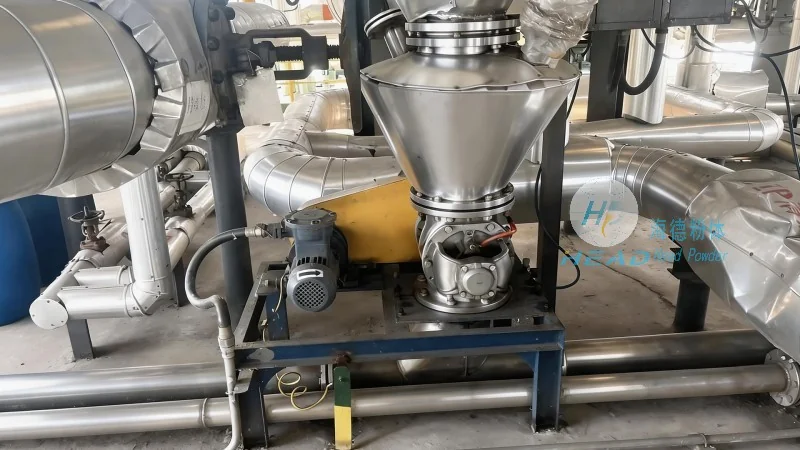
Every subsystem in the conveying line must be engineered to handle the specific demands of adipic acid. Rotary airlock valves at the feeding point should feature deep pockets, hardened rotor tips, and replaceable wear sleeves to prevent clogging and maintain seal integrity. Abrasion-resistant materials such as Stellite facings on the rotor tips can extend service life by a factor of three in high-throughput applications. The air-mover selection—whether roots blower, screw compressor, or side-channel blower—depends on the required pressure differential. For dense-phase systems, screw compressors delivering 1.5 to 3.5 bar pressure are common, with variable frequency drives to adjust flow dynamically. A critical yet often overlooked component is the cyclone receiver or filter receiver at the destination point. Adipic acid dust can be explosive when suspended in air at certain concentrations (minimum explosive concentration around 60 g/m³), so the receiver must include explosion venting, passive isolation valves, and a grounding system compliant with ATEX or NEC 500 standards. High-efficiency cartridge filters with PTFE membrane media are preferred to achieve outlet emissions below 1 mg/Nm³, ensuring regulatory compliance. Diverters and slide gates should have positive sealing mechanisms and self-cleaning geometries to prevent material buildup. The pipeline itself must be laid out with a minimum slope of 2° in horizontal sections to facilitate drainage during cleaning, and all flanged connections should be gasketed with FDA-approved EPDM or silicone materials to avoid contamination.
Safety in adipic acid pneumatic conveying extends far beyond standard material handling precautions. The fine dust that inevitably accumulates during transport is classified as a combustible dust hazard under NFPA 652 and ISO 80079-20-2. To mitigate the risk of primary and secondary dust explosions, the system must incorporate isolation devices such as backdraft dampers and pinch valves that close within milliseconds of a pressure spike. Automatic venting panels sized according to CEN/TR 15281 standards should be installed on all vessels with a volume exceeding 0.5 m³. Additionally, the conveying system should be bonded and grounded to an earth resistance of less than 10 ohms, with continuous monitoring of continuity. Headpowder integrates flame-proof proximity sensors and hot-surface detectors at key transfer points, linked to a central safety PLC that shuts down the blower and closes isolation valves if abnormal temperature rises (above 80°C) are detected. Beyond explosion safety, hygiene considerations for food-grade adipic acid (used in certain buffer applications) require that the system be designed for Clean-in-Place (CIP) or at least manual sanitization. Smooth interior pipe finishes (Ra ≤ 0.8 μm) and welded rather than flanged joints minimize areas where product can lodge and degrade. All filters and cyclone walls should have smooth contours without crevices. Regular housekeeping protocols—vacuum cleaning rather than compressed air blowing—should be enforced to prevent fugitive dust accumulations that could feed a secondary explosion.
Modern adipic acid conveying systems are no longer standalone units but Integrated parts of a plant-wide automation framework. The control architecture typically features a redundant PLC with a scada interface, monitoring conveying pressure, airflow, material flow rate, and filter differential pressure in real time. Advanced algorithms can adjust the air injection rate at booster points based on detected pressure surges, maintaining optimal slug length in dense-phase operation. When the system is integrated with upstream crystallizers or dryers, the conveying speed can be synchronized to match material discharge variations, reducing the need for intermediate storage vessels. This not only lowers capital expenditure but also minimizes the risk of material caking during hold times. A well-conceived control strategy can incorporate predictive maintenance using vibration analysis on rotary valves and blowers, along with air consumption trend tracking to identify developing leaks. For facilities handling multiple grades of adipic acid—for example, technical grade versus polymer grade—the system can include rapid changeover valves and flushing cycles to prevent cross-contamination. Data logs should be retained for at least 12 months to support quality audits and traceability. In practice, companies that have adopted fully integrated control report a 12–15% improvement in overall equipment effectiveness, along with reduction in human intervention that lowers safety exposure.
When evaluating a pneumatic conveying solution for adipic acid, plant managers must look beyond initial purchase price and consider the total cost of ownership over a 10- to 15-year horizon. Energy consumption typically represents 30–40% of operating costs for pneumatic systems, making air efficiency a primary lever for savings. Dense-phase systems, while requiring higher capital for booster valves and larger filter receivers, often deliver a payback period of under 18 months due to lower compressed air usage. Maintenance costs are also lower because lower velocities reduce wear on pipes and components; a typical dense-phase line can operate for 8,000 hours between major rebuilds of the diverter valves, compared to 4,000 hours for a dilute-phase system. Additionally, reduced product attrition translates directly to higher yield: a 2% reduction in fines can save a 50,000-ton-per-year plant over USD 800,000 annually at current adipic acid market prices. The hidden cost of unscheduled downtime must also be factored. Remote monitoring and robust component design can push system availability above 98.5%. By partnering with a supplier that offers simulation software for pressure drop modeling and material flow analysis, engineering teams can validate their designs before installation, avoiding costly field modifications. Headpowder provides a comprehensive simulation service that incorporates specific particle size distribution data, pipeline geometry, and target throughput to deliver a guaranteed performance envelope, backed by a written warranty on conveying rates and particle degradation limits.
One practical example illustrates the impact of tailored engineering. A mid-sized adipic acid producer in Southeast Asia was experiencing frequent blockages at the silo inlet of their existing dilute-phase system, resulting in three to four downtime events per month. The fines content in the product delivered to the downstream polymerization unit had increased by 5% compared to silo analysis, directly affecting final polymer clarity. After detailed material testing and system audit, a conversion to dense-phase conveying was recommended. The retrofit involved replacing the existing dilute-phase line with a 6-inch diameter dense-phase pipeline, installing four booster valves along the 180-meter route, and upgrading the receiving filter with a reverse-jet cleaning system. A new PLC with adaptive pressure control was also added. Post-installation, blockages dropped to zero over six months of operation, fines content decreased by 3.8 percentage points, and compressed air consumption fell by 22%. The plant achieved a return on investment in 14 months, with unplanned downtime reduced by 90%. This case demonstrates that proper system design, grounded in material science and applied engineering, yields measurable improvements that directly support business objectives.
As the adipic acid industry moves toward more sustainable production methods—including bio-based adipic acid from renewable feedstocks—pneumatic conveying requirements will evolve. Bio-based adipic acid often has a slightly different particle morphology and higher moisture sensitivity, requiring even more precise air management. By 2026, we anticipate widespread adoption of intelligent conveying systems equipped with AI-driven diagnostics that predict filter clogging, blower degradation, and pipeline blockage with 90% accuracy. Furthermore, the push for carbon neutrality will make energy recovery more common: systems that capture heat from compressor cooling or use regenerative blowers to recycle exhaust air can reduce the carbon footprint of conveying by 15–25%. Design-for-disassembly will also become a procurement criterion, allowing facilities to upgrade individual modules rather than replacing entire lines. Headpowder is already developing a next-generation conveying platform that incorporates IoT sensors for real-time particle size monitoring, enabling dynamic adjustments to conveying velocity based on real product condition rather than static setpoints. These innovations promise not only to improve efficiency but also to enhance supply chain transparency—a growing requirement for the end-users of nylon and polyurethane products.
Choosing the right partner for an adipic acid pneumatic conveying system is as critical as selecting the technology itself. A supplier should demonstrate not only equipment manufacturing capability but also deep process knowledge and a track record of installations in the chemical industry. When evaluating potential vendors, request references from plants handling similar materials (e.g., citric acid, bisphenol A, or other hygroscopic powders). Assess their ability to provide complete documentation: piping and instrumentation diagrams, electrical schematics, hazard analysis reports, and commissioning protocols. A typical implementation timeline for a medium-size system (20 t/h, 200 m distance) ranges from 20 to 28 weeks from order to mechanical completion, with another four weeks for startup and training. It is essential to involve the vendor early in the project definition phase, allowing them to assist with material sampling and bench-scale tests. The contract should include performance guarantees for throughput, particle degradation, and energy consumption, with clear acceptance criteria. Many leading manufacturers now offer performance-based maintenance contracts where they guarantee uptime and efficiency in exchange for a fixed annual fee, aligning their interests with yours. For inquiries about custom-engineered solutions, process simulation, or on-site evaluation, contact headpowder directly for a consultation covering your specific parameters—from bulk density to target conveying distance.
A high-performing adipic acid pneumatic conveying equipment system solution is not a commodity purchase but a strategic asset that directly influences product quality, plant safety, and operational cost structure. By prioritizing dense-phase conveying, investing in robust component materials, implementing comprehensive dust explosion safeguards, and leveraging intelligent control systems, manufacturers can achieve reliable, low-maintenance transfer of this challenging material. The engineering decisions made today—from pipe routing to filter media selection—will echo through years of production data. As market pressures intensify, the ability to convey adipic acid with minimal degradation, maximum energy efficiency, and near-zero safety incidents will separate industry leaders from the rest. The road to achieving that performance begins with thorough material characterization, continues with meticulous system design validation, and is sustained through proactive monitoring and ongoing collaboration with a qualified supplier. With the right approach, the conveying system becomes a silent driver of productivity, enabling your plant to operate at design capacity day after day. Whether you are planning a new facility or upgrading an existing line, investing the time to get the pneumatic solution right will pay dividends in operational excellence and competitive advantage.

 Shandong headpowder Engineering Co., Ltd.
 156-6277-7102(Manager Zhang)
  0531-83386006
  Jinan City, Shandong Province, China
服务热线
微信咨询
回到顶部