News
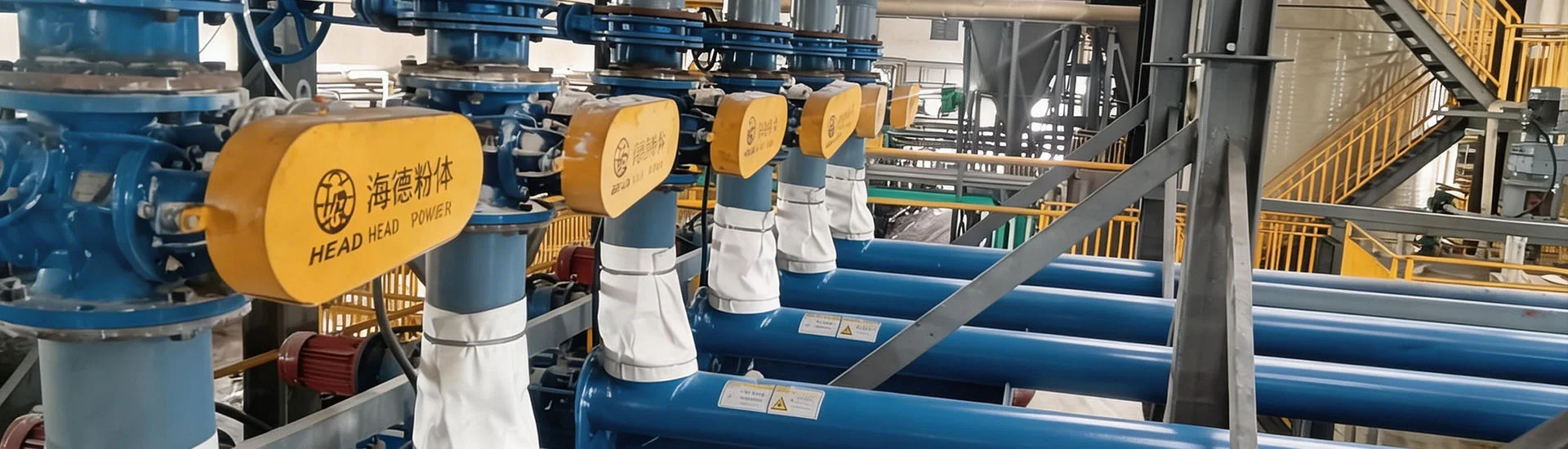
Rich project cases across industries, showing real implementation and proven technical strength.In the advanced materials industry, nano calcium carbonate (nano-CaCO₃) has become a critical functional filler for applications ranging from high-performance plastics and rubber to coatings, sealants, and pharmaceuticals. Its ultrafine particle size—typically between 15 and 100 nanometers—gives it exceptional surface area, high reactivity, and reinforcing properties that conventional ground calcium carbonate cannot match. However, the very characteristics that make nano calcium carbonate valuable also present significant handling challenges. Its low bulk density, high cohesiveness, and tendency to agglomerate require specialized pneumatic conveying systems designed to preserve particle integrity, prevent dusting, and maintain consistent feed rates. Headpowder, a company with over a decade of focused expertise in powder handling solutions, has developed a systematic approach to pneumatic conveying equipment selection for nano calcium carbonate that balances technical rigor with operational economy. This article provides a comprehensive, data-driven overview of the key factors, system configurations, and selection criteria that engineers and plant managers must consider when designing or upgrading a nano calcium carbonate conveying line.
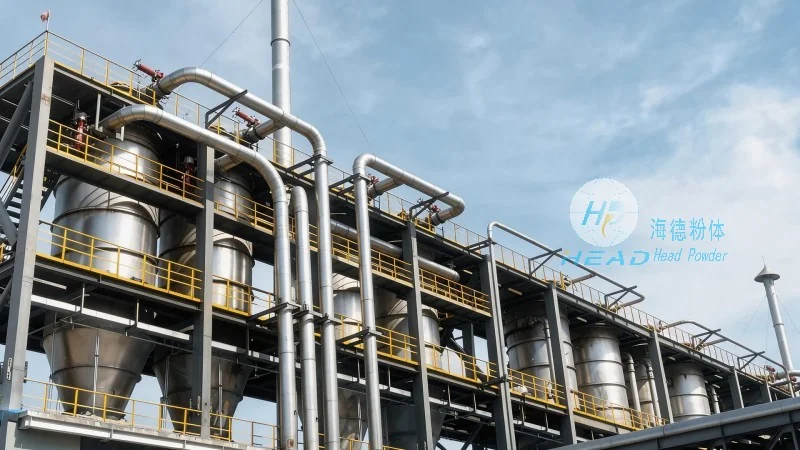
The global nano calcium carbonate market was valued at approximately USD 6.8 billion in 2025, with projections indicating a compound annual growth rate of 8.2% through 2032. This growth is driven by increasing demand in the plastic industry for lightweight automotive components, in the construction sector for high-performance sealants, and in the healthcare field for drug delivery systems. As production capacities expand, the need for reliable, low-degradation conveying systems becomes more acute. A poorly designed system can lead to particle breakage, excessive dust emissions, line blockages, and energy waste—all of which directly impact product quality and profitability. By understanding the physics of dilute-phase versus dense-phase conveying, the role of conveying velocity, the impact of moisture content, and the importance of proper filtration and material conditioning, facility operators can make informed decisions that optimize both throughput and product consistency. Headpowder's engineering team has applied these principles across dozens of successful installations, helping clients achieve conveying rates from 500 kg/h to over 20 t/h while maintaining particle size distribution within tight specifications.
Before selecting any pneumatic conveying system, one must thoroughly characterize the material's physical and flow properties. Nano calcium carbonate typically exhibits a bulk density ranging from 0.3 to 0.6 g/cm³, depending on whether it is coated or uncoated, and its moisture content often falls between 0.1% and 0.5%. The primary particle size is in the nanometer range, but due to strong van der Waals forces, these particles form agglomerates that behave like larger particles—sometimes up to 10–50 microns in equivalent diameter. This agglomeration tendency is a double-edged sword: moderate agglomeration can improve flowability, but excessive agglomeration can cause bridging in hoppers and plugging in conveying lines.
Key parameters to measure include angle of repose, compressibility index, cohesion coefficient, and air retention number. For nano calcium carbonate, the angle of repose is typically 45–55 degrees, indicating poor to fair flowability. The cohesion coefficient measured by a Jenike shear cell is often above 2 kPa at low consolidation stresses, signaling a material that is prone to arching and ratholing. Air retention time—the ability of the material to retain entrained air—is relatively high for nano powders, which can lead to fluidization instability if not properly managed. Headpowder's pre-selection laboratory testing includes standardized flow property analysis per ASTM D6393 and ASTM D6773, providing the engineering team with accurate data to model conveying behavior before any equipment is built. Only by understanding these fundamental parameters can engineers select the appropriate conveying mode, line geometry, and air source configuration.
The most critical decision in system design is choosing between dilute-phase (suspension flow) and dense-phase (non-suspension flow) conveying. Dilute-phase systems operate at high air velocities—typically 20–35 m/s—where particles are fully suspended in the air stream. While these systems are simpler and lower in initial capital cost, they present significant drawbacks for nano calcium carbonate. High velocity imparts substantial kinetic energy to particles, leading to attrition, agglomeration breakage, and increased dust generation. In one documented case from Headpowder's project archive, a dilute-phase system handling coated nano-CaCO₃ at 28 m/s resulted in a 12% reduction in mean particle size after only three months of operation, causing downstream quality issues in polymer compounding.
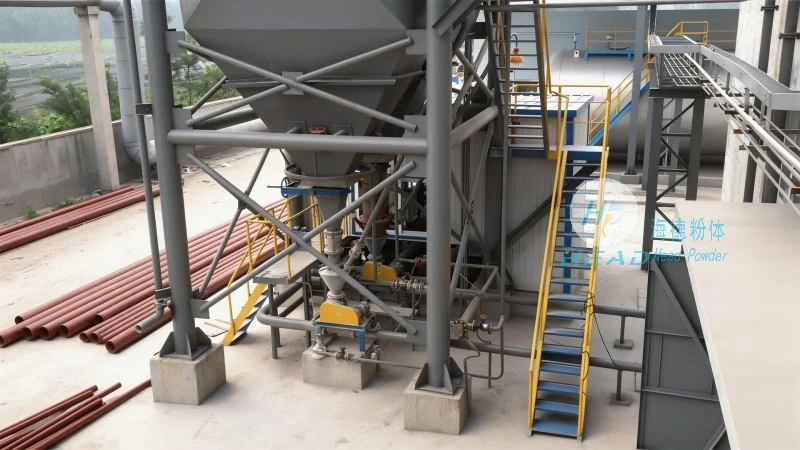
Dense-phase conveying, by contrast, operates at low velocities—typically 1–8 m/s—with material moving as a pulsating plug or as a moving bed. This mode dramatically reduces particle degradation and preserves the surface coating integrity essential for nano calcium carbonate's performance. Dense-phase systems also require less air volume, lowering energy consumption by 30–50% compared to dilute-phase, and they generate less dust at the receiving end. However, dense-phase conveying is more sensitive to material characteristics; it demands consistent feed rates and appropriate pipeline sizing to avoid blockages. Headpowder's standard dense-phase design for nano calcium carbonate employs a blow tank with a patented pressure-controlled discharge cone, ensuring reliable plug formation even with cohesive powders. The system typically operates at conveying pressures between 2 and 6 bar, with line diameters ranging from DN80 to DN200 depending on throughput.
For extremely fine nano calcium carbonate with a specific surface area above 25 m²/g, a "lean-phase" variant of dense conveying—sometimes called soft-dense phase—can be used. This approach combines a slightly higher velocity (8–12 m/s) with reduced pipeline loading ratio to minimize clogging while still keeping degradation below 2%. Headpowder has installed over 40 such systems globally, with the most recent project in Shandong Province successfully conveying surface-treated nano-CaCO₃ over a distance of 180 meters with zero measurable particle breakage after six months of continuous operation.
A well-engineered nano calcium carbonate pneumatic conveying system comprises several interlinked components, each of which must be specified with the material's unique properties in mind.
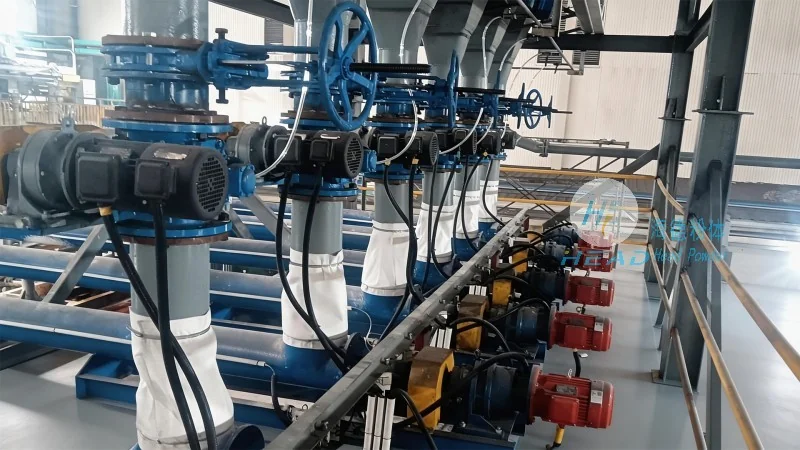
Feed System: The primary concern is achieving a steady, controlled feed into the conveying line. Nano calcium carbonate tends to fluidize prematurely in standard rotary valves, leading to blow-by and inaccuracies. Headpowder recommends a gravity-fed screw feeder with a variable-frequency drive (VFD) coupled with a small pilot air injection nozzle to fluidize the material just before entry. This prevents bridging above the feeder and ensures a consistent mass flow. For applications requiring high accuracy, weigh-belt feeders with a tolerance of ±0.5% are integrated upstream of the conveying system.
Blow Tank or Pump: In dense-phase systems, the blow tank design is paramount. Headpowder's blow tanks feature a conical bottom with a discharge cone angle of 60–70 degrees, manufactured from 304L or 316L stainless steel with internal surface roughness Ra ≤ 0.8 μm to minimize adhesion. The tank is equipped with a fluidizing membrane made of sintered polyethylene or porous stainless steel, through which low-pressure air is introduced to break incipient arches. The outlet is fitted with a pinch valve or dome valve for reliable sealing under pressure. Proper sizing is critical: a 500-liter blow tank can typically handle 2–3 t/h of nano-CaCO₃ over a 100-meter line, but exact capacity depends on material bulk density and conveying distance.
Conveying Pipeline: Pipeline routing should avoid sharp bends; long-radius bends (R ≥ 10× pipe diameter) or blind-tee fittings are preferred to reduce pressure drop and particle impingement. Pipe material is typically carbon steel for standard grades, but for food-grade or pharmaceutical nano calcium carbonate, headpowder uses 304 stainless steel with internal electropolishing to a Ra ≤ 0.4 μm. Wear-resistant ceramic-lined bends are recommended at high-velocity sections even in dense-phase systems, as slight particle abrasion can occur over years of operation. Standard branch take-offs must include gentle sweeping turns rather than abrupt 90-degree corners.
Air Source and Controls: Roots blowers are the most common air source for dilute-phase systems, while screw compressors or dry-running piston compressors are preferred for dense-phase to achieve the necessary pressure range. Headpowder equips all systems with a PLC-based control system that monitors conveying pressure, air flow, material level in the blow tank, and filter differential pressure. The control logic uses predictive algorithms to adjust conveying cycle timing based on real-time pressure trends, preventing line over-pressurization and optimizing energy use. For remote operations, an integrated IoT module allows operators to receive alerts and performance analytics via a secure cloud dashboard.
Filtration and Dust Collection: The receiving end of the system requires a reverse-pulse baghouse filter sized for a can velocity of less than 1.5 m/min to prevent filter cake formation. Headpowder's filters use polyester felt media with a PTFE membrane coating, achieving emission levels below 1 mg/Nm³. The filter housings feature a quick-release door and a rotary discharge valve that maintains a constant airlock. For sticky nano powders, a vibratory shaker or sonic horn is added to the filter housing to dislodge adhered particles without damaging the media.
Even with well-designed components, several operational pitfalls can undermine system performance. One frequent issue is moisture ingress. Nano calcium carbonate is hygroscopic; even a 0.2% increase in moisture content can double its cohesion and cause severe plugging in dense-phase lines. Headpowder specifies that all compressed air be dried to a pressure dew point of -40°C, and the blow tank and pipework be insulated in humid environments to prevent condensation. Another common problem is improper venting of the receiving bin, which can create back-pressure and disrupt filter operation. Every Headpowder installation includes a bin vent with a dedicated fan that maintains a slight negative pressure, ensuring smooth material discharge.
A third pitfall involves the use of undersized pipeline diameters. Many engineers attempt to reduce cost by using small-diameter pipes with high loading ratios, but for nano calcium carbonate, this often leads to "saltation" or "dune" flow patterns that increase pressure fluctuations and cause premature filter blinding. Headpowder's proprietary sizing software—developed from more than 200 field tests—recommends a minimum pipe diameter of DN100 for conveying distances up to 100 meters, with incremental increases of DN25 per additional 50 meters. The loading ratio (mass of material per mass of air) should be maintained between 10 and 25 for dense-phase systems, with the upper bound reduced for distances exceeding 150 meters.
Beyond technical performance, the economic viability of a pneumatic conveying system depends on energy consumption, maintenance requirements, and lifecycle costs. Headpowder has conducted a comparative analysis across 12 nano calcium carbonate plants and found that dense-phase systems operating at a conveying pressure of 4 bar achieve an average specific energy consumption of 2.8–3.5 kWh per ton, compared to 4.5–6.0 kWh per ton for dilute-phase systems at equivalent throughput. Over a 10-year operating life, this translates to cost savings of approximately USD 150,000 to 350,000 for a 5 t/h line, depending on local electricity tariffs.
Environmental compliance is also a growing concern. Nano particles are classified as respirable and may pose health risks if not contained. Many jurisdictions now require leakage detection systems and real-time particulate monitoring at the receiver outlet. Headpowder integrates laser-based particle counters with automatic shut-off valves that halt the system if the emission concentration exceeds 2 mg/m³. Additionally, sound levels in dense-phase systems are typically 75–82 dBA, well below the 85 dBA limit for continuous exposure, whereas dilute-phase systems often exceed 90 dBA without acoustic enclosures. By selecting a dense-phase configuration, plant operators can avoid expensive noise abatement retrofits.
Finally, system scalability should be considered from the outset. Headpowder's modular blow tank design allows plants to add parallel conveying lines without major civil works. A recent expansion project in Hebei Province demonstrated how a single blow tank originally sized for 3 t/h could be upgraded to 6 t/h by simply replacing the discharge cone and increasing the compressor capacity—saving 40% compared to a completely new installation.
To illustrate these principles in practice, consider a project Headpowder completed in early 2025 for a leading manufacturer in Jiangxi Province. The client produced stearic acid-coated nano calcium carbonate with a median particle size (D50) of 80 nm and a specific surface area of 28 m²/g. Their existing dilute-phase system experienced frequent blockages, product degradation, and high maintenance costs. After conducting a thorough material analysis and site survey, headpowder proposed a dense-phase system comprising a 750-liter blow tank, DN125 pipeline, and a 30 m² baghouse filter. The system was designed for a conveying rate of 4.5 t/h over a distance of 120 meters with four 45-degree bends.
During commissioning, the system achieved a stable loading ratio of 18, conveying pressure of 3.2 bar, and an energy consumption of 3.1 kWh/t. Post-installation testing showed no measurable change in particle size distribution, and the stearic acid coating integrity remained intact—verified by contact angle measurements and Fourier-transform infrared spectroscopy (FTIR). The client reported a 60% reduction in maintenance downtime and a 22% decrease in overall conveying cost per ton. This case underscores how careful system selection, grounded in material science and engineering data, delivers measurable operational improvements.
Looking ahead, several technological developments are poised to further optimize nano calcium carbonate handling. One such trend is the integration of artificial intelligence and machine learning into control systems. Headpowder is currently pilot-testing a predictive maintenance module that uses vibration analysis of blow tank valves and filter pressure trends to forecast component failure up to 72 hours in advance, allowing planned interventions. Another development is the use of hybrid conveying systems that switch between dense-phase and lean-phase modes depending on real-time material flow properties, which can be monitored by in-line near-infrared (NIR) sensors that detect moisture and coating variations.
Sustainability is also driving innovation. The use of waste heat recovery from air compressors to pre-dry the nano calcium carbonate feed is gaining traction, potentially reducing overall plant energy use by 8–12%. Headpowder is collaborating with a European research institute to develop a low-pressure conveying concept that uses a combination of air and nitrogen—reducing oxidation risk for uncoated grades—while achieving conveying velocities as low as 1.5 m/s. As environmental regulations tighten and product quality demands escalate, the importance of advanced, scientifically optimized pneumatic conveying equipment will only grow. Headpowder remains committed to providing systems that align with these evolving needs, backed by rigorous engineering and field-proven reliability.
For detailed guidance on selecting the right pneumatic conveying system for your nano calcium carbonate application, industry professionals are welcome to consult with Headpowder’s technical team. (Consultation hotline: 156-6277-7102)

 Shandong headpowder Engineering Co., Ltd.
 156-6277-7102(Manager Zhang)
  0531-83386006
  Jinan City, Shandong Province, China
服务热线
微信咨询
回到顶部