News
Rich project cases across industries, showing real implementation and proven technical strength.In the rapidly evolving landscape of advanced battery materials, lithium cobalt oxide (LiCoO₂) remains a cornerstone cathode active material for high‑energy‑density lithium‑ion cells, powering everything from smartphones to electric vehicles. As global battery production capacity surges past 3,000 GWh by 2026, the efficient, safe, and contamination‑free handling of LiCoO₂ powder from reactor to packaging has become a critical link in the manufacturing chain. Pneumatic conveying systems tailored for this fine, abrasive, and moisture‑sensitive material are no longer a secondary consideration — they are a core enabler of yield, workplace safety, and operational continuity. This article provides a comprehensive, technically grounded overview of lithium cobalt oxide pneumatic conveying system equipment solutions, covering key design principles, material behaviour considerations, equipment selection criteria, and real‑world implementation best practices. Whether you are scaling up a cathode production line or retrofitting an existing facility, understanding these system architecture fundamentals will help you avoid costly downtime, product contamination, and particle degradation.
Lithium cobalt oxide powder exhibits a unique combination of physical and chemical characteristics that directly influence pneumatic system design. With a median particle size typically ranging from 5 to 20 micrometers, LiCoO₂ falls into the cohesive and slightly abrasive category. Its bulk density varies between 1.0 and 1.8 g/cm³ depending on the synthesis method and particle morphology, while the angle of repose often exceeds 45°, indicating poor flowability. Additionally, the material is hygroscopic, meaning it readily absorbs ambient moisture, which can lead to agglomeration, caking, and even degradation of electrochemical performance. The presence of fine particles below 1 micron creates significant dust‑generation potential, raising concerns about worker exposure and environmental compliance. Moreover, lithium cobalt oxide is classified as a hazardous substance in many jurisdictions due to its cobalt content, requiring dust‑tight handling and proper grounding to prevent electrostatic discharge. These factors collectively demand a pneumatic conveying approach that minimises attrition, prevents segregation, maintains low moisture pickup, and ensures complete containment.
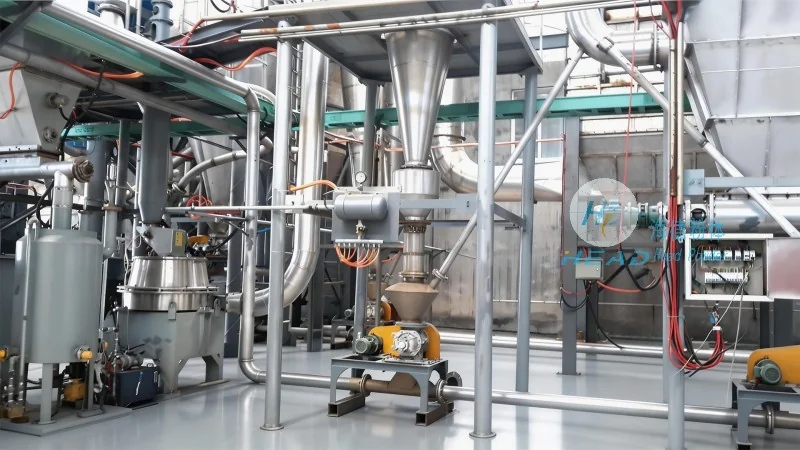
When selecting the pneumatic conveying mode for lithium cobalt oxide, two primary regimes are commonly evaluated: dilute phase (suspension flow) and dense phase (plug or slug flow). Dilute phase conveying, operating at high air velocities (typically 15–30 m/s), is well‑established for its simplicity and lower initial investment. However, for a cohesive, abrasive fine powder like LiCoO₂, the high velocity can cause significant particle breakage, equipment erosion, and increased dust generation. In contrast, dense phase conveying — particularly the low‑velocity, high‑pressure variant — keeps the material moving as compact slugs at speeds below 5 m/s. This gentle handling dramatically reduces attrition, preserves particle morphology, and minimises wear on pipelines and fittings. For lithium cobalt oxide production lines, dense phase pneumatic conveying has become the preferred solution among leading battery material manufacturers. Systems can be designed as either pressure‑driven or vacuum‑driven, with the choice depending on feed point configuration and plant layout. Pressure dense phase systems, using screw feeders or rotary airlocks, are ideal for long‑distance transfer from storage silos to mixing or coating areas, while vacuum dense phase systems are often used for unloading from bulk bags or reactor discharge ports.
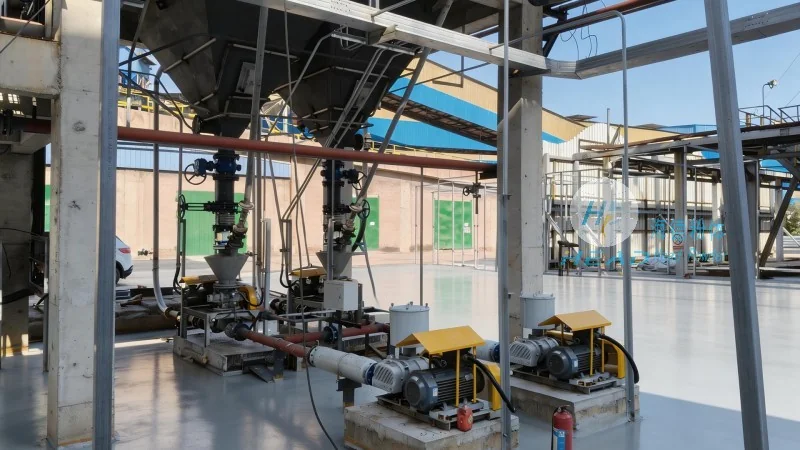
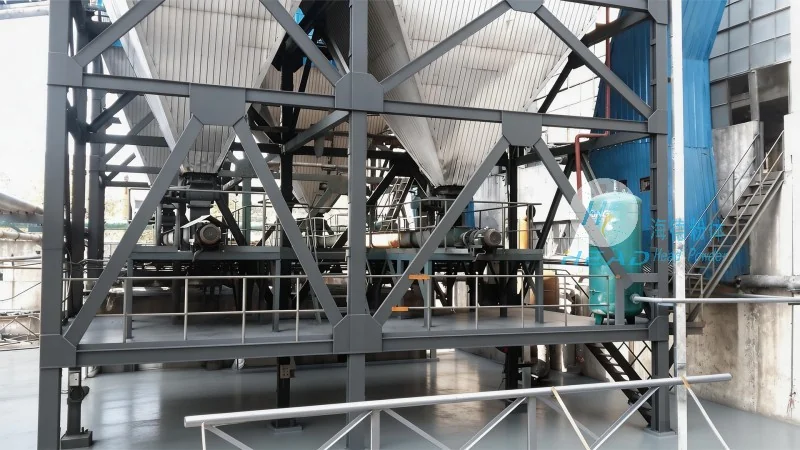
A reliable lithium cobalt oxide pneumatic conveying system integrates several specialised components, each engineered to meet the material’s demanding behaviour. The feeding device is arguably the most critical element. Rotary airlocks with abrasion‑resistant coatings, such as tungsten carbide or ceramic‑lined pockets, are common, but their tight clearances must be maintained to prevent air leakage while avoiding particle entrapment. For ultra‑fine LiCoO₂, screw feeders with variable frequency drives offer superior metering accuracy and can handle cohesive powders without bridging. The conveying pipeline itself should be fabricated from stainless steel (304L or 316L) with an internal surface finish of Ra ≤ 0.8 μm to reduce friction and minimise material build‑up. Gentle bends with large radius (≥ 10× pipe diameter) replace standard elbows to prevent impingement erosion and particle degradation. At the receiving end, a dust‑tight cyclone separator combined with a high‑efficiency cartridge filter (HEPA H13 or higher) ensures near‑zero emission levels, complying with strict occupational exposure limits for cobalt compounds. The filter cleaning mechanism must be designed with pulse‑jet systems using clean, dry instrument air to avoid moisture introduction. Additionally, a divertor valve assembly — preferably with zero‑dead‑space design — allows seamless switching between multiple destinations without cross‑contamination.
Given lithium cobalt oxide’s sensitivity to moisture, the compressed air supply for the pneumatic conveying system requires stringent treatment. Standard plant air, often containing dew points above −20°C, can introduce enough water vapour to cause caking in as little as a few hours. For LiCoO₂ applications, the conveying air should be dried to a pressure dew point of −40°C or lower, ideally using a combination of refrigerated and desiccant dryers. A particulate filter (0.01 μm) and an oil‑removal coalescing filter must be installed upstream to eliminate any trace lubricants or aerosols. In highly humid environments, additional measures such as trace heating on the conveying line (maintained at 10–15°C above ambient dew point) and nitrogen blanketing in the feed hopper are recommended. Some advanced systems integrate online moisture sensors near the discharge point, providing real‑time feedback to adjust drying parameters. The Headpowder team has implemented a nitrogen‑assisted dense phase solution for a 2,000‑tonne‑per‑year LiCoO₂ plant in Jiangsu, achieving less than 50 ppm moisture pickup during conveying — a level that fully preserves cathode material quality.
Modern lithium cobalt oxide conveying equipment relies on programmable logic controllers (PLCs) with distributed I/O modules to manage start‑up, steady‑state, and shut‑down sequences. Key control parameters include conveying line pressure differential, material flow rate (measured via loss‑in‑weight feeders or mass flow meters), and filter differential pressure. A well‑tuned system automatically adjusts the air supply pressure and pulse‑jet cleaning intervals to maintain stable material velocity and minimise energy consumption. Predictive maintenance features, such as pipeline wear monitoring using ultrasonic thickness gauges and rotary valve torque trending, are increasingly integrated into the control software. For facilities requiring batch tracking and full traceability, the control system can log every transfer event — including start time, duration, weight, and air consumption — and push the data to a manufacturing execution system (MES). This level of automation not only reduces operator intervention but also supports regulatory compliance for battery material supply chains, especially under emerging EU Battery Regulation requirements.
Lithium cobalt oxide dust is not typically considered explosible in the same way as organic powders, but fine cobalt‑containing particles can still generate static charges. Under certain conditions, accumulated electrostatic discharge can ignite flammable dust clouds if combustible coexists. Therefore, the entire conveying system must be bonded and grounded, with conductive hoses and couplings. All equipment hoppers, piping, and filters should have a ground resistance below 10 ohms. In addition, inert gas blanketing (nitrogen or argon) is strongly recommended for the feed hopper and the conveying line if oxygen levels in the process area are not tightly controlled. Pressure relief panels rated for the system’s maximum allowable working pressure should be installed on filter housings and silos. Emergency shut‑down interlocks, linked to dust monitors and temperature sensors, provide an additional safety layer. For operations handling more than 500 kg per hour, a comprehensive dust hazard analysis (DHA) consistent with NFPA 652 or ATEX guidelines is essential before commissioning.
To ensure that a lithium cobalt oxide pneumatic conveying solution meets production targets, several performance indicators must be verified during commissioning and periodic audits. Throughput capacity, expressed in tonnes per hour, should be measured under actual material conditions — not just with free‑flowing replacement powders. Attrition rate is a critical metric: samples taken before and after conveying are analysed by laser diffraction to determine the shift in particle size distribution. An acceptable increase in fines (sub‑5 μm fraction) is generally below 2% for most cathode applications. Conveying velocity, monitored via pitot tubes or ultrasonic flow meters, must stay within the dense phase regime to avoid saltation or plugging. Energy consumption, typically between 0.5 and 2.0 kWh per tonne of material depending on distance and elevation, provides a baseline for cost optimisation. Headpowder offers a comprehensive performance validation service, including on‑site tracer tests and computational fluid dynamics (CFD) modelling of pipeline flow, enabling clients to predict and resolve potential issues before full‑scale deployment.
In early 2025, a major Chinese lithium cobalt oxide manufacturer faced recurring blockages and product contamination in its dilute phase conveying line, resulting in 8% yield loss. After a thorough audit, Headpowder replaced the existing system with a dense phase conveying solution engineered specifically for LiCoO₂. The new configuration included a variable‑speed rotary feeder with ceramic coating, a 6‑inch stainless steel pipeline with 15°‑long‑radius bends, and a nitrogen‑assisted conveying circuit. A heated air drying system was installed to maintain a dew point of −45°C. Within three months of operation, the plant reported zero blockage events, particle attrition reduced by 73%, and yield improved from 92% to 99.2%. The customer also noted a 40% reduction in filter replacement frequency due to the gentler handling. This project, now referenced in industry forums, demonstrates how proper pneumatic conveying system design directly impacts battery material quality and operational costs.
When commissioning a lithium cobalt oxide pneumatic conveying system, the choice of engineering partner matters as much as the hardware. Look for a company with proven process knowledge in battery raw materials — not just general powder handling. A competent partner should offer:
Headpowder, with over 15 years of dedicated experience in the battery materials industry, provides all these capabilities from its China‑based engineering centre. The company’s portfolio includes over 40 pneumatic conveying installations for lithium‑ion cathode materials across Asia and Europe. (咨询热线:156-6277-7102)
Looking ahead to 2027 and beyond, digital twin technology is poised to transform pneumatic conveying operations for lithium cobalt oxide. By creating a virtual replica of the entire transfer system — including pipe geometry, material properties, and sensor data — operators can simulate scenarios such as filter blinding, air pressure fluctuations, or feed rate changes without disrupting production. Machine learning algorithms can predict wear patterns in rotary valves and elbows, scheduling maintenance precisely when needed rather than on a fixed calendar. Some early adopters are already integrating edge computing devices into their conveying skids, enabling real‑time optimisation of air‑to‑material ratios. As battery factories become fully digitised, the pneumatic conveying system will no longer be a standalone utility but a smart node feeding data into the broader Industry 4.0 ecosystem. Battery material manufacturers that invest in these intelligent conveying solutions today will gain a competitive advantage in quality consistency and operational efficiency.
Lithium cobalt oxide pneumatic conveying is neither a commodity purchase nor a mere afterthought — it is a strategic decision that affects every downstream process from coating to electrode fabrication. The physical and chemical properties of this material demand careful engineering: low‑velocity dense phase conveying, high‑efficiency dust collection, rigorous moisture control, and robust automation. A well‑designed system not only eliminates blockages and attrition but also protects worker health, reduces waste, and ensures that the expensive cathode material reaches the next process step in pristine condition. At Headpowder, the team integrates decades of powder handling knowledge with cutting‑edge control technology to deliver solutions that are both reliable and future‑ready. For any battery material manufacturer seeking to optimise their LiCoO₂ transfer line, engaging with a specialist early in the project cycle can save months of troubleshooting and tens of thousands of lost product. (咨询热线:156-6277-7102) The choice of pneumatic conveying equipment today will define the quality and profitability of tomorrow’s battery cells.

 Shandong headpowder Engineering Co., Ltd.
 156-6277-7102(Manager Zhang)
  0531-83386006
  Jinan City, Shandong Province, China
服务热线
微信咨询
回到顶部