News
Rich project cases across industries, showing real implementation and proven technical strength.In the realm of industrial material handling, the efficient and reliable transport of fine, abrasive, and often cohesive bulk solids remains a persistent challenge. Among these materials, plant ash—a byproduct of biomass combustion, power generation, and agricultural processing—presents unique difficulties due to its low bulk density, high abrasiveness, and hygroscopic nature. Pneumatic conveying systems have emerged as the preferred solution for moving plant ash over various distances, offering enclosed, dust-free, and flexible transport capabilities. However, the design and operation of such systems must adhere to rigorous technical specifications to ensure longevity, energy efficiency, and process safety. This article provides a comprehensive technical specification for plant ash pneumatic conveying equipment, drawing on industry standards, empirical data, and proven engineering practices. For organizations seeking to optimize ash handling, understanding these parameters is not merely academic—it directly impacts maintenance costs, system uptime, and environmental compliance. As the global push for renewable energy and waste-to-value intensifies, the demand for standardized, high-performance pneumatic conveying solutions continues to rise. In this context, headpowder (咨询热线:156-6277-7102) stands as a technology-driven partner, delivering equipment tailored to the specific rheological and chemical properties of plant ash.
Plant ash is not a uniform material; its properties vary widely based on the source feedstock (e.g., wood pellets, rice husk, straw, palm kernel shells), combustion conditions, and post-treatment processes. Typical plant ash exhibits a bulk density ranging from 300 to 700 kg/m³, a particle size distribution from sub-micron fines to coarse aggregates, and a moisture content that can fluctuate between 1% and 15%. The presence of unburned carbon, alkali metals, and silica compounds makes it highly abrasive and prone to caking when exposed to humidity. These physical and chemical characteristics directly influence the selection of pneumatic conveying equipment. For example, a dilute-phase system operating at high velocity may be suitable for dry, low-density ash, but it can cause excessive wear in pipelines when handling abrasive particles. Conversely, dense-phase conveying at lower velocities reduces erosion but requires careful control of air-to-material ratios to prevent blockages. Technical specifications must therefore define the material parameters to be handled, including particle size analysis (PSD), angle of repose, cohesion index, and moisture sensitivity. Designers must also account for temperature of the ash at the pickup point, as residual heat from combustion can affect seal materials and filter performance. A robust specification begins with a detailed material characterization protocol, ensuring that the conveying system is neither over- nor under-engineered for the specific ash type.
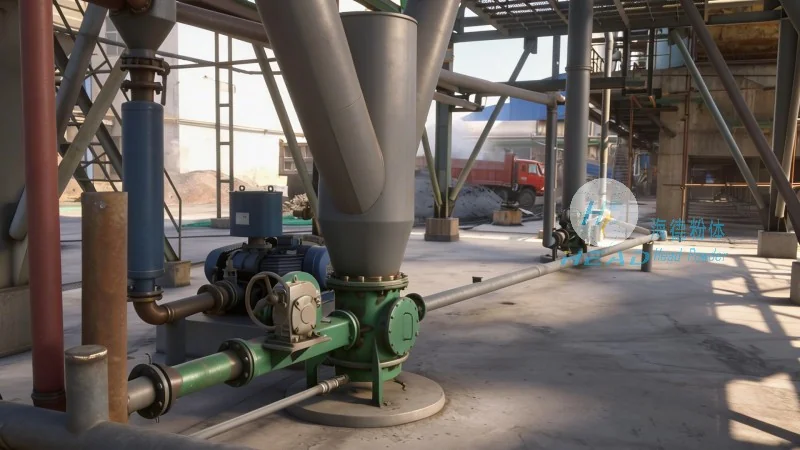
A complete plant ash pneumatic conveying system comprises several interdependent components, each requiring strict technical specifications. The air source, typically a positive displacement blower or a screw compressor, must deliver a consistent volumetric flow rate and pressure sufficient to overcome the system resistance. For long-distance or high-capacity applications, pressure ratings of 1.5 to 3.5 bar gauge are common. The feed point—often a rotary airlock, a venturi eductor, or a screw feeder—must introduce the ash into the pipeline without air leakage or material segregation. Rotary airlocks with hardened tips and replaceable wear sleeves are preferred for abrasive ash; they must be sized to match the desired conveying rate while maintaining a sealing efficiency above 95%. The conveying pipeline itself is typically manufactured from seamless steel with a wall thickness of 4 to 10 mm, depending on operating pressure and abrasion resistance requirements. Bends are critical wear points and should be designed with long-radius elbows, ceramic-lined bends, or replaceable wear boxes to extend system life. Downstream, the separation unit—a baghouse filter, a cyclone separator, or a combination of both—must capture fine particles with an emission level below 10 mg/Nm³ to comply with environmental regulations. The filter media should be selected based on ash temperature and chemical composition, with PTFE-coated polyester felt offering good resistance to moisture and fine dust blinding. Finally, the conveying control system integrates pressure sensors, flow meters, and programmable logic controllers to maintain stable transport conditions, automatically adjusting air velocity and feed rate to avoid plugging. These technical parameters form the backbone of a reliable specification, ensuring consistent performance across varying operating loads.
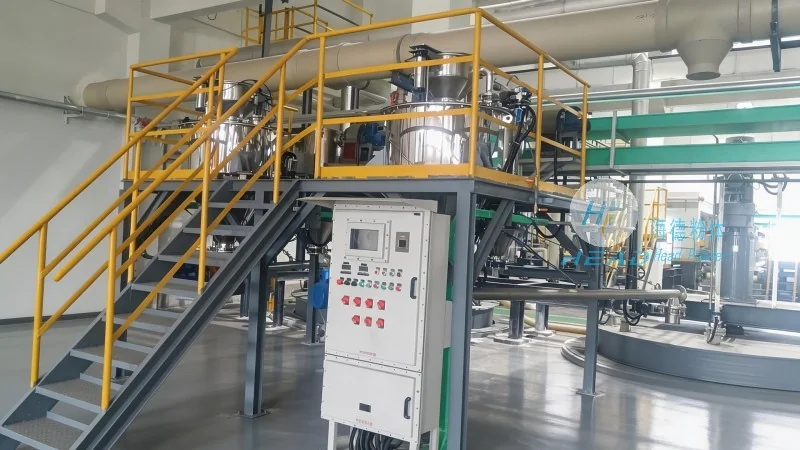
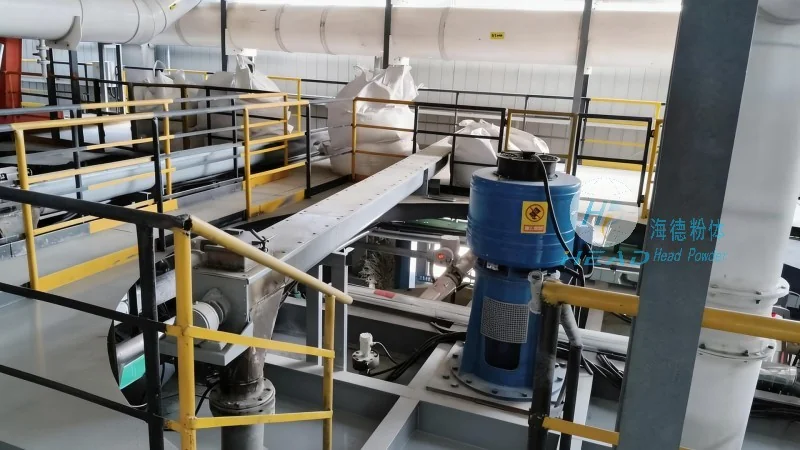
Developing a technical specification requires quantitative design calculations grounded in empirical correlations and validated field data. The primary design variables are the solids loading ratio (mass of ash per mass of conveying air), the conveying air velocity, and the pressure drop across the system. For plant ash in dilute-phase conveying, typical loading ratios range from 5 to 15, with air velocities between 20 and 30 m/s at the pickup point—higher velocities increase wear and energy consumption, while lower velocities risk saltation and settling. In dense-phase systems, loading ratios can exceed 30, with air velocities below 15 m/s, but the system must be designed with blow tanks or pressure vessels that can handle intermittent slug flows. The pressure drop calculation must account for frictional losses in straight pipes, bends, fittings, and the material itself. A commonly used method is the modified Darcy-Weisbach equation combined with the Strickland or Barth correlation for solids friction. Industry standards, such as the Guidelines for Pneumatic Conveying (published by the American Society of Mechanical Engineers or similar bodies), recommend using safety factors of 1.2 to 1.5 for pressure drop predictions to accommodate material variability. Key performance indicators for the specification include the specific energy consumption (kWh per ton of ash conveyed), which should target values below 0.5 kWh/t for well-designed systems; the system availability rate (target > 95%); and the mean time between failures for wear parts such as bends and rotary airlock vanes. A comprehensive specification also defines acceptance test procedures, including a 72-hour continuous run test under full load conditions, measurement of conveying capacity at design pressure, and dust emission verification. These quantifiable metrics allow end users to evaluate equipment performance objectively and provide a baseline for maintenance planning.
The specification of plant ash pneumatic conveying equipment must align with relevant international and local standards to ensure safety, reliability, and environmental compliance. In Europe, the Machinery Directive (2006/42/EC) and ATEX directives (2014/34/EU) are particularly relevant, as plant ash can generate explosive dust clouds under certain conditions. The spec should require that all electrical components in the conveying zone meet at least Zone 22 classification for non-conductive dust, with temperature ratings limited to avoid hot surfaces. For pressurized components, adherence to the Pressure Equipment Directive (PED) 2014/68/EU is mandatory for systems operating above 0.5 bar gauge. In North America, compliance with NFPA 652 (Standard on the Fundamentals of Combustible Dust) and NFPA 68 (Explosion Protection by Deflagration Venting) is essential. The technical specification should demand a dust hazard analysis (DHA) as part of the system design phase, identifying potential ignition sources and defining mitigation measures such as explosion vents, suppression systems, or inert gas blanketing. Additionally, environmental regulations governing particulate emissions—such as the US EPA's New Source Performance Standards (NSPS) or the EU's Industrial Emissions Directive (IED)—require that baghouse filters achieve outlet dust concentrations ≤ 10 mg/Nm³. The spec must also address structural integrity standards for silos and support structures, including seismic loads and wind loads as per local building codes. By integrating these standards into the specification, equipment owners can reduce liability and streamline permitting processes. headpowder’s design methodology incorporates these regulatory requirements from the initial concept, providing documentation that meets the rigorous expectations of plant auditors and regulatory bodies.
Given the abrasive nature of plant ash, material selection for conveying components is a decisive factor in equipment longevity and total cost of ownership. The pipeline material should be chosen based on the ash’s silica content and particle morphology. For ash with a high silica index (> 20%), the use of wear-resistant alloys such as AR400 or AR500 steel is recommended, or even ceramic-lined pipe for straight sections and bends subject to high impact wear. Heat treatment and surface hardening can extend service life by a factor of three to five compared to standard mild steel. Bends are the most vulnerable components; long-radius bends (R/D ratio of 10 to 15) reduce particle impact energy, while sacrificial wear plates or replaceable pipe spools at these locations allow for cost-effective maintenance. For rotary airlocks, the rotor tips should be made from hardened tool steel or coated with tungsten carbide, and the housing should include replaceable wear liners. Seals and gaskets must resist chemical attack from alkali compounds present in the ash, which may cause swelling or degradation of elastomers; fluoroelastomers (FKM) or PTFE-based materials are preferred. The specification should also include scheduled wear measurement protocols, using ultrasonic thickness gauging on straight sections and visual inspection on bends, with defined replacement thresholds (e.g., 50% of original wall thickness). For systems conveying hot ash (above 150°C), thermal expansion allowances must be incorporated, with expansion joints designed to accommodate axial movement without compromising dust tightness. A comprehensive wear management plan, embedded in the technical specification, not only reduces unplanned downtime but also lowers annual maintenance expenditures by an estimated 15–30%, according to operational data from multiple biomass power plants.
Even the most precisely specified pneumatic conveying system will underperform without disciplined operation and maintenance. The technical specification should include a detailed operations manual that defines start-up sequences, shutdown procedures, and emergency protocols. For plant ash systems, a critical operational parameter is the minimum conveying velocity: operators must monitor pressure drop trends to detect incipient blockages, and the control system should trigger an automatic purge cycle if the differential pressure exceeds a setpoint. Routine maintenance tasks include weekly inspection of rotary airlock clearances (tool gap should be maintained at 0.10–0.15 mm for optimal sealing), monthly filter bag pressure drop checks (target ≤ 150 mmH₂O for clean bags), and quarterly pipeline wall thickness surveys at high-wear zones. The specification should also prescribe lubricant grades for blowers—synthetic ISO VG 68 oil is typical—and recommend that oil change intervals be based on operating hours rather than calendar time, given the variability in process loads. For dense-phase systems that use blow tanks, the specification must describe the purge sequence to prevent ash compaction in the tank outlet. A digital twin or SCADA-based monitoring system is increasingly recommended, enabling real-time visualization of conveying parameters and predictive alerts. headpowder’s after-sales support package provides remote monitoring dashboards and annual on-site audits, ensuring that the system continues to operate within the design specifications throughout its lifecycle. These operational guidelines transform the technical specification from a static document into a dynamic tool for continuous improvement.
A recent project involving a 50 MW biomass power plant in Southeast Asia illustrates the importance of a rigorous technical specification. The plant operates three circulating fluidized bed boilers fueled by rice husk and palm kernel shells, generating approximately 12 tons per hour of mixed ash. Initial attempts using a conventional dilute-phase system resulted in frequent pipeline blockages due to ash moisture and high fines content, leading to unplanned downtime of 8–10 hours per month. The client engaged headpowder to redesign the conveying system based on a detailed material analysis that revealed a cohesion index exceeding 70 kPa and a moisture variation of 5–12%. The new specification called for a dense-phase system with a 1.0 m³ blow tank operating at 2.2 bar, a pipeline diameter of 150 mm with ceramic-lined bends, and a baghouse filter with PTFE-coated media. The system was designed for a solids loading ratio of 28 at a conveying velocity of 12 m/s. After installation, the system achieved a conveying capacity of 14.5 tons per hour with a specific energy consumption of 0.42 kWh/ton—15% lower than the client’s target. Over a 12-month performance period, system availability reached 98.2%, with only two brief stoppages for scheduled maintenance. The pipeline wear after one year was measured at 0.3 mm in straight sections and 1.1 mm in bends, well within the predicted range. This real-world outcome demonstrates how adherence to a comprehensive technical specification, combined with proper material characterization and component selection, can deliver measurable operational improvements. The specification developed for this project has since been adopted as a reference standard for similar installations across the region.
When investing in pneumatic conveying equipment for plant ash, the technical specification serves as the foundational document that bridges the gap between process requirements and equipment capabilities. It must be tailored to the specific material, site conditions, and regulatory landscape, incorporating quantifiable metrics that facilitate objective evaluation. Beyond the specification itself, the experience and technology portfolio of the equipment supplier play a decisive role in project success. Suppliers with deep expertise in handling abrasive, hygroscopic, and thermally active materials can anticipate challenges that generic designs overlook. For instance, experience in applying computational fluid dynamics (CFD) modeling to predict particle trajectories and wear patterns, or in using advanced control algorithms for dense-phase slugging, adds significant value. The supplier should also demonstrate a commitment to after-sales support, including training for plant operators, spare parts availability, and a network of service engineers. headpowder offers a full suite of engineering services—from material testing and system simulation to commissioning and ongoing optimization—backed by a track record of over 200 pneumatic conveying installations worldwide. By partnering with a technology leader that prioritizes specification-derived design, plant owners can achieve higher system reliability, lower life-cycle costs, and faster return on investment. A well-crafted technical specification is not merely a procurement document; it is a roadmap to sustainable, efficient, and safe ash handling operations. For project consultations and detailed specification reviews, reach out to the engineering team at headpowder (咨询热线:156-6277-7102).

 Shandong headpowder Engineering Co., Ltd.
 156-6277-7102(Manager Zhang)
  0531-83386006
  Jinan City, Shandong Province, China
服务热线
微信咨询
回到顶部