News
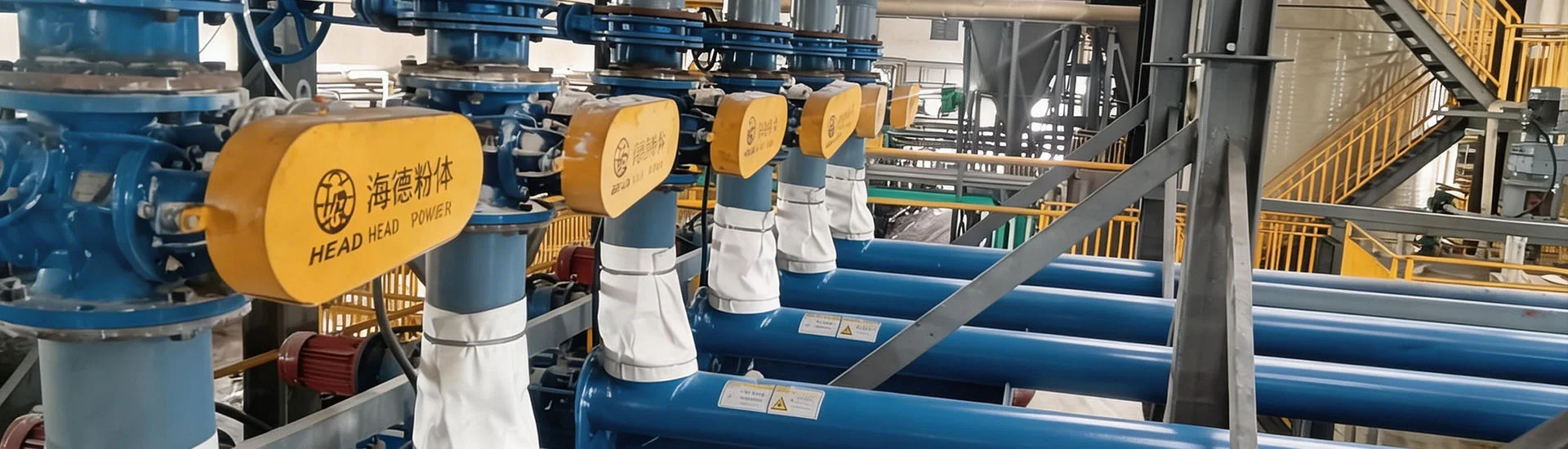
Rich project cases across industries, showing real implementation and proven technical strength.Peanut kernel processing facilities across the globe are increasingly adopting pneumatic conveying technology to streamline material handling, reduce product degradation, and improve operational hygiene. As a key link in the post-harvest value chain, the transport of peanut kernels—from drying and shelling to sorting, roasting, and packaging—demands equipment that ensures gentle handling, consistent flow, and minimal contamination risk. Pneumatic conveying, which uses air pressure to move kernels through enclosed pipelines, has emerged as a solution that meets these stringent requirements while also offering flexibility in layout, low maintenance costs, and compatibility with automated control systems. In this comprehensive guide, we examine the fundamental design principles, core components, selection parameters, and operational best practices for peanut kernel pneumatic conveying equipment systems, drawing on industry standards and real-world experience from headpowder's engineering projects. The goal is to provide plant managers, process engineers, and equipment specifiers with actionable insights to evaluate, design, or upgrade their conveying infrastructure for improved efficiency and product quality.
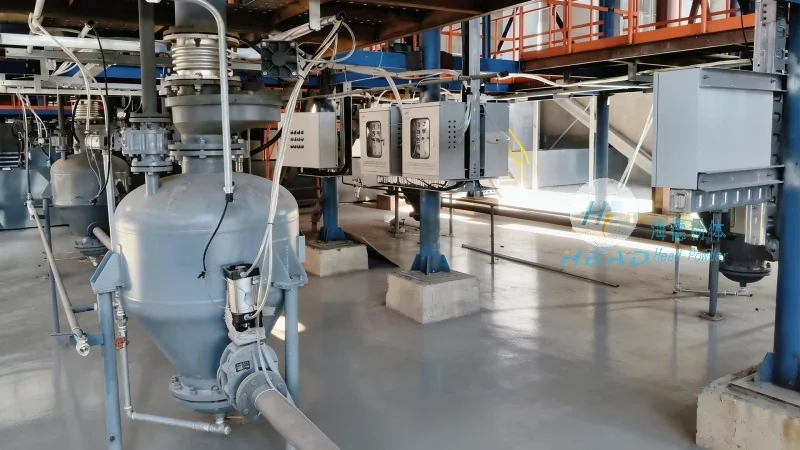
The peanut processing industry has experienced steady growth over the past decade, with global production exceeding 50 million metric tons in 2024 and forecasted to expand at a 2.8% annual rate through 2028. As processors scale up operations and face stricter food safety regulations, the choice of material handling equipment becomes critical. Traditional mechanical conveyors—belt, screw, or bucket elevators—often suffer from kernel breakage, dust generation, and high energy consumption due to friction and moving parts. Pneumatic conveying, in contrast, relies on a carefully controlled air stream to fluidize and transport kernels, reducing mechanical impact and allowing for closed-system operation that prevents foreign material ingress. However, designing an effective pneumatic system for peanut kernels requires a deep understanding of product characteristics (moisture content, particle size distribution, fragility), system hydraulics, and component compatibility. headpowder brings over 15 years of specialized engineering experience in this niche, having delivered more than 200 turnkey pneumatic conveying solutions for nut and seed processors worldwide. This article synthesizes that expertise into a practical reference for professionals seeking to optimize their peanut kernel handling lines.
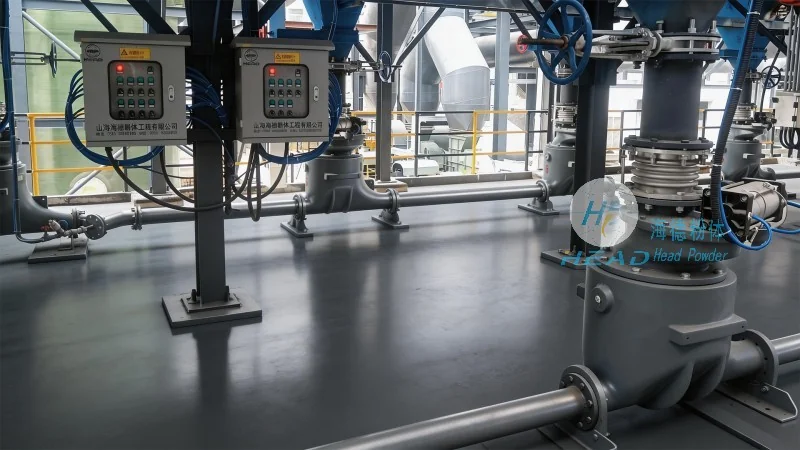
Pneumatic conveying systems operate on the principle of using a gas (typically air) to suspend and transport solid particles through a pipeline. For peanut kernels, two main modes are employed: dilute phase and dense phase. In dilute phase conveying, kernels are suspended in a high-velocity air stream (typically 20–35 m/s), resulting in a low solids-to-air ratio. This method is widely used for short-to-medium distances and provides high throughput flexibility. Conversely, dense phase conveying uses lower air velocities (4–12 m/s) and higher product concentrations, pushing kernels through the line in slugs or plugs. Dense phase is gentler on fragile kernels and reduces wear on pipe bends, but requires higher pressure and specialized feeders. The selection between these modes depends on kernel variety (runner, Virginia, Spanish, Valencia), moisture levels, target capacity, and pipeline layout. For most peanut kernel applications, dilute phase is preferred due to its simplicity, lower capital cost, and ease of cleaning when switching between product types. However, for delicate blanched or roasted kernels where breakage must be minimized, dense phase or a hybrid approach can be justified.
The fundamental governing equations involve conservation of mass and energy, with pressure drop calculated using the Darcy-Weisbach equation combined with solids friction factors. Accurate estimation requires considering acceleration losses, bends, vertical sections, and filter receiver resistances. Industry-standard guidelines such as the Conveying Equipment Manufacturers Association (CEMA) handbooks and the German VDI 2060 standard provide calculation methodologies. For peanut kernels, the particle density averages 1.05–1.15 g/cm³, with bulk density ranging from 550–650 kg/m³ depending on moisture. The angle of repose is approximately 30–35°, and the particle size typically falls between 6 and 22 mm in length. These parameters directly influence the minimum conveying velocity to prevent saltation (particles settling out) and the maximum solids loading ratio. headpowder's design engineers routinely conduct computational fluid dynamics (CFD) simulations to optimize pipe diameters, bend radii, and air handling unit sizing, ensuring that each system operates within 10% of its designed capacity while maintaining kernel integrity below 0.5% breakage rate.
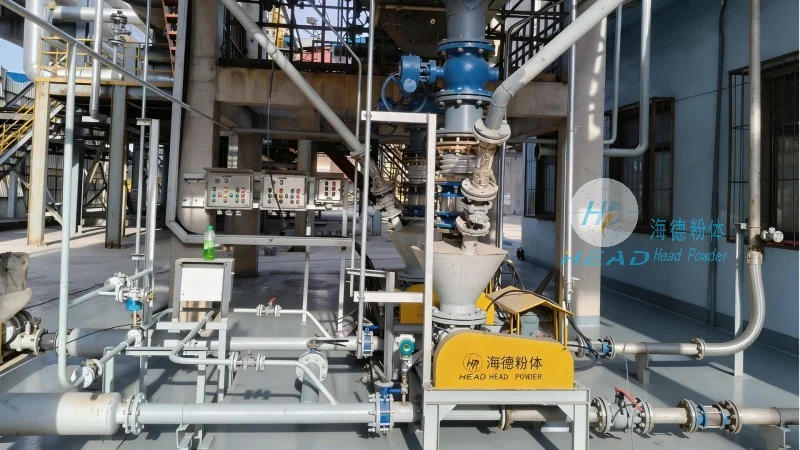
A complete peanut kernel pneumatic conveying system comprises several interconnected modules, each playing a critical role in reliable, hygienic, and energy-efficient operation. The primary components include the material feeding device, air mover, conveying pipeline with bends and diverters, separation unit, dust collection system, and control panel. We examine each in detail below.
Material Feeder: The feeder introduces peanut kernels into the air stream while minimizing air leakage and maintaining a consistent feed rate. Common options include rotary airlock valves, venturi feeders, and screw feeders. For peanut kernels, rotary airlock valves with specially designed pockets—often with wear-resistant coatings and adjustable rotor tips—are most common. The valve must handle the kernels’ irregular shape without crushing them; headpowder’s standard design features a 200 mm diameter rotor with 8 pockets and a stainless steel housing, achieving feed rates from 1 to 30 t/h with leakage below 1.5% of total airflow. For dense phase applications, pressure tanks with discharge cones are used, allowing batch or continuous operation.
Air Mover: Air movers generate the required pressure and volume. Centrifugal fans are typical for dilute phase systems due to their high volume and moderate pressure (up to 0.5 bar). Positive displacement blowers (Roots-type) are preferred for higher pressure requirements (0.5–1 bar) and are commonly used in dense phase or long-distance conveying. For peanut kernels, a variable-speed drive is recommended to adjust airflow according to product load, reducing energy consumption by 20–30% during partial load conditions. headpowder integrates energy-efficient IE4-rated motors and sound attenuation enclosures to comply with occupational noise limits below 85 dB(A) at 1 meter.
Conveying Pipeline and Bends: The pipeline is typically constructed from stainless steel (304 or 316L) or mild steel with internal coatings, depending on food contact requirements and abrasive wear. Pipe diameter is calculated based on conveying velocity and capacity; for peanut kernels, common diameters range from 80 mm to 200 mm. Bends are a critical wear point—use long-radius bends (1.5–2.0 times pipe diameter) or, for high-wear applications, plug-type bends with replaceable wear plates. headpowder’s proprietary “SmartBend” design uses a curved cast liner that can be rotated 90° to extend service life by 300% compared to standard bends.
Separation and Filtration: At the destination, peanut kernels must be separated from the conveying air. Cyclone separators are standard for primary separation, achieving 98–99% efficiency for kernels. For fine dust removal, a baghouse filter or cartridge filter is placed downstream. The cleaned air can be recirculated to reduce energy loss or exhausted through a stack. For food-grade applications, all filter media must be FDA-compliant and easily accessible for cleaning. headpowder offers integrated filter receivers that combine separation and storage, reducing footprint by 40%.
Control and Automation System: Modern pneumatic conveying systems rely on programmable logic controllers (PLCs) and supervisory control and data acquisition (SCADA) platforms to monitor pressures, airflows, product flow rates, and component status. Real-time adjustment of feeder speed and air mover speed ensures stable conveying under varying product batches. headpowder’s control system includes touch-screen interfaces with recipe management, enabling operators to switch between different peanut kernel grades with minimal manual intervention. Data logging supports traceability and predictive maintenance, aligning with Industry 4.0 initiatives.
Choosing the right pneumatic conveying system for peanut kernels involves evaluating multiple technical and economic factors. The first step is defining the system capacity: typical peanut processing lines require conveying rates between 5 and 50 t/h, depending on line size. Next, determine the conveying distance and routing: horizontal, vertical, and number of bends. Every 90° bend adds equivalent to 10–20 m of straight pipe in terms of pressure drop. The product’s moisture content is crucial—peanut kernels at 6–8% moisture convey easily, but above 10% moisture, the kernels become stickier and may lead to wall deposits or bridging in feeders. For high-moisture kernels, pre-conditioning or using aeration assist nozzles can help maintain flow.
Velocity selection must balance breakage and wear. For peanut kernels, minimum conveying velocity should be 16–20 m/s for dilute phase to avoid settling; however, velocities above 30 m/s may cause unacceptable kernel damage. The solids loading ratio (kg product per kg air) typically ranges from 5 to 15 for dilute phase. A higher loading ratio reduces air consumption but increases pressure requirements. Preliminary system design using headpowder’s online sizing calculator (available upon request) gives a quick estimate: for a 10 t/h system over a 50 m distance with 4 bends, a 125 mm diameter pipe, 25 m/s air velocity, and 3500 Pa/m pressure drop are typical starting values. Final design should always be validated with product trials.
Additional considerations include explosion protection, since peanut dust can be combustible. In dust-hazardous zones, systems must follow ATEX or NFPA 61 standards, using explosion relief panels, spark detection, and inerting gas. headpowder offers explosion-proof components certified for Class II, Division 1 environments. The layout should also allow easy access for cleaning and inspection—every pipe section should have cleanout ports at intervals of 20–30 m. For food safety, all surfaces must be smooth, free of crevices, and capable of dry-cleaning or CIP (clean-in-place) cycles.
Compared to belt conveyors, screw conveyors, and bucket elevators, pneumatic conveying for peanut kernels offers several distinct advantages. First, the enclosed system eliminates spillage and dust dispersion, improving workplace safety and compliance with air quality regulations. Second, the flexibility of routing—pipes can run overhead, underground, or along walls—reduces floor space requirements and allows easy integration into existing facilities. Third, pneumatic systems require fewer moving parts, resulting in lower maintenance costs: mechanical conveyors may have dozens of bearings, rollers, and belts that need frequent replacement, whereas a pneumatic system’s primary wear items are pipe bends and feeder components. headpowder’s case study from a major snack food manufacturer in the Midwest showed a 45% reduction in annual maintenance hours after switching from a belt-based system to a pneumatic conveyor for roasted peanut kernels.
Product quality is also enhanced. Mechanical conveyors often cause repeated impact and shear forces, leading to cracked kernels and fines generation. In a pneumatic system, the kernels travel in a suspended state with minimal contact with walls, especially when optimized velocities are maintained. One headpowder client processing blanched peanuts recorded a breakage rate drop from 3.2% to 0.7% after installing a custom dilute phase system with SmartBend technology. Additionally, pneumatic systems are inherently easier to automate and integrate with upstream and downstream equipment, allowing real-time adjustments to throughput based on demand. The energy consumption per ton conveyed may be higher than some mechanical alternatives, but when total lifecycle costs (capital, maintenance, product loss) are calculated, pneumatic conveying often proves more economical for capacities above 5 t/h and distances over 30 m.
Peanut kernel pneumatic conveying is employed across diverse sectors: raw material receiving, in-process transfer between shelling and blanching, conveying to roasters, and distribution to packaging lines. A typical application is in large-scale peanut butter processing plants, where kernels must be moved from storage silos to a pre-grind hopper. headpowder recently completed a project for a 50,000 t/year facility in Georgia, designing a dilute phase system with two parallel lines of 150 mm diameter pipes, each capable of 20 t/h over 80 m. The system includes a PLC-controlled pressure monitoring loop that automatically adjusts the blower speed to maintain optimal velocity, reducing energy use by 18% compared to a fixed-speed alternative. Commissioning tests showed kernel breakage below 0.3%, well within the client’s specification.
In the snack industry, where roasted and flavored peanut kernels are handled, the system must prevent contamination from seasoning residues. headpowder’s solution for a European snack manufacturer used a self-cleaning rotary airlock with compressed air purging and a pipeline coated with anti-static PTFE to reduce seasoning buildup. Cleaning time between product changeovers dropped from 8 hours to under 2 hours. Data collected over 12 months indicated a payback period of 14 months due to reduced product loss and labor savings.
For small- to medium-sized processors, headpowder offers modular pneumatic conveying units pre-assembled on a skid, complete with air mover, feeder, control panel, and basic piping, reducing installation time to less than a week. These units are designed for capacities from 2 to 8 t/h and feature quick-release couplings for easy relocation. Standard components ensure fast spare parts availability, minimizing downtime.
Successful implementation of a peanut kernel pneumatic conveying system requires careful attention to installation details. The pipeline must be supported at intervals of 3–5 meters to prevent sagging, and all joints must be gasketed and leak-tight. During commissioning, the first step is to verify air velocity and pressure at multiple points using pitot tubes and pressure transducers. Next, operate the system with inert material (e.g., hulls or broken kernels) to fine-tune feeder settings before introducing whole kernels. headpowder’s commissioning engineers follow a standard protocol: run at 50% capacity for 1 hour, measure product quality, then ramp up to 100% while monitoring motor current and pressure differentials. Any abnormal vibration or pressure fluctuation indicates potential issues such as blockages or worn components.
Routine maintenance should include daily visual inspections of bend sections for wear, monthly cleaning of the filter receiver and rotary airlock, and quarterly lubrication of blower bearings. headpowder provides a preventive maintenance checklist with recommended intervals based on operating hours. For example, pipe wear can be monitored using ultrasonic thickness gauges; a 20% reduction in wall thickness signals the need for replacement. Spare parts such as rotor blades, seal kits, and pressure relief diaphragms should be kept on-site. With proper care, a pneumatic conveying system can operate reliably for 15–20 years before requiring major overhaul.
Pneumatic conveying for peanut kernels represents a mature, well-proven technology that delivers measurable benefits in product quality, operational efficiency, and safety. The key to success lies in selecting the right system architecture—dilute vs. dense phase, appropriate pipe sizing, and component quality—and partnering with an experienced provider who understands the unique behavior of peanut kernels under airflow. With the peanut processing industry moving toward higher automation and stricter food safety standards, pneumatic conveying systems offer a scalable, flexible backbone for material flow. headpowder has demonstrated its expertise in this domain, providing custom-engineered solutions that meet specific capacity, layout, and regulatory needs. Whether you are building a new facility or upgrading an existing line, investing in a well-designed pneumatic system can reduce total cost of ownership while improving throughput consistency. For a consultation on your specific peanut kernel pneumatic conveying requirements, reach out to headpowder’s technical team at (咨询热线:156-6277-7102). We welcome the opportunity to discuss your project goals and provide a preliminary feasibility analysis based on your product parameters and operational constraints.
In summary, the adoption of modern pneumatic conveying equipment is not merely a trend but a strategic decision that affects the bottom line, product reputation, and compliance landscape. By leveraging engineering principles, real-world data, and continuous improvement, processors can optimize their peanut kernel handling with confidence. headpowder remains committed to advancing this technology and supporting the industry through innovative designs, responsive service, and a deep understanding of the complexities involved in conveying fragile, valuable agricultural products.

 Shandong headpowder Engineering Co., Ltd.
 156-6277-7102(Manager Zhang)
  0531-83386006
  Jinan City, Shandong Province, China
服务热线
微信咨询
回到顶部