News
Rich project cases across industries, showing real implementation and proven technical strength.Polypropylene (PP) pellets are a cornerstone material in the plastics processing industry, used extensively in injection molding, blow molding, extrusion, and nonwoven fabric production. The efficient, safe, and contamination-free transport of these pellets from storage silos to processing machines is a critical logistical challenge. Pneumatic conveying systems have emerged as the preferred solution for this task, offering a closed-loop, automated, and highly flexible method of material handling. At its core, a pneumatic conveying system for PP pellets utilizes a controlled stream of air (or an inert gas) to move the particles through a network of pipelines. The fundamental principle relies on the balance between air velocity, particle density, and pipeline geometry to maintain a stable, non-settling flow. Unlike mechanical conveyors (such as screw or belt conveyors), pneumatic systems eliminate the risk of pellet degradation from mechanical friction, reduce dust generation, and allow for complex routing around existing plant equipment. For headpowder, designing a system that minimizes energy consumption while maximizing throughput is a science that combines fluid dynamics, material science, and decades of field experience. The selection of the conveying mode—dilute phase, dense phase, or semi-dense phase—depends entirely on the specific characteristics of the PP pellets, including bulk density, particle shape, size distribution, and friability. A properly engineered system ensures that the pellets maintain their physical integrity, free from streamers, fines, or "angel hair" formation, which can clog downstream equipment and degrade final product quality. As the industry moves toward 2026, the demand for more sustainable, low-energy, and smart conveying solutions is accelerating, and understanding these core principles becomes the foundation for making informed investment decisions.
The selection between dilute phase and dense phase pneumatic conveying is one of the most consequential decisions in system design, directly impacting operational costs, maintenance frequency, and product quality. Dilute phase conveying operates at high air velocities (typically 20-35 m/s) and low material-to-air ratios, suspending particles in a continuous air stream. This method is well-suited for low-capacity, short-distance applications and materials that are not easily degraded. However, for PP pellets, the high velocity can cause significant drawbacks: impact damage leading to dust generation, excessive wear on pipeline elbows, and increased energy consumption due to high pressure requirements. In contrast, dense phase conveying operates at much lower velocities (2-8 m/s) and high material-to-air ratios, moving the pellets in a "plug" or "slug" form through the pipe. This gentle handling approach drastically reduces product degradation, eliminates the formation of "angel hair" (thin, string-like plastic strands that cause process disruptions), and typically consumes less energy per ton of material conveyed. The trade-off is that dense phase systems require higher initial capital investment, more sophisticated control valves, and careful pipeline design to prevent plugging. For headpowder, we have observed that the vast majority of PP pellet applications benefit from dense phase or semi-dense phase technology, especially when conveying over distances exceeding 50 meters or when the pellets have a high bulk density. Industry data from 2025 indicates that facilities switching from dilute to dense phase conveying for PP pellets report an average 30-40% reduction in fines generation and a 15-20% decrease in overall energy costs. When evaluating a system, engineers must also consider the conveying pressure — generally, dense phase systems operate at 2-4 bar, while dilute phase systems typically stay below 1 bar. The choice ultimately hinges on a comprehensive material test (often using a flowability index) and a lifecycle cost analysis. (咨询热线:156-6277-7102)
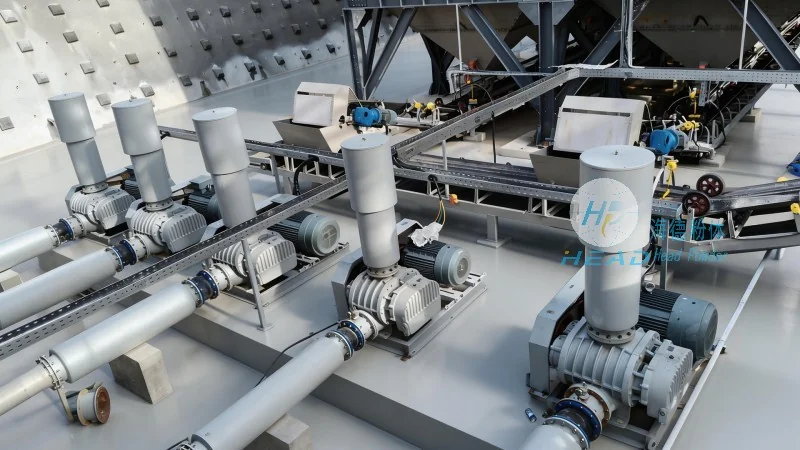
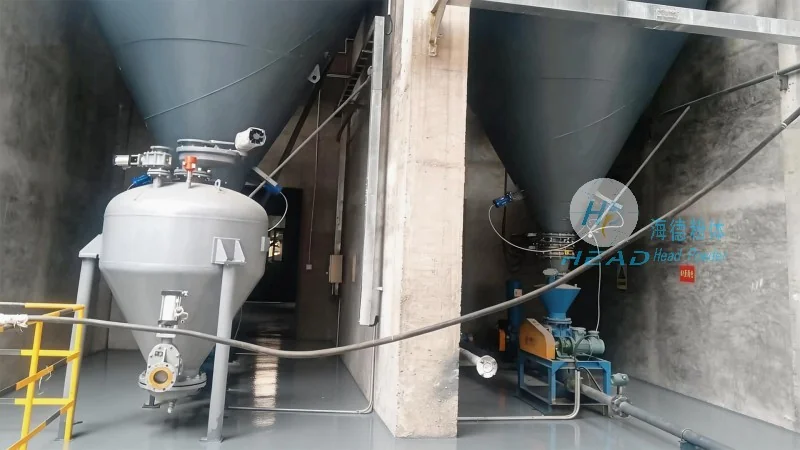
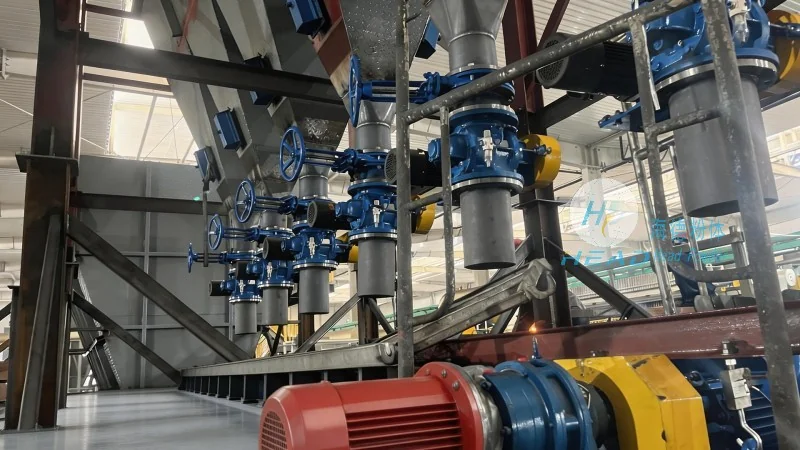
A robust pneumatic conveying system consists of several interdependent components, each engineered to meet the demanding requirements of continuous PP pellet handling. The starting point is the material source, typically a silo, big-bag unloader, or tote bin, which feeds into a rotary valve or a venturi feeder. The rotary valve acts as an airlock, preventing air leakage while metering a precise amount of pellets into the conveying line. For headpowder systems, we utilize proprietary rotary valves with hardened rotor tips and adjustable clearance to accommodate the abrasive nature of some PP grades. The conveying pipeline itself is usually manufactured from stainless steel or aluminum, with a smooth interior finish to reduce friction and pellet scuffing. Bend radii are carefully calculated — long-radius bends (minimum 10D to 20D) are standard to minimize impact force and wear. A properly designed diverter valve allows the system to route pellets to multiple destinations, such as several processing machines or storage bins. On the receiving end, a cyclone separator or a filter receiver separates the pellets from the conveying air. The separated air passes through a downstream filter (pleated cartridge or bag filter) to capture any fine dust before exhausting or recirculating. Pressure sensors, flow meters, and level indicators provide real-time feedback to a central PLC-based control system, enabling automated operation, fault detection, and remote monitoring. The blower package — whether positive displacement, side channel, or multi-stage centrifugal — must be sized to deliver the required air volume and pressure while maintaining energy efficiency. Modern systems increasingly incorporate variable frequency drives (VFDs) on blowers to adjust air speed in response to real-time demand, further reducing energy consumption. Industry standards such as ISO 10628 for piping and instrumentation and ATEX guidelines for explosion protection are mandatory when handling PP pellets in dusty environments. headpowder integrates these standards into every component specification, ensuring compliance with global safety regulations and operational longevity.
Designing an efficient pneumatic conveying system for PP pellets requires a data-driven approach, starting with accurate characterization of the bulk material. Key parameters include the mean particle size (typically 3-5 mm for standard pellets), bulk density (around 900-920 kg/m³ for virgin PP), angle of repose, and permeability. The conveying distance, both horizontal and vertical, must be precisely measured, including all bends, as each 90-degree bend can add the equivalent of 3-5 meters of straight pipe in pressure drop. The material flow rate (tons per hour) dictates the pipe diameter and air velocity. A common starting point for dense phase PP pellet conveying is a pipe diameter between 80 mm and 150 mm for typical plant capacities. The required air mass flow is calculated using the solids loading ratio (SLR), defined as the mass of material conveyed per mass of conveying air. For dense phase, SLR values can range from 10 to 30, while dilute phase operates at SLR below 5. The pressure drop across the system is estimated using the Darcy-Weisbach equation combined with empirical corrections for solids flow, with the total pressure requirement typically falling between 2 and 5 bar(g) for dense phase systems. headpowder employs proprietary simulation software that models particle trajectory, airflow distribution, and wear patterns, allowing us to optimize pipeline routing and component selection before fabrication. According to market trends projected for 2026, the industry is moving toward "digital twin" design methodologies, where a virtual model of the conveying system is created and tested under various operating scenarios. This approach reduces commissioning time by up to 25% and minimizes on-site troubleshooting. Additionally, the selection of the conveying gas — typically air, but sometimes nitrogen for special flame-retardant PP grades — must account for moisture content and dew point to prevent hygroscopic issues. A well-designed system includes a compressed air drying unit and an oil-free compressor package to maintain product purity. For each project, headpowder provides a detailed technical proposal that includes a pipe routing isometric, a pressure drop calculation sheet, and a component list with specified materials of construction, ensuring full transparency and engineering rigor.
Once installed, the ongoing performance of a PP pellets pneumatic conveying system depends heavily on proper operation and proactive maintenance. The most common issues include pipeline blockages (often caused by moisture, static charge buildup, or line wear), rotary valve jamming, and filter clogging. To minimize downtime, operators should establish a regular inspection schedule focusing on elbow thickness (using ultrasonic testing), seal integrity on diverter valves, and filter media condition. headpowder recommends a preventive maintenance checklist that includes: weekly visual inspection of all flexible hoses and connections, monthly cleaning of filter cartridges or bag filters, quarterly calibration of pressure transmitters and flow meters, and annual replacement of rotary valve rotor seals. Static electricity, a significant hazard when conveying plastic pellets in dry environments, can be mitigated through the use of conductive piping materials, grounding straps, and anti-static filters. Many modern systems incorporate automatic pipeline purging cycles using compressed air to clear residual material after each batch, reducing the risk of cross-contamination. Energy efficiency can be further enhanced by installing a pressure transducer at the receiver and adjusting the blower speed via a VFD to match the actual conveying demand — a technique that can lower electricity costs by 15-25% compared to constant-speed operation. Data from industry benchmarks in 2025 shows that well-maintained dense phase systems achieve a mechanical availability of over 98%, with blade replacement intervals exceeding 8,000 operating hours. headpowder offers a remote monitoring service that collects key performance indicators (KPIs) such as conveying rate, power consumption per ton, and filter differential pressure, enabling predictive maintenance and reducing unplanned shutdowns. For facilities aiming to comply with the latest environmental regulations, closed-loop systems that recirculate conveying air and capture fugitive dust are becoming standard. By investing in proper training for plant personnel—covering startup, emergency stops, and cleaning procedures—companies can maximize the return on their conveying investment over a service life that often exceeds 15 years.
A practical example illustrates the value of a well-engineered pneumatic conveying solution. A Midwest-based injection molding plant, processing over 12,000 tons of PP pellets annually, faced persistent challenges with angel hair formation and inconsistent feed rates to 24 molding machines. The existing dilute-phase system, installed in 2018, required frequent cleaning of filter receivers and resulted in a 4% material loss as scrap. headpowder was engaged to design a replacement system. After conducting a detailed material test and site survey, our engineering team proposed a dense-phase system with a centralized blower package, a network of 120 mm diameter aluminum pipelines, and automated diverter valves integrated with the plant's MES. The key design innovation was the use of a proprietary "gentle flow" launch chamber that gradually accelerated the pellet plug to prevent impact damage. The system was commissioned in eight weeks, with minimal disruption to production. Post-implementation results showed a 72% reduction in fines and angel hair, a 19% decrease in compressed air consumption, and a 3.2% increase in overall equipment effectiveness (OEE) due to fewer downtime events related to material handling. The plant achieved payback within 14 months. This case underscores the importance of tailoring the conveying mode to the specific material and operational constraints. For headpowder, every project begins with a comprehensive site assessment and material characterization, ensuring that the final system delivers measurable improvements in quality, cost, and sustainability.
As the plastics industry continues to evolve, pneumatic conveying technology must adapt to new material formulations, stricter sustainability targets, and the push for Industry 4.0 integration. One significant trend is the adoption of "zero-loss" conveying systems, where all dust and streamers are captured and recycled back into the process, achieving material utilization rates above 99.5%. Advanced sensor technology, including acoustic sensors that detect plug formation and infrared cameras that monitor pipe wall temperature, enables real-time optimization of conveying parameters. Artificial intelligence (AI) and machine learning algorithms are increasingly used to predict wear patterns and schedule maintenance, reducing unplanned downtime by an estimated 30% by 2027. Another emerging area is the use of low-pressure, high-volume air systems combined with energy recovery units, which can reduce the carbon footprint of conveying operations by up to 40%. For recycled PP pellets (rPP), which often have irregular shapes and higher fines content, specialized dense-phase designs with gentle acceleration zones are being developed. headpowder is actively researching novel pipeline coatings that reduce friction and prevent static buildup, along with modular system architectures that allow for rapid reconfiguration as plant layouts change. The regulatory landscape, particularly concerning emissions of volatile organic compounds (VOCs) from heated pellets, is also driving innovation in closed-loop gas recirculation with inline filtration. By staying at the forefront of these developments, headpowder ensures that our clients receive conveying solutions that not only meet today's demands but are future-proofed for the coming decade. Whether the goal is to increase throughput, reduce waste, or achieve net-zero operations, a properly engineered pneumatic conveying system remains an indispensable tool for any PP pellet processing facility.
For more information on how headpowder can design, manufacture, and install a customized PP pellets pneumatic conveying system tailored to your specific production requirements, please contact our engineering team. (咨询热线:156-6277-7102)

 Shandong headpowder Engineering Co., Ltd.
 156-6277-7102(Manager Zhang)
  0531-83386006
  Jinan City, Shandong Province, China
服务热线
微信咨询
回到顶部