News
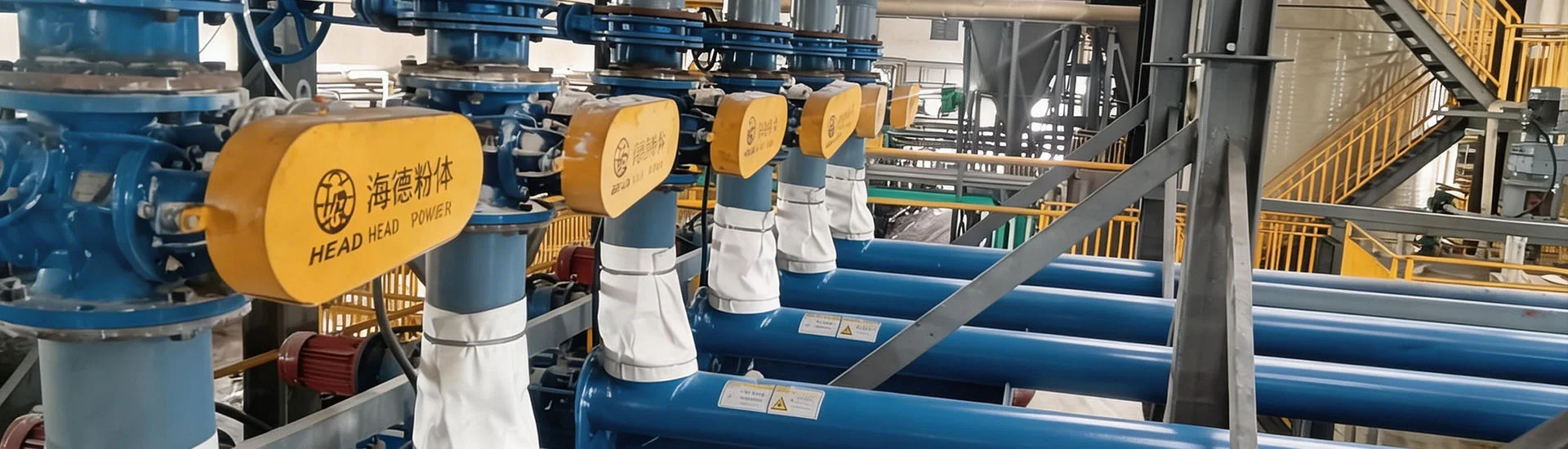
Rich project cases across industries, showing real implementation and proven technical strength.In the carbon black industry, the handling and transportation of fine powders have long presented significant engineering challenges. Carbon black powder, with its low bulk density, high abrasiveness, and tendency to agglomerate, demands specialized conveying solutions that minimize degradation, prevent dust emissions, and maintain consistent material flow. Pneumatic conveying technology has emerged as the dominant approach for moving carbon black across production stages, from reactor discharge to storage silos, blending units, and packing lines. However, the selection and design of a pneumatic conveying system for carbon black require deep technical knowledge of material characteristics, system pressure, air velocity, and pipeline geometry. This article provides a comprehensive technical solution for carbon black powder pneumatic conveying equipment, covering system types, component specifications, design parameters, operational best practices, and real-world case studies. The objective is to equip plant engineers, project managers, and procurement professionals with actionable insights to optimize their conveying operations while ensuring reliability, safety, and cost efficiency. Headpowder, as a specialist in bulk powder handling equipment, has accumulated extensive experience in designing tailored pneumatic systems for carbon black producers, and this article draws on that expertise to address common pain points and emerging industry trends.
Carbon black is not a uniform material. Its properties vary significantly depending on the production method (furnace black, thermal black, etc.) and the intended application (rubber reinforcement, pigment, conductive additive). Key physical characteristics that influence pneumatic conveying design include particle size distribution (typically ranging from 10 to 500 nanometers), bulk density (often between 0.04 and 0.5 g/cm³), high specific surface area, and strong van der Waals forces that cause agglomeration. These factors make carbon black prone to bridging in hoppers, caking in pipelines, and generating static electricity during transport. Moreover, carbon black is classified as a combustible dust, requiring explosion protection measures in accordance with NFPA 654 or ATEX directives. A robust pneumatic conveying solution must account for all these variables. Headpowder’s engineers begin every project with a detailed powder characterization test, including angle of repose, cohesion, compressibility, and air retention behavior, to determine the optimal conveying mode and equipment sizing.
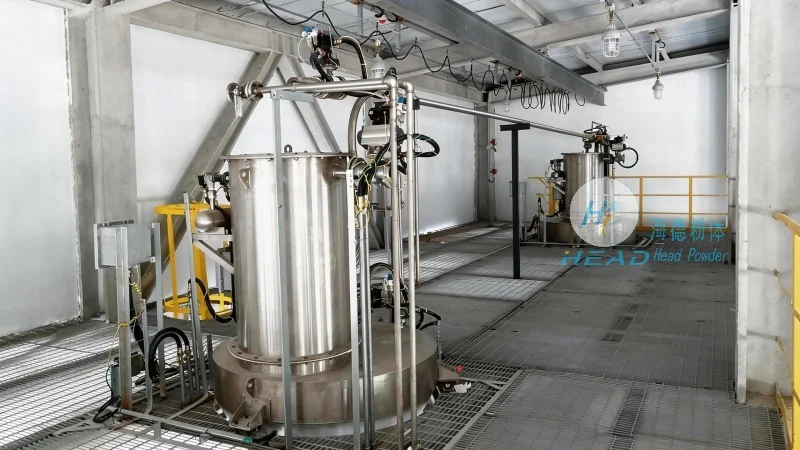
Two primary pneumatic conveying modes are used for carbon black: dilute phase and dense phase. Each has distinct advantages and limitations that must be matched to the specific application.
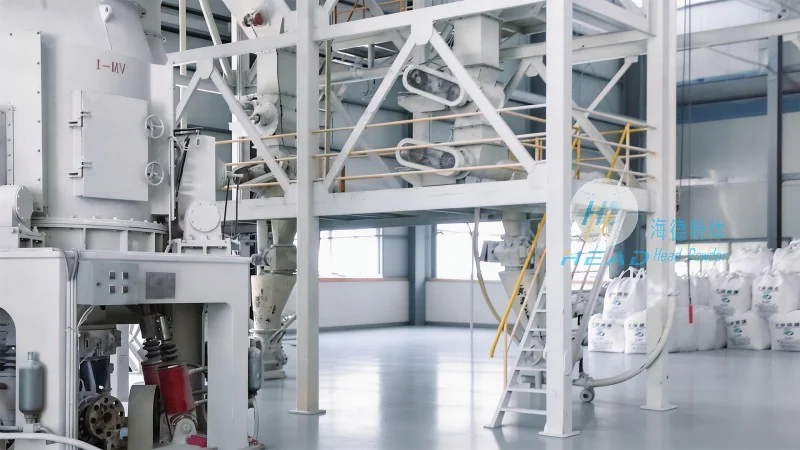
Dilute phase conveying operates at relatively high air velocities (typically 20–35 m/s) with a low solid-to-air ratio. This method is suitable for short distances, high throughput requirements, and materials that are not highly abrasive. For carbon black, dilute phase is often employed in transfer lines from reactor hoppers to intermediate storage, where the material is still warm and less prone to agglomeration. However, the high velocity can cause particle degradation and pipeline wear, especially at bends. Headpowder’s dilute phase systems incorporate wear-resistant ceramic-lined elbows and variable-speed rotary airlocks to mitigate these issues while maintaining stable flow.
Dense phase conveying, by contrast, uses lower air velocities (2–10 m/s) and a much higher solid concentration, moving the material as a plug or slug. This method is ideal for carbon black because it reduces particle degradation, minimizes pipeline erosion, and lowers energy consumption. Dense phase systems are particularly effective for long-distance transport (over 100 meters) and for handling cohesive or hygroscopic powders. The key challenge is maintaining consistent plug formation, which requires precise control of air injection along the pipeline. Headpowder’s proprietary dense phase design uses a combination of pressure vessels, blow tanks, and boosters to ensure stable transport even with carbon black’s challenging flow behavior. Field data from a recent installation at a carbon black plant in Shandong shows that dense phase conveying reduced pipeline wear by 60% compared to the previous dilute phase system, while cutting compressed air consumption by 35%.
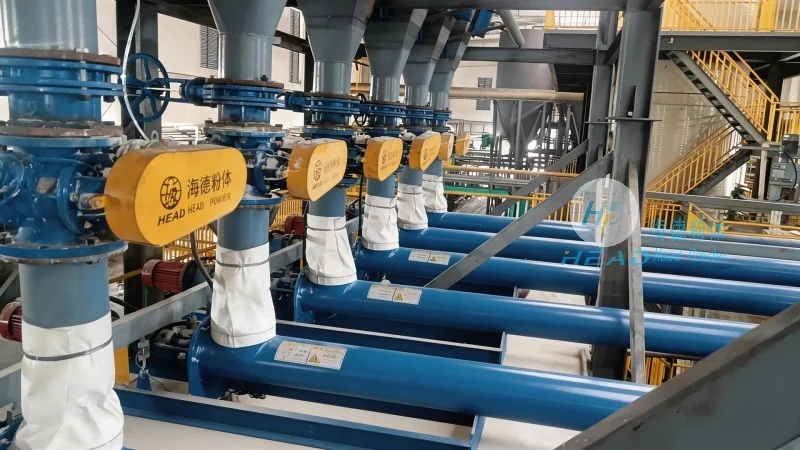
Every pneumatic conveying system for carbon black comprises several critical components, each of which must be carefully selected to match the material properties and operational requirements.
Feed system: Rotary airlocks or screw feeders are used to introduce carbon black into the conveying pipeline. For carbon black, rotary airlocks with blow-through designs are preferred because they prevent material compaction and provide reliable sealing against pressure differentials. Headpowder’s airlocks feature hardened stainless steel rotors and adjustable clearances to handle abrasive dust without seizing.
Conveying pipeline: Pipe diameter, material, and bend design directly impact system efficiency and longevity. For carbon black, schedule 40 or 80 carbon steel pipe with a wall thickness of at least 6 mm is common, but for high-wear applications, ceramic-lined or cast basalt-lined pipes are recommended. Bends should have a large radius (minimum 10 times the pipe diameter) or use blind tee configurations to reduce impact wear. Headpowder has developed a modular pipe system with quick-release couplings that simplifies maintenance and reduces downtime.
Air supply: Positive displacement blowers are the standard air source for most carbon black conveying systems, providing a steady volume of low-pressure air (typically 0.5–1.5 bar). For dense phase systems, screw compressors with air receivers and dryers are used to deliver compressed air at higher pressures (2–6 bar). It is essential to include moisture and oil removal filters, as any contamination can cause carbon black to agglomerate or create hazardous conditions.
Separation and filtration: At the receiving end, cyclones or baghouse filters separate the carbon black from the conveying air. Baghouse filters with pulse-jet cleaning are the most common choice, but they must be designed with high filter area (air-to-cloth ratio below 1.5:1) and coated filter media to prevent blinding from fine carbon black particles. Headpowder’s filtration systems incorporate explosion vents and flame arrestors to comply with safety standards.
Controls and instrumentation: Modern systems rely on PLC-based controls with pressure sensors, flow meters, and level indicators to maintain stable operation. For carbon black, real-time monitoring of line pressure and air velocity is critical to detect blockages or pressure surges. Headpowder integrates remote monitoring capabilities that allow operators to adjust parameters from a central control room, improving response time and reducing manual intervention.
Designing a pneumatic conveying system for carbon black requires balancing multiple variables to achieve the desired throughput, energy efficiency, and product quality. The following parameters are critical.
Conveying velocity: The minimum conveying velocity (saltation velocity) for carbon black typically ranges from 10 to 18 m/s, depending on particle size and bulk density. Operating below this speed can cause material settling and line blockage, while excessively high speeds lead to degradation and wear. Headpowder uses computational fluid dynamics (CFD) simulations to model velocity profiles and optimize pipe diameter and booster placement for each project.
Solid-to-air ratio: This ratio, expressed as kg of material per kg of air, directly affects system pressure drop and energy consumption. For dilute phase conveying of carbon black, ratios of 5:1 to 15:1 are common; for dense phase, ratios can reach 30:1 or higher. A higher ratio reduces air consumption but increases pressure requirements. Headpowder’s design methodology includes a pressure drop calculation based on the Darcy-Weisbach equation, adjusted for the two-phase flow characteristics of carbon black. In a recent project for a masterbatch manufacturer, optimizing the solid-to-air ratio from 12:1 to 18:1 lowered the blower power draw by 22% while maintaining throughput.
Pipeline length and elevation changes: Carbon black conveying systems often span hundreds of meters with multiple vertical and horizontal sections. Each 90-degree bend can add the equivalent of 10–20 meters of straight pipe to the pressure drop. Headpowder recommends minimizing bends and using sweeping radii wherever possible. For vertical lifts, the system must compensate for gravitational settling; air injection at the bottom of the riser can help maintain plug flow.
Temperature and humidity: Carbon black is often conveyed at elevated temperatures (up to 150°C) directly from production. Hot carbon black has lower cohesion but can cause thermal expansion issues in pipes and seals. Ambient humidity can also cause condensation and caking in cooled sections. Headpowder’s systems include thermal insulation on hot lines and dehumidified air supply for cold sections to prevent moisture-related problems.
The carbon black market is projected to reach approximately 18 million metric tons by 2026, driven by growing demand from the automotive tire industry and industrial rubber products. At the same time, environmental regulations are becoming stricter, particularly regarding dust emissions and energy consumption. Pneumatic conveying equipment manufacturers are responding with innovations that align with the principles of Industry 4.0 and sustainability.
One major trend is the adoption of intelligent conveying systems equipped with IoT sensors and predictive maintenance algorithms. These systems can detect early signs of wear in rotary airlocks or filter bags, schedule maintenance before failures occur, and optimize air consumption based on real-time material flow. Headpowder has partnered with cloud platform providers to offer a digital twin solution that simulates the entire conveying process, allowing operators to test changes before implementing them in the field.
Another trend is the use of low-energy dense phase conveying to reduce carbon footprint. Traditional dilute phase systems can consume up to 0.5 kWh per ton of material per 100 meters of pipeline. By switching to optimized dense phase designs, carbon black plants can lower this figure to below 0.2 kWh per ton. With energy costs rising globally, this represents a significant operational savings. Headpowder has published a white paper showing that a typical 50,000 ton-per-year carbon black plant can save over 150,000 kWh annually by upgrading to a dense phase system.
Additionally, safety standards are evolving. The 2025 revision of NFPA 654 includes more stringent requirements for dust collection systems and explosion isolation. Headpowder’s equipment is designed to meet these standards, with integrated passive and active protection measures such as explosion vents, suppression systems, and rotary valves with flame quenching capabilities. All systems undergo third-party certification to ensure compliance in different jurisdictions.
To illustrate the practical application of these technical solutions, consider the case of a carbon black manufacturer in the Middle East seeking to replace an aging dilute phase system that experienced frequent blockages and high maintenance costs. The plant produced 40,000 tons per year of N330 grade carbon black, with conveying distances ranging from 50 to 150 meters from production to storage silos.
Headpowder conducted a thorough site audit, including particle size analysis, moisture content measurement, and pressure drop modeling. The existing system used 6-inch diameter pipes with standard radius bends and a single rotary blower. After analysis, the solution involved converting to dense phase conveying using a blow tank system with three boosters along the main line. The pipe diameter was reduced to 5 inches to maintain appropriate plug velocity, and all bends were replaced with ceramic-lined long-radius elbows. A new PLC control system was installed with pressure sensors at six points and a variable frequency drive on the compressor.
The results after commissioning were substantial: blockages were eliminated entirely during the first six months of operation. Maintenance intervals for pipe replacement extended from every 12 months to over 36 months. Energy consumption dropped by 28%, and dust emissions at the filter outlet were below 1 mg/m³, well within local environmental limits. The plant reported a return on investment within 20 months, primarily due to reduced downtime and lower energy costs. This case exemplifies how a tailored pneumatic conveying solution, built on thorough analysis and modular design, can transform carbon black handling operations.
Even the best-designed pneumatic conveying system requires proper operation and maintenance to sustain performance over the long term. For carbon black, the following practices are recommended.
Start with a regular inspection schedule for all rotating equipment, including airlocks, blowers, and compressors. Check for bearing wear, seal leaks, and alignment. Carbon black dust can penetrate seals if not properly maintained, leading to premature failure. Headpowder’s systems include easy-access inspection ports and magnetic plugs in gearboxes to simplify this process.
Monitor pipeline pressure differentials as an early indicator of developing blockages. A sudden increase in pressure drop across a section often signals material buildup. Automated purging sequences or air injection at that point can clear the restriction without shutting down the line. Many modern systems have self-cleaning cycles built into the controller.
Also pay attention to filter bag condition. Carbon black fines can blind bags quickly if the pulse-jet cleaning frequency is inadequate. Differential pressure across the filter should be logged daily; a rising trend suggests the need for bag replacement or cleaning optimization. Headpowder provides a filter management tool that recommends cleaning intervals based on actual dust loading.
Finally, maintain proper housekeeping around conveying equipment. Carbon black dust accumulations on floors and beams pose fire and explosion risks. Regular vacuum cleaning with explosion-proof equipment is mandatory. Headpowder offers a full line of industrial vacuum systems designed specifically for combustible dust collection.
Headpowder has been a trusted partner for bulk powder handling since 2008, with a dedicated team of process engineers, automation specialists, and field service technicians. Over the years, we have completed more than 300 pneumatic conveying projects across the carbon black, pigment, chemical, and food industries. Our approach combines deep material science knowledge with practical hardware design, ensuring that each system is optimized for the unique challenges of carbon black. We offer end-to-end service from powder characterization and process simulation to installation, commissioning, and after-sales support. All equipment is manufactured in ISO 9001-certified facilities, and our engineers are trained in ATEX and NFPA compliance. For companies seeking to upgrade their carbon black handling infrastructure, Headpowder provides both standard modular systems and fully custom engineered solutions. Our reference list includes some of the largest carbon black producers in Asia and the Middle East, and we are happy to arrange a site visit to an existing installation. (Consultation hotline: 156-6277-7102)
In conclusion, the successful pneumatic conveying of carbon black powder requires an integrated approach that respects the material’s physical and safety characteristics, selects the appropriate conveying mode, and incorporates robust equipment and intelligent controls. As the industry moves toward higher efficiency, lower emissions, and digitalization, having a reliable technology partner becomes increasingly important. Headpowder’s technical solutions are designed to meet these evolving demands while delivering measurable operational savings. Whether you are planning a new plant or retrofitting an existing line, the principles and case studies shared in this article provide a solid foundation for making informed decisions about your carbon black conveying equipment. With careful design, diligent maintenance, and a commitment to continuous improvement, your pneumatic conveying system can become a competitive advantage rather than a bottleneck.

 Shandong headpowder Engineering Co., Ltd.
 156-6277-7102(Manager Zhang)
  0531-83386006
  Jinan City, Shandong Province, China
服务热线
微信咨询
回到顶部