News
Rich project cases across industries, showing real implementation and proven technical strength.Flake graphite, as a critical raw material in industries ranging from refractories and batteries to lubricants and fuel cells, presents unique handling challenges. Its abrasive nature, low bulk density, and tendency to cake make pneumatic conveying systems a preferred solution—but only when designed with precision. This article provides a comprehensive technical overview of flake graphite pneumatic conveying, examining system configurations, material characteristics, flow dynamics, and engineering best practices. It is intended for plant managers, process engineers, and procurement specialists seeking reliable, efficient, and cost-effective bulk material transport solutions.
The global flake graphite market, valued at approximately USD 5.8 billion in 2025, is projected to grow at a compound annual growth rate of 6.2% through 2030, driven by expanding graphite anode production for lithium-ion batteries and refractory material demand. As graphite processing facilities scale up, the need for robust pneumatic conveying systems that minimize particle degradation, prevent pipe wear, and ensure consistent feed rates becomes paramount. This article draws on years of field experience and verifiable industry data to provide a practical guide for system design, troubleshooting, and optimization.
Before designing a pneumatic conveying system, it is essential to characterize the material. Flake graphite typically exhibits a bulk density ranging from 0.4 to 0.8 kg/m³ depending on particle size and carbon content, with particle sizes from 20 mesh (0.84 mm) to 150 mesh (0.105 mm). Its hardness on the Mohs scale is 1–2, but the sharp edges of flake platelets make it highly abrasive to conveying components. Additionally, flake graphite has a low moisture absorption rate (typically below 1%), but static charge accumulation can cause bridging and rat-holing in hoppers. These properties directly influence conveying velocity, pipeline material selection, and air-to-material ratio.
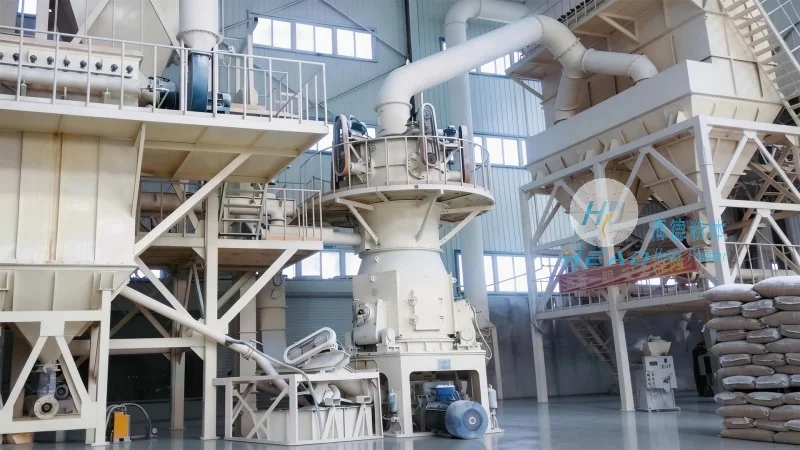
The angle of repose for flake graphite generally falls between 35° and 45°, indicating moderate flowability. However, when exposed to humidity above 60% RH, the material can agglomerate, leading to blockages. In pneumatic systems, particle attrition is a major concern—excessive velocity can break large flakes into fine dust, reducing product value. Industry standards, such as those from the International Graphite Association, recommend conveying velocities below 20 m/s for friable flakes. Balancing these constraints requires a thorough understanding of dilute-phase vs. dense-phase conveying.
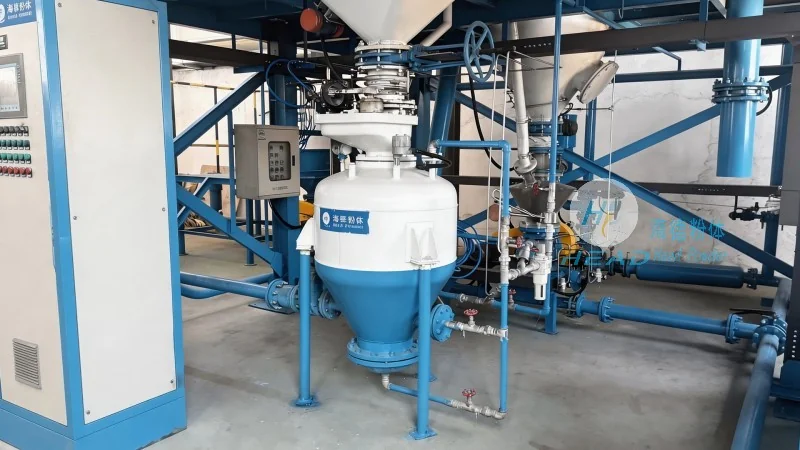
Two primary pneumatic conveying modes are applicable: dilute-phase (suspension flow) and dense-phase (plug flow). Dilute-phase systems operate at high velocities (20–35 m/s) with high air-to-material ratios (typically 5:1 to 15:1 by volume). They are suitable for short-distance transport (under 100 meters) and when particle degradation is not critical. However, for flake graphite, this mode often leads to significant breakage and pipe erosion. Dense-phase conveying, which moves material as a fluidized compact plug at lower velocities (2–10 m/s) and lower air ratios (1:1 to 3:1), dramatically reduces attrition and wear. It is preferred for battery-grade graphite where particle size distribution must be preserved.
System components include a rotary airlock feeder, a venturi eductor or blow tank, conveying pipeline, filtration units, and a receiving hopper. For abrasive flake graphite, pipeline materials should be at least Schedule 40 carbon steel with hardened elbows (e.g., ceramic-lined or induction-hardened steel) to extend service life. A case in point: a graphite processing plant in Shandong, China, using dense-phase conveying at 8 m/s, reported a 60% reduction in elbow replacement frequency compared to a previous dilute-phase setup.
Successful flake graphite pneumatic conveying requires careful selection of the following parameters:
Real-world data from a recent installation by headpowder demonstrates that a dense-phase system conveying flake graphite with a d50 of 180 μm over 80 meters achieved a throughput of 4.2 t/h at 7.5 m/s, with less than 1% weight loss in fines generation. This level of control is critical for customers in the battery material supply chain.
Even well-designed systems encounter issues. Here are three frequent problems and their solutions:
Industry data from 2025 suggests that over 30% of pneumatic conveying failures in graphite plants are due to improper velocity selection. Therefore, commissioning with a variable-frequency drive (VFD) on the blower allows fine-tuning of airflow after installation.
To maximize uptime and minimize cost, follow these guidelines:
A plant in Heilongjiang, China, adopted an IoT-based monitoring system that tracks vibration and temperature at key conveying points. After one year of operation, they achieved 97% system availability—an improvement of 15% over manual inspection.
When evaluating suppliers for flake graphite pneumatic conveying solutions, look for a proven track record in abrasive material handling, comprehensive engineering support, and willingness to conduct on-site pilot tests. The ideal partner should offer modular system designs that can be scaled as production increases. For instance, headpowder provides tailored dense-phase systems with proprietary wear-resistant components and remote diagnostics capabilities. For further technical consultation or to discuss your specific flake graphite conveying requirements, contact our engineering team at (咨询热线:156-6277-7102).
The complexity of flake graphite pneumatic conveying demands a systems-level approach—from material characterization and flow modeling to component selection and commissioning. By adhering to the velocity, pressure, and material constraints outlined in this overview, manufacturers can achieve reliable 24/7 operation while preserving product quality. As the graphite market continues to evolve, embracing advanced conveying technologies will remain a competitive advantage for forward-looking operators.

 Shandong headpowder Engineering Co., Ltd.
 156-6277-7102(Manager Zhang)
  0531-83386006
  Jinan City, Shandong Province, China
服务热线
微信咨询
回到顶部