News
Rich project cases across industries, showing real implementation and proven technical strength.In the evolving landscape of bulk material handling, the efficient and reliable transportation of fine-grained industrial by-products remains a critical challenge for sectors such as mining, metallurgy, construction, and environmental remediation. Among these materials, tailing powder slag—a finely milled, abrasive, and often moisture-sensitive residue generated during mineral processing and slag granulation—demands specialized handling solutions that can mitigate dust emissions, reduce mechanical wear, and ensure continuous, low-maintenance operation. Pneumatic conveying technology has emerged as the preferred method for transporting such powders, offering closed-loop, dust-free transfer over distances ranging from a few meters to several hundred meters. This article provides a comprehensive technical overview of tailing powder slag pneumatic conveying systems, outlining their core principles, key specification parameters, design considerations, and industry best practices. By understanding the nuances of system configuration, air velocity, pressure differentials, and material characteristics, engineers and plant managers can select or design a conveying solution that maximizes throughput while minimizing energy consumption and component degradation. The guidance presented here is grounded in operational data, evolving industry standards, and field-tested approaches, ensuring that readers gain actionable insights for both greenfield installations and retrofitting existing plants. As global demand for sustainable waste valorization and resource efficiency intensifies in the mid-2020s, the role of reliable pneumatic conveying infrastructure becomes increasingly pivotal.
Pneumatic conveying leverages a gas stream—typically air—to move bulk solids through a pipeline. For tailing powder slag, which exhibits high bulk density, irregular particle shapes, and moderate abrasiveness, the choice between dilute-phase and dense-phase systems directly influences operational reliability and lifecycle costs.
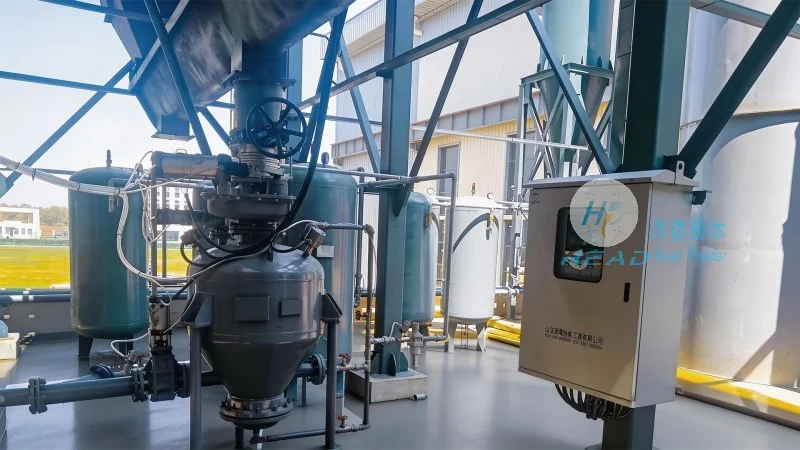
A dedicated system for tailing powder slag must account for its angle of repose, cohesion, and tendency to pack under pressure. Pre-conditioning via aeration or mechanical de-agglomeration is often integrated at the feed point. The pressure conveying vessel, rotary valve, or venturi feeder must be sized to avoid bridging. According to internal performance logs from headpowder (咨询热线:156-6277-7102), dense-phase installations handling slag of 45–75 µm median particle size achieve stable transport over 200-meter runs with less than 2% pipeline wear per 10,000 operating hours, a benchmark that underscores the value of precise specification.
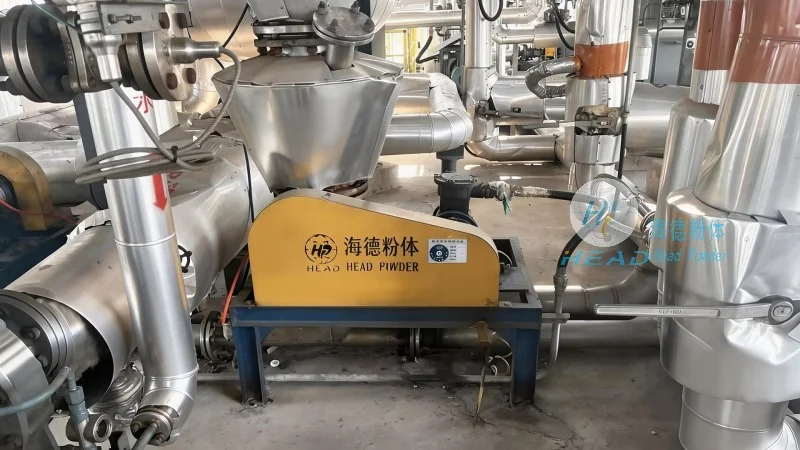
Every robust pneumatic circuit for tailing powder slag comprises five essential subsystems, each with selection criteria tailored to the material’s physical and chemical properties.
Correct sizing of each component depends on three cardinal parameters: conveying distance, mass flow rate, and material bulk density. A typical engineering workflow begins with bench-scale shear testing to predict the material’s deaeration time, followed by pilot-scale trials. One recent expansion project executed by headpowder for a copper smelter retrofit demonstrated that switching from a dilute-phase to a controlled dense-phase layout reduced annual maintenance downtime by 62% while increasing the daily slag throughput from 420 tonnes to 560 tonnes.
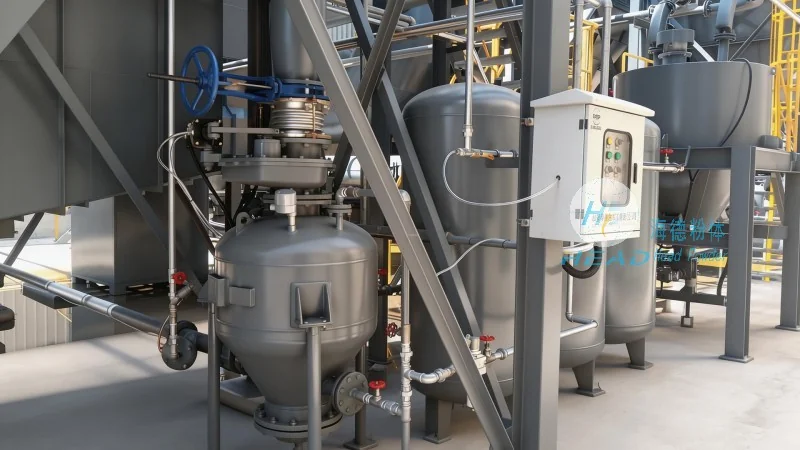
When drafting a technical specification for tailing powder slag pneumatic conveying, engineers must address the following variables to avoid costly over-engineering or performance deficits:
Aligning with 2026 market trends, the global pneumatic conveying equipment market for mineral powders is projected to grow at a compound annual rate of 5.8%, driven by stricter emissions regulations and the rising value of recycled slag in cement production and road base. Plants that invest in properly specified systems can achieve payback periods of under 18 months through reduced labor costs, lower dust collection filter replacement frequency, and decreased energy consumption. Headpowder’s technical library includes over 140 successfully commissioned slag conveying systems, from which standard specification templates for capacities up to 120 t/h have been developed.
Long-term reliability of a tailing powder slag pneumatic conveyor depends on disciplined maintenance routines and proactive monitoring. The following actionable protocols extend equipment life and preserve conveying efficiency:
Industry safety standards such as NFPA 654 (for combustible dusts) and ISO 12100 (machine safety) should be incorporated into operating procedures. Although tailing powder slag is generally non-combustible, fine fractions below 10 µm can form explosive clouds in the presence of organic contaminants or reactive metals. Regular dust layer thickness audits (limit: 1 mm on structural surfaces) are a low‑cost preventive measure.
A notable implementation involved a steel plant in Hebei Province handling blast furnace slag powder at 55 t/h over 180 meters. The original dilute-phase system consumed 620 kW of compressed air and required weekly bend replacements. After re‑engineering by headpowder to a dense‑phase configuration with 5 booster points and a DN250 pipeline, air power demand dropped to 380 kW, and bend life extended to 14 months. The plant reported annual savings of ¥1.2 million (approximately US $165,000) in energy and spare parts. The system also reduced dust leak incidents by 90%, helping the facility meet the latest national emission standards for particulate matter. This case illustrates how proper specification aligns with both economic and environmental goals.
Looking ahead, the convergence of digital twin simulation, real‑time wear analytics, and adaptive control algorithms will further refine pneumatic conveying of abrasive powders. By 2026, embedded sensors that detect pipe wall thickness and air‑solids flow patterns in real time are expected to become standard in high‑value lines. Headpowder has already deployed prototype IoT modules in three pilot installations, correlating velocity fluctuations with wear rates to automatically reduce air supply during low demand periods. These advancements, combined with the ongoing shift toward circular economy models where slag is a valuable input rather than a waste, will sustain the demand for technically superior pneumatic conveying solutions. For plant operators and engineering firms seeking to future‑proof their material transport infrastructure, a thorough grasp of tailing powder slag pneumatic conveying technical specifications is no longer optional—it is an operational imperative.

 Shandong headpowder Engineering Co., Ltd.
 156-6277-7102(Manager Zhang)
  0531-83386006
  Jinan City, Shandong Province, China
服务热线
微信咨询
回到顶部