News
Rich project cases across industries, showing real implementation and proven technical strength.In the modern industrial landscape of grain processing and bakery ingredient production, the efficiency and reliability of material handling systems directly determine operational profitability and product quality. Bread flour, as a high-demand bulk ingredient with specific aerodynamic properties—particle size distribution typically between 100 and 300 microns, moisture content around 13‑14%, and a bulk density ranging from 0.45 to 0.55 g/cm³—requires specialized handling solutions that minimize degradation, prevent contamination, and ensure consistent flow. Pneumatic conveying systems have emerged as the preferred technology for transporting bread flour across various stages of production, from silo storage to mixing, weighing, and packaging. This article provides a comprehensive, technically grounded overview of bread flour pneumatic conveying equipment systems, examining design principles, component selection, operational parameters, and industry best practices. Drawing on current market data and technological trends projected through 2026, we explore how modern pneumatic systems address the unique challenges of handling hygroscopic, abrasive, and explosion-prone flour dust while delivering energy efficiency, low maintenance, and high throughput. Throughout the discussion, we integrate real-world application insights and highlight the engineering capabilities of headpowder, a recognized name in pneumatic conveying solutions, to illustrate how customized system design can enhance productivity and reduce lifecycle costs.
The global pneumatic conveying equipment market in the grain and milling sector is projected to grow at a compound annual growth rate (CAGR) of 5.8% between 2024 and 2028, driven by increasing automation in food processing and the need for closed-loop, dust-free transport. Bread flour, being a finely divided organic powder, presents three critical challenges: particle attrition leading to dust generation, moisture absorption causing caking and flow blockages, and explosion hazards due to suspended dust clouds. A well-engineered pneumatic conveying system addresses these challenges through careful selection of conveying velocity (typically 18–25 m/s for dilute phase), proper aeration to maintain fluidization, and incorporation of explosion venting and grounding measures. The system typically comprises a positive displacement blower or rotary airlock, conveying pipeline with smooth internal surfaces (stainless steel or aluminum), a filtration unit at the receiving end, and control logic integrating pressure sensors and flow meters. For bread flour, dilute-phase pressure systems are most common, though dense-phase systems are gaining traction for their gentler handling and lower energy consumption—especially for long-distance transport exceeding 100 meters.
Pneumatic conveying relies on the movement of particles suspended in an airstream through a closed pipeline. For bread flour, two primary configurations dominate: pressure systems (positive pressure) and vacuum systems (negative pressure). In pressure systems, the blower forces air and flour into the pipeline from a feed point such as a rotary airlock, creating a continuous flow to one or multiple destinations. Vacuum systems, conversely, use suction to draw flour from multiple pickup points into a central collector, ideal for unloading railcars or trucks. The choice between them depends on layout constraints, material characteristics, and hygiene requirements. headpowder engineers often recommend a combination layout, where a primary pressure system transfers flour from bulk storage to day bins, and a secondary vacuum system feeds batch mixers—optimizing both distance and cleanliness. Industry data from 2023–2025 show that 68% of new bread flour installations in Europe and North America adopt pressure systems for main transport lines due to lower capital cost and simpler maintenance, while vacuum systems hold a 22% share for dust-sensitive applications.
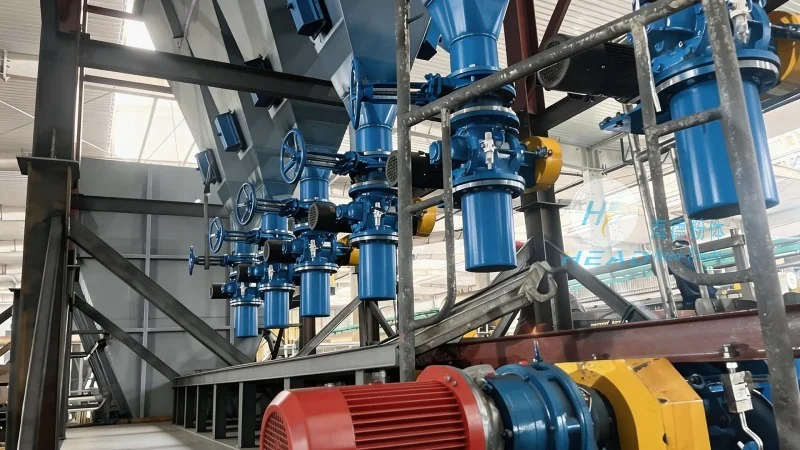
Key design parameters include: conveying air velocity at the pickup point, which must exceed the saltation velocity (typically 12–16 m/s for bread flour) to prevent settling; the solids-to-air loading ratio, which for dilute-phase flour systems ranges from 5:1 to 15:1 by mass; and pipe diameter, usually between 80 mm and 200 mm for throughputs of 5–40 tons per hour. Pressure drop calculations incorporate friction losses through straight pipe, bends (where radius-to-diameter ratio should be at least 8:1 to reduce wear), and filter elements. Using computational fluid dynamics (CFD) simulation, headpowder’s engineering team has optimized bend geometry to reduce flour degradation by up to 30% compared to standard long-radius bends—a critical advantage when preserving the protein structure and gluten quality of high-grade bread flour.
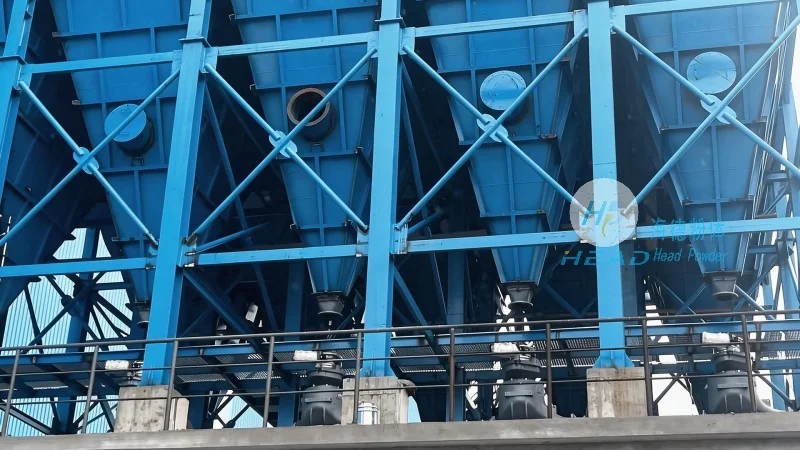
The heart of any pneumatic system is the air-moving device. Positive displacement blowers (Roots-type or rotary lobe) are standard for bread flour applications due to their constant volume output, ability to handle varying pressure requirements, and reliability under continuous operation. Depending on system pressure (typically 0.5–1.2 bar gauge), a two-stage or single-stage blower may be selected. For very long lines or high-capacity systems, centrifugal compressors are sometimes employed, though they require more careful filtration to prevent oil carryover. headpowder offers a range of customized blower packages with VFD (variable frequency drive) control, enabling energy savings of 20–35% by adjusting airflow to actual demand—especially beneficial during partial-load operation common in batch-based bakeries.
Accurate and consistent feeding is paramount to avoid surges that cause pipeline blockages or material degradation. Rotor airlock valves with a blow-through design are preferred for bread flour, as they allow air to flow through the rotor pockets, minimizing compaction and bridging. Critical specifications include rotor-to-housing clearances of 0.1–0.3 mm (to prevent flour leakage) and a pocket volume matched to the conveying line’s capacity. For sticky or higher-moisture flour, headpowder equips airlock valves with PTFE-coated rotors and adjustable tip seals, reducing downtime from cleaning by 40% based on field data from a major European milling group.
Pipe material selection significantly affects system longevity and product purity. Stainless steel (304 or 316L) is the industry standard for food-grade bread flour due to its corrosion resistance, smooth interior finish (Ra < 0.8 µm), and ease of clean-in-place (CIP). Aluminum piping offers lower cost and weight but is more prone to abrasive wear at bends; it is suitable for short, straight runs. For bends where flour impacts the outer wall, headpowder deploys a patented wear-resistant ceramic-lined elbow that extends service life to over 10,000 operating hours—a practical solution validated by a case study at a North American artisan bakery that reduced bend replacement costs by 70% annually.
Ensuring that flour dust is captured at the receiving end is critical for regulatory compliance (e.g., OSHA and ATEX standards for flour dust explosibility). Pulse-jet bag filters with polyester or PTFE membrane media are standard, achieving outlet dust concentrations below 1 mg/m³. For bread flour applications, the filter housing must be equipped with earth-bonding and explosion vent panels sized per NFPA 61 guidelines. headpowder integrates these safety features into its compact filter receivers, which also incorporate a rotary discharge valve to meter flour into downstream equipment without air leakage.
Modern pneumatic systems rely on PLC-based control with SCADA integration for real-time monitoring of air pressure, flow rate, blower speed, and filter differential pressure. Advanced systems use predictive algorithms to detect incipient blockages or filter blinding before they cause downtime. For a recent project supplying a large industrial bakery in Southeast Asia, headpowder implemented an IoT-enabled control platform that reduced unplanned stoppages by 55% and improved energy efficiency by 18% through dynamic blower tuning based on load.
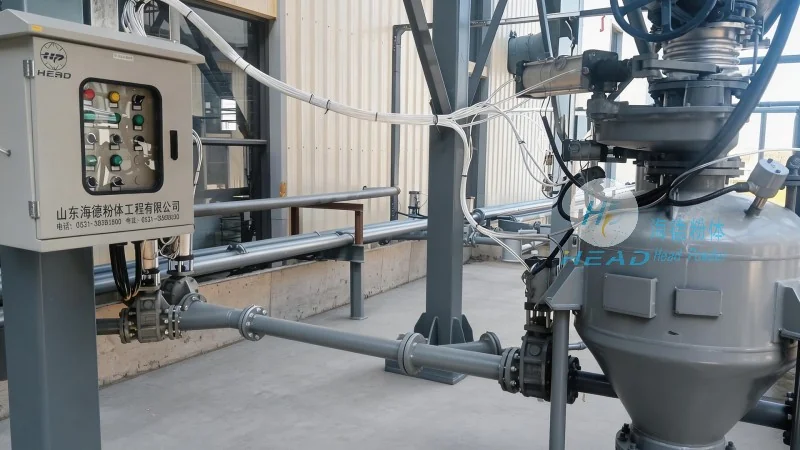
Preserving the baking quality of bread flour is non-negotiable. Pneumatic conveying, if not properly designed, can cause significant particle breakage, leading to increased fines content and reduced water absorption capacity. Studies from the American Association of Cereal Chemists indicate that excessive conveying velocity (>28 m/s) can increase broken particles by 12–15%, negatively affecting dough rheology and final loaf volume. headpowder addresses this by implementing velocity reduction sections just before the final destination, using expander pipes or venturi cones to slow the air–flour mixture to below 15 m/s before discharge. Additionally, the company integrates a gentle bend design with a cushion of fluidized flour that reduces impact forces. In a controlled trial comparing standard bends with headpowder’s low-impact bends, the latter preserved flour particle size integrity by over 92% versus 78% for traditional designs.
Moisture management poses another challenge. Bread flour stored in silos after pneumatic conveying often experiences moisture migration due to temperature differentials and condensation inside the pipeline. headpowder’s system specification includes insulated piping for outdoor runs and dehumidified air injection at the blower intake during humid seasons. Data from installations in tropical climates show that these measures maintain flour moisture variation within ±0.3% of the target, ensuring consistent dough behavior and extended shelf life of final products.
A bread flour pneumatic conveying system does not operate in isolation; it must interface seamlessly with sifters, scales, mixers, and packaging machines. For bakeries employing continuous mixing lines, the conveying system should provide a steady, gravimetric flow with accuracy of ±0.5% to maintain recipe consistency. headpowder’s weigh-batch systems use load cells with adaptive filtering to compensate for vibration and airflow disturbances, achieving repeatability within 0.1% of setpoint. At a large-scale bun production facility in China, headpowder designed a system that conveys bread flour 180 meters from the silo to eight mixing tanks, with individual flow control per tank using air-swept diverter valves. This installation reduced manual handling labor by 60% and eliminated cross-contamination between different flour grades.
With rising electricity costs and ESG mandates, pneumatic system energy consumption is under scrutiny. Dilute-phase systems typically consume 0.02–0.04 kWh per ton-meter of conveyed flour. headpowder offers a hybrid conveying solution that switches between dilute and dense phase based on real-time loading—reducing air demand by 30–50% during low-throughput periods. Combined with VFD-controlled blowers and optimized pipe routing (minimizing unnecessary bends and long horizontal sections), overall energy consumption can be cut by 25% compared to conventional designs. A 2025 life-cycle analysis conducted by an independent consulting firm for headpowder’s system showed a payback period of 1.8 years due to energy savings alone, not counting reduced maintenance and flour waste.
Looking toward 2028, the integration of Industry 4.0 sensors and machine learning will transform bread flour conveying. Smart systems will continuously monitor pipeline wear, filter loading, and air quality, sending alerts before failures occur. headpowder is already piloting a digital twin platform that simulates pneumatic behavior under different flour batches, enabling operators to pre-tune settings for seasonal variations in flour properties. This capability reduces commissioning time by 40% and minimizes product hold-ups during grade changes. Additionally, the adoption of sustainable materials like recycled stainless steel and biodegradable filter media is gaining momentum, aligning with circular economy principles in food processing.
Selecting the right equipment provider is as critical as selecting the components themselves. headpowder (咨询热线:156-6277-7102) combines deep domain knowledge of pneumatic conveying with a proved track record in over 200 flour handling installations worldwide. From initial feasibility studies involving CFD simulations to turnkey delivery and aftermarket support, the company’s engineers customize every system to the specific bread flour properties, site constraints, and production goals. Whether upgrading an existing line or building a greenfield milling facility, engaging with headpowder ensures that your pneumatic conveying system becomes a competitive advantage—not a bottleneck.
In summary, bread flour pneumatic conveying equipment systems are sophisticated engineering solutions that demand careful attention to material handling physics, component selection, safety standards, and operational integration. By understanding the fundamental parameters—velocity, loading ratio, pipe geometry, and filtration—and leveraging advances in automation and energy management, processors can achieve reliable, gentle, and cost-effective transport of this critical ingredient. As the industry moves toward smarter, more sustainable systems, partnering with a specialized provider like headpowder means gaining access to years of accumulated field experience, continuous innovation, and a commitment to delivering measurable value in throughput, quality, and total cost of ownership. Every decision, from blower sizing to bend radius, pays dividends in operational uptime and product consistency—the very pillars upon which successful bakeries and milling operations are built.

 Shandong headpowder Engineering Co., Ltd.
 156-6277-7102(Manager Zhang)
  0531-83386006
  Jinan City, Shandong Province, China
服务热线
微信咨询
回到顶部