News
Rich project cases across industries, showing real implementation and proven technical strength.In the modern agricultural processing and grain storage industries, the efficient and hygienic movement of bulk materials has become a critical operational priority. Among the various bulk handling technologies available, pneumatic conveying systems have emerged as a preferred solution for corn processing facilities, feed mills, ethanol plants, and grain terminals. These systems leverage the principles of air flow to transport corn kernels, corn grits, corn flour, and other corn-based materials through enclosed pipelines, offering distinct advantages in terms of dust control, space utilization, and automation. As the global grain trade continues to expand and environmental regulations become more stringent, the demand for reliable and energy-efficient corn pneumatic conveying system equipment has grown steadily. This article provides a comprehensive, technically grounded introduction to the core components, working principles, design considerations, and application scenarios of corn pneumatic conveying systems, with a focus on how industry professionals can select and optimize equipment for maximum operational performance.
Corn, as a granular material with specific flow characteristics, requires careful engineering when designing a pneumatic conveying solution. The particle size distribution, moisture content, bulk density, and hygroscopic nature of corn all influence the choice of conveying method and system configuration. Generally, pneumatic conveying systems for corn can be categorized into two primary modes: dilute phase conveying and dense phase conveying. Dilute phase systems suspend the corn particles in a high-velocity air stream, typically operating at air velocities between 20 and 30 meters per second, and are well suited for short-distance transfers with moderate throughput requirements. Dense phase systems, on the other hand, move corn at lower air velocities—often below 10 meters per second—using higher pressure differentials to push a compacted plug of material through the pipeline. This approach reduces product degradation and energy consumption, making it an attractive option for fragile corn products or long-distance conveying lines. Understanding these fundamental differences is the first step toward specifying equipment that aligns with the specific needs of a corn processing operation.
A complete corn pneumatic conveying system is composed of several key equipment modules, each serving a distinct function within the material transport chain. The primary components include the material intake device (such as a rotary airlock valve or venturi feeder), the air mover (roots blower, centrifugal fan, or compressor), the conveying pipeline, the separation and filtration unit (cyclone separator and baghouse filter), and the control system. The rotary airlock valve is one of the most critical elements, as it meters the flow of corn into the conveying line while maintaining a pressure seal between the feeding hopper and the pipeline. For corn applications, the rotor design must accommodate the abrasive nature of the grain and prevent shearing or crushing of the kernels. High-quality rotary valves manufactured by experienced suppliers like headpowder are engineered with hardened rotor tips and replaceable wear liners to extend service life in continuous duty environments.
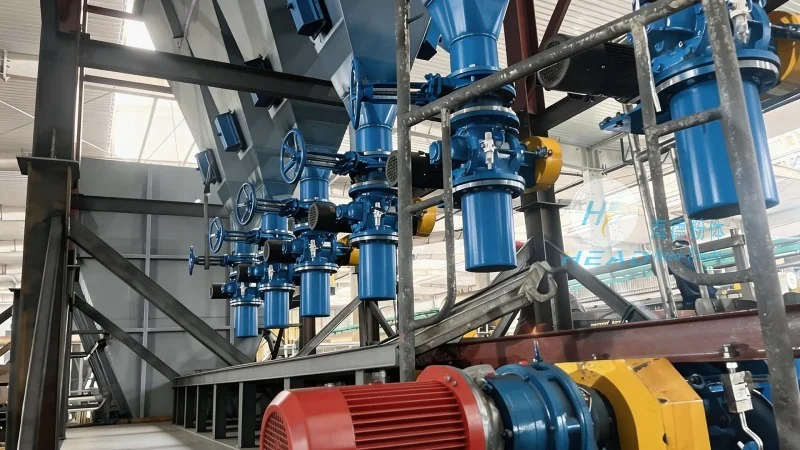
Another essential component is the air mover, which provides the necessary pressure and volume to propel the corn through the pipeline. For dilute phase systems, centrifugal fans or medium-pressure roots blowers are commonly used, offering reliable performance with relatively low operating costs. For dense phase systems, screw compressors or high-pressure roots blowers are required to generate the higher pressures needed to overcome friction and maintain plug flow. The selection of the air mover must be based on accurate calculations of the system's total pressure loss, which includes losses from straight pipe sections, bends, vertical lifts, and the material acceleration zone. In practice, many facilities benefit from a variable frequency drive (VFD) on the air mover, allowing the system to adjust airflow based on real-time conveying conditions. This not only improves energy efficiency but also reduces wear on the pipeline and components.
The conveying pipeline itself must be designed with care to minimize pressure drop and avoid material buildup. For corn pneumatic conveying, standard carbon steel pipes with a smooth internal surface are typically used, although stainless steel may be specified for food-grade or high-moisture applications. The diameter of the pipeline, the radius of bends, and the routing path all influence the system's performance. Long-radius bends are preferred to reduce impact forces that can cause kernel breakage and pipe abrasion. Additionally, the pipeline should incorporate strategically placed access ports and cleanout sections to facilitate maintenance and inspection. At the receiving end, a cyclone separator is employed to decelerate the corn particles and separate them from the conveying air. The effectiveness of the cyclone is determined by its design parameters—inlet velocity, cone angle, and outlet diameter—which must be tailored to the specific particle size and density of the corn. Following the cyclone, a baghouse filter or cartridge dust collector captures any residual fines, ensuring that the exhaust air meets environmental compliance standards.
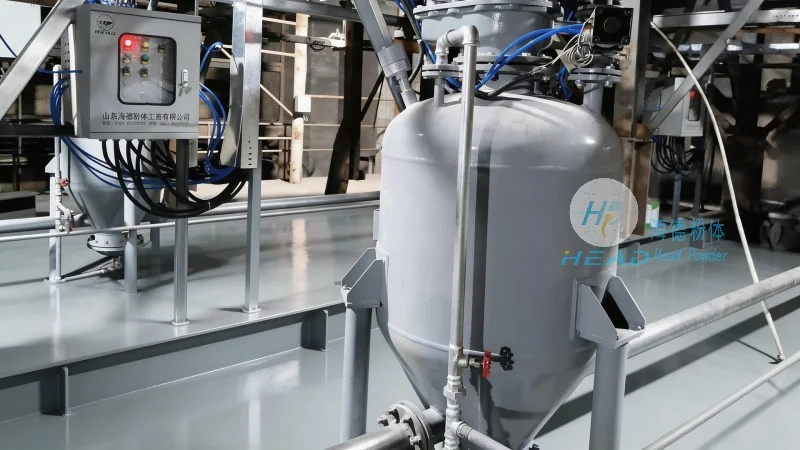
Designing a pneumatic conveying system for corn requires a holistic approach that balances throughput, product quality, energy consumption, and capital investment. One of the first technical parameters to establish is the conveying velocity. For dilute phase systems, the air velocity must be sufficiently high to keep all particles in suspension and prevent saltation, which occurs when heavier particles fall out of the air stream and accumulate at the bottom of the pipe. Conversely, excessively high velocity leads to increased kernel damage, higher energy usage, and accelerated pipe wear. Industry guidelines suggest that for whole corn kernels, a minimum conveying velocity of 20 m/s is necessary in dilute phase, while for corn grits or cracked corn, slightly lower velocities may be acceptable. In dense phase systems, the conveying velocity is intentionally kept below the saltation velocity, with the material moving as a series of plugs. The key design challenge becomes managing the pressure fluctuations that occur as plugs form and break, which requires robust control logic and properly sized blow tanks or pressure vessels.
Material degradation is a major concern in corn pneumatic conveying, as broken kernels and fines reduce product value and create dust hazards. The degree of breakage is influenced by the number of bends, the conveying velocity, and the impact forces at pipe walls and fittings. To minimize degradation, system designers often incorporate larger bend radii—typically 10 to 15 times the pipe diameter—and use wear-resistant materials such as ceramic-lined elbows at high-impact areas. Additionally, the use of dense phase conveying technology has gained significant traction in recent years, particularly for applications where maintaining kernel integrity is paramount. According to industry data from 2025, facilities that have converted from dilute phase to dense phase conveying report a 40% to 60% reduction in kernel breakage, along with a corresponding decrease in dust generation. Headpowder has successfully deployed multiple dense phase systems for corn processing clients across mid-western grain hubs, achieving consistent throughput with minimal product degradation.
Another critical factor is the moisture content of the corn. Corn harvested at high moisture levels (above 15%) exhibits significantly different flow behavior compared to dry corn. Wet corn tends to stick to pipe walls, cause bridging in hoppers, and increase the overall energy required for conveying. In humid climates or during rainy seasons, moisture management becomes a system design priority. Dehumidified conveying air, insulated pipelines, and gentle acceleration zones can help mitigate these issues. For facilities that process both dry and wet corn, a flexible system design with adjustable airflow and multiple feed points allows the same infrastructure to handle varying material conditions. Headpowder’s engineering team typically performs a detailed material characterization at the project outset, testing the specific corn variety under actual operating conditions to validate design assumptions before finalizing the equipment configuration.
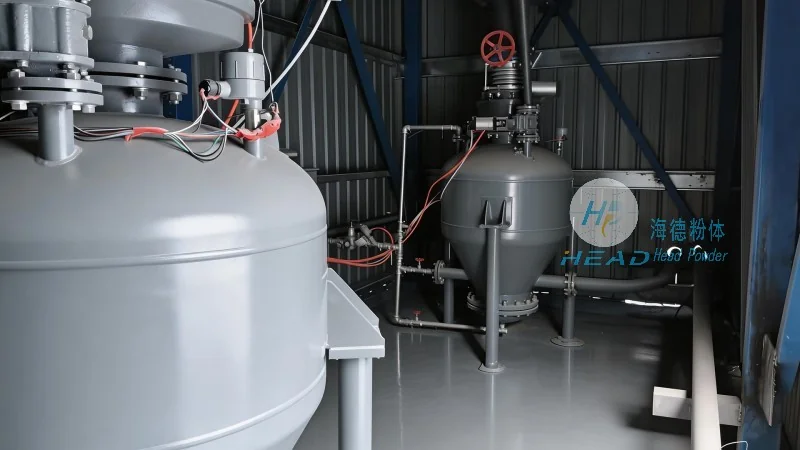
Modern corn pneumatic conveying systems are increasingly integrated with advanced automation and monitoring technologies to enhance reliability and reduce labor intervention. Programmable logic controllers (PLCs) coordinate the sequencing of rotary valves, air mover start-stop, diverter gates, and filter cleaning cycles. Pressure transmitters and flow sensors placed along the pipeline provide real-time feedback, allowing the control system to detect blockages, leaks, or unusual pressure drops. For example, a sudden increase in pressure drop may indicate a partial blockage, prompting the system to initiate a purge cycle or reduce feed rate. This proactive approach to system management minimizes unplanned downtime and protects downstream equipment from damage. Many headpowder-installed systems come with a remote monitoring interface, enabling plant managers to view performance dashboards on mobile devices and receive alerts for maintenance events.
Energy optimization is another area where technology-driven improvements have delivered measurable benefits. Traditional pneumatic conveying systems often operate at fixed speed, consuming maximum power regardless of actual throughput. By incorporating VFDs on blowers and fans, the system can modulate air flow to match real-time demand. For typical corn conveying applications, this results in energy savings of 25% to 40% compared to constant-speed operation. Additionally, the use of high-efficiency cyclones and low-pressure-drop filters reduces the overall power requirement of the air mover. Headpowder has documented case studies where clients achieved a return on investment within 18 months solely from energy savings after upgrading to a VFD-controlled dense phase system. Such empirical data reinforces the value of investing in well-engineered equipment from a reputable manufacturer.
Maintenance requirements for corn pneumatic conveying systems are straightforward but must be performed on a consistent schedule to ensure longevity. The rotary airlock valve should be inspected regularly for wear on the rotor tips and housing seals. Pipeline sections, particularly at elbows and tees, should be checked for thinning or pinholing. Filter bags or cartridges need to be replaced based on differential pressure readings, typically every 6 to 12 months depending on dust loading. Headpowder provides comprehensive maintenance training for client operators and offers spare parts kits that include commonly replaced items such as gaskets, bearings, and filter elements. This support structure helps facilities maintain peak performance and avoid costly emergency repairs.
Corn pneumatic conveying systems are deployed across a wide range of industrial segments. In dry mill ethanol plants, whole corn is conveyed from storage silos to hammer mills or roller mills for size reduction. The ability to transfer corn over long distances without intermediate handling reduces labor costs and eliminates dust exposure for workers. In animal feed manufacturing, corn is one of the primary ingredients and must be accurately proportioned into mixing batches. Pneumatic conveying allows for precise metering and rapid transfer between multiple bins, supporting high-speed production lines. For corn flour and corn grits processors, the gentle handling afforded by dense phase conveying is especially valuable, as it preserves the particle size distribution required for consistent end-product quality. A recent installation by headpowder for a tortilla chip manufacturer demonstrated that switching from mechanical conveyors to a closed-loop pneumatic system reduced spillage by 90% and improved sanitation compliance for third-party audits.
Looking ahead, the corn pneumatic conveying equipment market is expected to grow at a compound annual rate of 5.2% through 2028, driven by expansion of the global biofuel industry and increasing automation in grain handling. Environmental, social, and governance (ESG) considerations are also pushing companies to adopt enclosed conveying technologies that minimize fugitive dust emissions. In the United States, the Environmental Protection Agency’s revised New Source Performance Standards for grain elevators and feed mills have made pneumatic conveying an even more attractive alternative to open belt conveyors. Furthermore, the integration of artificial intelligence for predictive maintenance is emerging as a frontier in bulk material handling. Systems equipped with machine learning algorithms can analyze historical pressure and flow data to predict component failures before they occur, reducing downtime and extending equipment life. Headpowder is actively researching sensor fusion techniques that combine vibration analysis with thermal imaging to provide early warning of bearing wear and blower inefficiency.
Choosing the right supplier for corn pneumatic conveying system equipment is a decision that carries long-term implications for operational efficiency, product quality, and total cost of ownership. A competent manufacturer should offer not only standard equipment but also customized engineering support, process simulation, and after-sales service. Headpowder, with over a decade of focused experience in pneumatic conveying for grain and powder applications, has developed a reputation for delivering robust systems that meet the unique demands of corn handling. The company emphasizes a consultative sales approach, where technical representatives typically conduct on-site assessments to measure existing conveying distances, elevation changes, and throughput targets before proposing a tailored solution. This hands-on methodology ensures that each system is correctly sized and configured from the start, avoiding costly modifications later. For corn processors aiming to upgrade their bulk material handling infrastructure, contacting headpowder’s engineering team is a practical first step. (咨询热线:156-6277-7102)
In conclusion, corn pneumatic conveying system equipment represents a mature yet continuously evolving technology that offers significant advantages over mechanical conveying alternatives. By understanding the nuances of dilute phase versus dense phase design, selecting the right components, and integrating modern automation, industrial facilities can achieve higher throughput, lower energy consumption, and superior product quality. The industry's trajectory points toward greater automation, tighter environmental compliance, and more intelligent maintenance practices. For any operation involved in corn storage, processing, or distribution, investing in a well-engineered pneumatic conveying system from a trusted partner like headpowder is a strategic move that pays dividends in reliability and competitive performance. With proper design and ongoing support, these systems will continue to serve as the backbone of efficient grain logistics for years to come.

 Shandong headpowder Engineering Co., Ltd.
 156-6277-7102(Manager Zhang)
  0531-83386006
  Jinan City, Shandong Province, China
服务热线
微信咨询
回到顶部