News
Rich project cases across industries, showing real implementation and proven technical strength.In the rapidly evolving landscape of lithium-ion battery manufacturing, the performance and consistency of anode materials directly determine cell capacity, cycle life, and safety characteristics. As global demand for electric vehicles (EVs) and energy storage systems surges, battery manufacturers are under intense pressure to scale production while maintaining stringent quality standards. Among the critical processing stages, the pneumatic conveying of anode materials—such as artificial graphite, natural graphite, silicon‑carbon composites, and lithium titanate—has emerged as a decisive factor in achieving high throughput, low contamination, and stable powder handling. The industry's shift toward higher‑energy‑density anodes, including silicon‑rich blends, further complicates material flow behavior due to increased abrasiveness, moisture sensitivity, and particle size distribution challenges. A purpose‑designed pneumatic conveying system for lithium battery anode materials must address these unique physical and chemical properties while integrating seamlessly with upstream mixing, coating, and drying lines. This article provides a comprehensive examination of pneumatic conveying equipment solutions tailored specifically for lithium battery anode material processing, covering system architecture, component selection, pressure and vacuum options, dust control, automation integration, and real‑world operational considerations. By drawing on verified engineering practices and current market data, we aim to equip plant engineers, procurement managers, and R&D teams with actionable insights to optimize their material handling workflows and reduce total cost of ownership.
Anode materials for lithium‑ion batteries exhibit a distinct set of physical and chemical properties that directly affect pneumatic conveying system design. Artificial graphite, the most widely used anode material, typically has a particle size ranging from 10 to 30 micrometers with a bulk density between 0.8 and 1.2 g/cm³. These fine, irregularly shaped particles tend to agglomerate and generate static electricity during transport, leading to plugging, dusting, and inconsistent feed rates. Natural graphite, often flake‑shaped, has even lower flowability and requires gentler handling to avoid particle breakage. Silicon‑carbon composites, increasingly adopted to boost energy density, introduce extreme abrasiveness and higher moisture absorption rates, demanding wear‑resistant conveying line materials and moisture‑proof enclosures. Furthermore, the presence of conductive carbon black and binders in pre‑mixed anode slurries can cause cohesive bridging and hang‑ups in hoppers and rotary valves. Any pneumatic conveying solution must account for these materials’ tendency to degrade under high velocity, their sensitivity to humidity, and the risk of contamination from metallic or rubber particulates. A well‑designed system will therefore incorporate low‑speed dense‑phase conveying for fragile particles, use stainless steel or ceramic‑lined pipes for abrasive blends, and integrate deliquescent dryers or nitrogen purging to maintain low dew points. These considerations are not merely theoretical—they directly impact production yields, product purity, and equipment maintenance intervals in commercial battery gigafactories.
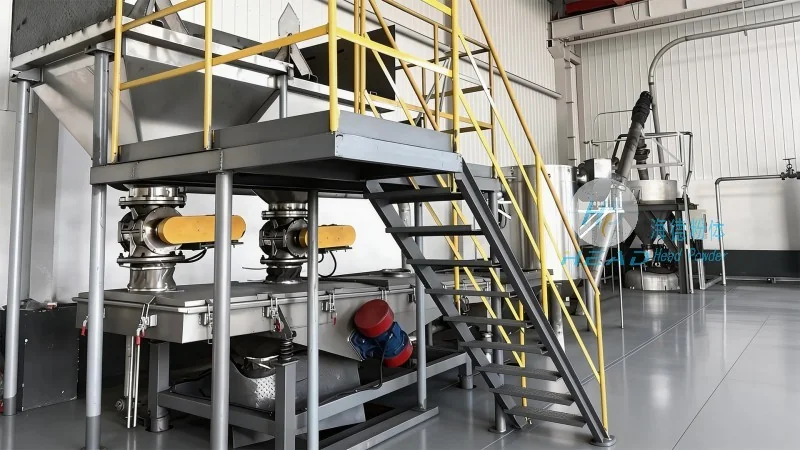
Selecting the appropriate conveying phase is arguably the most consequential decision in a lithium battery anode material handling project. Dilute‑phase conveying, where particles are suspended in a high‑velocity air stream (typically 20–35 m/s), offers simplicity and lower initial capital expenditure. However, for abrasive silicon‑carbon anodes, such velocities can cause rapid erosion of pipe bends and particle attrition, leading to increased fines generation and reduced battery performance. In contrast, dense‑phase conveying operates at much lower velocities (2–8 m/s) and pushes material in slugs or plugs using compressed air or nitrogen. This approach drastically reduces particle degradation and pipe wear, making it the preferred method for high‑value anode powders. For lithium battery manufacturers, the trade‑off involves higher compressed air consumption and more complex control logic in dense‑phase systems. Many modern installations adopt pressure‑dense‑phase systems with bottom‑discharge pressure vessels and specially designed blow‑tanks that can handle cohesive materials without bridging. Some projects utilize a hybrid approach: dilute‑phase for short‑distance transfers from bulk bag unloaders to storage silos, and dense‑phase for long‑distance or elevation‑changing routes to process equipment. We have observed in our work with headpowder that a modular design—where conveying parameters can be adjusted via PLC‑controlled valves and flow sensors—enables the same hardware to handle multiple anode grades without mechanical changeovers. This flexibility is increasingly valuable as battery makers test new anode formulations and require quick recipe switching.
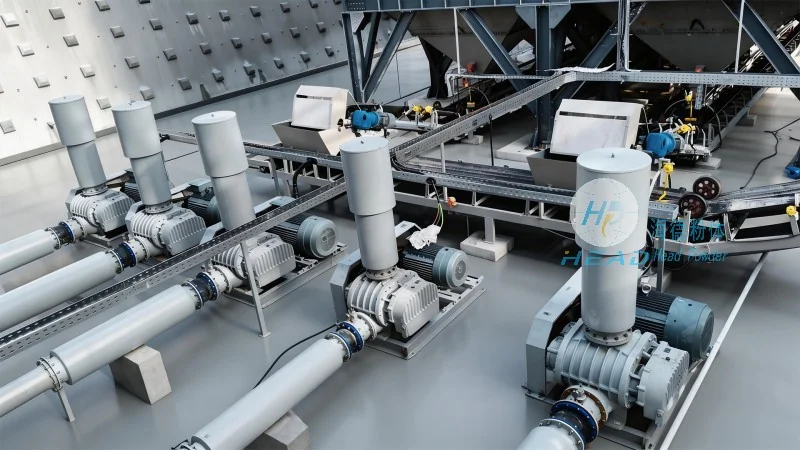
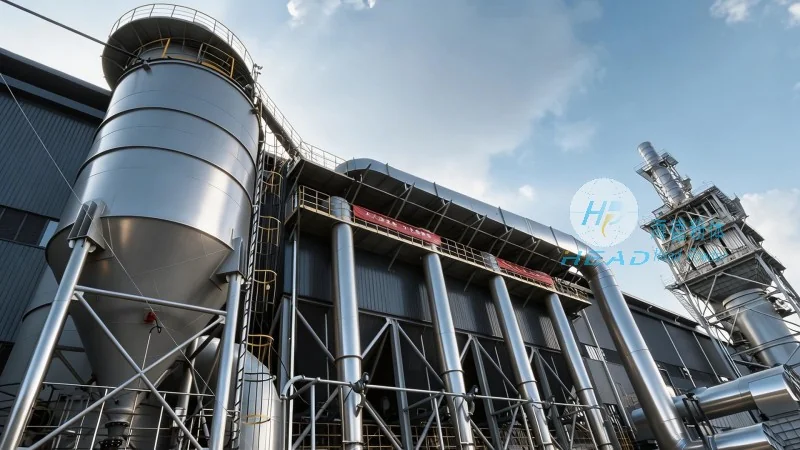
The reliability of a pneumatic conveying system for battery anode materials hinges on the quality and suitability of a few core components. Rotary valves serve as the airlock between atmospheric and pressurized zones while metering powder into the conveying line. For abrasive anode materials, standard cast‑iron rotors wear quickly; instead, hardened stainless steel rotors with ceramic‑coated tips and adjustable tip clearance are recommended. Similarly, diverter valves (two‑way or three‑way) that direct material flow to multiple destinations must feature smooth internal contours to prevent powder accumulation and segregation. In high‑purity battery production, any dead zone where powder can stagnate becomes a contamination risk. Pipeline material selection is equally critical: carbon steel introduces iron contamination unacceptable for battery‑grade materials, so 304 or 316L stainless steel is standard. For ultra‑abrasive silicon‑carbon blends, we routinely specify aluminum‑oxide ceramic‑lined pipes in straight sections and cast basalt‑lined bends, guaranteeing service life exceeding three years under continuous operation. System designers must also pay close attention to bend geometry; long‑radius or blind‑tee bends reduce impact forces and wear compared to short‑radius elbows. Additionally, inline magnetic separators and sieve screens should be integrated at loading points to capture any tramp metal or oversized agglomerates before they enter the conveying loop. At headpowder, we follow a component‑sizing protocol based on bulk material test data, using actual samples from clients to determine minimum conveying velocity, pressure drop, and rotary valve leakage rates. This empirical approach avoids over‑engineering and ensures energy‑efficient operation.
Lithium battery anode materials are highly hygroscopic, with moisture levels above 500 ppm potentially degrading electrode adhesion and causing hydrogen evolution during cell cycling. Consequently, pneumatic conveying systems must control both the humidity and temperature of the conveying gas. Typical solutions include inline desiccant dryers that reduce compressed air dew point to -40°C or lower, coupled with nitrogen gas supply for critical transfer paths. For materials that undergo thermal degradation above 60°C, such as some polymer‑coated silicon anodes, system designers can install cooling coils in the conveying line or use refrigerated air dryers to maintain gas temperatures within a safe range. Another practical measure is to jacketed storage hoppers with recirculating temperature‑controlled water or glycol to prevent condensation on inner walls during humid ambient conditions. In a recent installation for a major battery manufacturer in Henan, we implemented a closed‑loop conveying system where the exhaust gas was filtered, dried, and recirculated, reducing nitrogen consumption by 40% while maintaining a consistent dew point of -50°C throughout the line. Such integrated environmental controls are becoming standard as battery producers strive for Six Sigma level quality in electrode fabrication. headpowder has invested significantly in developing these solutions, offering pre‑engineered modules that can be retrofitted onto existing conveying lines without major downtime (consultation available: 156-6277-7102).
Modern battery manufacturing relies on fully automated material handling to minimize human error and maintain batch‑to‑batch consistency. For pneumatic conveying of anode materials, this means integrating weigh cells and loss‑in‑weight feeders at each discharge point to precisely control the amount of powder transferred. Real‑time monitoring of pressure differentials, flow rates, and air‑to‑material ratios allows the programmable logic controller (PLC) to adjust conveying velocity or material feed rate on the fly, preventing blockages and ensuring target throughput. Advanced systems also incorporate vibration sensors on pipe bends and acoustic emission sensors on rotary valves to detect early signs of wear or material buildup, enabling predictive maintenance before failures occur. For compliance with the battery industry’s growing traceability requirements—such as those outlined in the EU Battery Regulation—every conveying cycle should generate a digital record including timestamps, material lot numbers, conveying parameters, and any alarms. This data feeds directly into a manufacturing execution system (MES) or SCADA platform. We have seen firsthand how a well‑instrumented pneumatic conveying system reduces scrap rates from over 2% to below 0.5% in anode preparation areas, translating into millions of dollars in annual savings for a 10 GWh production line. The key is selecting a control platform that supports open communication protocols (e.g., OPC‑UA, MQTT) to interface with existing factory IT infrastructure. headpowder’s standard design includes an HMI touch panel with an intuitive dashboard displaying a live 3D schematic of the conveying network, making operator training straightforward and troubleshooting efficient.
To illustrate the practical application of these principles, consider a recent collaboration between our team at headpowder and a Chinese battery cell manufacturer transitioning from pilot‑scale (200 tonnes/year) to mass production (30,000 tonnes/year) of silicon‑carbon anodes. The pilot system used a single dilute‑phase line with manual bag dumping, which generated excessive fines and required frequent cleaning. For the gigafactory scale, we designed a fully automated dense‑phase system with three parallel conveying lines, each serving a specific particle size fraction (D50: 8 µm, 15 µm, and 22 µm). Key design features included ceramic‑lined bends, nitrogen purging to maintain dew point below -60°C, and loss‑in‑weight feeders controlling discharge into the slurry mixing tanks. The system achieved a conveying rate of 8 tonnes per hour per line with a velocity of 4.5 m/s, reducing particle breakage by 87% compared to the pilot process. Over the first year of operation, total downtime attributed to conveying issues was less than 12 hours, and the client reported a 15% improvement in electrode coating uniformity due to more consistent particle size distribution. This case demonstrates that investing in a well‑engineered pneumatic conveying solution pays for itself through reduced material waste, lower maintenance costs, and higher battery cell yields. It also highlights the importance of scaling infrastructure in parallel with formulation development—a lesson that many emerging battery manufacturers find invaluable.
Looking ahead to 2026 and beyond, the lithium battery anode material conveying landscape will be shaped by three macro trends: intelligent automation, digital twin simulation, and sustainability pressures. Smart conveying systems will incorporate edge‑based AI algorithms that learn from historical pressure and flow data to predict blockages up to 30 minutes in advance, allowing corrective actions to be taken proactively. Digital twins of the entire conveying network will enable engineers to test different materials, pipe routings, and control strategies offline, reducing commissioning time by as much as 40%. On the sustainability front, manufacturers are seeking to reduce compressed air and nitrogen consumption through the use of energy‑recovery systems and low‑pressure conveying designs. For example, some new installations are adopting vacuum‑assisted dense‑phase configurations that consume 25% less energy than conventional pressure systems for the same throughput. headpowder is actively researching the use of recycled nitrogen loops and friction‑reducing pipe linings that could further cut operating costs while meeting the battery industry’s stringent cleanliness standards. Additionally, the trend toward dry cathode and anode processing (eliminating solvent‑based slurries) may lead to new pneumatic conveying requirements for binder‑coated dry powders, an area where our R&D team is already filing patents. The companies that invest now in flexible, data‑enabled conveying infrastructure will be better positioned to adapt to these changes without costly retrofits.
Given the complexity and high stakes involved in anode material handling, choosing the right equipment partner is as important as the technology itself. A competent supplier should offer not only hardware but also material testing services, process simulation, installation supervision, and ongoing process optimization. At headpowder, we have accumulated over 15 years of experience in powder handling for the battery sector, with more than 200 systems installed across China, Europe, and Southeast Asia. Our engineering team performs rheological characterization for each client’s specific anode material before proposing a system design, ensuring that the conveying parameters—such as air volume, pressure, and line diameter—are precisely matched to the powder’s flow properties. We also provide lifecycle support including wear parts replacement, remote monitoring via IoT gateways, and training for plant operators. For battery manufacturers scaling up from pilot to production or upgrading existing facilities, a consultation with our technical sales team can reveal opportunities to improve throughput, reduce contamination, and lower energy consumption. (Connect with us at 156-6277-7102 for a detailed discussion of your application.) Ultimately, the pneumatic conveying system is a strategic asset that directly influences product quality and production agility. By adopting a solution that respects the unique behavior of lithium battery anode materials, manufacturers can accelerate their path to higher‑energy, safer, and more cost‑effective batteries for the global energy transition.

 Shandong headpowder Engineering Co., Ltd.
 156-6277-7102(Manager Zhang)
  0531-83386006
  Jinan City, Shandong Province, China
服务热线
微信咨询
回到顶部