News
Rich project cases across industries, showing real implementation and proven technical strength.As the global demand for lithium-ion batteries continues to surge, driven by the rapid expansion of electric vehicles, energy storage systems, and portable electronics, the production of cathode materials has become a critical focus for manufacturers. Among these materials, lithium iron phosphate (LiFePO₄) has emerged as a preferred choice due to its inherent thermal stability, long cycle life, and cost-effectiveness. However, the efficient and safe handling of LiFePO₄ powder during the manufacturing process presents significant engineering challenges. The material is fine, cohesive, and often prone to degradation if not conveyed under controlled conditions. This is where a specialized pneumatic conveying system tailored for lithium iron phosphate becomes essential. A well-designed solution not only ensures continuous, dust-free, and gentle transport of the powder but also maintains its chemical integrity and particle size distribution. In today's competitive battery material market, manufacturers are increasingly seeking reliable, automated, and energy-efficient conveying technologies that minimize material loss and contamination risks. This article provides an in-depth technical overview of a pneumatic conveying system specifically engineered for lithium iron phosphate powders, covering system architecture, key components, performance parameters, and practical considerations for deployment. The insights presented here are based on years of field experience and engineering validation at headpowder, a company dedicated to advanced powder handling solutions.
The lithium iron phosphate battery market has witnessed remarkable growth, with global installed capacity projected to exceed 800 GWh by 2026. This expansion directly drives the demand for high-quality LiFePO₄ cathode materials, which must be produced with precise control over powder characteristics. During the production process, raw LiFePO₄ is typically synthesized, washed, dried, and then subjected to milling, blending, and finally transport to packing stations or electrode coating lines. Pneumatic conveying is the preferred method for moving such powders because it offers closed-loop operation, reduces manual handling, and prevents environmental contamination. According to industry data, more than 70% of LiFePO₄ production facilities now employ pneumatic conveying systems, with a shift toward dense-phase transport to minimize particle breakage and energy consumption. By 2026, it is anticipated that intelligent monitoring and real-time adjustment of conveying parameters will become standard. Manufacturers must also comply with evolving safety regulations regarding dust explosion prevention, as LiFePO₄ powder, while less reactive than some alternatives, still requires careful handling under proper inert gas conditions.
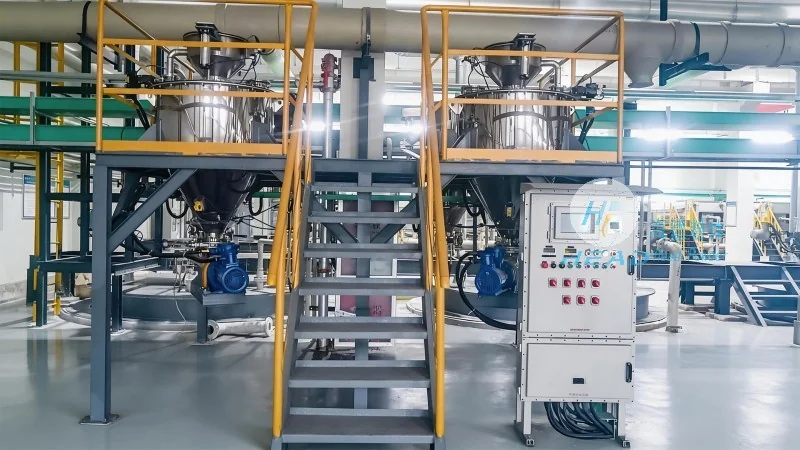
Pneumatic conveying uses a gas stream—usually air, nitrogen, or a mixture—to transport particulate solids through a pipeline. For lithium iron phosphate, which has an average particle size typically between 2 and 10 micrometers, the choice between dilute-phase and dense-phase conveying is crucial. Dilute-phase systems operate at high gas velocities (typically 20–40 m/s) and low solid-to-gas ratios, making them suitable for short distances and small capacities. However, the high velocity can cause attrition, leading to fines generation and potential degradation of the active material. Dense-phase conveying, operating at velocities below the saltation point (often 2–8 m/s) and using higher solid loadings, is far gentler on friable powders. For LiFePO₄, dense-phase systems are strongly recommended because they preserve particle morphology and prevent unwanted agglomeration. The flow regime in dense-phase conveying can be either moving bed or plug flow, depending on the powder's cohesion and the system's design pressure. headpowder has developed proprietary algorithms to predict flow behavior based on material characterization, ensuring that each system is precisely calibrated for the specific batch of LiFePO₄.
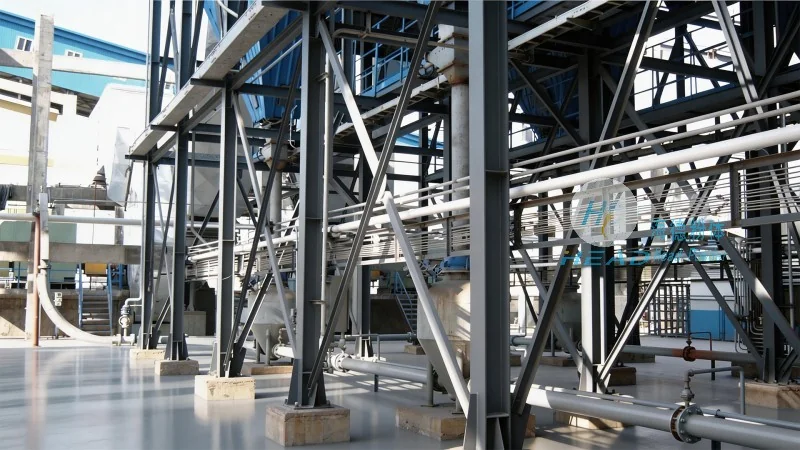
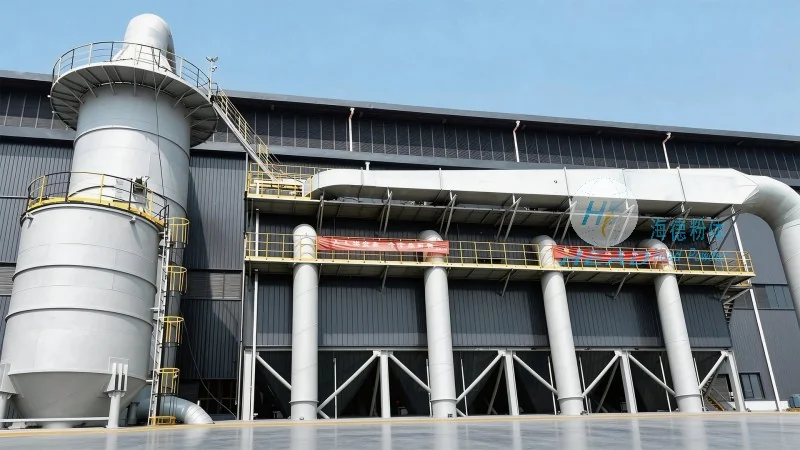
A complete pneumatic conveying system for lithium iron phosphate comprises several integrated modules, each engineered to perform a specific function while maintaining material integrity. The key components include a feed hopper with integrated discharge aid, a rotary valve or screw feeder for controlled material introduction, a conveying pipeline with optimized bends and straight sections, a gas supply unit with filtration and pressure regulation, and a receiving vessel equipped with a high-efficiency cyclone or bag filter for product separation. The conveying line diameter is typically between 50 mm and 200 mm, depending on throughput requirements, which can range from 100 kg/h for pilot plants to over 20 t/h for large-scale production. All contact surfaces should be made of stainless steel 304 or 316L with a surface finish Ra ≤ 0.8 μm to minimize adhesion and facilitate cleaning. Additionally, explosion venting panels, grounding connections, and inert gas blanketing are mandatory when handling LiFePO₄ in closed-loop systems to meet ATEX or NFPA standards.
Designing a reliable pneumatic conveying system for LiFePO₄ requires addressing several material-specific challenges. First, the powder's high angle of repose (typically 40–55°) and poor flowability demand the use of vibratory bin activators or fluidizing pads at the hopper outlet to prevent bridging and ratholing. Second, the material is mildly abrasive, so pipeline elbows should be constructed with thick-walled wear-resistant materials or provided with replaceable backing plates. Third, electrostatic charge accumulation during conveying can lead to clumping or spark hazards; therefore, conductive hoses and proper earthing are essential. Fourth, temperature control is critical—LiFePO₄ can degrade at temperatures above 200 °C, and friction during conveying can generate localized heating. Using a dense-phase system with low velocities helps keep temperature rise within 10–20 °C above ambient. headpowder incorporates temperature sensors at multiple points along the pipeline and integrates cooling jackets where necessary. Finally, moisture pickup must be avoided, as humid air can reduce battery performance; the conveying gas should be dried to a dew point of -40 °C or lower when required.
When specifying a pneumatic conveying system for LiFePO₄, several performance parameters must be evaluated to match the production requirements. The conveying capacity (kg/h or t/h) determines the pipe diameter, blower power, and feeder size. The conveying distance (horizontal and vertical) influences the pressure drop and the need for booster stations. Typical pressure ranges for dense-phase systems are 2–6 bar(g), while dilute-phase systems operate at 0.5–2 bar(g). The solid loading ratio (kg solid per kg gas) in dense-phase conveying for LiFePO₄ can be as high as 30:1 to 60:1, resulting in low gas consumption and reduced energy costs. Another critical selection factor is the particle degradation rate. Field tests at headpowder have demonstrated that with optimized dense-phase parameters, the generation of fines (particles below 1 μm) can be kept under 0.5%, compared to 2–3% in conventional dilute-phase designs. Similarly, the bulk density of LiFePO₄ powder, which varies between 0.6 and 1.2 g/cm³ depending on tap density, affects the sizing of storage vessels and the design of the feeding mechanism. For facilities planning to expand capacity in the coming years, a modular system design that allows for easy addition of parallel conveying lines and scalability from 5 t/h to 15 t/h is highly recommended.
A pneumatic conveying system does not operate in isolation; its seamless integration with upstream milling, classification, blending, and downstream packing or electrode coating processes is vital for overall plant efficiency. The system should be equipped with diverter valves and multi-port switching stations to route material to different destinations—such as storage silos, intermediate hoppers, or directly to the slurry mixing tank. For continuous operation, the conveying system must be synchronized with the batch cycle of the mill or dryer. headpowder offers advanced PLC-based control systems that interface with existing DCS (Distributed Control Systems) via standard protocols like Profibus or Modbus. Real-time data on mass flow, pressure, temperature, and gas consumption are logged for traceability and performance optimization. In leading production facilities, this integration has resulted in a 15% reduction in overall material handling downtime and a 10% improvement in yield due to reduced fines generation. Furthermore, the system can be paired with inline sampling ports to allow quality checks without interrupting the material flow, supporting the high-quality standards required for battery-grade LiFePO₄.
Implementing a tailored pneumatic conveying solution for lithium iron phosphate has yielded measurable benefits in commercial-scale operations. For instance, a cathode material manufacturer in East China processing 8,000 tonnes of LiFePO₄ annually faced severe pipeline blockages and high moisture contamination with their existing dilute-phase system. After upgrading to a dense-phase system designed by headpowder, the plant reported a 60% reduction in cleaning frequency and a 40% decrease in compressed air consumption. The new system also featured a nitrogen recirculation loop, lowering nitrogen consumption by 35% and improving workplace safety. In another case, a Korean battery materials company needed to transport LiFePO₄ over a 150-meter distance with multiple elevation changes. The dense-phase solution with intermediate boosters and wear-resistant bends successfully maintained a conveying rate of 12 t/h with less than 0.3% particle breakage over a six-month continuous run. These results underscore the importance of custom engineering—using standardized components is often insufficient to handle the unique characteristics of LiFePO₄. The experience accumulated at headpowder over more than 3,000 installed systems across various industries provides a reliable foundation for delivering robust and durable conveying solutions.
To ensure long-term reliability of a LiFePO₄ pneumatic conveying system, a proactive maintenance schedule should be established. Key components such as rotary valves, filter elements, and pipe bends should be inspected at intervals of 500–2,000 operating hours, depending on the abrasive nature of the powder. Worn parts should be replaced proactively to avoid sudden shutdowns. The filter bags in the receiving cyclone must be changed annually or when the pressure drop exceeds a threshold of 50 mbar. Safety considerations extend to explosion prevention: even though LiFePO₄ has a higher ignition temperature than carbon black or aluminum powder, dust cloud explosion tests at headpowder's lab indicate a Kst value of 150–200 bar·m/s, which requires explosion venting design per EN 14491. Inert gas (nitrogen) blanketing with oxygen level monitoring below 8% vol. is strongly advised. Additionally, automatic shutoff valves and pressure relief devices should be integrated to isolate sections during maintenance. A well-maintained system designed by headpowder can operate for over 15 years with proper care, providing a strong return on investment. For clients seeking turnkey solutions, headpowder also offers remote monitoring and predictive maintenance services, reducing unplanned downtime by up to 30%.
Looking ahead to 2026 and beyond, the evolution of pneumatic conveying for lithium iron phosphate will be shaped by digitalization and sustainability. Smart conveying systems equipped with IoT sensors and machine learning algorithms can self-optimize to maintain steady flow even as powder properties vary with different batches. For example, predictive models can adjust gas velocity and feeder speed based on real-time particle size analysis from inline sensors. Another trend is the adoption of fully closed-loop nitrogen systems with membrane or PSA nitrogen generators, reducing dependency on external gas supplies and lowering operational carbon footprint. headpowder is already piloting a system that recycles more than 90% of the conveying gas, cutting energy consumption by an additional 20%. Moreover, as battery recycling gains momentum, pneumatic conveying will play a role in transporting black mass and other recycled materials. The experience gained from handling pristine LiFePO₄ directly translates to handling these challenging, high-density, and sometimes sticky feedstocks. By staying at the forefront of material testing and flow simulation, headpowder ensures that its clients are equipped with state-of-the-art conveying solutions that meet the rigorous demands of the battery industry’s next growth phase.
The selection and implementation of a lithium iron phosphate pneumatic conveying system is a strategic decision that directly impacts product quality, operational efficiency, and workplace safety. By prioritizing gentle dense-phase transport, precise component engineering, and intelligent control integration, manufacturers can achieve a reliable material handling process that supports the increasing scale of battery production. The technical solution must go beyond generic designs—it must be customized based on the specific physical and chemical properties of the powder, the plant layout, and the throughput targets. Industry data and field results consistently show that properly designed systems reduce material degradation, lower energy consumption, and minimize maintenance interventions. headpowder (咨询热线:156-6277-7102) has demonstrated its capability to deliver such high-performance systems, backed by rigorous testing, extensive field experience, and a commitment to continuous innovation. Whether for a new production line or an upgrade of an existing facility, engaging with a specialized engineering partner ensures that the pneumatic conveying system becomes a value-adding asset rather than a bottleneck. As the global energy transition accelerates, investing in robust, future-proof conveying technology is a decisive step toward competitive and sustainable lithium iron phosphate manufacturing.

 Shandong headpowder Engineering Co., Ltd.
 156-6277-7102(Manager Zhang)
  0531-83386006
  Jinan City, Shandong Province, China
服务热线
微信咨询
回到顶部