News
Rich project cases across industries, showing real implementation and proven technical strength.In the rapidly evolving landscape of powder handling technology, the protein powder pneumatic conveying system has emerged as a cornerstone for manufacturers aiming to maintain product integrity while achieving high throughput. As the global demand for protein-based supplements, sports nutrition, and functional foods continues to surge—projected to exceed USD 45 billion by 2026 according to recent market analyses—the need for reliable, hygienic, and efficient material transport solutions becomes paramount. Pneumatic conveying, leveraging air flow to move fine powders through enclosed pipelines, offers distinct advantages over mechanical conveyors: it eliminates dust leakage, reduces cross-contamination risk, and enables flexible plant layouts. This article provides a comprehensive technical introduction to protein powder pneumatic conveying systems, covering system types, design parameters, component selection, energy efficiency considerations, and industry best practices. Whether you are planning a new production line or upgrading an existing facility, understanding the underlying engineering principles will help you make informed decisions that safeguard product quality and operational profitability. Headpowder, as a specialized provider of powder handling solutions, has accumulated extensive field experience in designing and commissioning such systems for leading nutrition brands worldwide, and we share these insights to support your technical evaluation.
The unique physical and chemical properties of protein powders—including low bulk density (typically 0.3–0.6 g/cm³), high fat content (2–8% depending on source), hygroscopicity, and electrostatic charge buildup—pose specific challenges for pneumatic conveying. Unlike inert minerals or plastics, protein powders are sensitive to heat, shear, and moisture, which can cause denaturation, agglomeration, or off-flavor development. Therefore, a conventional dilute-phase system operating at high velocity (20–30 m/s) may lead to particle attrition and excessive fines generation, reducing yield and causing downstream segregation. Conversely, dense-phase conveying at low velocity (3–8 m/s) can significantly reduce degradation but requires careful pressure and pipeline design to avoid plugging. Recent advances in sensor technology and PLC-based flow control have made it possible to optimize conveying conditions in real time, balancing gentle handling with acceptable throughput. In 2026, the industry trend leans toward modular, sanitary-design systems that comply with FDA, EU, and GMP standards, incorporating features like easy-clean couplings, smooth internal surfaces, and CIP (clean-in-place) capability. Headpowder's engineering team has developed proprietary algorithms that predict particle breakage probability under varying air-to-material ratios, enabling custom-tailored system configurations for whey, casein, soy, pea, and rice protein isolates.
A typical protein powder pneumatic conveying system consists of several key modules: a material intake device (such as a rotary valve or venturi feeder), a conveying pipeline, a separation device (cyclone or bag filter), and an air mover (positive displacement blower or roots-type compressor). The choice between positive-pressure and vacuum (negative-pressure) systems depends on the number of pick-up points, the required conveying distance, and the plant's space constraints. For short distances (<50 m) with single source and multiple destinations, vacuum conveying is often preferred because it naturally suppresses dust emissions and simplifies filter cleaning. For long-distance transfer (<200 m) or high-capacity lines (1–10 t/h), positive-pressure systems using a rotary airlock feeder and a blower are more energy efficient. Headpowder's typical design for a 2 t/h whey protein line employs a dense-phase positive-pressure configuration operating at 0.8–1.5 bar gauge pressure, with a convey line diameter of DN80–DN100. This setup reduces particle velocity to under 6 m/s at the material entry point, dropping to 4 m/s at the receiver, thereby minimizing fat smearing and protein denaturation.
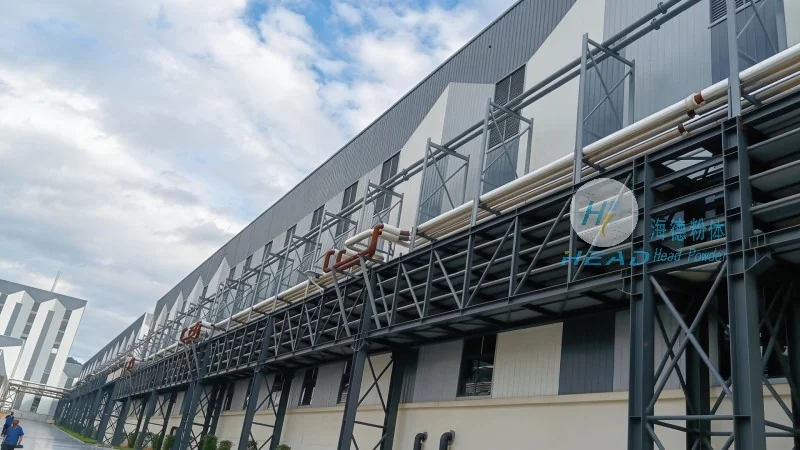
Designing a protein powder pneumatic conveying system requires accurate characterization of the powder's flow properties. Key parameters include: bulk density (both loose and tapped), particle size distribution, angle of repose, cohesion, and permeability. For example, highly cohesive powders like pea protein isolate (tapped density 0.45 g/cm³, cohesion 800 Pa) exhibit strong inter-particle forces that can cause bridging in the feeder hopper. Aeration pads or fluidizing dischargers are often installed to break arches. The saltation velocity—the minimum air velocity required to keep particles suspended—must be calculated using empirical correlations such as the Zenz or Rizk equation, typically yielding values between 4 and 10 m/s for protein powders. Operating below this velocity leads to pipeline blockage; operating far above it causes degradation and increased pipe wear. Headpowder's design methodology combines computational fluid dynamics (CFD) simulations with validated pilot-scale testing, ensuring that the system operates at the optimal velocity window for each specific protein type. For instance, a recent project for a soy protein concentrate facility achieved a 12% reduction in energy cost and a 19% decrease in fines generation after switching from dilute-phase to optimized dense-phase conveying.
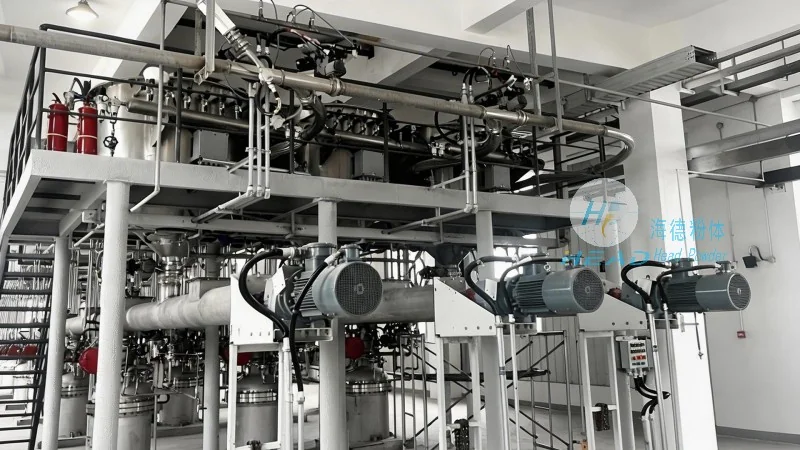
Pressure drop calculations are equally critical. The total pressure loss comprises losses from straight pipe, bends, vertical lifts, and feeder components. A 100-meter long line with eight 90-degree bends typically exhibits a total pressure drop of 0.6–1.2 bar, depending on solid loading ratio (mass of powder per mass of air). Loading ratios for dense-phase protein conveying range from 10 to 30 kg/kg, whereas dilute-phase operates at 1–5 kg/kg. Higher loading ratios reduce air consumption and energy per ton, but increase the risk of slugging or blockage if the powder's fluidization characteristics are poor. Headpowder's engineers use proprietary software that accounts for pipe wall friction, particle shape factor, and humidity effects, enabling accurate sizing of blowers and filter areas. In addition, moisture content in the conveying air must be controlled to below 40% RH, especially for hygroscopic whey permeate, which can cake if exposed to damp air. A desiccant dryer or a refrigeration air dryer with a dew point of -20°C is typically specified.
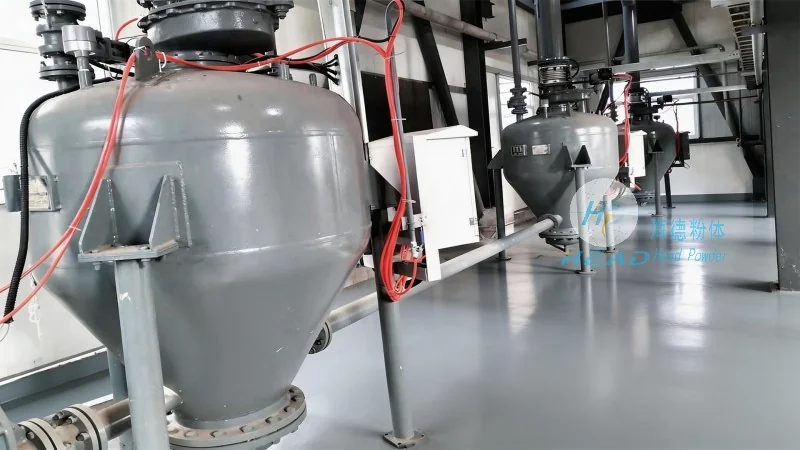
For food-grade protein powder handling, sanitary design is non-negotiable. All contact surfaces must comply with 3-A sanitary standards or EU hygienic design guidelines, featuring crevice-free welds, sloped discharge hoppers (minimum 60° angle), and quick-disconnect tri-clamp fittings. The conveying pipeline should be assembled with ground flanges and gaskets made of FDA-approved EPDM or silicone. To prevent microbial growth, the system must be capable of being fully drained and dried after wash-down cycles. Headpowder offers a CIP-ready option with spray balls installed in the receiver vessel and at strategic points along the line, allowing automated cleaning with hot water (80°C) and mild alkaline solutions. Validation of cleaning effectiveness is performed using ATP swab tests or protein residue analysis, meeting the audit requirements of major certification bodies like BRC or SQF. Furthermore, explosion protection measures must be implemented: protein powders are combustible (Kst values typically 150–300 bar·m/s) and can form explosive dust clouds. ATEX-rated equipment, explosion vent panels, and suppression systems are mandatory in many jurisdictions. Headpowder's systems are designed with passive isolation (flame arrestors) and active suppression (chemical injection) to achieve compliance with Directive 2014/34/EU and NFPA 61.
A North American manufacturer of organic whey protein isolate faced persistent quality issues with their existing dilute-phase system: up to 5% of the product was degraded into fines (particles <10 μm), leading to poor solubility and off-taste complaints. After evaluating multiple vendors, they selected Headpowder to retrofit a dense-phase positive-pressure system tailored to their facility. The project involved replacing the existing 4-inch pipeline with a DN100 ceramic-lined line, installing a VFD-controlled roots blower, and adding a fluidizing hopper with a pinch valve for controlled feeding. The new system operates at a solid loading ratio of 22 kg/kg and a conveying velocity of 5 m/s, reducing fines generation to 1.2% and achieving a throughput increase from 1.8 t/h to 2.4 t/h. Energy consumption dropped by 18%, saving approximately USD 42,000 annually. The plant also benefited from lower noise levels (78 dB vs. previous 92 dB) and simplified maintenance thanks to modular tri-clamp pipe sections. This installation demonstrates how targeted technical improvements—based on accurate powder characterization and proper component sizing—can deliver measurable ROI within 14 months.
Looking ahead, the protein powder pneumatic conveying industry is embracing digitalization and predictive maintenance. In 2026, we expect wider adoption of IoT sensors that monitor pipe wall erosion, filter bag differential pressure, and motor vibration in real time. Machine learning algorithms can predict blockage events up to 30 minutes in advance, allowing operators to adjust air flow or reduce feed rate proactively. Headpowder is actively developing a cloud-based dashboard that aggregates data from multiple conveying lines, providing actionable insights for plant managers to optimize scheduling and reduce downtime. Additionally, the push for carbon neutrality drives interest in energy recovery systems—such as using exhaust air preheaters to recover heat from the blower outlet—and in alternative conveying media like nitrogen for oxygen-sensitive products. These innovations position pneumatic conveying as a sustainable, high-integrity solution for the growing protein market.
Selecting the right pneumatic conveying system for protein powders is a multifaceted decision that demands technical rigor and domain expertise. From initial powder flow testing to commissioning and after-sales support, every stage must be aligned with product quality goals and regulatory standards. Headpowder's team brings over 15 years of applied research in particle technology, combined with practical experience spanning more than 200 projects in the nutraceutical and food sectors. We work closely with clients to conduct in-plant trials, generate process data, and customize solutions that fit existing layouts without compromising hygiene or throughput. If you are evaluating a new protein powder line or seeking to improve your current operation, we invite you to reach out for a confidential technical consultation. (咨询热线:156-6277-7102)

 Shandong headpowder Engineering Co., Ltd.
 156-6277-7102(Manager Zhang)
  0531-83386006
  Jinan City, Shandong Province, China
服务热线
微信咨询
回到顶部