News
Rich project cases across industries, showing real implementation and proven technical strength.In the rapidly evolving landscape of plastic material handling, pneumatic conveying systems have become the backbone of efficient production lines for ABS pellets. As the global demand for high-quality ABS resin continues to grow—projected to reach a market value of over $45 billion by 2026—manufacturers are increasingly seeking reliable, cost-effective, and safe solutions for transferring these hygroscopic and abrasive pellets from storage to processing equipment. At headpowder, we specialize in delivering robust pneumatic conveying technical solutions that address the unique challenges posed by ABS pellets, combining decades of engineering expertise with field-proven designs. This comprehensive guide explores the core principles, key technical parameters, system configurations, and real-world applications of ABS pellet pneumatic conveying, providing you with the insights needed to make informed decisions for your facility.
Pneumatic conveying leverages the kinetic energy of a gas stream—typically air—to transport bulk solids through enclosed pipelines. For ABS pellets, this method offers distinct advantages over mechanical conveyors: reduced maintenance due to fewer moving parts, complete dust containment, flexibility in routing through complex plant layouts, and the ability to handle multiple pick-up and discharge points. The fundamental principle relies on creating a pressure differential between the source and destination, with the conveying gas providing both the motive force and a cushioning effect that minimizes pellet degradation. ABS pellets, known for their hardness but susceptibility to impact damage, require careful velocity management—typically maintained between 15 and 25 m/s in dilute phase systems to prevent surface scuffing while ensuring reliable transport. headpowder’s engineering team has refined these parameters through extensive computational fluid dynamics (CFD) modeling and on-site validation, resulting in systems that achieve material-to-air ratios optimized for both throughput and pellet integrity.
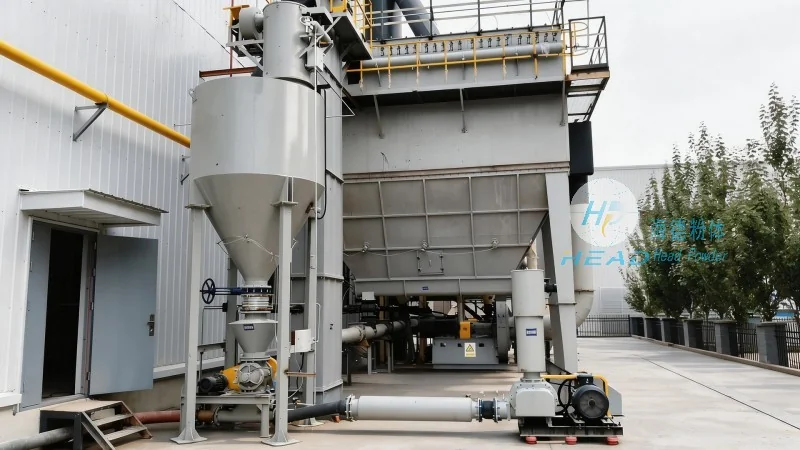
Designing a pneumatic conveying system for ABS pellets involves balancing several interdependent variables. The most critical parameters include:
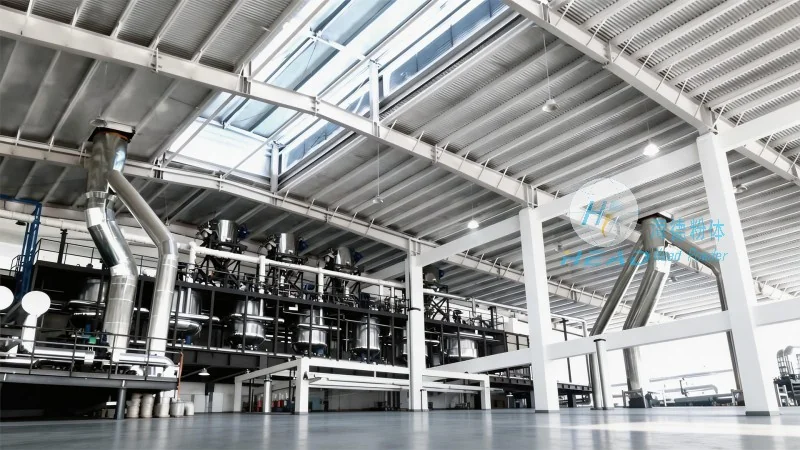
These parameters are not static—they must be tailored to the specific plant layout, conveying distance (from 20 to 500 meters), and required throughput (typically 1–20 tons per hour). headpowder’s proprietary design software simulates hundreds of operating scenarios to identify the most efficient combination for each client.
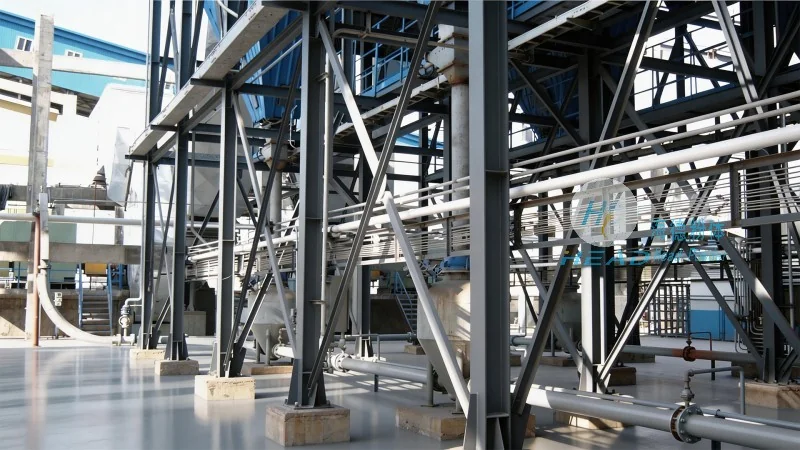
A complete ABS pellet pneumatic conveying system comprises several key components, each playing a vital role in performance and reliability:
Configuration options range from simple single-source-to-single-destination lines to multi-way distribution networks with automated diverter valves. For facilities handling multiple ABS grades, we design batch conveying systems that eliminate cross-contamination through purging cycles and dedicated line cleaning stations.
ABS pellets present several handling challenges that directly influence system design. Their relatively high hardness (Rockwell R 100–115) makes them abrasive, accelerating wear in bends and reducers if not properly addressed. The material is also hygroscopic, absorbing atmospheric moisture that can lead to surface defects in molded parts. headpowder’s solutions incorporate dehumidified conveying air (dew point ≤ -40°C) and insulated pipelines to prevent condensation during temperature swings. Additionally, ABS can generate static charges during conveying, causing pellet agglomeration and filter clogging. We mitigate this through grounded stainless steel components and, in sensitive applications, ionizing air nozzles at discharge points. Common industry applications include:
Safety and regulatory compliance are non-negotiable when conveying combustible dusts like ABS fine particles (which can form explosive atmospheres under certain conditions). headpowder designs all systems in accordance with ATEX Directive 2014/34/EU for equipment used in potentially explosive environments, as well as ISO 12100 for machinery safety. Key considerations include:
Beyond safety, our systems comply with NFPA 652 (combustible dust) and local environmental regulations regarding noise levels (typically ≤ 85 dB(A) at 1 meter) and air quality. Every headpowder installation undergoes a rigorous FAT (Factory Acceptance Test) before shipment, including documentation of pressure tests, flow measurements, and material integrity checks.
In a recent project for a large-scale automotive parts manufacturer, headpowder replaced an existing mechanical bucket elevator system with a pneumatic conveying network handling 8 tons per hour of ABS pellets across a 150-meter route with 12 machine drop stations. The legacy system suffered from frequent downtimes (averaging 6 hours per month due to belt slippage and bucket wear) and pellet degradation rates of nearly 2%—causing visible splay marks on finished dashboards. Our solution employed a dilute-phase positive pressure design with a custom rotary airlock featuring hardened Ni-hard wearing tips, ceramic-lined long-radius bends, and a PLC controller with adaptive velocity adjustment. Within six months of operation, the new system demonstrated:
This success underscores the importance of tailored engineering—the client’s specific ABS grade (a high-impact variant with 12% rubber content) required a lower conveying velocity (18 m/s) and larger pipeline diameter (125 mm) than standard recommendations. headpowder’s willingness to customize, combined with our extensive data library on polymer rheology, made the difference.
Choosing the right partner for your ABS pellet conveying project goes beyond comparing component specifications. headpowder brings over 18 years of focused experience in bulk solids handling, with more than 200 pneumatic conveying systems installed globally across plastics, chemicals, and food processing sectors. Our approach is consultative: we begin with a detailed site survey, collect material samples for lab analysis (density, flowability, abrasion index, moisture sensitivity), and then model your specific conditions using validated simulation tools. Every system we deliver comes with full commissioning support, operator training, and a comprehensive documentation package that simplifies maintenance for years to come. For more information about how headpowder can optimize your ABS pellet conveying process, contact our engineering team directly at headpowder. (咨询热线:156-6277-7102)
Looking ahead to 2026 and beyond, the industry is moving toward smarter, more sustainable systems. The integration of IoT sensors and cloud analytics enables real-time condition monitoring, allowing predictive maintenance that can reduce unplanned outages by up to 40%. Energy optimization also remains a focus—new low-pressure loss pipe linings (e.g., UHMWPE inserts) can cut blower power draw by an additional 15%. Furthermore, hybrid conveying systems that combine dilute and dense phase in different segments of the same line are emerging, offering the gentle handling of dense phase for ABS pellets while maintaining the high throughput of dilute phase through long straight runs. headpowder is actively developing these advanced solutions, ensuring that our clients remain competitive in an increasingly demanding market. Whether you are upgrading an existing line or building a greenfield facility, investing in a well-engineered pneumatic conveying system is a strategic decision that directly impacts product quality, operational efficiency, and bottom-line profitability. With headpowder, you gain a partner committed to delivering measurable results, backed by technical depth and a track record of success.

 Shandong headpowder Engineering Co., Ltd.
 156-6277-7102(Manager Zhang)
  0531-83386006
  Jinan City, Shandong Province, China
服务热线
微信咨询
回到顶部