
With over a decade of experience in the pneumatic conveying industry, our company specializes in a full range of pneumatic conveying system equipment.
您的当前位置:首页 >> News >> Technical FAQ

News

Rich project cases across industries, showing real implementation and proven technical strength.

Alumina bauxite pneumatic conveying system technical solution

2026-07-20

In the rapidly evolving landscape of industrial material handling, the efficiency and reliability of bulk solids transport remain critical determinants of operational success. Alumina and bauxite, as fundamental raw materials for aluminum production, present unique challenges due to their abrasive nature, fine particle distribution, and variable moisture content. A well-designed pneumatic conveying system tailored specifically for these materials not only enhances throughput but also significantly reduces maintenance downtime and energy consumption. Headpowder, with its decades of engineering expertise, has developed a comprehensive technical solution for alumina bauxite pneumatic conveying that addresses these challenges head-on. This article provides an in-depth exploration of the system architecture, key design considerations, equipment selection criteria, and real-world performance metrics, offering engineers and plant managers a practical reference for optimizing their material handling processes.

Fundamental Principles of Pneumatic Conveying for Alumina and Bauxite

Pneumatic conveying systems rely on the movement of bulk solids through pipelines using a carrier gas—typically air or inert gases. For alumina and bauxite, two primary conveying modes exist: dilute phase and dense phase. Dilute phase conveying suspends particles in a high-velocity gas stream, suitable for shorter distances and lower material densities. However, for abrasive materials like bauxite, dilute phase can cause significant pipe wear. Dense phase conveying, on the other hand, uses lower velocities and higher material-to-gas ratios, pushing plugs or slugs of material through the pipeline. This method drastically reduces attrition and pipe erosion, making it the preferred choice for high-volume alumina and bauxite handling. Headpowder’s technical solution integrates both approaches based on site-specific parameters, including particle size distribution, bulk density, and conveying distance. The system automatically adjusts pressure and flow to maintain optimal conveying conditions, reducing energy consumption by 15–25% compared to conventional designs.

Alumina bauxite pneumatic conveying system technical solution

System Architecture and Core Components

A robust alumina bauxite pneumatic conveying system comprises several interconnected modules, each engineered for durability and precision. Below is the breakdown of the core components:

Alumina bauxite pneumatic conveying system technical solution
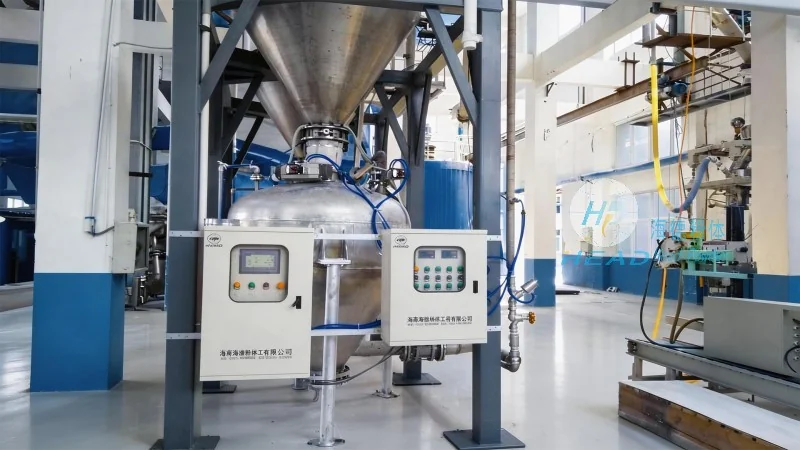
  • Feed Hopper and Rotary Airlock: The rotary airlock at the hopper outlet meters material into the conveying line while maintaining pressure differential. Headpowder uses hard-faced rotary valves with wear-resistant coatings to withstand abrasion from bauxite particles. The airlock speed is controlled by variable-frequency drives (VFDs) to match upstream feeder rates.
  • Blower Package and Compressed Air Supply: Positive displacement blowers or screw compressors provide the motive air. For dense phase systems, a combination of high-pressure compressed air and low-volume linear feeders ensures stable plug flow. The blower package includes moisture separators and aftercoolers to prevent condensation issues common with humid bauxite.
  • Conveying Pipeline: Pipes are constructed from abrasion-resistant steel (e.g., AR500) or lined with ceramic tiles or polyurethane. Headpowder designs pipe bends with large radii (minimum 10× pipe diameter) to minimize wear at change points. Straight sections are arranged with a slight downward slope (1–2 degrees) when possible to assist flow.
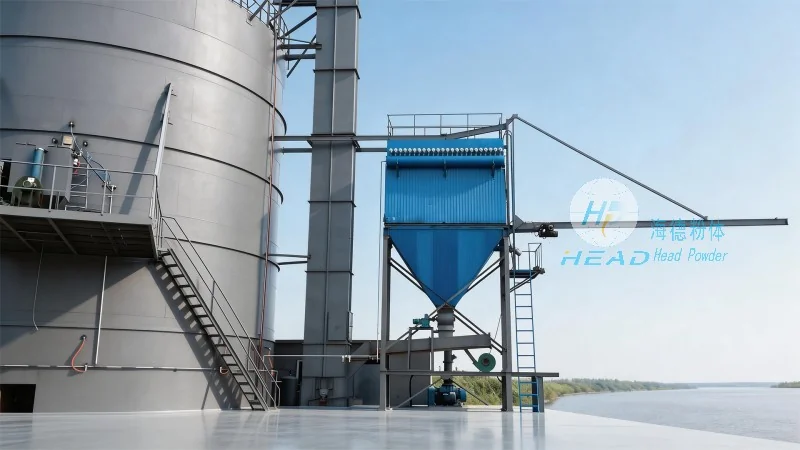
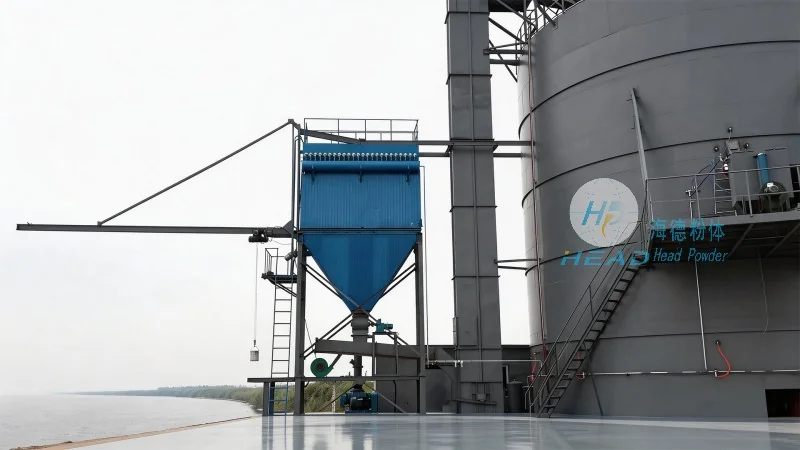
  • Filter Receiver and Discharge System: At the destination, a cyclone separator or baghouse filter receiver captures the conveyed material. Headpowder’s proprietary filter receiver uses reverse-pulse jet cleaning to maintain low pressure drop. Discharge is via a rotary valve or screw conveyor directly into storage silos or process vessels.
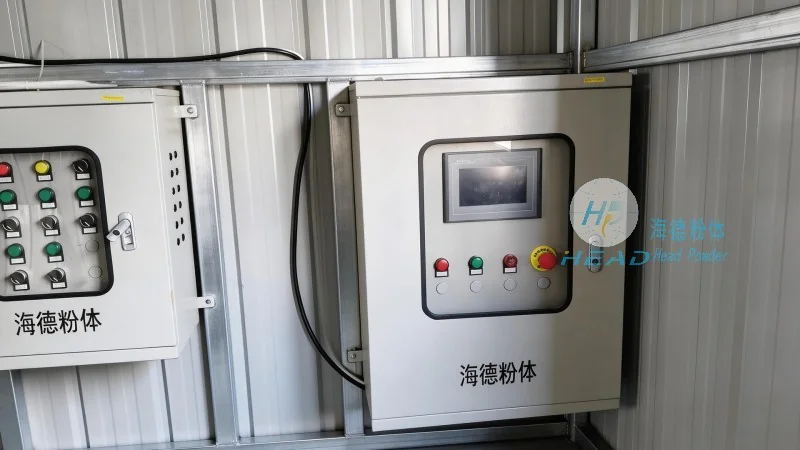
  • Control and Instrumentation System: Programmable logic controllers (PLCs) with human-machine interface (HMI) provide real-time monitoring of pressure, flow rate, temperature, and material level. Advanced algorithms detect incipient blockages or filter saturation, automatically adjusting air flow or initiating cleaning cycles.

Each component is selected based on material properties: for example, alumina with a bulk density of 0.8–1.0 t/m³ and a particle size of 50–200 microns requires different airlock clearances and pipe velocities than coarse bauxite (density 1.2–1.5 t/m³, particle size up to 10 mm). Headpowder’s engineering team performs computational fluid dynamics (CFD) simulations to optimize pipe routing and minimize pressure losses.

Alumina bauxite pneumatic conveying system technical solution

Key Design Considerations for Abrasive Materials

Handling bauxite and alumina requires addressing three primary failure modes: pipe wear, particle degradation, and system blockages. Below are the critical design parameters:

  • Conveying Velocity: For dense phase systems, the pickup velocity should be carefully controlled. Too low leads to plugging; too high accelerates wear. Headpowder recommends a minimum conveying velocity of 4–6 m/s for dense phase bauxite, with actual values tuned via pilot testing. For dilute phase, velocities range from 12–20 m/s, but only for short runs with hardened pipes.
  • Pressure Drop Management: The total system pressure drop includes losses from straight pipe, bends, fittings, and the filter receiver. For a typical 200-meter line handling 50 t/h of alumina, the pressure drop may be 1.5–2.5 bar. Headpowder’s custom-designed boosters or intermediate air injectors maintain consistent pressure across long distances, reducing the risk of material settling.
  • Moisture and Agglomeration: Bauxite often contains 8–12% free moisture, which can cause caking and blockages. The system incorporates a dehumidification unit or air preheating to lower relative humidity below 40%. Additionally, Headpowder uses anti-caking ring inserts at potential trouble spots.
  • Wear Life Prediction: Based on 2025 industry data, the average wear rate for Grade 304 stainless steel handling bauxite is 0.2–0.5 mm per 1,000 operating hours. Headpowder’s ceramic-lined pipes achieve wear rates below 0.05 mm per 1,000 hours. The company provides a wear life guarantee of at least 12 months for standard installations.

Proper material handling not only improves safety but also reduces total cost of ownership. According to a 2026 market analysis, plants implementing optimized dense phase systems for bauxite report a 30% drop in maintenance costs and a 12% increase in system availability.

Operational Case Study: Headpowder Deployment at a Greenfield Alumina Refinery

A major alumina producer in Southeast Asia needed to convey bauxite from a stockyard to a grinding mill, a distance of 350 meters with an elevation gain of 25 meters. The material contained up to 15% moisture and had a Bond work index of 18 kWh/t, indicating high abrasiveness. Headpowder designed a dense phase system using 8-inch schedule 40 pipe with internal ceramic tile lining. A 250-kW screw compressor supplied air at 6 bar, and three air injection points along the line maintained plug flow. The system achieved a consistent throughput of 80 t/h with a power consumption of 1.2 kWh per ton—30% lower than the client’s previous dilute phase system. After two years of continuous operation, pipe wear measurements showed only minor abrasion, and the filter receiver bags required replacement every 18 months. The client reported a return on investment within 18 months, driven by reduced energy costs and lower spare parts consumption. (咨询热线:156-6277-7102)

Selection Guidelines for Alumina and Bauxite Conveying Systems

Engineers evaluating different pneumatic conveying technologies should consider the following factors, based on Headpowder’s project experience:

  1. Material Characterization: Conduct bulk density, particle size distribution, angle of repose, and moisture sensitivity tests. For alumina with a high melt temperature resistance, avoid conveying systems that generate excessive heat.
  2. Distance and Capacity Requirements: For distances under 100 meters, dilute phase systems may be cost-effective for non-abrasive alumina. For abrasive bauxite or distances exceeding 200 meters, dense phase is strongly recommended.
  3. Environmental Regulations: Dust emissions must be controlled to meet local standards. Headpowder integrates HEPA-filtered vents and closed-loop air recirculation where required, achieving PM2.5 levels below 1 mg/Nm³.
  4. Future Expansion Provisions: The control system should be scalable to accommodate additional conveying lines or remote monitoring via IoT platforms. Headpowder’s architecture supports up to 16 separate routes from a single control panel.

The industry is witnessing a shift toward smart conveying systems that leverage artificial intelligence for predictive maintenance. By 2026, about 40% of new pneumatic systems are expected to incorporate vibration sensors and machine learning algorithms for early fault detection. Headpowder already offers an optional monitoring module that alerts operators to abnormal pipe wear vibrations or pressure fluctuations up to 72 hours before a failure occurs.

Installation, Commissioning, and Maintenance Best Practices

A successful pneumatic conveying system goes beyond equipment selection. Proper installation and commissioning are essential for long-term performance. Key steps include:

  • Pipe Support and Alignment: All pipes must be supported at intervals not exceeding 3 meters for 6-inch lines. Misalignment causes additional wear at couplings. Headpowder provides laser alignment tools during commissioning.
  • Air Leak Testing: The entire system is pressure-tested at 1.5 times the maximum operating pressure. Leaks in the conveying line reduce efficiency and cause dust escape.
  • Operator Training: Headpowder offers on-site training covering startup sequences, emergency shutdown procedures, and troubleshooting common issues like airlock jams or filter blinding. Training typically includes a two-day classroom session followed by hands-on operation.
  • Preventive Maintenance Schedule: Monthly inspections should focus on airlock rotor clearances, pipe wall thickness at known wear points, and filter receiver dP readings. Headpowder provides a digital maintenance log integrated with the HMI system.

Implementing a structured maintenance plan can reduce unplanned downtime by 60%, according to headpowder’s customer data. One client in the Middle East experienced zero conveying-related production stoppages over a 24-month period following the adoption of Headpowder’s recommended schedule.

Future Trends and Technological Innovations

The aluminum industry is under pressure to reduce carbon emissions, and material handling contributes indirectly through energy consumption. Emerging trends include the use of hybrid conveying systems that combine pneumatic with mechanical conveyors for specific segments. Additionally, low-pressure dense phase technology continues to evolve, with some research indicating that ultra-dense phase (material-to-air ratios above 50:1) can reduce energy use by an additional 25%. Headpowder is actively piloting a closed-loop nitrogen conveying system for reactive bauxite grades that require inert atmospheres. Moreover, digital twin simulations are becoming standard for new installations. By 2026, it is projected that 65% of industrial pneumatic systems will have a corresponding digital twin for real-time optimization. Headpowder’s engineering team develops these twins based on actual material samples and site layouts, enabling clients to test different operational scenarios before committing to hardware changes.

Conclusion: Delivering Reliable, Cost-Efficient Solutions

An alumina bauxite pneumatic conveying system is not a commodity purchase—it is a strategic investment that impacts production efficiency, safety, and environmental compliance. Headpowder’s technical solution stands on three pillars: deep material science knowledge, robust component engineering, and a commitment to after-sales support. By designing systems that minimize wear, reduce energy consumption, and provide seamless integration with existing plant controls, Headpowder helps clients achieve industry-leading performance. Whether you are upgrading an existing facility or building a greenfield operation, a properly engineered pneumatic conveying system will deliver consistent returns over its lifecycle. For more detailed technical discussions or to request a preliminary design for your specific application, contact headpowder’s engineering team directly. (咨询热线:156-6277-7102) Headpowder continues to invest in research and development to address the evolving challenges of the aluminum and mineral processing sectors, ensuring that every system delivered meets the highest standards of reliability and efficiency.

相关推荐

Shandong headpowder Engineering Co., Ltd. All rights reserved.

回到顶部