

What is Fly Ash Particle Pneumatic Conveying, Classification and Applications of Pneumatic Conveying
HeadPowder, a leading engineering company based in Shandong, China, specializes in advanced material handling solutions, including the technology of fly ash particle pneumatic conveying. This article provides a comprehensive overview of what pneumatic conveying is, its classification, and practical applications in handling fly ash particles. Understanding the principles and types of pneumatic conveying is crucial for optimizing material transport efficiency in industrial settings.
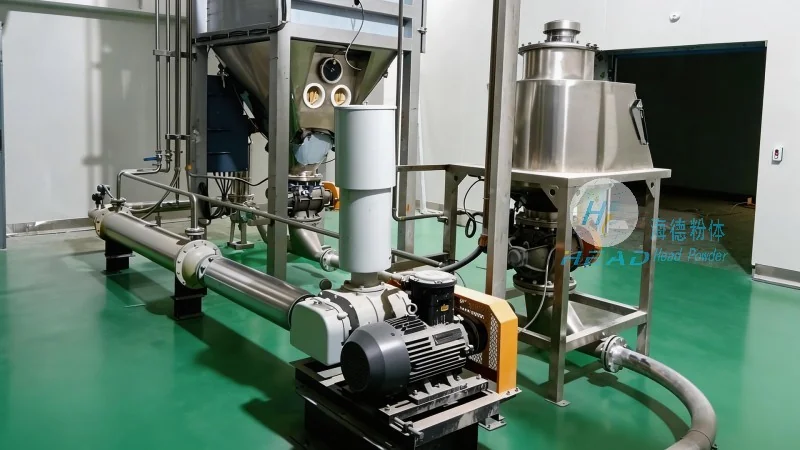
What is Pneumatic Conveying?
Pneumatic conveying, also known as pneumatic transport, is a method of transporting bulk materials through a pipeline using a gas stream, typically air or other gases. In the context of fly ash particle handling, this technology is employed to move fine particles from one location to another without the need for mechanical components like belts or buckets. The process involves creating a pressure differential or using a vacuum to move the material through a system of pipes, making it ideal for handling dusty or abrasive materials such as fly ash.
Classification of Pneumatic Conveying Systems
Pneumatic conveying systems are broadly classified into two main categories: dilute-phase and dense-phase systems. Each type has distinct characteristics and is suited for different material properties and application requirements.
Dilute-Phase Pneumatic Conveying operates at relatively low pressure and high velocity, where the material is suspended in the gas stream as a dilute mixture. This method is suitable for transporting light, non-abrasive materials over moderate distances. The system typically uses positive pressure to move the material, with the gas velocity exceeding the settling velocity of the particles, ensuring they remain suspended.
Dense-Phase Pneumatic Conveying, on the other hand, operates at higher pressure and lower velocity, where the material is conveyed as a dense slurry or plug flow. This approach is ideal for handling abrasive or high-density materials, as it reduces wear on the system components and minimizes particle degradation. Dense-phase systems often use a combination of pressure and vacuum to control the flow, ensuring stable and efficient transport.
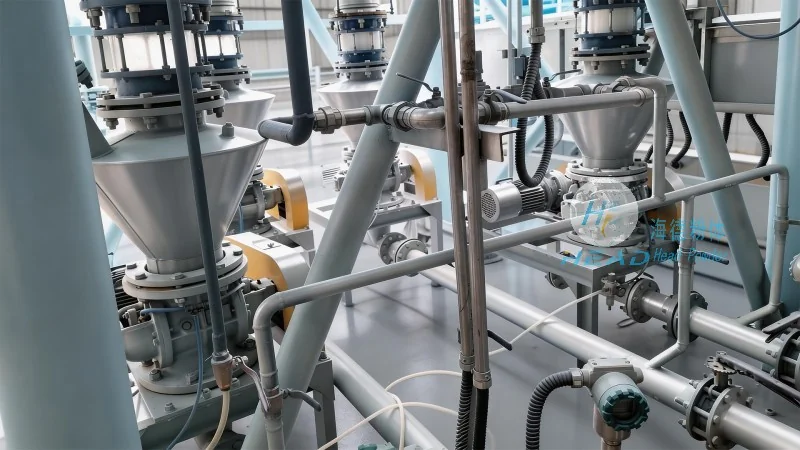
Additionally, pneumatic conveying can be further categorized based on the direction of material flow relative to the gas stream. Co-current systems have the material and gas moving in the same direction, while counter-current systems move in opposite directions. The choice between these configurations depends on the material's characteristics, such as particle size, density, and moisture content, as well as the desired transport distance and efficiency.
Applications of Fly Ash Particle Pneumatic Conveying
Fly ash, a byproduct of coal combustion, is a fine, powdery material that requires efficient and reliable transport for various industrial applications. Pneumatic conveying offers several advantages over traditional methods like belt conveyors or trucks, including reduced dust emissions, lower maintenance costs, and the ability to handle abrasive materials without significant wear.
In power plants, fly ash is commonly used as a raw material in cement production or as a supplementary cementitious material (SCM) in concrete. Pneumatic conveying systems are used to transport fly ash from the boiler to storage silos or directly to cement production facilities, ensuring a continuous and efficient supply of the material. The technology also facilitates the transport of fly ash to landfills or recycling facilities, where it can be used as a construction material or for soil stabilization.
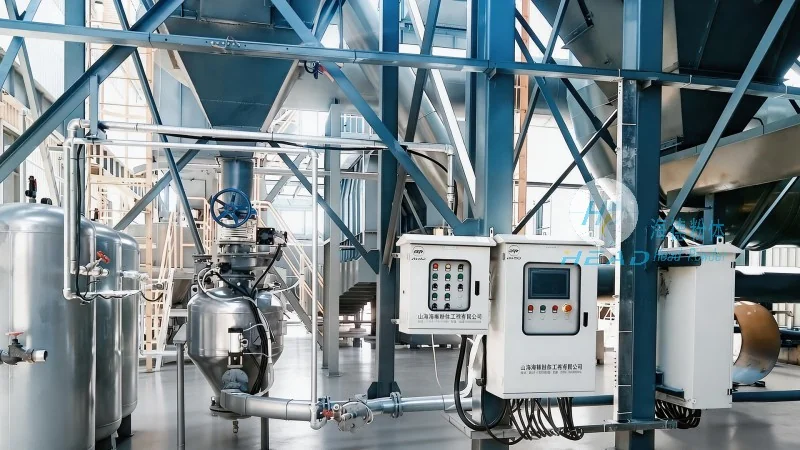
Industrial plants that generate fly ash, such as cement factories or thermal power stations, often require a robust material handling system to manage the volume of ash produced. Pneumatic conveying systems, particularly dense-phase designs, are well-suited for this task due to their ability to handle high-volume, abrasive materials while maintaining low maintenance costs and minimal environmental impact.
Moreover, pneumatic conveying can be integrated with other processes, such as drying or mixing, to enhance the overall efficiency of fly ash utilization. For example, a combined system may include a dryer to reduce the moisture content of fly ash before it is conveyed to a storage or processing facility. This integration allows for a more streamlined operation, reducing energy consumption and improving the quality of the final product.
Advantages of Pneumatic Conveying for Fly Ash Handling
When compared to traditional material handling methods, pneumatic conveying offers several key advantages for fly ash transport. These benefits include:
- Reduced Dust Emissions: Pneumatic systems are enclosed, which minimizes the release of dust into the environment, improving workplace safety and compliance with environmental regulations.
- Lower Maintenance Costs: Unlike mechanical conveyors, which require regular maintenance for belts, pulleys, and bearings, pneumatic systems have fewer moving parts and are less prone to wear and tear from abrasive materials.
- Flexibility in Layout: Pneumatic conveying systems can be easily adapted to different plant layouts, allowing for the integration of multiple transfer points and the ability to change the direction of material flow as needed.
- Energy Efficiency: Advanced pneumatic systems, such as those using variable speed drives, can optimize energy consumption based on the material flow rate, reducing operational costs over time.
Conclusion
HeadPowder Engineering Co., Ltd., with its headquarters in Shandong, China, provides specialized solutions for fly ash particle pneumatic conveying, leveraging both dilute-phase and dense-phase technologies to meet the diverse needs of industrial clients. By understanding the classification and applications of pneumatic conveying systems, industries can optimize their material handling processes, reduce costs, and enhance operational efficiency. The company's expertise in designing and implementing customized pneumatic conveying solutions ensures that clients receive tailored systems that align with their specific requirements, contributing to sustainable and effective material transport in the fly ash industry.