

Operation Process and Working Principle of Magnesium Oxide Powder Pneumatic Conveying Machine
Shandong HeadPowder Engineering Co., Ltd., based in Shandong, China, specializes in the design, manufacturing, and supply of advanced pneumatic conveying systems tailored for diverse industrial applications. With a focus on precision engineering and customer-centric solutions, the company has built a reputation as a trusted partner in the powder handling industry, delivering high-quality equipment that meets the evolving needs of modern manufacturing processes.
Overview of Pneumatic Conveying Systems
Pneumatic conveying machines, such as the magnesium oxide powder pneumatic conveying equipment, are critical for transporting bulk powders efficiently and safely. These systems utilize air or gas as the conveying medium to move materials from one location to another, eliminating the need for mechanical components like belts or buckets. The technology is widely adopted in industries like chemical, food, and pharmaceuticals due to its flexibility, ability to handle sensitive or abrasive powders, and reduced risk of contamination.
System Components and Their Functions
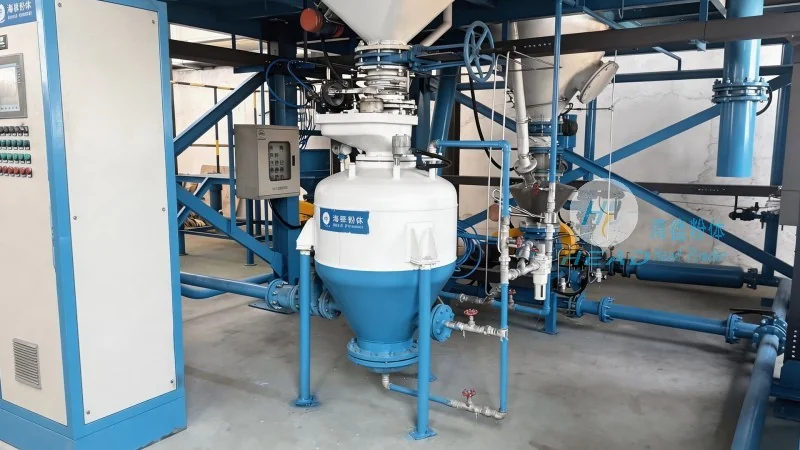
A typical pneumatic conveying system for magnesium oxide powder comprises several key components that work in unison to ensure smooth operation. These include a hopper for material storage, a rotary valve or feeder to control the flow rate, a conveying line (usually made of stainless steel or corrosion-resistant plastic), a pressure vessel or receiver to collect the material at the destination, and a blower or compressor to generate the necessary air pressure. Each component plays a critical role in maintaining system efficiency and preventing material degradation.
Detailed Operation Process
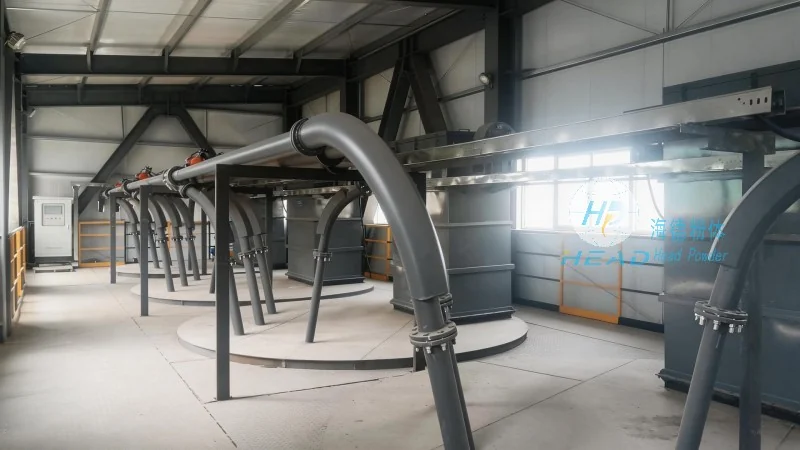
The operation process of the magnesium oxide powder pneumatic conveying machine begins with the material being loaded into the hopper. The rotary valve then regulates the flow of powder into the conveying line, ensuring a consistent feed rate. The blower generates high-pressure air, which is introduced into the line and mixes with the powder, creating a dense or dilute phase flow depending on the system design. As the mixture travels through the conveying line, it reaches the receiver at the destination, where the air is separated from the powder and discharged. The separated air is then vented back to the atmosphere or recirculated, while the powder is collected in the receiver for further processing. This continuous cycle allows for seamless and uninterrupted material transport.
Working Principle Analysis
The working principle of the magnesium oxide powder pneumatic conveying machine is based on fluid dynamics and particle motion. In the dense phase conveying mode, the air velocity is relatively low, and the powder particles are suspended in a continuous stream of air, forming a dense mixture. This mode is ideal for long-distance or high-capacity transport, as it minimizes particle degradation and reduces energy consumption. In the dilute phase mode, the air velocity is higher, and the powder particles are dispersed in the air as individual particles, similar to a cloud. This mode is more suitable for short-distance or low-capacity applications. The choice of mode depends on factors such as the powder characteristics, system length, and required flow rate, with the system design optimized to achieve the most efficient operation.
Technical Advantages and Considerations
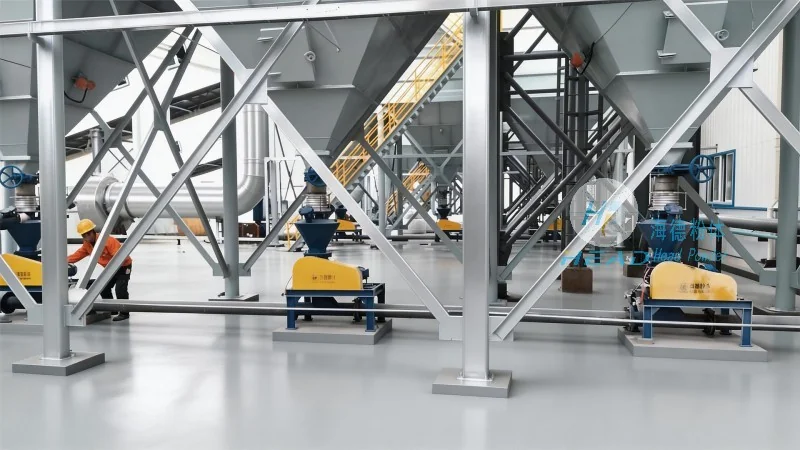
The magnesium oxide powder pneumatic conveying machine offers several technical advantages over traditional mechanical conveying methods. These include reduced material handling time, lower labor costs, and improved safety due to the enclosed system design, which prevents dust dispersion and protects operators from direct contact with the material. Additionally, the system can handle abrasive or corrosive powders without causing wear or damage to the equipment, as the conveying line and components are typically made of high-quality materials like stainless steel. However, proper maintenance and regular inspection are crucial to ensure optimal performance and prevent issues such as blockages or air leaks, which can impact system efficiency and material quality.
Application Scenarios
The magnesium oxide powder pneumatic conveying equipment is widely used in various industrial applications where efficient and dust-free powder transport is essential. Some common applications include the transportation of magnesium oxide in chemical plants for the production of refractory materials, the handling of food-grade powders in the food processing industry, and the delivery of pharmaceutical powders in the pharmaceutical sector. The system's flexibility allows it to be adapted to different production scales and operational requirements, from small-scale laboratory applications to large-scale industrial production lines. Its ability to maintain material integrity and prevent contamination makes it a preferred choice for industries where product quality and safety are paramount.