News
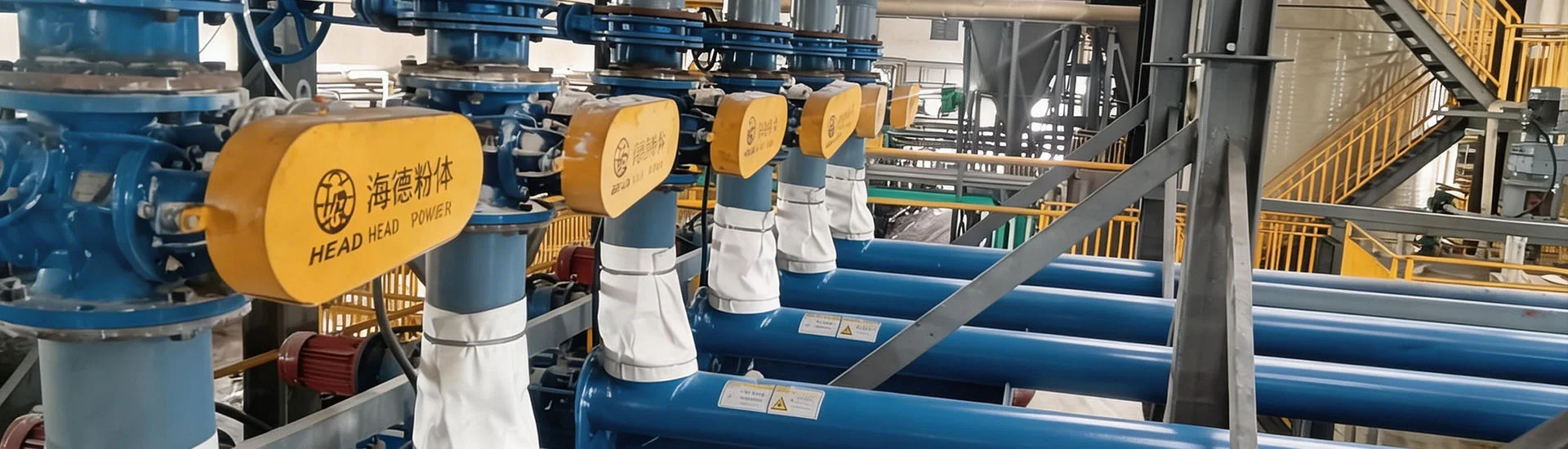
Rich project cases across industries, showing real implementation and proven technical strength.In modern industrial processing, the efficient and reliable transfer of heavy powders—such as metal oxides, cement, foundry sand, pigments, and fine chemicals—presents unique engineering challenges. Unlike free-flowing granular materials, heavy powders often exhibit high bulk density, poor fluidization characteristics, abrasiveness, and tendency to bridge or compact under pressure. Pneumatic conveying has emerged as a preferred solution for moving these dense materials through pipelines using compressed air or inert gas. However, selecting the correct pneumatic method for heavy powder applications requires a deep understanding of system dynamics, material properties, and operational constraints.
Heavy powder conveying systems generally fall into two main categories: dilute phase and dense phase. In dilute phase conveying, particles are suspended in high-velocity air streams, typically operating at velocities between 15 and 35 m/s. While effective for light and fine powders, applying dilute phase to heavy powders often leads to excessive pipe wear, high energy consumption, and material degradation. Dense phase conveying, by contrast, moves material at lower velocities—usually below 8 m/s—by creating a continuous or pulsed plug flow. This method significantly reduces abrasion and energy requirements, making it the preferred choice for heavy, friable, or abrasive powders. Within dense phase, further distinctions exist between fluidized dense phase (where air is injected into the material to maintain fluidity) and plug phase (where discrete slugs of material are propelled by compressed air pressure differentials).
For heavy powders with a bulk density exceeding 800 kg/m³, such as zinc oxide or iron powder, fluidized dense phase conveying often requires careful air injection point design and pipe diameter optimization. The ratio of material to air, known as the solids loading ratio (SLR), is a critical parameter. In heavy powder applications, SLR values can reach 30:1 or higher, indicating that the air volume is minimal relative to the material mass. Operating at these high SLRs minimizes air consumption but necessitates robust compressor capacity and precision control valves. Modern systems increasingly incorporate variable frequency drives (VFDs) on blowers and real-time pressure monitoring to adjust conveying parameters dynamically, a trend projected to grow substantially through 2026 as smart factory concepts mature.
Designing a pneumatic conveying line for heavy powders begins with accurate material characterization: particle size distribution, moisture content, angle of repose, abrasivity index, and cohesive strength. Without this data, system failures such as pipeline blockages, filter overloads, or erosive wear become common. A typical heavy powder conveying system comprises a feeding device (rotary valve, screw feeder, or venturi eductor), a conveying pipeline with appropriate bends and couplings, a primary air source (positive displacement blower or screw compressor), and a separation unit (cyclone, bag filter, or cartridge collector).
For heavy powders prone to segregation or flooding, rotary valves equipped with drop-through or blow-through designs are often specified. The clearances between the rotor blades and housing must be tight enough to prevent air leakage but loose enough to accommodate abrasive wear. Several industry studies from 2024–2025 indicate that for powders with Mohs hardness above 5, hard-faced rotors or ceramic-lined housings extend service life by 200–300% compared to standard steel. Similarly, pipeline bends represent the highest wear zone in any heavy powder system; long-radius bends with replaceable wear backings or plugged tees are recommended to maintain system uptime. headpowder has integrated these design principles into its standard conveying modules, offering custom wear-protection options validated through accelerated lifecycle testing under 50,000-hour equivalent loading conditions. (咨询热线:156-6277-7102)
The air mover selection also requires careful attention. For heavy powders conveyed over distances exceeding 200 meters, screw compressors delivering 2–4 bar gauge pressure are typical, whereas positive displacement blowers suffice for shorter runs at lower pressure requirements. Recent 2026 market analysis forecasts a 12% annual increase in demand for energy-efficient pneumatic conveying systems, largely driven by carbon taxation policies in Europe and North America. Consequently, many operators now specify VFD-controlled blowers that reduce power draw by 30–60% during partial load conditions. In addition, moisture removal equipment—refrigerated dryers or desiccant systems—must be oversized for heavy powders that are hygroscopic, as even slight moisture pickup can trigger cohesive bridging and flow stoppages.
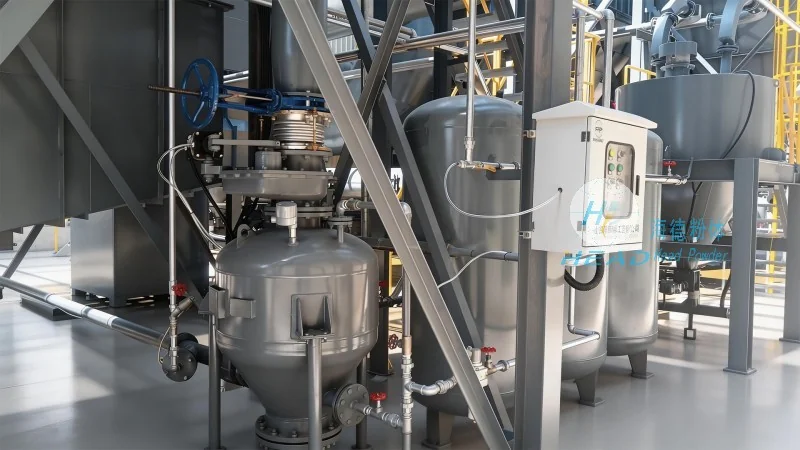
Determining the minimum conveying velocity (also called saltation velocity) is perhaps the most critical step in heavy powder system design. If velocity drops below this threshold, particles settle out of the airstream, leading to plugging and eventual blockage. Conversely, excessive velocity accelerates wear and degrades material quality. For heavy powders of irregular shape, the minimum conveying velocity is typically 8–12 m/s in dense phase, but must be confirmed through pilot testing or empirical correlations such as the Muschelknautz method or the Zenz correlation. Many engineers now rely on computational fluid dynamics (CFD) simulations to predict particle trajectories and pressure profiles before constructing physical test loops, a practice that reduces commissioning time by 40–60% according to 2025 industry reports.
Pressure drop calculations for heavy powder systems involve both the acceleration pressure drop (to bring particles up to conveying velocity) and the friction pressure drop along straight pipes and through bends. The presence of bends, especially in tight-radius configurations, can double or triple the local pressure drop compared to straight sections. For installations with multiple changes in direction, pressure drop prediction models must incorporate bend-specific factors that account for particle re-acceleration losses. In a recent field installation handling lead oxide powder (bulk density 9.5 g/cm³), the pressure drop across a single 90° bend with radius-to-diameter ratio of 6 was measured at 0.15 bar, while a ratio of 12 reduced this to 0.09 bar—a 40% improvement. Such data underscores the importance of pipeline layout design, particularly for heavy powders where gravitational settling forces are high.
Pipeline diameter selection must balance air velocity, material throughput, and capital cost. Typical heavy powder conveying lines range from 80 mm to 200 mm in diameter, with larger diameters accommodating higher tonnages at lower velocities. However, excessively large pipes result in higher air consumption and reduced conveying stability. A rule of thumb from SME B20.1 standards suggests that the pipe diameter should be at least three times the largest particle diameter, but for heavy cohesive powders, a ratio of 5:1 is safer. Head powders with mean particle sizes of 50–150 μm are well served by 100–150 mm diameter pipes operating at dense phase conditions, achieving throughputs of 20–50 tonnes per hour over distances up to 500 meters.
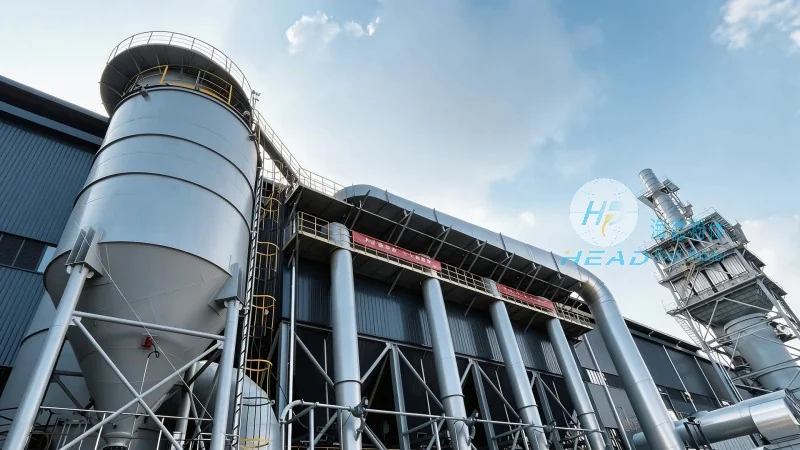
Even a well-designed heavy powder conveying system can suffer from performance deterioration without disciplined maintenance. The most common issues include filter blinding, rotary valve jamming, and pipeline erosion at bend points. Implementing a predictive maintenance program that monitors pressure trends across each section of the line can identify developing blockages before they cause downtime. For example, if the pressure differential across a filter unit increases by more than 15% over baseline within a week, a cleaning cycle should be triggered. Many modern systems now incorporate automated filter cleaning via reverse-pulse jet systems, which reduce manual intervention and maintain consistent airflow.
Wear management is another area where proactive strategies pay dividends. In heavy powder conveying using steel pipelines, wall thinning at bends can reach 1–2 mm per 1,000 operating hours depending on material abrasivity. Regular ultrasonic thickness measurements at critical locations, combined with scheduled rotation of wear components, can extend pipeline service life to 5–8 years. Some operators have adopted ceramic-lined bends or basalt-lined straight sections, which offer 5–10 times the wear resistance of standard carbon steel. headpowder's field data from 2024 shows that installations using its proprietary HardTec wear protection system have experienced zero unscheduled shutdowns due to pipe erosion over two years of continuous operation with powdered silicon carbide (Mohs 9.5). (咨询热线:156-6277-7102)
Operator training also plays a vital role. Personnel must understand the relationship between air supply pressure, material feed rate, and system backpressure. In heavy powder lines, attempting to increase throughput by simply opening the rotary valve speed can lead to overfeeding and plugging. Proper startup and shutdown sequences—such as purging the line with air after each batch—prevent material accumulation and moisture condensation. Furthermore, many heavy powders (e.g., aluminum powder, magnesium dust) are combustible or explosive; compliance with ATEX or NFPA 61 standards requires bonding and grounding of all system components, explosion venting panels, and suppression systems. Working with a supplier that provides comprehensive documentation and compliance support minimizes liability and ensures regulatory adherence.
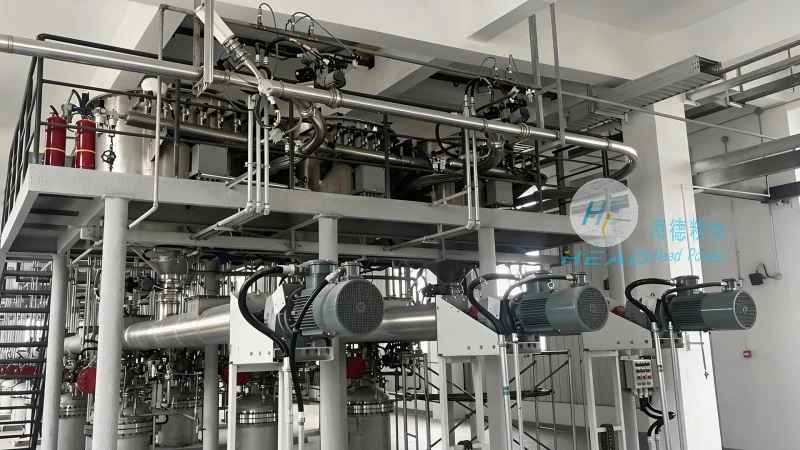
The global pneumatic conveying equipment market is projected to reach USD 42 billion by 2027, with the heavy powder segment accounting for roughly 25% of this value. Three macro trends are reshaping the landscape: first, regulatory pressure to reduce greenhouse gas emissions is driving adoption of low-pressure dense phase systems that cut energy consumption by 40–60% compared to dilute phase alternatives. Second, the shift toward continuous processing in industries like battery material production (lithium iron phosphate, nickel cobalt manganese) demands high-reliability conveying solutions that minimize contamination and segregation. Third, digital twin technology—creating virtual replicas of conveying lines—enables operators to simulate different powder recipes, pipeline geometries, and flow rates without interrupting production, reducing material waste and R&D cycles.
From a total cost of ownership perspective, heavy powder pneumatic conveying systems must be evaluated not only on initial equipment cost but on operational expenditure over a 10-year horizon. Energy typically represents 30–50% of lifecycle cost, followed by maintenance and replacement parts. Systems designed for dense phase operation with optimal pipe diameters and low-pressure air sources consistently deliver lower OPEX, even if their upfront cost is 20–30% higher. Additionally, filtration efficiency has become a hot topic: new bag filter materials with nanofiber coatings achieve 99.99% particulate capture at 0.5 μm, ensuring compliance with PM2.5 regulations while reducing cartridge replacement frequency.
For companies processing heavy powders—whether in mining, chemicals, ceramics, or additive manufacturing—selecting the right pneumatic conveying method is a strategic decision that affects production efficiency, product quality, and environmental footprint. By partnering with experienced system integrators who understand material behavior and can tailor solutions to specific process parameters, operators can achieve seamless material handling even with the most challenging powders. The evolution toward Industry 4.0 and smart conveying further enhances the value proposition, enabling real-time diagnostics, predictive maintenance, and remote optimization. As the industry progresses through 2026, those who invest in robust, well-engineered heavy powder pneumatic systems will gain a competitive edge through higher uptime, lower costs, and safer operations. For a detailed feasibility assessment or system quotation tailored to your specific heavy powder application, contact headpowder's engineering team to discuss your conveying requirements. (咨询热线:156-6277-7102)

 Shandong headpowder Engineering Co., Ltd.
 156-6277-7102(Manager Zhang)
  0531-83386006
  Jinan City, Shandong Province, China
服务热线
微信咨询
回到顶部