News
Rich project cases across industries, showing real implementation and proven technical strength.Polyvinyl butyral (PVB) is a high-performance thermoplastic resin widely utilized in the laminated safety glass industry, photovoltaic module encapsulation, and specialty coatings. Its exceptional adhesion to glass, optical clarity, and impact resistance make it indispensable for automotive windshields, architectural glazing, and solar panel backsheets. The global PVB market has experienced steady growth, driven by increasing demand for safety glass in infrastructure projects and electric vehicles. According to 2026 industry forecasts, the compound annual growth rate for PVB consumption is projected at 4.8%, with Asia-Pacific accounting for over 45% of total production capacity. However, handling PVB powder during manufacturing poses significant challenges due to its hygroscopic nature, low bulk density, and tendency to form electrostatic charges. Inefficient conveying systems can lead to material degradation, bridging in hoppers, or even dust explosion hazards. This makes the design of a reliable pneumatic conveying system for PVB not merely a logistics choice but a critical factor in ensuring product quality, operational safety, and overall plant economics.
Pneumatic conveying, as a closed-loop transport method, offers distinct advantages when moving PVB powder: it minimizes contamination, reduces manual labor, and enables flexible routing across multiple processing stages. Yet, the specific physical and chemical characteristics of PVB demand a tailored approach. Standard pneumatic systems designed for free-flowing granules often fail when applied to PVB, resulting in blockages, inconsistent feed rates, or excessive energy consumption. Therefore, engineers must consider parameters such as particle size distribution (typically 200–500 µm for PVB powder), moisture absorption limits (below 0.5% by weight), and explosive limits (lower explosion limit around 40 g/m³ for PVB dust). This article explores the technical nuances of PVB pneumatic conveying, offering actionable guidance for system selection, component design, and operational optimization—all within the framework of real-world industrial practices.
To design an effective pneumatic conveyor for PVB, one must first understand the material’s rheological and safety attributes. PVB powder exhibits moderate to high cohesiveness, particularly when exposed to humidity. Its angle of repose typically ranges from 40° to 55°, indicating poor flowability under gravity alone. The bulk density varies between 350 and 550 kg/m³, depending on particle shape and moisture content. These factors directly impact the minimum conveying velocity required to prevent saltation and pipeline blockages. Additionally, PVB is classified as a combustible dust, requiring compliance with ATEX or NFPA 68 standards for explosion protection. Electrostatic buildup during pneumatic transport further increases ignition risks, necessitating conductive piping and grounding systems.
These properties collectively dictate that a one-size-fits-all approach is insufficient. For instance, a dilute-phase system operating at 20–30 m/s might work for coarse acrylic pellets but would quickly fail with PVB due to high wear and dust generation. Instead, a carefully calibrated dense-phase or semi-dense-phase solution is typically employed, where material is pushed as plugs at low velocities (3–8 m/s) with a high solid-to-air ratio. This not only reduces attrition but also lowers energy consumption by up to 40% compared to conventional dilute-phase systems.
Three primary pneumatic conveying configurations are applicable to PVB powder: positive pressure (blow) systems, vacuum (suction) systems, and combination systems. Each has its own merits and limitations depending on the plant layout, distance, and number of discharge points.
Positive Pressure Dense-Phase Systems are the most common choice for PVB due to their ability to handle cohesive powders over long distances (up to 500 m) without segregation. A pressure vessel (blow tank) pressurizes the material and injects it into the pipeline in batches or continuous plugs. The air supply is typically provided by a rotary screw compressor with a dryer and filtration package. For PVB, the pressure range is usually 3–6 bar, with a conveying velocity kept below 10 m/s to minimize degradation. This setup is ideal for moving PVB from silos to compounding extruders or blending hoppers.
Vacuum Dilute-Phase Systems are sometimes used for short-distance transfer (under 50 m) from bag dump stations or small containers. A vacuum pump creates negative pressure that draws PVB powder through a flexible hose. However, the high velocity (20–30 m/s) can cause significant dust generation and particle breakage. Therefore, such systems are limited to applications where gentle handling is not critical, or where downstream processes already reintroduce fines. Most modern PVB plants avoid vacuum dilute-phase for primary conveying.
Combination Systems integrate both pressure and vacuum segments, often with a buffer hopper and rotary airlock valve. This allows receiving material from multiple sources and distributing it to different destinations. The key design challenge is to maintain consistent pressure differentials and prevent air leakage through the airlock. For PVB, using a drop-through rotary valve with adjustable rotor tip clearance helps reduce material smearing.
Headpowder’s engineering team has developed a proprietary Low-Shear Dense-Phase (LSDP) technology specifically for PVB conveying. By incorporating a helical flow distributor inside the blow tank and a tapered pipe section at the outlet, the LSDP system reduces particle impact force by 60% while maintaining a conveying capacity of up to 15 tons per hour. This design has been validated in multiple 2025-2026 retrofits for laminated glass producers.
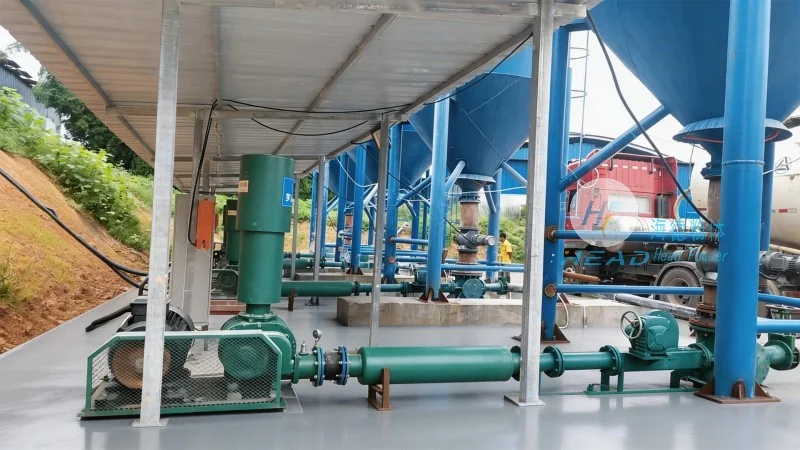
Selecting the right components is as important as the system architecture. The following table summarizes recommended materials and configurations for each critical component in a PVB pneumatic conveyor:
| Component | Recommended Material / Specification | Reason for PVB Suitability |
|---|---|---|
| Pipeline | Stainless steel 304 or 316L (electropolished interior) | Prevents corrosion from moisture, reduces surface roughness that traps fines |
| Bends | Long-radius (R ≥ 10D) with wear-resistant ceramic lining | Minimizes particle impact and abrasion |
| Diverter Valves | Full-port ball valve with PTFE seats or knife-gate valve | Provides tight shut-off, avoids material accumulation |
| Blow Tank | Carbon steel with epoxy coating, or 304L stainless | Resists internal pressure cycling, easy to clean |
| Air Dryer | Refrigerated or membrane type, dew point ≤ -40°C | Eliminates moisture that causes PVB stickiness |
| Filter Receiver | Cartridge or pulse-jet bag filter, filtration ≤ 1 µm | Captures fine PVB dust, allows air venting below LEL |
| Grounding System | Continuous bonded copper strap, resistance < 10 Ω | Dissipates electrostatic charge safely |
Additionally, explosion venting panels should be installed on the blow tank and filter receiver, sized according to the cubic volume and PVB dust Kst value (typically 150–200 bar·m/s). Automatic suppression systems using nitrogen inerting may be required in high-risk zones. Headpowder integrates these safety features as standard in its PVB conveying packages, ensuring compliance with EN 1127-1 and API 521.
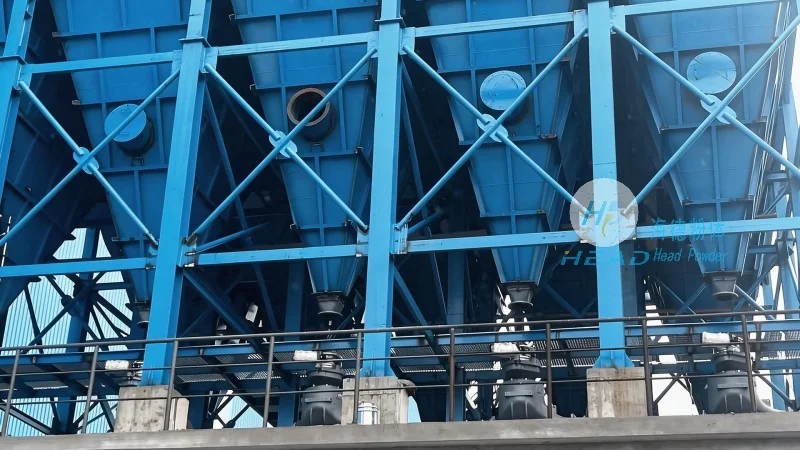
Even with a well-designed system, daily operation of PVB pneumatic conveyors requires disciplined monitoring. The most frequent issues include line plugging, erratic flow, and dust leaks. Below are root causes and corrective actions grounded in field experience.
One case study from a 2026 retrofit at a European PVB film manufacturer illustrates these principles. The original dilute-phase system suffered 12% material loss through fines generation and required weekly downtime for cleaning. After migrating to a Headpowder-supplied LSDP dense-phase system with a dehumidified air loop, the fines content dropped to under 2%, energy consumption reduced by 35%, and maintenance intervals extended to three months. The client reported a return on investment within 18 months.
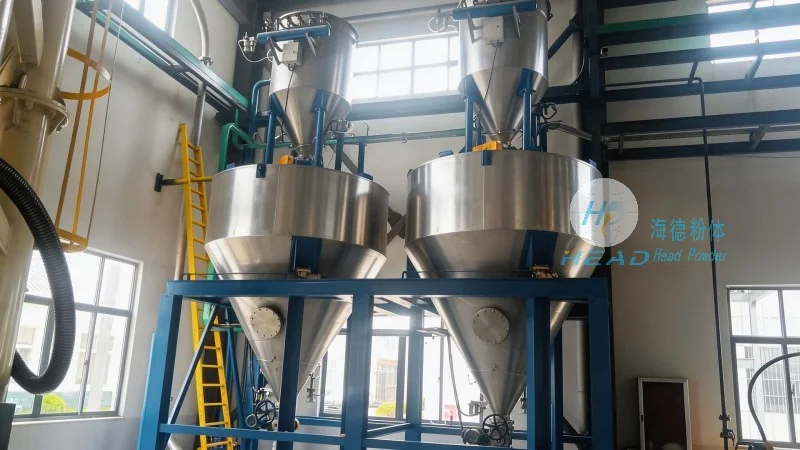
Looking ahead to 2027 and beyond, three macro trends will shape PVB pneumatic conveying technology. First, the push toward Industry 4.0 demands real-time monitoring and predictive maintenance. Smart sensors measuring pipeline pressure, vibration, and dust concentration can feed into digital twins, enabling operators to anticipate blockages before they occur. Headpowder’s IoT-enabled control platform, PowderLink, already provides dashboard visibility for up to 32 conveying lines simultaneously.
Second, sustainability regulations are driving lower energy consumption and reduced dust emissions. New screw compressor designs with variable frequency drives (VFDs) can match air supply exactly to conveying demand, achieving specific power as low as 0.025 kWh per kg of PVB conveyed. Combined with leak detection systems, this aligns with the European Green Deal targets for 2030.
Third, the growth of recycled PVB content in automotive and building materials introduces additional handling challenges—recycled powder has wider particle size distribution and higher contamination levels. Pneumatic systems must be adaptable, with adjustable air injection points and self-cleaning filters. Headpowder’s R&D team is currently piloting a modular conveying skid that can switch between virgin and recycled PVB without hardware changes.
In conclusion, pneumatic conveying for polyvinyl butyral is not a commodity solution but a specialized engineering discipline. By respecting the material’s unique properties—hygroscopicity, electrostatic sensitivity, and abrasion vulnerability—and applying dense-phase, low-velocity principles with robust component selection, manufacturers can achieve reliable, cost-efficient transport. Headpowder brings over two decades of field-proven expertise in this niche, with installations across Asia, Europe, and North America. For a detailed system design tailored to your PVB throughput and plant layout, please contact our engineering team. (咨询热线:156-6277-7102)

 Shandong headpowder Engineering Co., Ltd.
 156-6277-7102(Manager Zhang)
  0531-83386006
  Jinan City, Shandong Province, China
服务热线
微信咨询
回到顶部