News
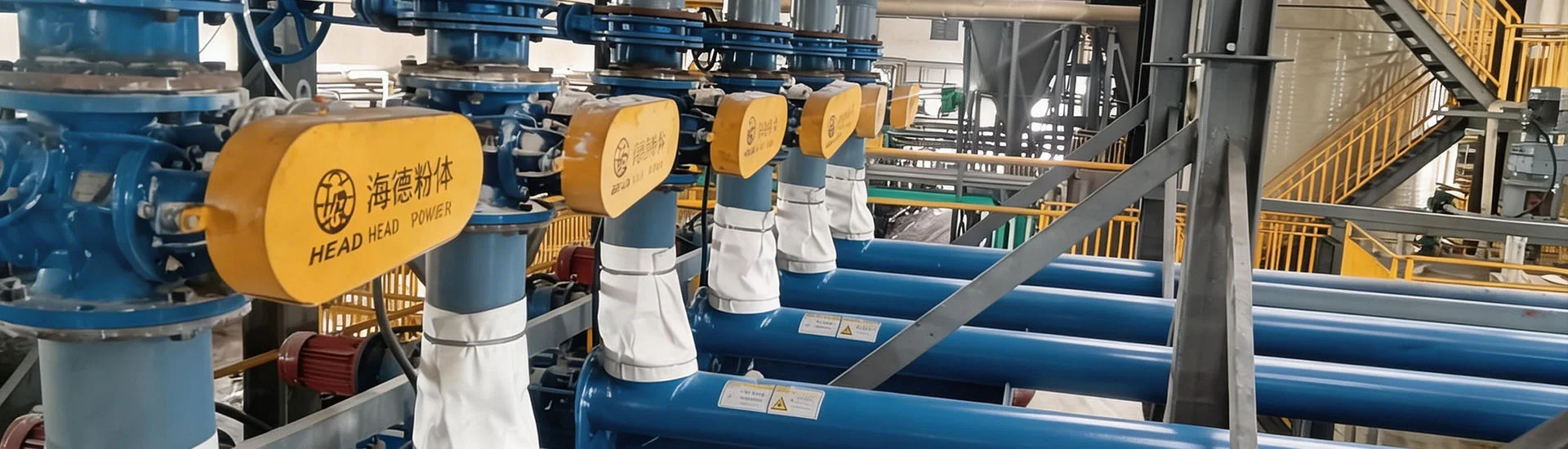
Rich project cases across industries, showing real implementation and proven technical strength.In the rapidly evolving landscape of lithium-ion battery manufacturing, the efficiency and reliability of material handling processes directly influence production throughput, cost control, and final product quality. Among the critical stages in anode production, the conveying of powdered carbon-based materials—such as graphite, silicon‑carbon composites, and hard carbon—presents unique challenges due to their fine particle size, low bulk density, and high abrasiveness. Pneumatic conveying systems have emerged as the preferred solution for moving these sensitive materials through closed pipelines using pressurized air or inert gas. This article provides an in‑depth technical analysis of pneumatic conveying for battery anode materials, covering system architecture, component selection, key design parameters, operational best practices, and future trends. The goal is to equip production engineers, procurement specialists, and plant managers with actionable knowledge to optimize their anode material conveying lines. headpowder, a specialist in advanced powder handling solutions, has accumulated extensive field experience in this domain, and we will reference real‑world insights throughout the discussion. (咨询热线:156-6277-7102)
Pneumatic conveying relies on a gas stream to transport solid particles through a pipeline. For battery anode materials, the conveying medium is typically nitrogen or argon to prevent oxidation and moisture pickup, especially for high‑surface‑area graphites and silicon‑based powders. Two main modes are employed: dilute‑phase and dense‑phase conveying. Dilute‑phase systems operate at high gas velocities (10–30 m/s) and low solids‑to‑gas ratios, suitable for friable materials that require gentle handling but tolerate moderate attrition. Dense‑phase systems, on the other hand, use lower gas velocities (2–8 m/s) and higher solids loading, which significantly reduces particle breakage and wear. Anode material producers favor dense‑phase conveying for premium‑grade graphite and silicon‑carbon blends, where preserving particle morphology and minimizing fines generation are critical for electrochemical performance. Industry data from 2025 indicates that over 65% of new anode production lines in Asia and Europe now specify dense‑phase pneumatic systems, reflecting the industry’s shift toward higher‑capacity, lower‑damage handling technologies.
A well‑designed pneumatic conveying system integrates several interdependent components, each requiring careful specification based on material properties and throughput targets. The pressure vessel or rotary valve serves as the feeding device. For anode powders, rotary valves with hardened tips and adjustable clearances are preferred to handle abrasive particles without excessive leakage. The pipeline material is often stainless steel 304L or 316L, with internal surface finishes of Ra ≤ 0.8 µm to reduce friction and prevent particle accumulation. Bends must be long‑radius (≥10 times pipe diameter) or use ceramic‑lined elbows to extend service life. Filtration equipment, such as reverse‑jet cartridge filters, ensures complete separation of powder from the conveying gas, achieving emission levels below 1 mg/Nm³ to comply with increasingly strict environmental regulations. The conveying gas source—a roots blower or screw compressor—should provide stable pressure and flow with variable frequency drives for precise control. headpowder’s engineering team recommends integrating real‑time pressure and flow sensors at multiple points to monitor system health and predict maintenance needs, a practice that has reduced unplanned downtime by 40% in recent installations.
Proper system design begins with accurate characterization of the anode material. Key parameters include particle size distribution (PSD), bulk density, tapped density, moisture content, angle of repose, and abrasion index. For example, spherical natural graphite with a D50 of 15–20 µm exhibits excellent flowability but generates static electricity, requiring conductive piping and grounding. Silicon‑carbon composites, with higher density and irregular shapes, demand higher conveying pressure and lower gas velocities to prevent settling. The solids loading ratio (kg of powder per kg of gas) typically ranges from 10:1 to 30:1 for dense‑phase systems, while dilute‑phase operates at 0.5:1 to 5:1. Pipeline pressure drop calculations must account for straight sections, bends, vertical risers, and fittings. Standard engineering models—such as the Darcy‑Weisbach equation adapted for two‑phase flow—are used, but empirical correction factors derived from pilot tests are essential for accurate sizing. A common mistake is under‑estimating pressure loss in long horizontal runs, leading to insufficient conveying velocity and blockages. headpowder’s proprietary simulation software incorporates over 500 real‑world data points from battery material projects, enabling clients to achieve first‑pass design accuracy within ±5% of actual performance.
Graphite, the dominant anode material for commercial lithium‑ion batteries, presents several handling challenges. Its low bulk density (0.4–0.6 g/cm³) requires large‑volume hoppers and extended pipeline diameters to maintain throughput. More critically, graphite particles are prone to delamination and edge‑plane exfoliation under impact. Controlled dense‑phase conveying with gentle acceleration zones and minimal bends preserves the crystalline structure. For silicon‑carbon anodes, which represent a growing segment expected to capture 22% of the market by 2026, the material’s higher hardness (Mohs 6–7) accelerates pipeline wear. Additionally, nano‑sized silicon particles (50–200 nm) tend to agglomerate, necessitating in‑line de‑agglomeration devices such as static mixers or ultrasonic vibration. Moisture control is paramount: silicon reacts with water to form hydrogen gas, creating explosion risks. Therefore, all conveying equipment must be sealed with desiccant breathers, and the conveying gas should have a dew point below −40 °C. headpowder’s recent project for a top‑five battery manufacturer integrated these features, achieving consistent material quality with less than 0.5% weight loss during conveying.
To maintain peak efficiency and prevent costly interruptions, operators should adhere to several proven protocols. First, regular inspection of wear‑sensitive components—especially bends, diverters, and rotary valve tips—using ultrasonic thickness gauging every 500 operating hours. Second, implementing a predictive maintenance program based on trend analysis of pressure drop and power consumption. An increase of 10% in baseline pressure drop often signals incipient blockage or filter blinding. Third, establishing a strict cleaning schedule to avoid cross‑contamination between different grades of anode materials. For multi‑product lines, pigging systems or vacuum purges can reduce changeover time from hours to under 30 minutes. Fourth, training operators on the relationship between conveying parameters and end‑product quality. For instance, excessive gas velocity generates fines that reduce battery energy density, while insufficient velocity leads to segregation of coarse and fine fractions. headpowder provides on‑site commissioning and training packages that have helped clients reduce material degradation by 30% and increase system availability above 97%.
In 2024, a major battery cell manufacturer in South Korea required a conveying system capable of handling 8 tons per hour of artificial graphite anode material with a D50 of 18 µm. The existing dilute‑phase system caused excessive particle breakage (fines generation over 12%) and frequent filter clogging. headpowder designed and installed a fully automated dense‑phase pneumatic system with nitrogen recirculation. Key design features included: a 6‑inch diameter stainless steel pipeline with ceramic‑lined elbows; a 4‑meter‑long acceleration section with gradually increasing cross‑section; and a high‑efficiency cyclone pre‑separator followed by a reverse‑jet filter with PTFE membranes. The system achieved a conveying velocity of 5 m/s at the solids loading ratio of 18:1. After commissioning, fines content in the conveyed material dropped to 4.3%, well below the customer’s specification of 5%. Energy consumption per ton was reduced by 35% compared to the previous system. The plant now operates three parallel lines with a combined throughput of 24 t/h, and scheduled maintenance intervals have been extended from 200 to 800 operating hours. This installation demonstrates how careful integration of material science and conveying engineering directly translates into production economics.
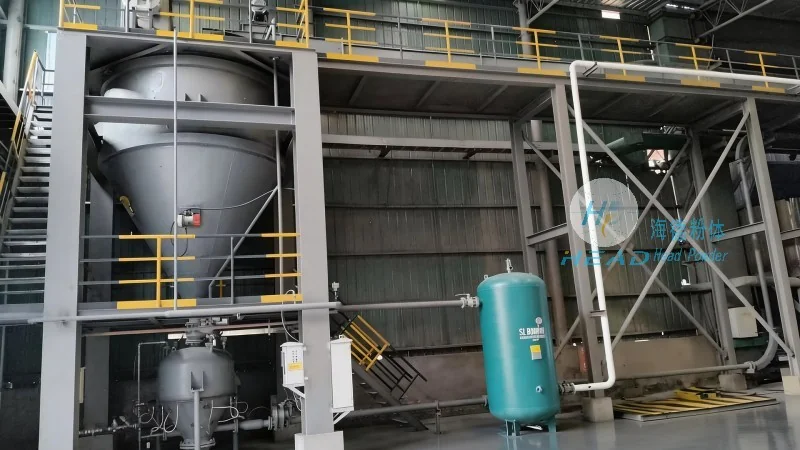
Several technological and market developments are influencing the design and adoption of pneumatic conveying systems in the battery supply chain. First, the shift toward dry electrode coating processes eliminates solvent‑based slurry mixing, but requires ultra‑precise metering and conveying of dry anode powder directly into coating machines. This demands pneumatic systems with mass flow accuracy of ±0.5% and closed‑loop control. Second, the rising use of recycled graphite from spent batteries poses additional challenges: particle shape heterogeneity and residual binder content increase the risk of agglomeration and pipeline fouling. Conveying systems must incorporate advanced dispersion technology and self‑cleaning features. Third, digital twin technology is becoming standard for new installations. By creating a virtual replica of the conveying line that integrates real‑time sensor data, operators can simulate material behavior, optimize velocity and pressure setpoints, and predict wear patterns. By 2026, an estimated 70% of new battery material plants will deploy digital twin‑enabled conveying systems. headpowder has already delivered three digital‑twin projects in Europe, allowing clients to reduce commissioning time by 40% and achieve peak efficiency from day one.
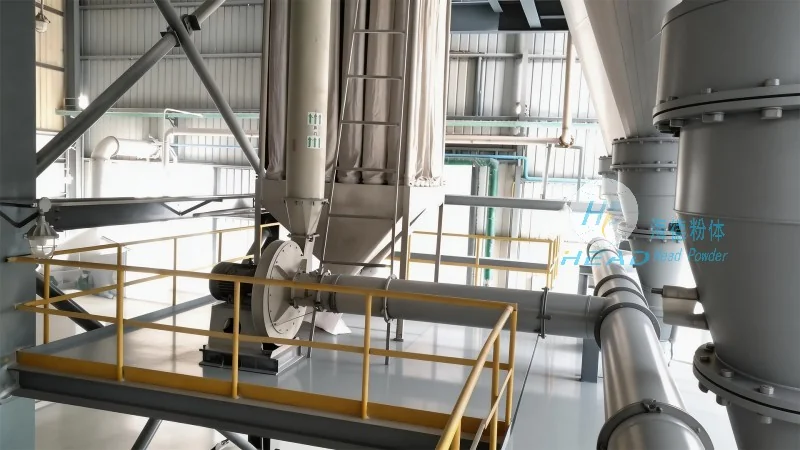
Investing in a state‑of‑the‑art pneumatic conveying system yields measurable returns beyond operational reliability. Reduced material degradation directly improves the yield of usable anode powder, translating to lower raw material costs. For a plant processing 10 t/h of graphite, a 3% reduction in fines can save over 2,000 tons of valuable material annually at current market prices. Lower energy consumption—achievable through variable speed drives and optimized gas recirculation—lowers carbon footprint and electricity bills. Furthermore, enclosed pneumatic systems eliminate dust emissions, supporting compliance with occupational exposure limits (OELs) for respirable graphite dust, which in many jurisdictions is set at 2 mg/m³. The lifecycle analysis of modern dense‑phase systems shows a 25–30% lower environmental impact compared to mechanical conveyors of equivalent capacity, primarily due to reduced wear parts replacement and lower maintenance waste. These factors align with the battery industry’s sustainability commitments and increasingly stringent environmental regulations.
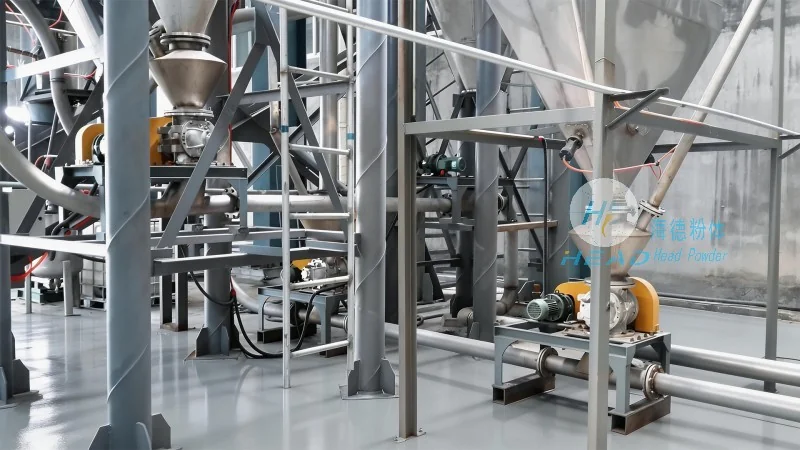
Selecting and implementing the right pneumatic conveying system for battery anode materials is a multifaceted decision that requires deep technical expertise, experience with diverse material types, and a forward‑looking approach to automation and digitalization. From the initial material characterization through to detailed engineering, installation, and ongoing optimization, every stage demands precision. Companies that invest in robust, well‑engineered conveying solutions position themselves to achieve higher production yields, lower operating costs, and superior product consistency—all of which are essential in the fiercely competitive battery market. headpowder combines decades of pneumatic conveying experience with a dedicated focus on battery materials, offering end‑to‑end support from conceptual design to onsite commissioning and lifecycle service. Whether upgrading existing lines or building greenfield plants, our team helps clients navigate the complexities of anode powder handling. For a detailed discussion of your specific conveying requirements, please reach us at the contact number provided at the beginning of this article. (咨询热线:156-6277-7102)

 Shandong headpowder Engineering Co., Ltd.
 156-6277-7102(Manager Zhang)
  0531-83386006
  Jinan City, Shandong Province, China
服务热线
微信咨询
回到顶部