News
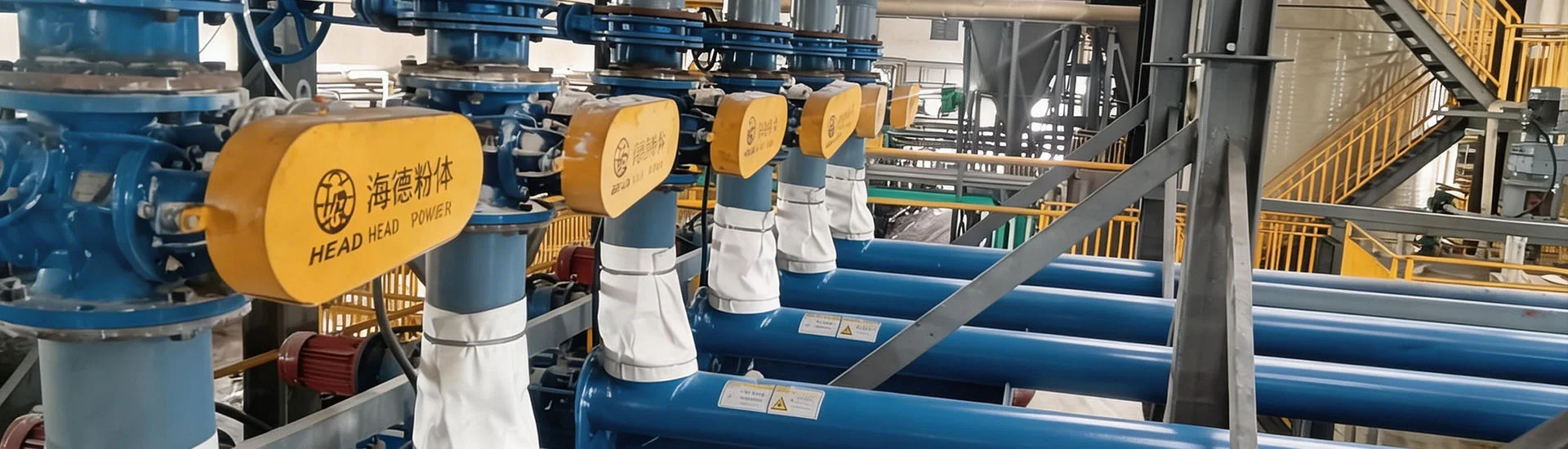
Rich project cases across industries, showing real implementation and proven technical strength.Carboxymethyl cellulose (CMC) is a highly versatile, water-soluble polymer widely used across industries such as food, pharmaceuticals, cosmetics, oil drilling, and paper manufacturing. Its unique properties—hygroscopicity, fine particle size, low bulk density, and tendency to bridge or cake under pressure—present significant challenges during bulk material handling. Pneumatic conveying systems have emerged as the most reliable, hygienic, and efficient method for transporting CMC powder from storage to processing points. This article provides a deep technical exploration of pneumatic system design for CMC, covering material characteristics, system types, component selection, sizing parameters, industry trends through 2026, and practical implementation insights. Whether you are a plant engineer evaluating new equipment or a procurement specialist seeking understanding of the technology, this guide offers actionable knowledge grounded in real-world engineering practice.
CMC is produced through the chemical modification of natural cellulose, resulting in an anionic polymer with variable degrees of substitution and viscosity grades. The powder form typically exhibits particle sizes ranging from 80 to 200 mesh (75–180 μm), with true densities around 1.5–1.6 g/cm³ but bulk densities as low as 0.3–0.6 g/cm³. This makes CMC a typical "aeratable" powder that can fluidize easily but also tends to generate dust and compact under static conditions. The moisture content, usually 5–10%, further influences flowability—higher moisture can cause stickiness and bridging. Additionally, many CMC grades possess electrostatic charge accumulation, leading to material buildup on pipe walls and filter surfaces. These characteristics dictate the choice of pneumatic system design: dilute-phase versus dense-phase, negative pressure versus positive pressure, and the selection of rotary valves, diverter valves, and filtration units. A system designed without accounting for CMC's hygroscopic nature and fine particle behavior will inevitably face plugging, segregation, or inconsistent feed rates.
Two primary pneumatic conveying regimes apply to carboxymethyl cellulose: dilute-phase (suspension flow) and dense-phase (slug or plug flow). Dilute-phase systems, operating at high air velocity (20–35 m/s) and low solid-to-air ratios, are commonly used for short distances and moderate capacities. They are effective for CMC when the pipeline is kept short and straight, and when dust collection is robust. However, the high velocity can cause particle attrition, especially for higher-viscosity CMC grades that are more brittle. For applications requiring longer distances or gentle handling, dense-phase conveying is preferred. In dense-phase systems, material moves as compact plugs at much lower air velocities (2–8 m/s), reducing both wear and degradation. Headpowder's engineering team has documented numerous CMC installations where dense-phase pressure systems operating at 1–3 bar achieved product integrity rates above 99.5% over 150-meter conveying lines. Negative pressure (vacuum) systems are another option, ideal for multiple pick-up points feeding a single destination, and are particularly hygienic for food-grade CMC because any leakage is inward, preventing contamination.
Within these categories, the choice between pressure vessel (blow tank) and rotary valve feeding depends on particle characteristics. For fine, free-flowing CMC, rotary valves with blow-through or drop-through configurations work well. For sticky or cohesive grades, blow tanks with fluidizing cones and specially designed discharge nozzles are recommended. It is essential to evaluate the CMC's angle of repose, cohesion index, and aeration behavior—data generated from shear cell testing—before committing to a system architecture. Many plant failures originate from assuming one-size-fits-all design; a tailored approach based on laboratory analysis of the specific CMC grade is non-negotiable.
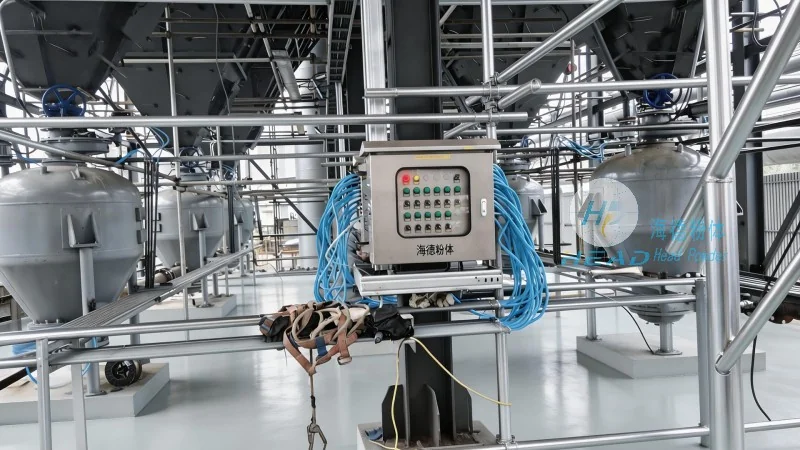
A robust CMC conveying system comprises several critical components, each must be engineered to withstand the powder's challenging properties. The feeding device is arguably the most important. Rotary valves with close-tolerance rotors and abrasion-resistant coatings prevent air leakage and product caking. For CMC prone to bridging, a vibrated hopper or fluidized bottom with aeration pads ensures consistent material discharge into the conveying line. The conveying pipeline itself should be made of 304 or 316L stainless steel, with internal surface roughness below 0.8 μm Ra to minimize friction and powder sticking. Pipe bends must be of long-radius design (R/D ratio of 12:1 or higher) or use ceramic-lined bends to reduce wear from particle impact. The separation point—usually a cyclone receiver followed by a bag filter or cartridge filter—needs efficient air-material separation while handling fine CMC dust. Filter media with anti-static properties and a surface treatment for easy dust release are recommended to prevent blinding. Finally, the control system integrates pressure transmitters, velocity sensors, and flow regulators to maintain stable conveying conditions. Headpowder's proprietary control logic for CMC applications includes self-adaptive algorithms that adjust feed rate and air velocity in real-time based on line pressure feedback, ensuring consistent throughput even when material properties fluctuate with ambient humidity.
Accurate sizing of a CMC pneumatic conveying system requires determination of several key parameters: conveying distance (horizontal, vertical, and equivalent bends), required capacity (kg/h or t/h), material bulk density, particle size distribution, and moisture content. The dilute-phase design typically uses the standard gas-solid flow equations where the solids loading ratio (kg solids per kg air) ranges from 5 to 15 for CMC. The pick-up velocity at the feed point should be at least 20 m/s to prevent pipe blocking, while the terminal velocity (settling velocity) of CMC particles (0.5–2 m/s depending on size) dictates that the conveying velocity remains well above that threshold. Pressure drop calculations must account for acceleration loss, straight pipe friction, bend losses, and lift energy. For dense-phase systems, the design approach shifts to plug flow modeling where the pressure drop across a plug is a function of plug length, pipe diameter, and material compressibility. Empirical data from headpowder's test facility—which includes a 100-meter closed-loop conveying system with adjustable blow tank pressure—indicates that CMC with bulk density 0.45 g/cm³ and median particle size 120 μm can be conveyed in dense-phase at a solids loading ratio of 30–60 with blow tank pressure of 2.5–3.5 bar. These values are typical for medium- to long-distance applications. It is strongly recommended that users request a material test with their actual CMC sample before finalizing the system size, as minor variations in viscosity grade can shift conveying behavior significantly.
In the food industry, CMC is used as a thickener, stabilizer, and emulsifier in products such as ice cream, sauces, and bakery fillings. A global dairy manufacturer recently replaced a mechanical screw conveyor system with a headpowder-designed dense-phase pneumatic system to transport CMC powder from bulk silos to mixing vessels located on four separate production floors. The previous system suffered from frequent bridging and contamination due to exposed augers. The pneumatic solution eliminated product stagnation, reduced cleaning downtime by 70%, and achieved conveying rates of 1,500 kg/h over a total distance of 85 meters including six 90-degree bends. In the oil drilling sector, CMC serves as a fluid-loss control agent in water-based drilling muds. A drilling chemicals plant in the Middle East required a system capable of conveying high-viscosity grade CMC (viscosity 2,000–3,000 mPa·s in 1% solution) from a bag dump station to a batch mixer 120 meters away with minimal dust emission. Headpowder deployed a negative-pressure dilute-phase system with a cartridge filter equipped with pulse-jet cleaning and anti-static elements. The system consistently maintained dust concentrations below 1 mg/m³ at the operator area and achieved 95% feeding accuracy without shear degradation. For pharmaceutical-grade CMC (USP/NF compliant), a European contract manufacturer needed a fully enclosed, hygienic conveying line that could be cleaned via CIP (clean-in-place) and SIP (sterilize-in-place). The solution incorporated orbital-welded pipes with zero dead legs, quick-release connections, and a vacuum conveying principle to avoid any direct contact with moving mechanical parts. These examples demonstrate that pneumatic conveying for CMC is not a one-size-fits-all solution—each application demands tailored engineering based on product grade, hygiene requirements, and plant layout.
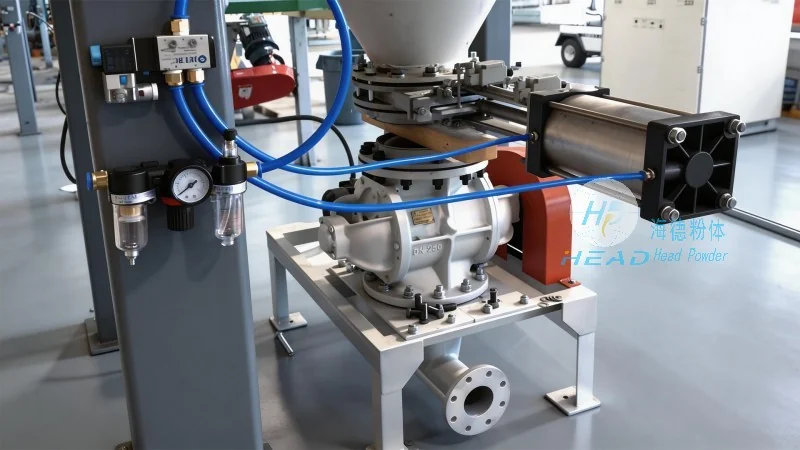
The global carboxymethyl cellulose market is projected to grow at a compound annual growth rate (CAGR) of 3.8% from 2024 to 2029, driven by increasing demand in convenience foods, personal care, and enhanced oil recovery. As production scales, manufacturers are seeking more efficient, less wasteful conveying solutions. Several technology trends are shaping the CMC pneumatic conveying landscape toward 2026. First, digitalization and Industry 4.0 integration are enabling real-time monitoring of conveying parameters—such as air mass flow, material velocity, and line pressure—via sensors connected to cloud-based analytics platforms. This allows predictive maintenance and optimization of energy consumption, which can reduce operating costs by 15–25%. Second, the adoption of low-velocity dense-phase technology is expanding because it reduces particle breakage and pipe wear, directly improving product quality and equipment lifespan. Third, environmental regulations are driving the use of dust-tight systems with higher filtration efficiency (MERV 16 or HEPA filters) and closed-loop conveying to minimize emissions. Additionally, modular and containerized pneumatic systems are gaining traction, offering faster installation and flexibility for multi-product lines. Headpowder has already introduced a line of "smart blow tanks" with integrated PLC and remote diagnostic capabilities, enabling customers to adjust conveying parameters from a central control room without physical intervention. These innovations align with the growing emphasis on sustainability and operational excellence across the chemical and food processing sectors.
Choosing the right engineering partner for a carboxymethyl cellulose pneumatic conveying project is as critical as the technology itself. Look for a provider with demonstrable experience in handling hygroscopic, fine, and cohesive powders. The partner should offer in-house material testing capabilities that simulate your actual conveying conditions—distance, pipe diameter, air velocity, and temperature—and provide data-driven recommendations rather than generic system designs. headpowder has served clients across six continents for over two decades, with a dedicated powder testing laboratory that includes shear cell analyzers, fluidization tests, and a pilot-scale conveying loop. The company’s team of process engineers works closely with clients to evaluate all variables: particle degradation tolerance, allowable dust emissions, energy consumption targets, and integration with existing equipment. After-sales support is equally important—headpowder provides remote monitoring, spare parts inventory management, and field service technicians who specialize in powder handling systems. For any inquiry regarding CMC pneumatic conveying, including feasibility studies, budget costing, or turnkey installation, you may reach the team directly (咨询热线:156-6277-7102).
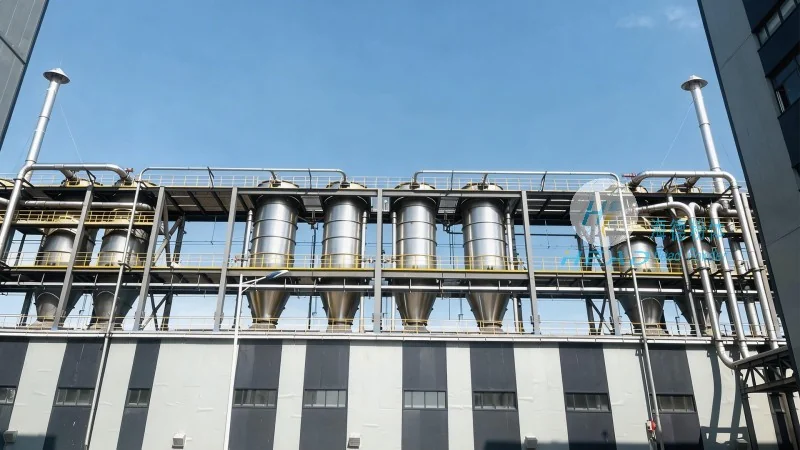
Carboxymethyl cellulose is a critical raw material whose handling and conveying must be executed with precision to preserve its functional properties and ensure process reliability. Pneumatic systems—when correctly designed, sized, and maintained—offer the most effective balance of hygiene, capacity, gentle handling, and cost efficiency. From understanding powder behavior and selecting the correct conveying regime to specifying components that resist wear and accommodate electrostatic issues, every decision impacts the total cost of ownership. The industry is progressing toward smarter, more adaptable systems that leverage real-time data for continuous improvement. Companies that invest in well-engineered pneumatic solutions today will benefit from reduced downtime, lower maintenance costs, and higher product consistency in the coming years. Whether you are expanding an existing line or building a new plant, take the time to conduct thorough material characterizations and engage an experienced partner who can translate those insights into a system designed for your specific CMC grade and operational context. With the right approach, pneumatic conveying becomes a seamless, high-performance link in your production chain, supporting both current needs and future growth.

 Shandong headpowder Engineering Co., Ltd.
 156-6277-7102(Manager Zhang)
  0531-83386006
  Jinan City, Shandong Province, China
服务热线
微信咨询
回到顶部