News
Rich project cases across industries, showing real implementation and proven technical strength.As the global demand for high-performance lithium-ion batteries surges—driven by electric vehicles, portable electronics, and grid-scale energy storage—the manufacturing of battery-grade nanomaterials has become a focal point of industrial innovation. Among the most challenging aspects of this production chain is the handling and transport of ultrafine powders such as lithium iron phosphate (LFP), nickel cobalt manganese (NCM) cathode precursors, carbon nanotubes, silicon anodes, and solid-state electrolyte particles. These materials, often with particle sizes below 100 nanometers, exhibit extremely high surface area, low bulk density, and strong cohesive or agglomerative tendencies. Traditional mechanical conveying methods, such as belt conveyors, screw feeders, or bucket elevators, frequently lead to material degradation, dust generation, cross-contamination, and significant maintenance overhead. In this context, pneumatic conveying has emerged as the preferred technology for moving lithium battery nanomaterials safely, precisely, and efficiently. This article explores the technical nuances, design considerations, and operational best practices for pneumatic conveying systems tailored to the unique properties of lithium battery nanomaterials, with a focus on achieving high throughput while preserving material integrity and process safety.
The lithium battery industry is projected to exceed 3.5 terawatt-hours of annual production capacity by 2026, according to industry benchmarks. With such rapid scaling, the reliability of material handling systems directly impacts production yields, operational costs, and final product quality. Nanomaterials used in battery electrodes are particularly sensitive to shear forces, moisture, and temperature fluctuations. Even minor degradation can alter electrochemical performance, leading to reduced cycle life or capacity fade. Therefore, conventional conveying approaches are no longer adequate. Pneumatic conveying offers a closed-loop, dust-free, and highly controllable environment that aligns with the cleanliness requirements of Class 1000 cleanrooms and the stringent safety standards of combustible dust handling. By leveraging dilute-phase, dense-phase, or hybrid conveying modes, manufacturers can transport these delicate powdered materials over distances ranging from a few meters to hundreds of meters, with minimal particle breakage and zero leakage. The following sections provide a comprehensive examination of pneumatic conveying system design for lithium battery nanomaterials, covering system architecture, key parameters, material characterization, energy efficiency, and real-world implementation insights.
Successful pneumatic conveying begins with a thorough understanding of the physical and chemical properties of the powder being handled. Lithium battery nanomaterials present several distinct challenges that differ significantly from conventional bulk solids. First, their extremely small particle size (typically between 10 nm and 500 nm) results in high inter-particle Van der Waals forces, leading to strong agglomeration. This can cause blockages in pipelines if the system is not properly designed. Second, many cathode and anode materials are hygroscopic, absorbing moisture from ambient air, which can degrade battery performance and create sticky deposits inside the conveying line. Third, the low bulk density—often between 0.2 and 0.8 g/cm³—means that volumetric flow rates need to be much higher than for denser materials to achieve the same mass throughput. Fourth, the abrasive nature of materials like NCM (with Mohs hardness up to 6) requires careful selection of pipe materials and bend geometry to avoid rapid wear. Finally, many lithium battery nanomaterials are combustible when suspended in air, requiring explosion protection measures such as inert gas blanketing, pressure relief vents, or the use of nitrogen as a conveying medium.
To design a reliable pneumatic conveying system, engineers must first characterize the powder's flowability, using methods such as the Carr Index, Hausner Ratio, or shear cell testing. For materials with poor flowability, dense-phase conveying—where material moves in slugs or plugs at low velocity—can reduce degradation compared to dilute-phase conveying. However, dense-phase systems require higher air pressure and more robust feeder mechanisms. Conversely, dilute-phase conveying, where particles are fully suspended in a high-velocity air stream, is simpler and cheaper but can cause unacceptable attrition for fragile materials like carbon nanotubes. A hybrid approach, often referred to as semi-dense phase, can be optimized by adjusting air velocity and solids loading ratio. For example, when conveying lithium iron phosphate (LFP) powder with a mean particle size of 200 nm, a solids loading ratio of 10 to 20 kg material per kg air, combined with an air velocity of 6 to 12 m/s, has been shown to maintain particle integrity while achieving throughputs of up to 5 tonnes per hour in a 4-inch pipeline. These parameters must be validated through pilot testing, as theoretical models alone cannot fully account for the complex rheology of nanopowders.
A well-engineered pneumatic conveying system for lithium battery nanomaterials integrates several critical components, each requiring careful specification. The feeding system is often the most challenging part. Rotary valves, screw feeders, or venturi eductors must provide a steady, controlled material flow without pulsing or bridging. For cohesive nanopowders, a positive displacement feeder with a metering screw and a vibrated hopper bottom can prevent arching. The conveying pipeline should be constructed from smooth-bore stainless steel (304 or 316 grade) with an internal surface finish of Ra ≤ 0.8 μm to minimize friction and material buildup. Bends should be long-radius (R/D ≥ 10) or use blind-tee configurations to reduce particle impact and wear. For abrasive materials, ceramic-lined bends or replaceable wear-back plates are recommended. The air mover—typically a roots blower, screw compressor, or centrifugal fan—must deliver sufficient pressure and flow rate. For dense-phase systems, pressures of 2 to 6 bar(g) are common, while dilute-phase systems operate at 0.5 to 1.5 bar(g). The separation system at the destination, usually a cyclone separator followed by a baghouse filter or cartridge filter, must achieve 99.9% separation efficiency to recover valuable nanomaterials and prevent environmental emissions. For ultra-fine powders, HEPA filters with MERV 16 or higher ratings may be necessary to comply with occupational exposure limits.
Beyond hardware, the control system plays a pivotal role. Modern pneumatic conveying installations utilize PLC-based controls with real-time monitoring of air pressure, velocity, material flow rate, and differential pressure across the line. Automatic adjustments can maintain optimal conveying conditions even as material properties vary due to batch differences. For instance, a sudden increase in pressure drop might indicate a plug formation, triggering a reverse pulse or a temporary increase in air velocity to clear the blockage. Additionally, moisture control is critical: an inline desiccant dryer or a nitrogen purge system can maintain a dew point below -40°C, preventing moisture absorption during conveying. For combustible materials, the oxygen concentration in the conveying gas must be kept below the limiting oxygen concentration (LOC), typically less than 8% by volume for many lithium battery powders. This is achieved by using nitrogen or argon as the conveying medium, with continuous oxygen monitoring and automatic shutdown interlocks. headpowder has extensive experience designing and integrating such safety-critical systems, ensuring compliance with NFPA 652 and ATEX directives (咨询热线:156-6277-7102).
While pneumatic conveying offers undeniable advantages for nanomaterial handling, energy consumption remains a significant operational cost. The specific energy requirement for conveying lithium battery powders typically ranges from 2 to 15 kWh per tonne, depending on distance, elevation, and conveying phase. Dilute-phase systems consume more energy due to high air volume, whereas dense-phase systems use higher pressure but lower air volume. In a recent industry study, switching from dilute-phase to optimized dense-phase conveying for NCM precursor powder reduced energy consumption by 40% while cutting particle attrition by 60%. To further improve energy efficiency, variable frequency drives (VFDs) on blowers and feeders allow the system to match real-time throughput demands rather than running at full capacity continuously. Another effective strategy is the use of multi-point conveying—where a single blower serves multiple pick-up points via branched pipelines with diverters—reducing the total installed horsepower. Additionally, proper pipeline sizing and minimizing unnecessary bends can lower pressure losses. A typical rule of thumb: every 90-degree bend adds the equivalent of 15 to 20 meters of straight pipe in pressure drop, so careful layout design is essential.
Cost optimization also extends to maintenance and downtime. Because nanoparticle-laden air can cause erosion and filter clogging, regular inspection and replacement of wearing components are necessary. Predictive maintenance using pressure sensors and wear monitors can schedule interventions before failures occur, reducing unplanned downtime. The total cost of ownership (TCO) for a pneumatic conveying system should account for initial equipment investment, installation, energy, maintenance, and the value of material saved from degradation. In many lithium battery production plants, the cost of scrapped out-of-spec material due to mechanical conveying damage can be as high as 5% of total raw material cost. By adopting properly engineered pneumatic systems, manufacturers can reduce this waste to below 0.5%, resulting in rapid payback periods of 12 to 18 months. headpowder's turnkey solutions include lifecycle cost analysis, helping clients select the most economical conveying approach for their specific nanomaterials.
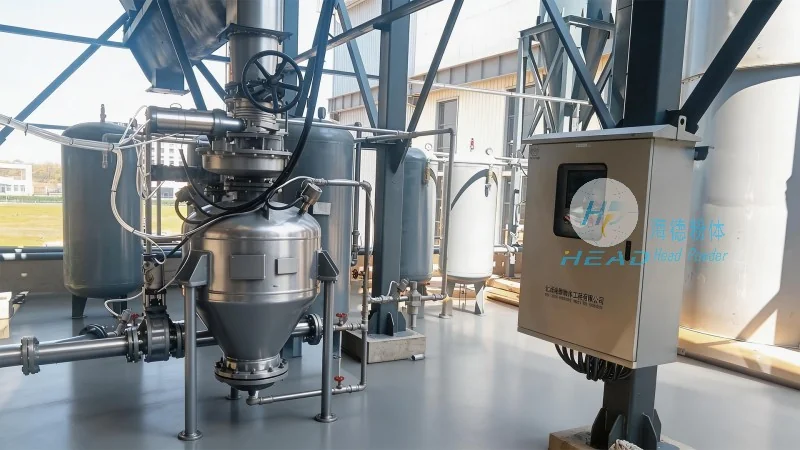
To illustrate the practical implementation of these principles, consider a mid-scale lithium battery cathode plant producing 10,000 tonnes per year of LFP (lithium iron phosphate). The raw material—a fine powder with D50 of 150 nm and bulk density of 0.35 g/cm³—must be conveyed from a warehouse bag dump station to blending silos located 80 meters away, including a 12-meter vertical lift. The material is hygroscopic and temperature-sensitive, requiring a dry, inert environment. The plant selected a dense-phase pneumatic conveying system designed by headpowder. Key specifications included: a 3-inch Schedule 10S stainless steel pipeline, a pressure vessel feeder rated for 5 bar(g), a rotary screw compressor with integrated nitrogen supply, and a reverse-jet cartridge filter with PTFE membrane for fine particle collection. The system operates at a solids loading ratio of 18 kg/kg, air velocity of 8 m/s, and achieves a throughput of 4.2 tonnes per hour with less than 0.3% particle size reduction as measured by laser diffraction. The closed-loop nitrogen recirculation system maintains oxygen levels below 5%, eliminating combustion risk. Over 18 months of continuous operation, the system has achieved 98.7% availability, with only two scheduled maintenance stops. The plant reported a 3.2% reduction in raw material waste compared to their previous mechanical conveying setup, translating to annual savings of over $320,000.
Another application involves conveying carbon nanotube (CNT) additives for conductive slurries. CNT agglomerates are notoriously difficult to handle due to their high aspect ratio and tendency to form entangled networks. Using a specially designed venturi-based dilute-phase system with ultra-low air velocity (2–4 m/s) and a dispersion nozzle at the conveying line outlet, headpowder successfully transported CNT powder with negligible breakage, maintaining consistent electrical conductivity in the final electrode coating. These case studies demonstrate that a tailored pneumatic conveying approach—backed by rigorous material testing, computational fluid dynamics (CFD) modeling, and field-proven component selection—can meet the most demanding requirements of lithium battery nanomaterial production.
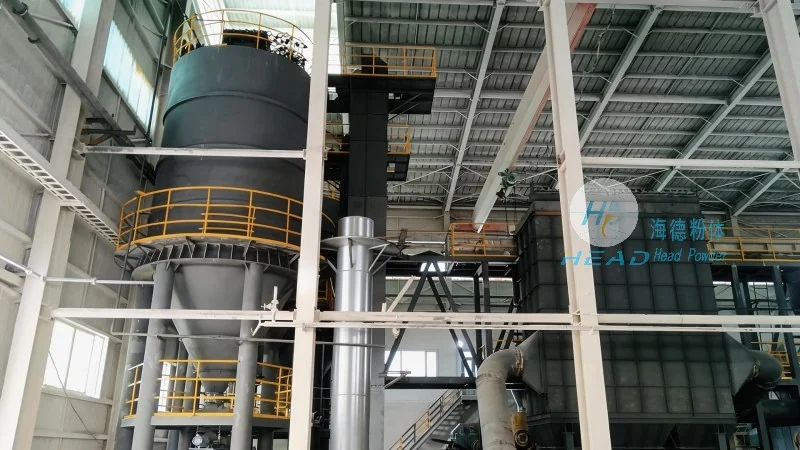
Looking ahead to 2026 and beyond, the lithium battery industry is expected to adopt even more advanced nanomaterial formulations, such as silicon-dominant anodes with 50 nm particles and high-voltage cathodes with multi-layered nanostructures. These materials will require further innovations in pneumatic conveying technology. One emerging trend is the integration of real-time particle characterization inline, using laser diffraction or dynamic image analysis to continuously monitor particle size distribution during conveying. This data can feed back into the system control to adjust conveying parameters on the fly, ensuring consistent product quality. Another development is the use of electrostatic charging mitigation, as nanomaterial conveying can generate significant static charges that lead to agglomeration or spark hazards. Surface conductivity measurements and grounding techniques combined with anti-static filter media are becoming standard practice. Additionally, modular and mobile conveying units are gaining traction in pilot-scale battery research facilities, allowing flexible reconfiguration as formulations change. The push toward sustainable manufacturing is also driving interest in closed-loop conveying systems that recover and reuse conveying gas, reducing nitrogen consumption by up to 70%.
headpowder continues to invest in R&D to address these evolving needs. Recent innovations include a proprietary adaptive flow control algorithm that uses machine learning to predict and prevent blockages, and a low-wear bend design with replaceable ceramic inserts that extends service life by three times compared to standard bends. As battery manufacturers scale up their gigafactories, the reliability and precision of pneumatic conveying will remain a cornerstone of their production strategy. By partnering with experienced system integrators who understand the unique challenges of nanomaterial handling, companies can achieve higher yields, lower costs, and safer operations. The comprehensive expertise offered by headpowder (咨询热线:156-6277-7102) ensures that every conveying system is engineered for optimal performance, from initial concept through commissioning and ongoing support.
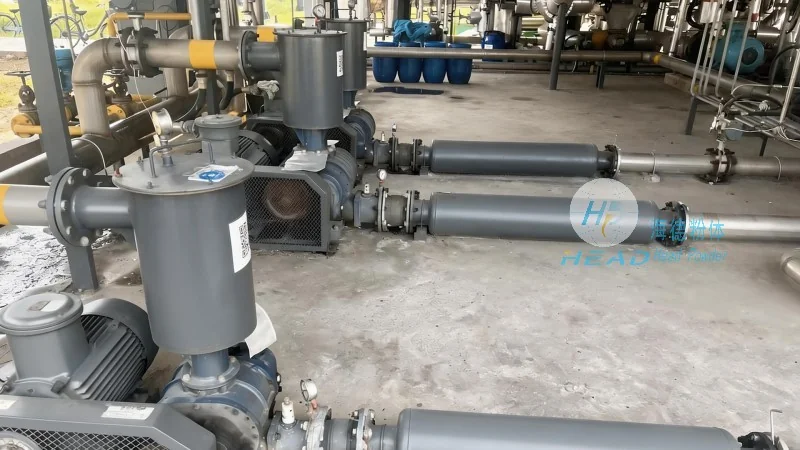
Safety compliance cannot be overstated in the context of lithium battery nanomaterials. Many of these powders are classified as flammable solids and can form explosive dust clouds when dispersed. The entire pneumatic conveying system must be designed in accordance with international standards such as ISO 13849 for safety-related control systems, IEC 60079 for electrical equipment in explosive atmospheres, and local regulations like the Chinese GB 50016 or European EN 1127. Key safety measures include: (1) bonding and grounding of all conductive components to prevent electrostatic discharge; (2) installation of explosion vents on vessels and long straight pipe runs; (3) use of pinch valves or fast-acting shut-off valves to isolate sections in case of an event; (4) continuous monitoring of process parameters with automatic shutdown triggers; and (5) regular dust layer thickness inspections inside the system to avoid secondary explosions. For oxygen-sensitive materials, the conveying gas should be monitored for oxygen content, and a nitrogen supply with a redundant pressure regulator should be integrated. headpowder's safety engineering team conducts detailed hazard analysis (HAZOP) for each project, ensuring that every system meets or exceeds regulatory requirements. Moreover, the company provides comprehensive training for plant operators on safe startup, shutdown, and emergency procedures, as well as routine maintenance protocols to maintain the integrity of the conveying system over its lifecycle.
In conclusion, pneumatic conveying stands as an indispensable technology for the lithium battery nanomaterial industry, offering a reliable, clean, and efficient means of transporting delicate powders across production stages. By understanding material properties, optimizing system design, embracing energy-efficient practices, and prioritizing safety, manufacturers can unlock significant operational and economic benefits. As the industry moves toward higher energy densities and faster charging capabilities, the role of advanced material handling will only grow. Companies that invest in proven pneumatic conveying expertise—backed by real-world experience and continuous innovation—will be best positioned to thrive in the competitive global battery market.

 Shandong headpowder Engineering Co., Ltd.
 156-6277-7102(Manager Zhang)
  0531-83386006
  Jinan City, Shandong Province, China
服务热线
微信咨询
回到顶部