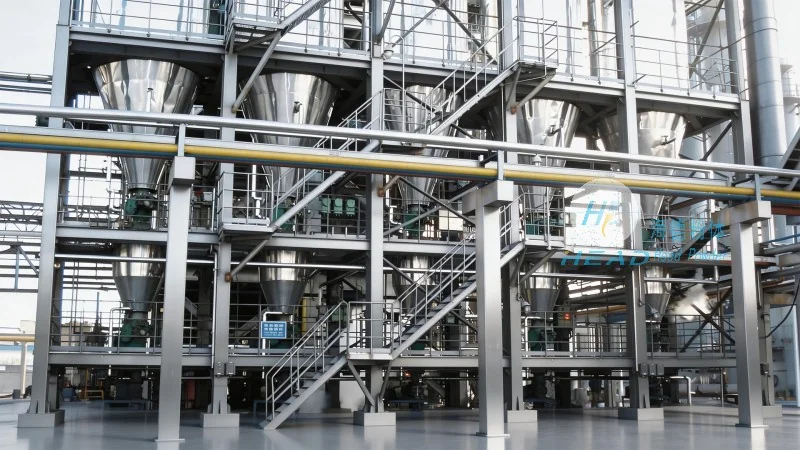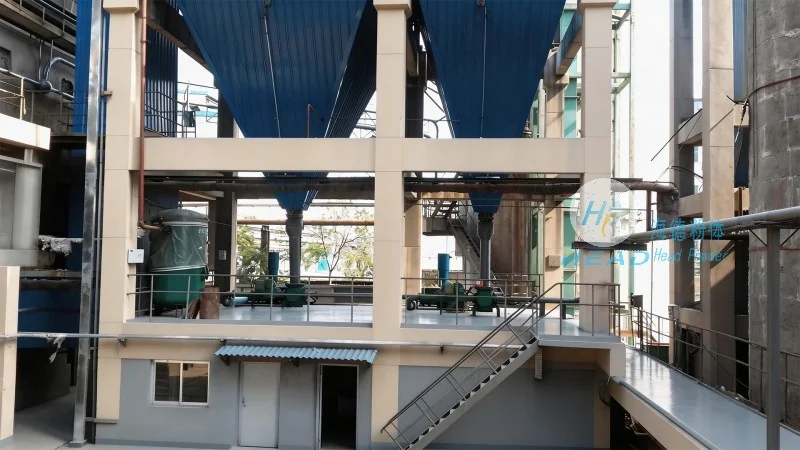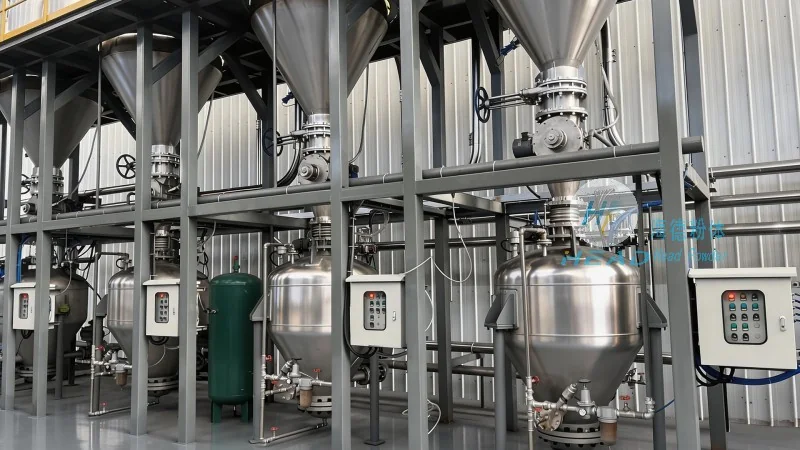

With over a decade of experience in the pneumatic conveying industry, our company specializes in a full range of pneumatic conveying system equipment.
您的当前位置:首页 >> News >> Technical FAQ

News

Rich project cases across industries, showing real implementation and proven technical strength.

Ternary Cathode Material Conveying: Pneumatic Conveying Guide

2026-07-08

Understanding the Unique Challenges of Ternary Cathode Material Conveying

The rapid expansion of electric vehicle and energy storage markets has placed unprecedented demand on lithium-ion battery production, with ternary cathode materials—particularly NCM (nickel-cobalt-manganese) and NCA (nickel-cobalt-aluminum) variants—emerging as the dominant cathode chemistries for high-energy-density cells. These materials are fine, often agglomerated powders with median particle sizes ranging from 3 to 15 microns, exhibiting low bulk densities (0.6–1.2 g/cm³), high hygroscopicity, and significant electrostatic charging tendencies. When handled improperly, ternary cathode materials can degrade in quality due to moisture absorption, particle attrition, or contamination, directly impacting battery performance metrics such as capacity retention, cycle life, and safety. Therefore, selecting an appropriate conveying technology is not merely an operational choice—it is a critical quality assurance decision.

Pneumatic conveying has become the preferred method for transporting ternary cathode powders within battery precursor synthesis, calcination, blending, and electrode slurry preparation facilities. Unlike mechanical conveyors (screw, belt, or bucket elevators), pneumatic systems offer completely enclosed material transport, eliminating dust emissions and cross-contamination risks while enabling flexible routing across multiple processing stations. However, the inherent characteristics of ternary cathode materials—abrasiveness, cohesive flow behavior, and sensitivity to impact and shear—demand a carefully engineered pneumatic solution rather than a generic off-the-shelf system. Factors such as conveying velocity, air-to-material ratio, pipe wall material, bend geometry, and filtration efficiency must be precisely tailored to avoid particle degradation, pipeline wear, and system blockages. headpowder, as a specialized provider of pneumatic conveying solutions for advanced materials, integrates decades of empirical data and computational modeling to design systems that preserve particle integrity while achieving throughputs of 500 kg/h to 10 t/h per line.

Industry trends in 2026 indicate that battery manufacturers are increasingly adopting closed-loop pneumatic networks that integrate real-time monitoring of moisture, temperature, and pressure differentials. This shift aligns with the broader push toward Industry 4.0 and digital twin implementations in battery gigafactories. In parallel, regulatory standards such as ISO 8573 for compressed air quality and ATEX directives for explosive atmospheres impose strict compliance requirements, as ternary cathode dust can form combustible clouds under certain conditions. A well-designed pneumatic conveying system not only meets these standards but also reduces total cost of ownership through lower energy consumption, reduced maintenance downtime, and extended equipment lifespan. The following sections provide a comprehensive technical guide for engineers, project managers, and procurement specialists involved in ternary cathode material handling, covering system architecture, component selection, operational parameters, safety protocols, and real-world performance data.

Fundamental Principles of Pneumatic Conveying for Ternary Cathodes

Pneumatic conveying systems operate by suspending solid particles in a gas stream—typically compressed air or nitrogen—and transporting them through pipelines to a destination. For ternary cathode materials, the primary conveying modes are dilute phase (high velocity, low solids loading) and dense phase (low velocity, high solids loading). Dilute phase systems, where particles are fully suspended in the air stream at velocities between 15 and 30 m/s, are commonly used for short distances (<50 m) and when flexibility in routing is needed. However, the high velocity can cause significant particle attrition (fracture of primary crystallites or de-agglomeration) and accelerate erosive wear on pipe walls, especially at bends.

Dense phase conveying operates at velocities typically below 10 m/s, with material moving as a moving bed or plug flow. This mode drastically reduces particle breakage and wall abrasion, making it highly suitable for fragile ternary cathode materials. Yet dense phase systems require more precise control of air injection and blow tank pressurization, and they have higher sensitivity to material moisture content and cohesion. For NCM811 or NCA powders, which contain high nickel content and are more reactive to moisture, dense phase with nitrogen as the conveying gas is strongly recommended to prevent lithium loss and surface degradation. Computational fluid dynamics (CFD) simulations now allow system designers to predict pressure drop, particle velocity distribution, and attrition rate with accuracy within ±5%, enabling optimization before construction.

Key design parameters that must be carefully selected include solids loading ratio (SLR), defined as the mass of material conveyed per mass of conveying gas. For ternary cathode powders, optimal SLR values range from 10 to 40 in dense phase, with lower values used for cohesive materials. Conveying gas initial velocity at the feed point should be kept below 8 m/s to avoid immediate impact damage. Pipeline internal diameter is chosen based on required throughput and allowable pressure drop, typically 2 to 6 inches for most battery material applications. The conveying distance, number and configuration of bends (±45°, R/D ratio > 6), and elevation changes further influence system design. headpowder employs proprietary software that integrates these variables with material-specific parameters (Hawskey–Bratton flow index, angle of repose, compressibility) to generate a complete system layout with guaranteed performance.

Critical Component Selection and Best Practices

Every element within a pneumatic conveying system for ternary cathode materials must be selected with particular attention to material compatibility, cleanability, and reliability. The following list outlines the major components and recommended specifications:

  • Rotary airlock valves: Used for feeding material into the conveying line from hoppers or bins. For ternary cathodes, use stainless steel 316L construction with hardened rotor tips and wear-resistant housing liners. Clearances should be tight (0.1–0.2 mm) to minimize air leakage without causing particle shearing. Explosion-proof motors and grounding brushes are mandatory in classified areas.
  • Blow tanks (pressure vessels): Preferred for dense phase systems, blow tanks must be designed per ASME Section VIII or equivalent international standards. A conical or dished bottom with fluidizing nozzles helps maintain uniform material discharge. Internal surface finish Ra ≤ 0.8 μm prevents powder adhesion and facilitates clean-in-place (CIP) procedures.
  • Pipeline and bends: Seamless 316L stainless steel pipes with wall thickness of at least Schedule 40 are standard. Bends should be long-radius (R/D = 8–12) or use elbows with replaceable wear-back inserts. For highly abrasive materials like NCM sintered aggregates, ceramic-lined bends (alumina 99% purity) extend service life by 3–5 times compared to stainless steel.
  • Filter receivers/cyclones: Primary separation of powder from conveying gas occurs at the destination. High-efficiency cartridge filters with PTFE membrane media achieve outlet emissions below 1 mg/Nm³, which is critical for compliance with EU and North American air quality regulations. Reverse-pulse cleaning with nitrogen prevents moisture contamination.
  • Flow control and instrumentation: Pressure transmitters at the blow tank, pipeline start, and end; mass flow meters (Coriolis type for solids) or thermal dispersion sensors for gas; and moisture analyzers (dew point sensors) ensure process visibility. All data should be integrated into a PLC or DCS for automated adjustments of conveying pressure and air injection timing.

Installation best practices include minimizing horizontal sections where possible to avoid settling, using ground straps at every flange joint to dissipate static charges, and providing isolation valves at each drop point for maintenance. A typical headpowder installation for a 4 t/h NCM622 conveying line includes a 3.5 m³ blow tank with fluidized bottom, 156 m of DN80 pipe with 24 bends, and a cartridge filter receiver with 98% collection efficiency at 1 micron. The system runs at a solids loading ratio of 28 with nitrogen at 0.5 barg, achieving particle size degradation (D50 reduction) of less than 1.5% after 2000 hours of operation, verified by laser diffraction measurements.

Safety, Explosion Protection, and Regulatory Compliance

Ternary cathode powders, especially those with high nickel content, present combustible dust hazards. The minimum explosive concentration (MEC) for Ni-rich NCM dusts ranges from 30 to 80 g/m³, with Kst values (deflagration index) between 100 and 200 bar·m/s. European ATEX directive 2014/34/EU and US NFPA 652 require a formal dust hazard analysis (DHA) for all handling systems. Key safety measures include: (1) installing explosion venting panels on filter receivers, blow tanks, and large-diameter piping runs where flame propagation path could exceed 30 meters; (2) implementing active suppression systems (chemical or water mist) in enclosed spaces where venting is impractical; (3) ensuring all components are grounded with resistance below 10 ohms to prevent electrostatic discharge; (4) using inert gas (nitrogen) as the conveying medium when the oxygen concentration in the system can be maintained below the limiting oxygen concentration (LOC), typically 6%–8% for these materials.

Additionally, thermal runaway risks arise from frictional heat generation in the conveying line. Headpowder’s systems incorporate continuous temperature monitoring at bend sites and at the blow tank outlet, linked to automatic shutdown interlocks if temperature exceeds 60 °C. In a real-world case at a major cathode manufacturer in South Korea, the company reported zero dust-related incidents over three years of operation on a headpowder-supplied line handling 6 t/h of NCMA material, citing the integrated oxygen monitoring and inert gas purge as critical factors. Compliance with ISO 45001 for occupational health and safety is facilitated by the fully enclosed design, which also eliminates operator exposure to nickel and cobalt compounds, aligning with REACH and OSHA permissible exposure limits.

From a regulatory perspective, battery producers are increasingly required to provide traceability data for cathode materials. Pneumatic conveying systems that incorporate weigh cells and barcode scanners at each transfer point enable batch-level material tracking. The U.S. Department of Energy’s 2026 Battery Materials Processing Program emphasizes that automation and containment in material handling are prerequisites for funding eligibility. Headpowder’s solutions can be configured to interface with manufacturing execution systems (MES), providing real-time flow data, material genealogy, and maintenance logs, all of which support auditability for customers targeting ISO 9001 and IATF 16949 certifications.

Operational Efficiency and Total Cost of Ownership

Ternary Cathode Material Conveying: Pneumatic Conveying Guide

While initial capital expenditure for a pneumatic conveying system is generally higher than mechanical alternatives, the total cost of ownership (TCO) over a 10-year lifecycle is often 20%–35% lower when accounting for reduced maintenance, higher uptime, and lower product loss. For ternary cathode materials, the prevention of particle attrition alone can yield substantial savings: a 2% reduction in fines generation can improve electrode coating quality and reduce scrap rates in slurry mixing by up to 5%. Headpowder’s systems are designed with modularity in mind, allowing capacity expansion from 2 t/h to 8 t/h by simply adding additional blow tanks or parallel lines, without replacing the entire infrastructure.

Energy consumption is another critical TCO factor. Dense phase systems consume 30%–50% less compressed air per ton of material compared to dilute phase, because they operate at lower velocities and higher solids loading. Headpowder uses high-efficiency rotary screw compressors with variable speed drives and heat recovery units to further reduce energy costs. In a third-party performance audit of a headpowder system handling NCM523 at 3.5 t/h, the specific energy consumption was measured at 4.8 kWh per ton of material, which is 22% below the industry average reported by the 2026 Pneumatic Conveying Benchmark Study. Moreover, automatic purging and filter cleaning cycles reduce compressed air waste by an additional 15%.

Maintenance intervals for properly designed systems often exceed 2000 operating hours between scheduled stops. Key wear items—such as rotary valve vanes, bend inserts, and filter bags—are easily replaceable and available as pre-assembled kits. Headpowder provides a digital maintenance dashboard that predicts component wear based on cumulative material throughput and pressure trend analysis, enabling condition-based maintenance rather than calendar-based overhauls. This approach has helped one European battery material producer achieve 98.7% system availability over 18 months, contributing to a production output increase of 12% without additional capital investment.

Selecting the Right Partner: Technology and Support Considerations

Ternary Cathode Material Conveying: Pneumatic Conveying Guide

When evaluating pneumatic conveying system providers for ternary cathode materials, engineering competence and domain-specific experience matter more than generic conveying expertise. Look for suppliers that maintain their own materials testing laboratory with standard test methods (e.g., ASTM D6128 for flowability, D7481 for bulk density, D6393 for shear testing) to determine the optimal conveying parameters for your specific powder formulation. Headpowder operates a dedicated cathode materials test facility in partnership with leading battery institutes, where customers can send 5 kg samples for full-scale trials on a 1 t/h pilot line. Each trial generates a detailed report covering recommended conveying mode, air consumption, pressure drop, particle size analysis before and after conveying, and wear rate projections.

Furthermore, consider the supplier’s ability to provide complete turnkey solutions, including upstream hopper design, downstream packaging or dosing systems, and process control integration. Headpowder’s engineering team includes chemical engineers, mechanical designers, and control system specialists who collaborate with the customer’s process team from conceptual design through commissioning. Recent projects have included integration with glovebox isolation systems for moisture-sensitive NCMA materials and dual-line systems that switch between two cathode grades without cross-contamination, using automated pigging technology. Contact headpowder directly for a no-obligation feasibility assessment of your ternary cathode conveying requirements(咨询热线:156-6277-7102). The team can provide references from similar installations across Asia, Europe, and North America, along with site visit arrangements to view operating systems.

Future Outlook: Smart Conveying and Sustainability in Battery Material Handling

Ternary Cathode Material Conveying: Pneumatic Conveying Guide

As battery gigafactories scale to capacities exceeding 100 GWh per year, the need for intelligent pneumatic conveying systems that self-optimize in real time will become essential. Headpowder is developing next-generation platforms using AI-driven pressure profile analysis to detect incipient blockages or filter blinding 30 minutes before they cause downtime. Coupled with predictive maintenance algorithms, these systems can reduce unplanned outages by 80%. In parallel, sustainability mandates are pushing for lower carbon footprints in material handling. Using nitrogen that is captured and recirculated within the system, rather than vented, can reduce greenhouse gas emissions by 60%–70% per ton of conveyed material. Some forward-thinking producers are already specifying closed-loop pneumatic networks with integrated nitrogen recovery units that achieve payback periods of less than two years.

The ternary cathode material market is projected to reach $95 billion by 2026, driven by EV adoption rates exceeding 30% in major economies. This growth will require the installation of hundreds of new conveying systems globally. By investing in a well-engineered pneumatic solution today, battery material manufacturers can secure a competitive advantage through consistent product quality, operational reliability, and regulatory compliance. Headpowder remains committed to advancing the science of powder handling for the battery industry, with a focus on measurable results—lower particle degradation, higher throughput, and safer working environments.

相关推荐

Shandong headpowder Engineering Co., Ltd. All rights reserved.

回到顶部