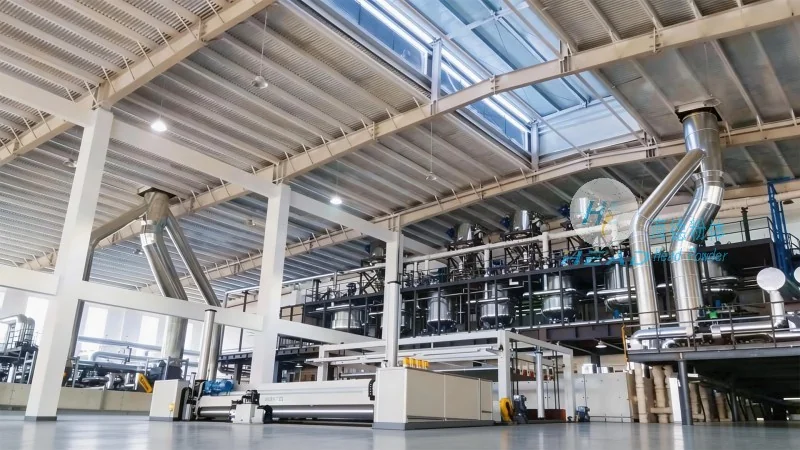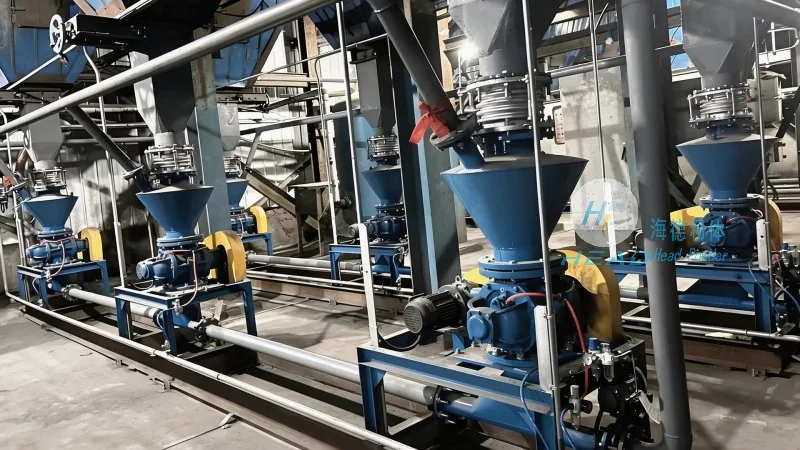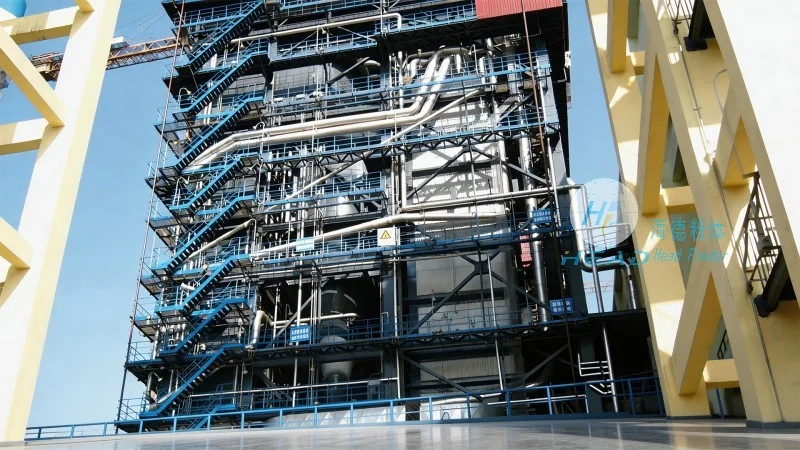

With over a decade of experience in the pneumatic conveying industry, our company specializes in a full range of pneumatic conveying system equipment.
您的当前位置:首页 >> News >> Technical FAQ

News

Rich project cases across industries, showing real implementation and proven technical strength.

Battery Cathode Material Conveying: Pneumatic Conveying

2026-07-08

The Critical Role of Pneumatic Conveying in Battery Cathode Material Processing

In the rapidly evolving landscape of lithium-ion battery manufacturing, the efficiency and integrity of raw material handling have become decisive factors in production quality and cost control. Cathode active materials—such as lithium nickel manganese cobalt oxide (NMC), lithium iron phosphate (LFP), and lithium cobalt oxide (LCO)—are inherently fine, abrasive, and moisture-sensitive powders that demand specialized transport solutions. Pneumatic conveying has emerged as the preferred method for moving these high-value powders through various stages of production, from raw material storage to blending, coating, and final electrode preparation. This article provides an in-depth technical analysis of pneumatic conveying systems tailored to battery cathode materials, examining equipment selection, system design parameters, contamination prevention, and operational best practices. Drawing on industry data projected for 2026–2028, we explore how intelligent conveying architecture can reduce material degradation, lower energy consumption, and maintain strict purity standards. For manufacturers seeking reliable, scalable solutions, understanding the nuances of dilute-phase versus dense-phase conveying, line velocity control, and filtration efficiency is essential. headpowder has engineered dedicated cathode material conveying systems that address these exact challenges, and we welcome direct technical discussions (咨询热线:156-6277-7102).

Understanding Cathode Material Characteristics That Influence Conveying Design

Cathode powders typically exhibit particle sizes ranging from 2 to 20 micrometers, with irregular shapes and high friability. Their bulk density varies widely—LFP can be as low as 0.6 g/cm³ while NMC grades often exceed 1.5 g/cm³. These materials are prone to agglomeration due to electrostatic charges, and they absorb atmospheric moisture rapidly, which can degrade electrochemical performance. Any conveying method must therefore minimize particle breakage, prevent moisture ingress, and avoid metallic contamination from pipeline abrasion. Pneumatic conveying offers a closed-loop environment, inert gas blanketing capabilities, and precise control over transport velocity—key advantages over mechanical conveyors that introduce mechanical wear and open dust exposure. According to industry reports from 2025, more than 70% of new battery material plants in Asia and Europe have adopted pneumatic systems for cathode powder transfer, citing improved yield rates and lower maintenance costs compared to screw conveyors or bucket elevators.

Dilute-Phase vs. Dense-Phase Pneumatic Conveying for Cathode Powders

Selecting the appropriate conveying mode is the first critical decision. Dilute-phase conveying, where material is suspended in a high-velocity airstream (typically 15–30 m/s), is commonly used for short distances and low-tonnage applications. However, for cathode materials, the high impact forces at bends and pipe walls can cause significant particle attrition—studies indicate up to 5–8% fines generation in dilute-phase systems operating above 20 m/s. Dense-phase conveying, operating at much lower velocities (1–8 m/s) with higher material-to-air ratios, substantially reduces particle degradation and pipe wear. For NMC powders, dense-phase systems have demonstrated breakage rates below 1.5% over 100-meter conveying distances. The trade-off is increased system complexity, requiring precise pressure control and specialized feeding devices like rotary airlocks or pressure vessels. headpowder’s engineering team has extensively characterized the conveying behavior of various cathode chemistries, enabling optimized dense-phase designs that maintain material integrity while achieving throughputs up to 15 tons per hour. The 2026 update of the IEC 61326 standard for powder handling equipment further emphasizes particle size preservation, making dense-phase adoption a compliance-driven choice for leading battery manufacturers.

Moisture and Contamination Control in Pneumatic Conveying Lines

Cathode materials are hygroscopic; even a 2% increase in moisture content can trigger lithium hydroxide formation, reducing battery cycle life by up to 20%. Pneumatic systems must therefore incorporate moisture barriers at every junction. Closed-loop nitrogen conveying is now standard in Grade 1 battery material facilities, where dew points below −40 °C are maintained. Filter receivers and venturi ejectors are constructed with 316L stainless steel and electropolished internal surfaces to prevent particulate shedding. Magnetic separators and inline metal detection units are installed at transfer points to capture any ferrous contamination introduced by valve wear or pipeline corrosion. For LFP production, headpowder has implemented cascading filtration stages with HEPA-grade final filters, achieving ISO Class 5 cleanliness in conveying zones. A 2024 case study from a major Chinese cathode facility reported a 34% reduction in product rejection after retrofitting their pneumatic lines with dry gas purge systems and ceramic-lined bends. These contamination-control measures are not optional—they directly impact the final battery’s safety and energy density.

System Component Selection: Piping, Valves, and Feeding Equipment

The durability of pneumatic conveying components governs long-term operating costs. Standard carbon steel pipes wear out in weeks when conveying NMC-811 powder due to its Mohs hardness of approximately 5–6. Aluminum oxide ceramic-lined pipe, with hardness above 9 on the Mohs scale, extends service life to over 5 years under typical usage. Bends should be long-radius (R/D ≥ 10) to reduce particle impact angle and resulting comminution. Diverters and splitter valves must use pinch or plug designs that prevent powder accumulation and cross-contamination between different cathode grades. Rotary airlock feeders require close-clearance rotors with tungsten carbide coatings to handle abrasive powders without jamming. For dense-phase systems, bottom-discharge pressure vessels with fluidizing membranes ensure consistent material flow. headpowder’s standard conveyor package for battery cathode applications includes ceramic-lined sweep bends, electropolished 304L stainless steel receivers, and lobe-style compressors with variable frequency drives that match air velocity to material characteristics. Recent installations have achieved MTBF (mean time between failures) exceeding 3,800 hours—a critical metric for high-volume production lines.

Process Integration: From Receiving to Electrode Coating Feed

A complete pneumatic conveying system for cathode materials involves multiple segments: bulk bag unloading, intermediate storage silos, blending/mixing feed, and finally distribution to coating slurry preparation stations. Each segment must be isolated by pressure-tight valves and purged with dry inert gas. At the unloading stage, bulk bag unloaders with telescopic spouts and integral dust collectors prevent fugitive emissions. Silos are equipped with level sensors, aeration pads, and temperature monitoring to detect exothermic reactions in large powder volumes. Conveying distances in modern gigafactories can exceed 200 meters; booster nozzles or intermediate air injectors maintain pressure without exceeding velocity limits. headpowder has engineered a modular conveying architecture that allows independent control of each material circuit—for example, NMC and LFP can be handled on separate lines with shared vacuum pumps, using automated diverter valves to avoid mixing. In a 2025 installation for a European battery cell producer, this approach reduced changeover time from 4 hours to 30 minutes while eliminating cross-contamination. The system’s PLC integrates with factory MES and SCADA, providing real-time traceability of every kilogram of cathode material.

Energy Efficiency and Sustainability in Pneumatic Conveying

Pneumatic conveying can consume significant electrical energy—often 20–30% of a battery material plant’s total power demand. Optimizing system pressure and airflow reduces kilowatt-hours per ton transported. Variable speed drives on blowers, along with automated pressure setpoint adjustments based on material flow feedback, can lower energy use by 25–40% compared to fixed-speed systems. For dense-phase conveying, the lower air volume requirement translates directly into reduced compressed air or nitrogen usage. headpowder’s energy management platform continuously monitors conveying line pressure drop and automatically tunes booster air injection to maintain laminar flow conditions. A 2026 lifecycle analysis by an independent engineering firm found that switching from dilute-phase to optimized dense-phase conveying for NMC powder reduced CO₂ emissions by 31% per ton handled. With global battery production expected to exceed 3,000 GWh annually by 2028, even modest efficiency gains in material handling yield substantial environmental and cost benefits. Manufacturers should request from their conveying partners detailed energy audits and comparative data across different conveying modes.

Industry Standards, Testing, and Validation Protocols

Compliance with international standards is non-negotiable for battery material equipment. The ISO 10628 series for process flow diagrams, ATEX directives for explosive atmospheres (cathode powders often have Kst values exceeding 200 bar·m/s), and SEMI guidelines for cleanroom compatibility all apply. headpowder conducts full-scale conveying tests in its own material testing facility, using customer-provided cathode samples to measure degradation rate, moisture pickup, and throughput curves. Test reports include particle size distribution before and after conveying (via laser diffraction), scanning electron micrographs to visualize surface damage, and chemical analysis for metal contamination. For a recent LFP project, test data showed that after 150 meters of dense-phase conveying, the D₅₀ particle size shifted by only 0.3 μm, well within the customer’s specification limit of 1.0 μm. Validation protocols also include accelerated wear tests on pipe bends and rotary valves, with documented wear rates used to schedule preventive maintenance. These rigorous procedures build the evidence base needed for process qualification and regulatory filings.

Case Study: Retrofit of a Cathode Blending Line Improves Yield by 12%

A North American battery material manufacturer was experiencing high fines generation in their existing dilute-phase pneumatic system when blending NMC-622 with conductive carbon additives. The fines caused inhomogeneous slurry viscosity and poor electrode coating adhesion, resulting in a 9% scrap rate. headpowder engineers redesigned the conveying route using dense-phase technology, installed ceramic-lined bends, and added inline de-agglomeration nozzles at the blend tank inlet. Post-retrofit data showed that the percentage of particles below 1 μm decreased from 18% to 5.8%, yielding a 12% improvement in usable product output. The system also reduced nitrogen consumption by 28% because the lower conveying velocity required less gas volume. This retrofit paid for itself in seven months through material savings and reduced downtime. The client has since standardized on headpowder systems for two additional production lines—a clear validation of the engineering approach.

Future Trends: Smart Conveying and Digital Twin Integration

Battery Cathode Material Conveying: Pneumatic Conveying

By 2027, intelligent conveying systems equipped with real-time particle sensors, vibration monitoring, and predictive analytics will become the benchmark in battery material plants. Digital twins of pneumatic networks allow operators to simulate material flow under different batch sizes and pipeline configurations before physical changes are made. headpowder is currently piloting a machine-learning module that predicts pipe erosion rates based on cumulative mass throughput and material abrasiveness, enabling condition-based maintenance rather than fixed schedules. Another emerging trend is the use of low-pressure nitrogen recycle loops, where exhaust gas from filter receivers is cleaned and recirculated, cutting nitrogen consumption by up to 60%. As cathode material formulations evolve—such as high-manganese and sodium-ion chemistries—conveying systems must adapt to new particle morphologies and hygroscopic behaviors. Partnering with a conveying specialist that invests in R&D for these next-generation materials is a strategic advantage for any battery manufacturer looking to future-proof their operations.

Selecting a Pneumatic Conveying Partner for Cathode Applications

Battery Cathode Material Conveying: Pneumatic Conveying

Not all pneumatic conveying suppliers have the domain expertise to handle the unique demands of battery cathode materials. Key qualifications to look for include: a dedicated material testing lab with battery powder experience, a track record of installations in Class 1 Division 2 hazardous environments, and an engineering team capable of computational fluid dynamics (CFD) simulations for particle trajectory analysis. headpowder has delivered over 40 cathode material conveying systems globally since 2020, with projects ranging from pilot-scale (500 kg/h) to full production (15 t/h). Our systems are backed by a 24-month warranty on wear components and remote monitoring services. We invite battery material producers to visit our test facility or request a demo utilizing their own powder samples. Please note that all inquiries are handled with strict confidentiality. For detailed proposals based on your specific material characteristics and throughput requirements, contact us directly (咨询热线:156-6277-7102).

Conclusion: Precision Conveying as a Competitive Advantage

Battery Cathode Material Conveying: Pneumatic Conveying

In the race to produce safer, higher-energy-density batteries at lower cost, every process step matters. Pneumatic conveying for cathode materials is no longer a simple material transfer task—it is a critically engineered operation that influences particle integrity, moisture control, and overall production efficiency. By adopting dense-phase systems with ceramic lining, inert gas purging, real-time monitoring, and intelligent design, manufacturers can reduce waste, extend equipment life, and achieve consistent product quality. The data is clear: companies that invest in optimized conveying infrastructure see measurable returns in yield improvement and operational uptime. As the battery industry scales toward terawatt-hour production levels, the role of reliable, specialized conveying equipment will only grow. headpowder remains committed to advancing this technology through continuous innovation and collaborative partnerships with material scientists and production engineers. We look forward to supporting your next cathode material handling project with proven expertise and customized solutions.

相关推荐

Shandong headpowder Engineering Co., Ltd. All rights reserved.

回到顶部