
In the rapidly evolving landscape of lithium-ion battery manufacturing, the handling and conveying of cathode active materials represent a critical bottleneck that directly impacts product quality, production efficiency, and overall operational safety. Cathode materials such as lithium iron phosphate (LFP), lithium nickel cobalt manganese oxide (NCM), and lithium cobalt oxide (LCO) are typically fine powders with high abrasiveness, hygroscopic tendencies, and sensitivity to mechanical degradation. The selection of an appropriate conveying system therefore requires deep technical consideration. Among the available options, pneumatic conveying systems have emerged as the preferred solution for modern battery material production lines, offering enclosed, dust-free, and gentle transport capabilities. This article provides a comprehensive examination of pneumatic system design, operational parameters, material behavior, equipment selection, and industry best practices specific to lithium battery cathode material conveying. It is intended for process engineers, plant managers, and procurement specialists who demand reliable, scalable, and contamination-free material handling solutions.
Pneumatic conveying utilizes a gas stream, typically compressed air or nitrogen, to transport bulk solid materials through pipelines. For cathode materials, the choice between dilute phase and dense phase conveying is governed by particle characteristics and process requirements. Dilute phase systems, operating at high gas velocities (15–30 m/s) and low solids-to-gas ratios, are commonly employed for short distances and when minimal material degradation is acceptable. However, cathode powders, particularly NCM and LCO, are prone to attrition under high velocity impacts, leading to fines generation and potential contamination. Dense phase conveying, operating at lower velocities (2–8 m/s) and higher solids loading, significantly reduces particle breakage and wear. This mode is increasingly adopted in headpowder’s system designs for sensitive battery materials, as it preserves particle morphology and electrochemical performance. The selection also depends on the material’s flowability, which can be assessed through parameters such as Hausner ratio, angle of repose, and cohesion index. For example, LFP with a typical Hausner ratio above 1.3 may exhibit poor flowability and require specialized aeration or vibration aids.
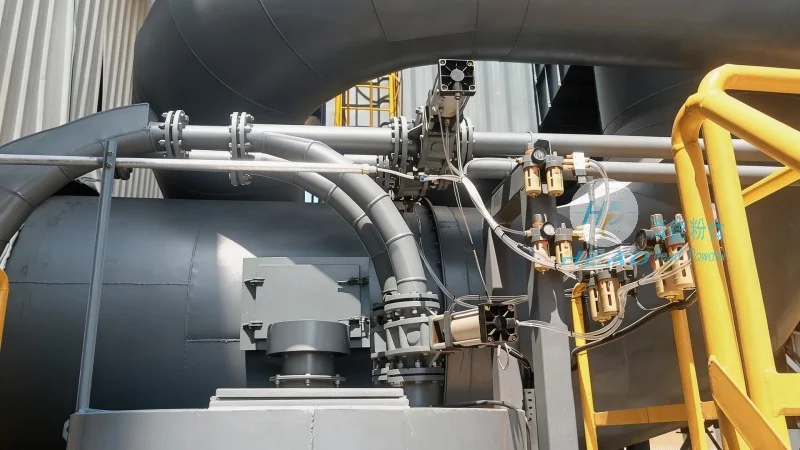
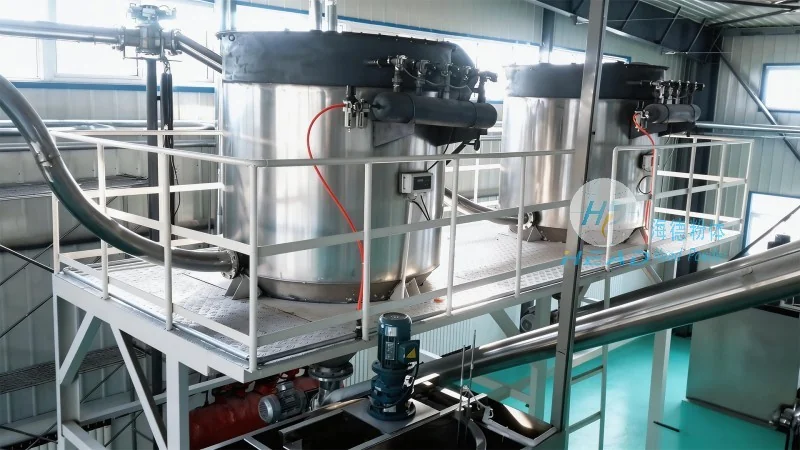
A complete pneumatic conveying system for cathode materials comprises several integrated components, each requiring careful engineering to ensure reliable and contamination-free operation. The prime mover, usually a positive displacement blower or a roots-type compressor, must deliver consistent air volume and pressure while accommodating fluctuations in material feed rate. Filtration at the intake side is mandatory to prevent ambient moisture or particulates from entering the system, as moisture absorption can degrade cathode material quality. The feeding device, such as a rotary airlock or a screw feeder, must provide a steady, metered material introduction into the conveying pipeline. For hygroscopic powders, headpowder recommends the use of nitrogen as the conveying gas with a dew point below −40°C to suppress moisture pick-up. Pipeline geometry, including bends, elbows, and straight sections, should be designed with radii no less than six times the pipe diameter to minimize wall friction and material deposition. Pipe materials, commonly stainless steel 304 or 316L, require internal surface finishes of Ra 0.4 µm or better to reduce adhesion and facilitate cleaning between product changeovers. The separation unit, typically a cyclone or a baghouse filter, must achieve capture efficiencies above 99.9% for fine particles down to sub-micron sizes, while maintaining a low pressure drop to conserve energy. A well-designed receiver hopper with level sensors and discharge valves ensures continuous downstream material flow.
Maintaining stable process parameters is paramount to preserving the chemical and physical integrity of cathode materials during pneumatic conveying. The conveying velocity must be kept within a narrow window: too high causes particle fracture and metal contamination from pipe abrasion; too low leads to settling, plugging, and unreliable flow. For NCM materials with a d50 around 10–15 µm, headpowder’s field data indicate that a conveying velocity of 6–10 m/s in dense phase operation reduces particle breakage by over 70% compared to conventional dilute phase systems. The solids loading ratio, defined as the mass of material per mass of gas, should be optimized for each material. A loading ratio of 10–30 kg/kg is typical for dense phase conveying of cathode powders, balancing energy consumption and throughput. Pressure differential across the system, monitored at multiple points, offers real-time indication of pipeline condition and potential blockages. Temperature control is equally critical: excessive heat generated by gas compression or friction can accelerate material decomposition, especially for lithium-rich compositions. System design must include provisions for temperature monitoring at the gas source and at the discharge point, with intercooling or aftercooling as necessary. Additionally, electrostatic charge buildup during conveying can cause dust explosions or coating issues; grounding all conductive components and using anti-static hoses are standard safety measures.
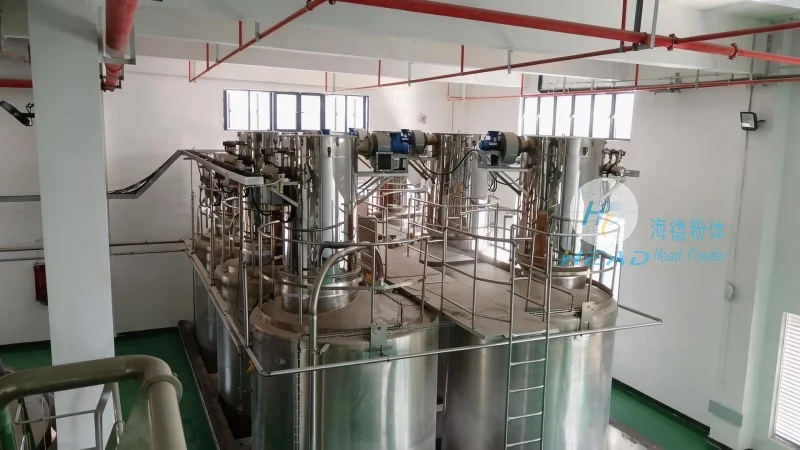
Cathode materials exhibit diverse flow behaviors that complicate pneumatic conveying. Fine particles below 50 µm often display cohesive and adhesive properties due to van der Waals forces, electrostatic attraction, and surface moisture. This can lead to ratholing, arching, and erratic discharge from storage vessels. Headpowder addresses these challenges through several proven techniques. First, the use of fluidizing cones or air cannons at bin bottoms promotes consistent material discharge. Second, the incorporation of mechanical agitators or vibratory dischargers reduces bridging. Third, pipeline induction of small quantities of inert gas improves material fluidization and reduces friction. For materials that are particularly prone to caking during transport, surface coating with hydrophobic agents or the addition of flow aids such as silica nanoparticles may be considered, though this must be evaluated for electrochemical compatibility. The moisture content of cathode powder should be maintained below 500 ppm; conveying in a controlled atmosphere with dry nitrogen is therefore standard practice in headpowder’s installations. Real-time moisture monitoring near the feed point allows automatic adjustment of gas dew point to stay within specifications.
Energy efficiency in pneumatic conveying is a major cost driver for battery material producers. A typical cathode material plant may consume several hundred kilowatts alone for material transport. Optimization begins with proper system design: oversizing blowers leads to unnecessary power draw, while undersizing causes frequent stoppages and product damage. Headpowder employs computational fluid dynamics (CFD) modeling during the design phase to predict pressure losses, optimize pipe routing, and minimize bends. The use of variable frequency drives (VFDs) on blowers allows the system to adjust air flow in response to actual material loading, reducing energy consumption by 15–30% compared to fixed-speed operation. Pipeline diameter selection is also critical: a slightly larger diameter can substantially lower gas velocity and pressure drop, but increases capital cost. Lifecycle cost analysis incorporating both energy and maintenance should guide these decisions. Another effective strategy is the recuperation of exhaust gas energy through expanders or heat exchangers, though this is more common in large-scale continuous operations. Maintenance scheduling, including periodic pipe cleaning to remove built-up fines, helps sustain low pressure drop and consistent energy use over time.
Handling lithium battery cathode materials requires rigorous safety protocols to prevent dust explosions, chemical reactions, and cross-contamination. Cathode powders, especially those containing cobalt or nickel compounds, are classified as combustible dusts with a minimum ignition energy below 10 mJ. Pneumatic systems must incorporate explosion venting, suppression, or inerting (typically using nitrogen) to mitigate risks. Headpowder’s standard design includes pressure relief panels, spark detection sensors, and automatic isolation valves. Contamination control is equally important: residual material from one product changeover must not mix with the next grade. Modular filter receivers with quick-release clamps and clean-in-place (CIP) spray nozzles enable rapid and thorough cleaning. For high-value cathode materials, the use of dedicated conveying lines for each formulation is recommended to avoid cross-contamination, although this increases capital investment. Magnetic separators and sieves installed at the system discharge provide an additional safeguard against metal contamination. Regular particle size distribution and X-ray fluorescence (XRF) analysis of conveyed material should be conducted to validate cleanliness.
The global lithium-ion battery market is projected to exceed 1.5 TWh by 2026, driving unprecedented demand for efficient and reliable cathode material handling. Several trends are shaping pneumatic conveying technology for this sector. First, the shift toward dry electrode coating processes eliminates solvent drying steps and places higher demands on particle integrity during transport. Second, the rising adoption of next-generation cathode chemistries, such as high-manganese and lithium-rich layered oxides, requires even gentler handling due to their friability. Third, digitalization and Industry 4.0 integration are enabling predictive maintenance and real-time process optimization. Headpowder is at the forefront of these developments, offering systems equipped with IoT sensors that track wear, material flow rate, and gas composition. Advances in material science, such as the development of more spherical particle morphologies, also improve flowability and reduce system wear. Automated regulation of conveying parameters based on inline particle size analyzers is expected to become standard in new installations by 2026. Furthermore, sustainability regulations are pushing manufacturers to reduce energy consumption and waste; pneumatic systems designed for high recirculation of conveying gas can cut nitrogen usage by up to 50%.

To illustrate the practical benefits of optimized pneumatic conveying, consider a project executed for a leading cathode material producer in Jiangsu, China. The client required a system to convey NCM811 powder from a spray dryer to storage silos and then to mixing and coating units, with a total distance of 180 meters and an elevation change of 12 meters. The material had a d50 of 12 µm and a moisture sensitivity threshold of 200 ppm. Headpowder designed a dense phase nitrogen-based pneumatic system with a conveying velocity of 8 m/s and a solids loading ratio of 22 kg/kg. Stainless steel 316L pipes with internal electropolishing were installed, incorporating long-radius bends and a bypass line for cleaning. The system achieved a throughput of 8 tonnes per hour with a specific energy consumption of 0.45 kWh per ton—30% lower than the client’s previous dilute phase system. Particle size analysis before and after conveying showed less than 2% increase in fines content (below 5 µm), confirming gentle handling. The client reported zero product contamination incidents over 18 months of continuous operation. This case demonstrates the tangible value of a properly engineered pneumatic conveying system in preserving cathode material quality and reducing operational costs.

When evaluating a pneumatic system supplier for cathode material conveying, several factors should be prioritized beyond initial pricing. Technical competence in material characterization—specifically the ability to conduct flowability tests, attrition tests, and moisture adsorption studies—is essential. The supplier should offer pilot-scale testing facilities where real cathode material can be run under simulated production conditions. Headpowder, for instance, maintains a state-of-the-art test center capable of processing up to 5 tonnes of material per day. The supplier’s track record in battery material handling and references from established battery manufacturers provide confidence in long-term reliability. Service capabilities, including installation supervision, training, and rapid spare parts delivery, minimize downtime. Modular system designs that allow future capacity expansion or product changeover flexibility are advantageous. Environmental and safety compliance, such as adherence to ATEX or IECEx standards, must be verified. Lastly, post-installation support with remote monitoring and predictive maintenance contracts can significantly extend system life and reduce unplanned interruptions. For detailed technical consultation and layout proposals tailored to your specific material and throughput requirements, headpowder invites you to reach out directly. (咨询热线:156-6277-7102)

The pneumatic conveying of lithium battery cathode materials is far from a commodity process; it is a strategic element that influences product quality, production yield, safety, and total cost of ownership. As the battery industry continues to scale up and diversify chemistries, the need for robust, flexible, and contamination-free conveying solutions will only intensify. Dense phase pneumatic systems, when designed with careful attention to material properties, component selection, and process control, offer a compelling balance between gentle handling and high throughput. Companies that invest in advanced conveying technology today will be better positioned to meet the quality standards and efficiency targets demanded by global battery manufacturers tomorrow. Headpowder’s expertise in pneumatic system engineering, combined with a deep understanding of cathode material behavior, enables battery producers to achieve reliable operations while minimizing particle degradation and energy waste. By aligning system design with real-world production constraints and future technological trends, manufacturers can create a material handling infrastructure that supports both current output goals and future innovation. The path forward lies in collaboration between material scientists, process engineers, and conveying system specialists—a partnership that headpowder is committed to advancing with every project.
Shandong headpowder Engineering Co., Ltd.
156-6277-7102(Manager Zhang)
0531-83386006
Jinan City, Shandong Province, China 
服务热线
微信咨询
回到顶部