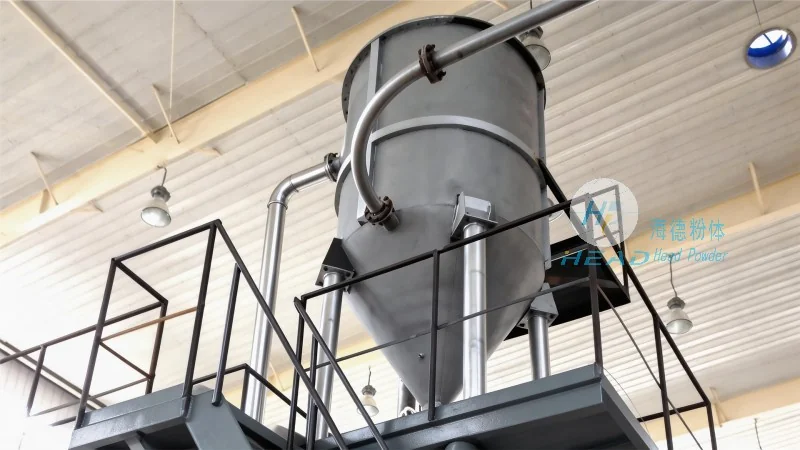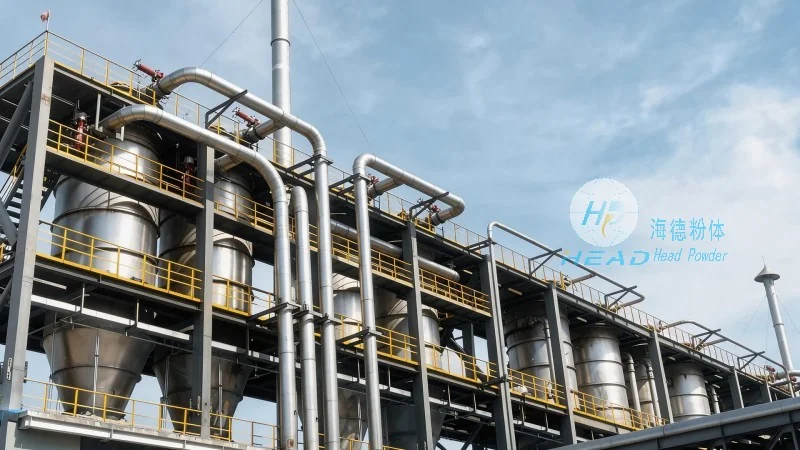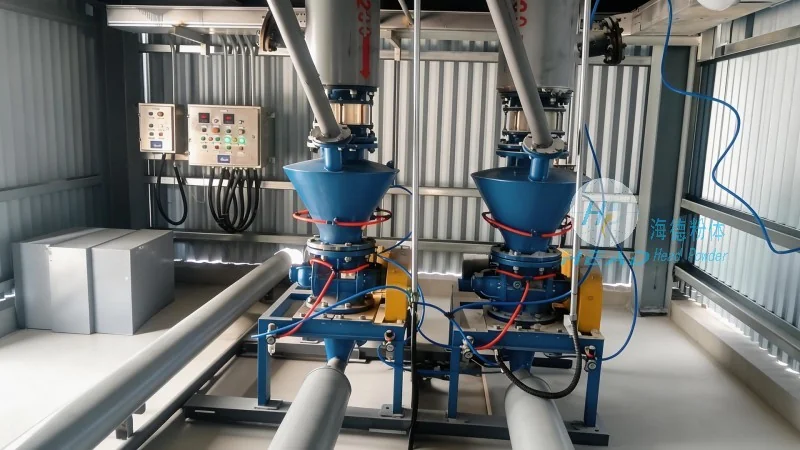

Fluorinated ethylene propylene (FEP) is a high-performance fluoropolymer that has become a material of choice in industries requiring exceptional chemical resistance, thermal stability, and non-stick surface properties. When integrated into pneumatic conveying systems, FEP-lined or FEP-based components offer distinct advantages for handling aggressive powders, granules, and pellets. Pneumatic conveying itself is a widely adopted method for moving bulk solids through pipelines using air or an inert gas. The combination of FEP's unique characteristics with the efficiency of pneumatic transport creates a reliable solution for processing sensitive, corrosive, or ultra-pure materials. This article delves into the technical aspects of FEP pneumatic conveying, exploring material properties, system design considerations, operational benefits, and industry applications. It also discusses real-world implementations that demonstrate how headpowder has leveraged FEP technology to solve complex material handling challenges.
Fluorinated ethylene propylene is a copolymer of tetrafluoroethylene and hexafluoropropylene. It shares many of the desirable properties of polytetrafluoroethylene (PTFE) but offers improved melt processability, allowing it to be extruded or molded into complex shapes such as pipes, liners, and fittings. FEP exhibits a continuous service temperature range from -200°C to 200°C, making it suitable for both cryogenic and high-temperature applications. Its coefficient of friction is among the lowest of all solid materials, which significantly reduces the energy required to push materials through a conveying line. Additionally, FEP is chemically inert to almost all acids, bases, solvents, and oxidizers, ensuring that conveyed products remain uncontaminated and that the conveying equipment itself resists degradation.
In pneumatic conveying, the primary concerns are abrasion, corrosion, product degradation, and system wear. FEP addresses these concerns directly. For instance, when conveying abrasive powders such as titanium dioxide, silica, or metal oxides, traditional carbon steel or stainless steel pipes suffer from progressive wall thinning, leading to leaks and contamination. FEP liners, whether applied as a coating or as a full extruded tube, provide a smooth, non-porous surface that resists both abrasion and chemical attack. The low surface energy of FEP also prevents material buildup, reducing the frequency of cleaning cycles and minimizing the risk of blockages. These properties make FEP an ideal material for conveying pharmaceutical intermediates, food additives, specialty chemicals, and high-purity electronic materials.
Another critical advantage is FEP's non-stick characteristic. Many powders, especially those with sticky or hygroscopic behavior, tend to adhere to pipe walls, causing bridging and inconsistent flow. FEP's low adhesion ensures that particles remain in suspension and move smoothly through the system. This is particularly valuable in dilute-phase pneumatic conveying, where material is suspended in a high-velocity air stream. The smooth interior surface also reduces pressure drop, allowing for lower energy consumption and smaller compressor requirements. headpowder has extensive experience designing and installing FEP-lined pneumatic conveying systems that optimize these benefits for clients across multiple sectors.
Designing a pneumatic conveying system with FEP components requires careful consideration of several factors, including material characteristics, conveying phase, pipeline layout, and component selection. The two primary modes are dilute-phase (suspension flow) and dense-phase (plug flow). Dilute-phase uses high air velocity (typically 20–30 m/s) to keep particles airborne, while dense-phase operates at lower velocities (1–8 m/s) and uses air pressure to push slugs of material through the line. FEP-lined systems are compatible with both modes, but the choice depends on the product's friability, bulk density, and abrasiveness.
For fragile materials such as pharmaceutical crystals or food powders, dense-phase conveying is preferred because it minimizes particle degradation. FEP's smooth surface further reduces friction, allowing dense-phase systems to operate at even lower pressures. In contrast, for high-throughput applications involving abrasive minerals, dilute-phase with FEP liners offers extended service life compared to metal pipes. The key design parameters include pipe diameter, conveying length, number of bends, and air-to-material ratio. headpowder utilizes computational fluid dynamics (CFD) simulations to model flow behavior and optimize these parameters before installation, ensuring predictable performance and minimal trial-and-error adjustments.
Bends and elbows are particularly vulnerable to wear in any pneumatic system. In FEP conveying, standard steel elbows can be lined with removable FEP inserts, or entire bends can be manufactured from solid FEP. The low friction of FEP reduces the impact force of particles at bends, extending component life by three to five times compared to unlined steel. Additionally, FEP's flexibility allows for some expansion and contraction during temperature changes, reducing stress on joints and flanges. It is essential to select appropriate coupling methods, such as flanged connections with FEP-faced gaskets, to maintain system integrity and prevent leaks.
Not all powders behave identically in FEP pneumatic conveying systems. The particle size distribution, shape (spherical, irregular, needle-like), moisture content, and electrostatic properties all affect flowability. FEP's low surface energy naturally minimizes electrostatic charge generation, which is beneficial for handling flammable or explosive powders. However, in some cases, static dissipative additives or grounding cables may still be required. headpowder conducts material characterization tests—including angle of repose, compressibility, and permeability—to determine the optimal conveying parameters for each product.
The chemical compatibility of FEP is nearly universal, but it is important to verify that the conveyed material does not contain components that could degrade FEP at elevated temperatures or under mechanical stress. For example, certain chlorinated solvents at temperatures above 150°C may cause swelling, though such scenarios are rare in typical conveying applications. In practice, FEP is used for conveying materials like ammonium sulfate, sodium bicarbonate, calcium carbonate, pigments, PVC resin, and even corrosive acids in granular form. For extremely aggressive media, such as hydrofluoric acid or molten salts, FEP remains one of the few viable liner options.
Another important factor is the size of the conveyed particles. FEP pipes are generally available with internal diameters ranging from 25 mm to 300 mm. For larger particles or high throughput, multiple parallel lines can be deployed. The wall thickness of FEP liners typically ranges from 2 mm to 6 mm, depending on pressure rating and abrasion resistance requirements. headpowder offers customized liner thicknesses and can combine FEP with a structural jacket of carbon steel or stainless steel for pressure containment. This dual-layer design ensures that the system meets ASME or EN pressure vessel standards while benefiting from FEP's unique surface properties.
Implementing FEP pneumatic conveying delivers tangible operational benefits beyond material compatibility. The non-stick surface reduces cleaning downtime significantly. In industries with frequent product changeovers, such as specialty chemical batch production, a FEP-lined system can be cleaned in place (CIP) using low-cost detergents or solvents without disassembly. The smooth interior also allows for visual inspection via borescopes or cameras, helping maintenance teams identify wear or deposits early. headpowder reports that clients have observed a 30% reduction in maintenance costs and a 20% increase in system availability after switching to FEP-lined conveying lines.
Energy efficiency is another measurable advantage. Because FEP's coefficient of friction is approximately 0.03–0.05 compared to 0.2–0.3 for steel, the pressure drop per unit length is lower. This translates into smaller compressors, lower power consumption, and reduced carbon emissions. For a typical long-distance conveying system (e.g., 200 meters), the energy savings can amount to 15–25%, depending on the conveying phase and material density. Over the equipment's lifecycle, these savings often offset the higher initial cost of FEP components within two to three years.
Furthermore, FEP conveying systems contribute to product quality. In the food and pharmaceutical sectors, contamination from metal ions or rust is unacceptable. FEP is FDA-compliant for food contact and meets USP Class VI requirements for pharmaceutical use. The material does not leach additives or degrade into the product, ensuring purity from source to destination. headpowder's installations have passed stringent validation protocols for cleanroom environments, including ISO Class 5 (Class 100) facilities, demonstrating that FEP pneumatic conveying can meet the most demanding regulatory standards.
The global pneumatic conveying market is projected to grow at a compound annual growth rate (CAGR) of 5–6% through 2026, driven by expanding chemical, food processing, and battery materials industries. The demand for high-performance polymers like FEP is rising in parallel, as manufacturers seek to improve equipment longevity and product safety. In particular, the lithium-ion battery sector, which requires precise handling of cathode and anode powders such as lithium carbonate, graphite, and nickel cobalt manganese oxide, has become a major user of FEP-lined pneumatic systems. These materials are both abrasive and chemically sensitive, making FEP an ideal liner choice.
Another trend is the increasing adoption of automation and digital monitoring in bulk material handling. Smart sensors integrated into FEP pipes can detect pressure fluctuations, temperature changes, and flow irregularities in real time. headpowder has developed proprietary monitoring solutions that use acoustic emissions and near-infrared spectroscopy to assess liner condition without interrupting production. As Industry 4.0 initiatives expand, these capabilities will become standard in new installations. The European Union's revised ATEX directives and the U.S. OSHA combustible dust regulations also drive the need for non-sparking, anti-static conveying solutions, areas where FEP's inherent properties offer a natural advantage.
Environmental sustainability is another factor shaping the market. FEP is fully recyclable under controlled conditions, and its long service life reduces waste generation compared to frequent replacement of metal pipes. headpowder promotes a circular approach by offering take-back programs for used FEP liners, which are processed into raw material for non-critical applications. Clients in Europe and North America have already adopted this program, aligning with their corporate sustainability goals.

One notable implementation involved a major specialty chemical manufacturer in Germany that needed to convey acidic copper chloride powder from a reactor to a packaging station. The existing stainless steel pipe suffered severe corrosion within six months, leading to product contamination and downtime. headpowder designed a dense-phase pneumatic system using FEP-lined carbon steel pipes with a wall thickness of 4 mm. The system operated at a conveying pressure of 1.5 bar and a velocity of 4 m/s, handling 500 kg/h over a distance of 80 meters with four 90-degree bends. After two years of continuous operation, inspection showed no measurable wear or corrosion. The client reported a 40% reduction in maintenance costs and a 99.5% system availability rate.
Another case involved a pharmaceutical company in Ireland handling a highly friable active pharmaceutical ingredient. The product had a mean particle size of 50 microns and was extremely sensitive to impact. Traditional dilute-phase systems caused 15% degradation. headpowder replaced the system with a dense-phase FEP conveying line operating at 1.2 m/s and 0.8 bar. The FEP liner ensured minimal friction, and the gentle slug flow kept particle breakage below 1%. The system also incorporated a reverse jet filter for pressure relief and product recovery. The client achieved a return on investment in 14 months due to reduced waste and improved yield.
headpowder (consulting hotline: 156-6277-7102) offers comprehensive services from material assessment to system commissioning, including retrofit of existing metal conveying lines with FEP liners. The company's engineering team has completed over 150 FEP conveying projects worldwide, with capacities ranging from 100 kg/h to 50 t/h. Each project is backed by performance guarantees and on-site training for operators.

Proper installation is critical to maximize the benefits of FEP pneumatic conveying. Pipes and fittings should be handled with care to avoid scratching or gouging the liner. During joint assembly, flanges must be aligned precisely to prevent gasket creep. headpowder recommends using full-face FEP gaskets with a hardness of Shore D 50–55 for optimum sealing. For vertical sections, support brackets should be placed every 2 meters to prevent sagging of the FEP liner, which can cause flow obstructions.
Maintenance routines typically include quarterly visual inspections using a borescope, annual pressure decay tests to check for leaks, and thickness measurements at critical wear points such as bends. If localized thinning is detected, FEP liners can be repaired in situ using patch kits or replaced individually without dismantling the entire pipeline. The non-stick nature of FEP means that most deposits can be removed by flushing with warm water or a mild detergent. For tough residues, steam cleaning at 120°C is effective without damaging the liner.
Safety considerations focus on preventing static buildup and ensuring pressure relief. While FEP is naturally antistatic to some degree, grounding of the external metal jacket is mandatory, especially in explosive environments. headpowder's systems include conductive pathways that bleed static charge to earth. Additionally, pressure relief valves and burst discs should be installed at the system's highest potential blockage points. All systems comply with IEC 60079-10-1 for explosive atmospheres and ASME B31.3 for process piping.

As industries continue to demand higher purity, longer equipment life, and lower operating costs, fluorinated ethylene propylene pneumatic conveying stands out as a proven solution. The material's unique combination of chemical inertness, low friction, high temperature tolerance, and non-stick properties aligns perfectly with the challenges of modern bulk solids handling. Whether for corrosive chemicals, fragile pharmaceuticals, or abrasive minerals, FEP-lined systems deliver consistent performance with minimal intervention.
Looking ahead, advances in FEP compounding are expected to produce even more durable grades with enhanced wear resistance and higher thermal limits. Nanofillers and surface treatments may further reduce friction coefficients, enabling even higher conveying speeds without compromising particle integrity. The integration of IoT sensors and predictive analytics will allow operators to monitor liner condition in real time, shifting maintenance from reactive to predictive. headpowder is actively engaged in research collaborations to bring these innovations to market, ensuring that its clients remain at the forefront of material handling technology.
For companies exploring new conveying installations or seeking to upgrade existing systems, engaging with a specialized partner early in the design phase is essential. The choice of material, pipe geometry, and conveying parameters directly affects both capital expenditure and operational expenses. headpowder's team of application engineers works closely with clients to define the most cost-effective and reliable solution, providing detailed technical documentation, 3D layout drawings, and performance simulations. With a track record of successful projects and a commitment to quality, headpowder is well positioned to support the growing demand for FEP pneumatic conveying systems across diverse industries.
Shandong headpowder Engineering Co., Ltd.
156-6277-7102(Manager Zhang)
0531-83386006
Jinan City, Shandong Province, China 
服务热线
微信咨询
回到顶部