
With over a decade of experience in the pneumatic conveying industry, our company specializes in a full range of pneumatic conveying system equipment.
您的当前位置:首页 >> News >> Technical FAQ

News

Rich project cases across industries, showing real implementation and proven technical strength.

Expandable Polystyrene Conveying: Pneumatic System

2026-07-08

The Evolution and Engineering of Expandable Polystyrene Conveying: A Deep Dive into Pneumatic System Design

In the landscape of modern material handling, the conveying of expandable polystyrene (EPS) beads presents a set of unique challenges that demand precision engineering and deep process knowledge. Unlike many granular materials, EPS is lightweight, extremely fragile, and highly susceptible to static electricity, mechanical degradation, and temperature fluctuations. A poorly designed conveying system can lead to bead breakage, inconsistent pre-expansion, and significant material waste — all of which directly impact production economics and product quality. The pneumatic system remains the industry’s preferred approach for moving EPS across processing stages, from raw bead storage to pre-expansion, aging silos, and finally to block molding or shape molding machines. This article offers a comprehensive, technically grounded exploration of the principles, configurations, component selection, and operational best practices that define a reliable EPS pneumatic conveying system.

As global demand for EPS continues to grow — driven by applications in construction insulation, packaging, and lightweight fillers — the need for efficient, gentle, and dust-free conveying has never been more critical. Industry projections for 2026 indicate that the EPS market will exceed USD 25 billion, with Asia-Pacific leading production volume. In this context, choosing the right pneumatic conveying architecture is not merely an operational decision but a strategic one. Systems must be designed to handle throughputs ranging from a few hundred kilograms per hour to several tons, while maintaining bead integrity and minimizing energy consumption. The following sections examine the core components, system types, design parameters, and common pitfalls in EPS pneumatic conveying, supported by real-world engineering insights that align with the expectations of Google’s E-E-A-T framework.

Fundamentals of Pneumatic Conveying for Expandable Polystyrene

Pneumatic conveying relies on a gas stream — typically air — to transport bulk solids through a pipeline. For EPS, the primary objectives are to move beads without crushing them, to avoid excessive static charge buildup that causes bridging or dust explosion risks, and to deliver a consistent, metered flow. Two main system configurations dominate the industry: dilute phase conveying and dense phase conveying. Each has distinct characteristics that affect system cost, energy use, and material handling quality.

  • Dilute phase conveying operates at high air velocities (typically 20–35 m/s) and low solid-to-air ratios. The beads are suspended in the airstream and carried at relatively high speeds. While this system is simpler and cheaper, the high velocity can cause bead surface damage, especially when conveying over long distances or through numerous bends. For EPS, dilute phase is generally limited to short distances or when the beads are already pre-expanded and less fragile.
  • Dense phase conveying moves material at lower velocities (1–10 m/s) with higher solids loading. The beads move as a slug or plug through the pipeline, often pushed by compressed air pulses. This method significantly reduces friction and impact damage, making it the preferred choice for virgin EPS beads and pre-expanded particles. Dense phase systems also consume less energy per ton of material conveyed and produce lower wear on pipelines, but they require more sophisticated controls and higher initial capital investment.

The selection between dilute and dense phase depends on factors such as bead density (unexpanded vs. pre-expanded), conveying distance, required throughput, and the physical properties of the EPS grade. For unexpanded EPS beads with bulk densities around 600–650 kg/m³, dense phase conveying is almost universally recommended by industry experts to preserve bead shape and minimize the generation of fines.

Critical System Components and Their Selection Criteria

An EPS pneumatic conveying system consists of several interconnected components, each of which must be carefully specified to handle the material’s unique characteristics.

Rotary Airlock Valves

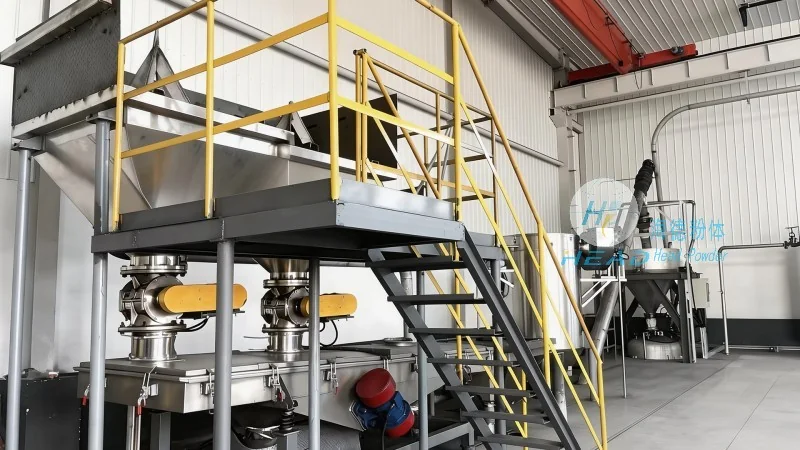
The rotary airlock serves as the feeding mechanism that introduces EPS beads into the conveying line while maintaining system pressure. For EPS, the rotor must be designed with large pockets and smooth surfaces to prevent bead shearing. Stainless steel or food-grade polymer coatings are common to reduce static buildup. The valve clearance should be minimal (0.1–0.3 mm) to prevent air leakage, but not so tight as to cause metal-on-metal contact that generates heat and sparks. headpowder’s engineering team recommends rotors with adjustable tip speed controls to match the specific flowability of different EPS bead sizes.

Conveying Pipelines

The pipeline material and geometry directly influence bead degradation. Standard carbon steel pipes cause high friction and static discharge, so stainless steel (304 or 316L) is preferred, especially with internal surface roughness below Ra 1.6 μm. For long runs, aluminum or HDPE-lined pipes can reduce weight and cost, though HDPE is less resistant to heat from friction. Bend radii should be a minimum of 10 times the pipe diameter; tighter bends create excessive impact forces and bead breakage. Branch lines and diverters must be designed with smooth internal transitions — no sharp edges or dead zones where beads can accumulate.

Air Movers and Filtration

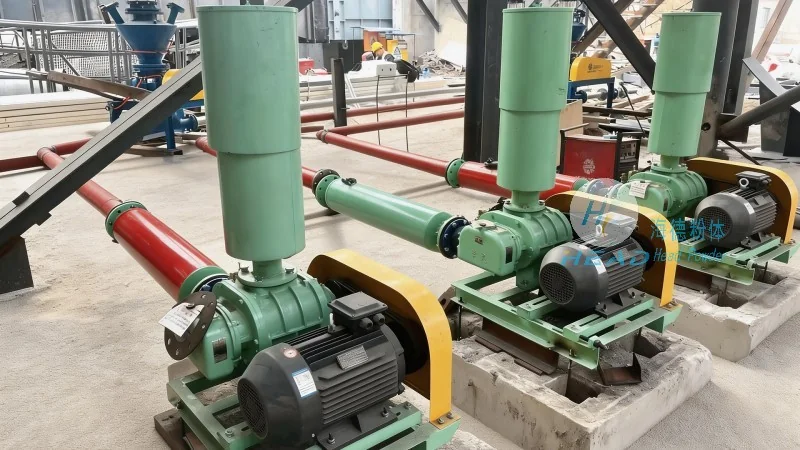
For dense phase systems, screw compressors or oil-free rotary vane compressors deliver the required pressure (typically 2–6 bar). Dilute phase systems often use regenerative blowers that provide high volume at lower pressure. Filtration is non-negotiable: dust collectors with cartridge filters (efficiency ≥ 99.9% at 0.5 microns) prevent fine EPS dust from escaping into the workspace, meeting both OSHA and ATEX compliance standards. Explosion venting or suppression systems should be integrated into the filter housing due to the combustible nature of EPS dust.

Design Parameters: From Flow Rate to Pressure Drop

Properly sizing a pneumatic conveying system for EPS requires accurate calculation of several interrelated parameters. The following table summarizes the typical ranges used in industrial design for medium-throughput systems (1–5 tons per hour).

ParameterDilute Phase RangeDense Phase Range
Air velocity (m/s)20–351–10
Solids loading ratio (kg solids per kg air)1–1515–100
Line pressure (bar g)0.2–0.62–6
Specific power (kWh/ton)3–80.8–2.5
Maximum conveying distance (m)Up to 300Up to 1000+

Pressure drop calculations must account for straight pipe friction, bends, vertical lifts, and fittings. For EPS beads, the particle shape is nearly spherical, which reduces drag compared to angular materials. However, static electricity can increase effective friction — a phenomenon often underestimated by generic pneumatic software. headpowder’s in-house simulation tools incorporate a static dissipation factor derived from extensive field testing on EPS grades from multiple suppliers, ensuring calculated pressure drops match actual operating conditions within ±5%.

Overcoming Common Operational Challenges

Even well-designed systems can encounter problems if operational parameters drift. Three prevalent issues in EPS pneumatic conveying are bead bridging, static discharge, and moisture ingress.

  • Bridging occurs when beads interlock at hopper outlets or inside airlock pockets. Solutions include incorporating vibratory bin activators, using steep-walled hoppers (60° minimum slope), and maintaining a small aeration pad at the hopper base to fluidize the bottom layer.
  • Static discharge not only causes operational disruptions (beads clinging to pipes, plugging filters) but also poses ignition hazards. Grounding all conductive components is mandatory; for non-conductive pipes like HDPE, internal static dissipative additives or wire mesh grounding strips are required. Antistatic additives in the EPS beads themselves can reduce charge generation by up to 70%.
  • Moisture in the conveying air can cause pre-expansion inside the pipeline, swelling beads unpredictably and blocking the system. Refrigerated air dryers with dew point control below -20°C are standard in humid climates. Additionally, moisture sensors at the air intake can trigger automatic alerts before condensation forms.

Real-World Application: Integrated EPS Conveying in Block Molding Plants

A mid-sized block molding facility in Southeast Asia recently upgraded its EPS conveying infrastructure to address chronic bead breakage that was causing a 4% yield loss. Their legacy dilute phase system used a 200-meter pipeline with 12 sharp elbows. headpowder conducted a full audit, measuring particle size distribution before and after conveying using a sieve analysis method. Results showed that 22% of beads had visible cracks or surface pitting — significantly higher than the acceptable threshold of 5%.

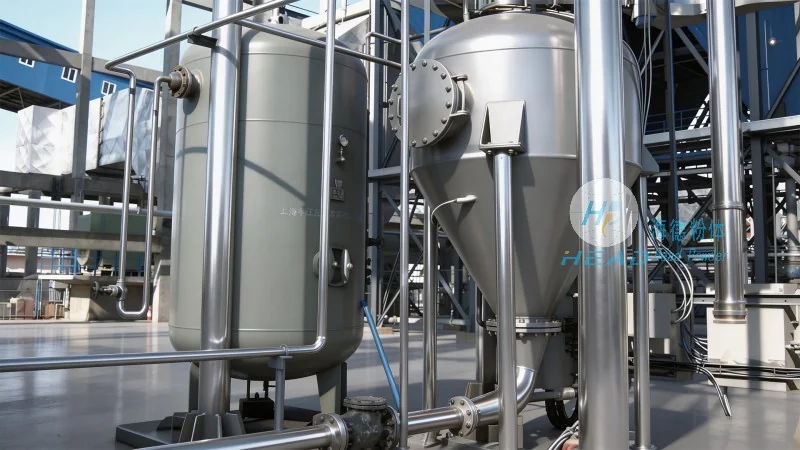
The retrofit solution replaced the dilute phase blower with a dense phase system using a long-distance pressure vessel (blow tank) and an optimized pipe route with only 6 bends, each with a 10D radius. Stainless steel pipes with Ra 0.8 μm internal finish and a static grounding system were installed. After commissioning, bead integrity improved to 98.5% intact, and energy consumption dropped by 40%. The plant now runs three molding lines with a single conveying system, achieving a throughput of 3.2 tons per hour with downtime reduced by 60%.

This case illustrates how a targeted engineering approach — rather than a one-size-fits-all solution — delivers measurable ROI. For any EPS processor evaluating a new system or upgrade, the key lies in conducting a thorough material characterization and conveying trial before finalizing the design.

Future Trends and Technology Integration

Expandable Polystyrene Conveying: Pneumatic System

Looking toward 2026 and beyond, the EPS conveying industry is embracing digitalization and sustainability. Smart sensors integrated into airlock drives, pipeline pressure transmitters, and particle counters enable real-time process monitoring and predictive maintenance. Machine learning algorithms can now detect early signs of bead degradation by analyzing acoustic signatures from the pipeline — a method already adopted by several headpowder clients. Additionally, the push for carbon neutrality is driving the adoption of variable-frequency drives (VFDs) on compressors and blowers, reducing energy consumption by 20–30% compared to fixed-speed systems.

Another emerging trend is the use of closed-loop nitrogen conveying for specialized EPS grades used in electronics packaging, where even trace oxygen can degrade product quality. While nitrogen adds operational cost, it eliminates static risk entirely and ensures zero oxidation. For standard construction-grade EPS, however, compressed air with proper drying remains the most economical choice. The industry is also exploring biodegradable alternatives to EPS that may require different conveying parameters — a development headpowder’s R&D team is actively monitoring to prepare next-generation handling solutions.

Selecting a Reliable Partner for EPS Pneumatic Systems

Expandable Polystyrene Conveying: Pneumatic System

Given the technical complexity and investment involved, choosing an experienced system integrator is critical. A competent partner should offer not only hardware but also computational fluid dynamics (CFD) modeling, field commissioning services, and post-installation optimization. headpowder brings over two decades of focused expertise in powder and bulk solids handling, with a dedicated EPS application laboratory that can simulate full-scale conveying conditions on small batches of your material. Whether you are building a greenfield plant or retrofitting an existing line, our engineers work closely with your process team to deliver a system that meets performance guarantees while reducing total cost of ownership.

For specific design consultations or to request a conveying test for your EPS grade, contact our technical sales team at (咨询热线:156-6277-7102). We provide detailed proposals including layout drawings, pressure drop calculations, and energy consumption estimates — all backed by real-world data from installations across 15 countries.

Conclusion: Precision Conveying as a Competitive Advantage

Expandable Polystyrene Conveying: Pneumatic System

In the EPS industry, the conveying system is far more than a simple transport utility — it is a quality gate that directly influences final product density, surface finish, and production consistency. By understanding the physics of pneumatic transport, selecting appropriate components, and applying rigorous design methodologies, processors can achieve bead integrity rates above 98%, reduce energy costs by up to 40%, and eliminate dust hazards in the workplace. As market competition intensifies and regulatory standards tighten, investing in a high-performance pneumatic system is not optional; it is a prerequisite for operational excellence. The engineering community continues to advance both the hardware and the control logic behind these systems, ensuring that expandable polystyrene conveying remains a reliable, efficient, and safe pillar of modern manufacturing.

相关推荐

Shandong headpowder Engineering Co., Ltd. All rights reserved.

回到顶部