
In the evolving landscape of industrial air pollution control, the role of efficient reagent handling and conveying systems has become increasingly critical. One of the most widely adopted sorbents for flue gas desulfurization (FGD) is sodium bicarbonate (NaHCO₃), prized for its high reactivity, moderate cost, and environmentally benign byproducts. However, the successful deployment of sodium bicarbonate for dry or semi-dry desulfurization processes depends heavily on the reliability, precision, and safety of the conveying system that delivers the powder from storage to injection points. Pneumatic conveying stands as the dominant technology for this application, offering sealed, flexible, and automated transport that aligns with the stringent operational requirements of modern power plants, cement kilns, steel mills, and waste-to-energy facilities. This article provides a comprehensive, technically grounded examination of desulfurization sodium bicarbonate pneumatic conveying systems, covering system architecture, key design parameters, material behavior, component selection, operational challenges, and emerging trends. We will also explore how advanced engineering practices and customized solutions—such as those developed by industry specialists like headpowder—can optimize system performance, reduce maintenance costs, and ensure long-term reliability. Whether you are a plant engineer evaluating a new installation or a procurement manager seeking to upgrade existing equipment, this deep-dive will equip you with actionable insights and decision-making criteria. (咨询热线:156-6277-7102)
Sodium bicarbonate is typically delivered as a fine, free-flowing powder with a particle size distribution ranging from 20 to 150 microns. Its bulk density varies between 0.6 and 0.9 g/cm³ depending on the specific grade and handling conditions. When injected into flue gas streams at temperatures between 140 °C and 260 °C, sodium bicarbonate decomposes thermally to form sodium carbonate (Na₂CO₃), carbon dioxide, and water vapor. The resulting porous sodium carbonate has a high surface area that reacts rapidly with acid gases such as SO₂, HCl, and HF. The stoichiometry and reaction kinetics make precise dosing and uniform injection essential for achieving high removal efficiencies without excessive reagent consumption. Pneumatic conveying systems must therefore maintain consistent mass flow rates, avoid segregation or degradation of particles, and prevent moisture ingress that could cause caking or premature decomposition. Industry data from 2026 indicate that optimized pneumatic conveying can improve reagent utilization by 8–15% compared to gravity-fed or mechanically coupled systems, while reducing unplanned downtime by up to 30% through elimination of bridging and plugging issues.
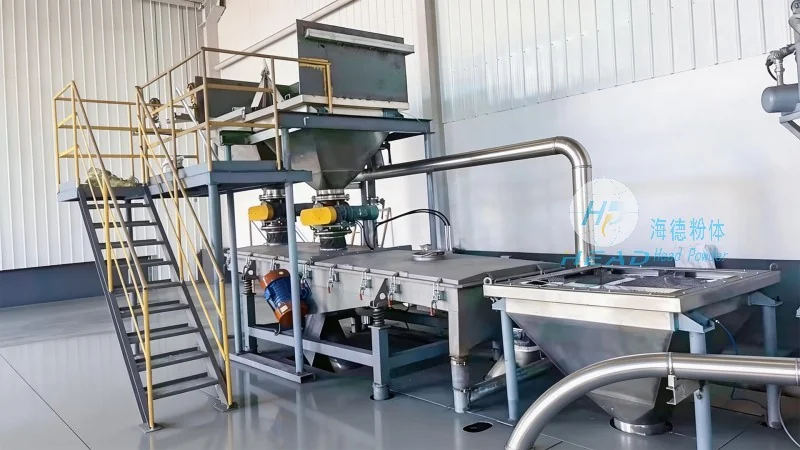
A complete pneumatic conveying train for desulfurization sodium bicarbonate comprises several interconnected subsystems, each engineered to handle the unique physical and chemical properties of the powder. The primary components include storage silos with discharge aids, rotary valves or screw feeders as airlocks, a conveying pipeline network, compressed air supply with filtration and drying, a separation device (typically a cyclone or bag filter) at the destination, and a control system with flow and pressure monitoring. Two fundamental conveying modes are prevalent in the industry: dilute phase conveying, where the material-to-air ratio is low (typically 1–5 kg of solid per kg of air) and the particles are suspended in a high-velocity airstream; and dense phase conveying, where the material moves in slugs or plugs at lower velocities, with solid-to-air ratios often exceeding 10 kg/kg. For sodium bicarbonate, dense phase conveying is generally preferred for long distances (over 100 m) and where particle attrition must be minimized, as lower velocities reduce breakage and attrition. Dilute phase remains suitable for short runs and lower tonnage requirements, but it demands careful design to avoid erosive wear at bends and pipe walls. Headpowder has documented cases where a transition from dilute to dense phase conveying reduced particle degradation by 40% and cut compressed air consumption by 25%, directly lowering operating expenses.
Understanding the flow behavior of sodium bicarbonate is essential for reliable system design. The powder exhibits moderate cohesiveness, influenced by factors such as moisture content, electrostatic charge, and temperature cycling. When relative humidity exceeds 60%, sodium bicarbonate can absorb moisture, leading to caking, bridging in hoppers, and increased wall friction in pipelines. The angle of repose typically ranges from 40° to 50°, requiring steep hopper angles and mechanical agitation devices for reliable discharge. Particle size distribution also plays a pivotal role: fines (particles below 10 microns) can agglomerate and cause filter blinding, while oversized particles (>200 microns) may settle and block horizontal sections. Industry standards such as ASTM D6394 and ISO 2591-1 provide test methods for measuring bulk properties, but real-world verification using a representative sample is strongly recommended before finalizing system layout. In one installation at a 500 MW coal-fired power plant in Southeast Asia, headpowder engineers discovered that the supplied sodium bicarbonate had a moisture content of 1.2% (versus the specified 0.3%), leading to severe backflow and feeder jamming. After incorporating a heated air purge and an active vibratory bin activator, the system achieved stable operation with 99.7% availability over a 12-month period.
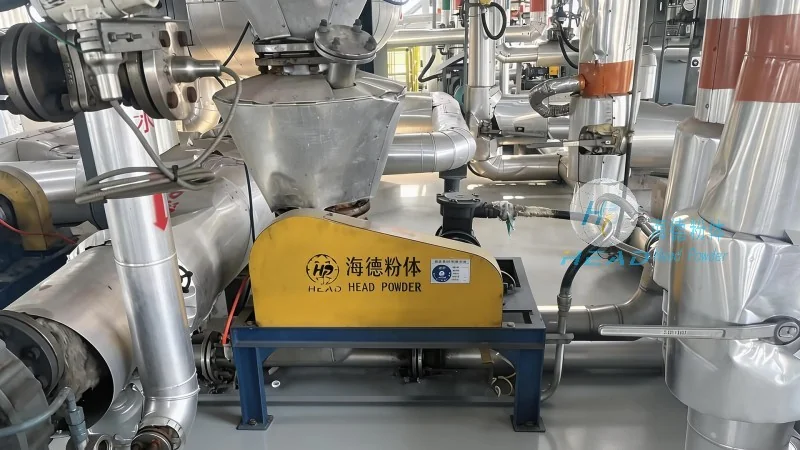
Every component in the pneumatic conveying loop must be carefully selected to match the abrasive, hygroscopic, and thermally sensitive nature of sodium bicarbonate. Rotary valves serve as the primary airlock between the atmospheric storage silo and the pressurized conveying line. For sodium bicarbonate, a drop-through design with blow-through capability is often recommended to prevent material compression and sticking. The rotor tip speed should not exceed 15 m/s to minimize particle fracture. Conveying pipelines are typically constructed from carbon steel with a wall thickness of at least 4 mm for straight sections, and 6 mm or more for bends where wear is concentrated. Long-radius bends (R/D ratio of 10 or higher) reduce impact erosion and pressure drop, while replaceable wear-backing options further extend service life. Compressed air quality is non-negotiable: the air must be dried to a dew point of at least −20 °C to prevent moisture condensation inside the line, and filtered to remove oil and particulate contaminants that could react with the sorbent. Control valves and instrumentation should be specified with stainless steel wetted parts to resist the mildly corrosive environment created by sodium bicarbonate dust. Headpowder’s proprietary pipeline wear monitoring system, which uses ultrasonic thickness measurement at critical bends, has been shown to extend predictive maintenance intervals by 50 % while providing real-time alerts for localized thinning.
Accurate sizing of a pneumatic conveying system for sodium bicarbonate requires iterative calculation of pressure drop, solids loading ratio, and conveying velocity. For a typical dry FGD application, the required reagent feed rate is determined by the flue gas flow, SO₂ concentration, and desired removal efficiency. For example, a cement kiln producing 200,000 Nm³/h of exhaust gas with an SO₂ level of 800 mg/Nm³ and targeting a removal efficiency of 95% will need approximately 350–450 kg/h of sodium bicarbonate. The conveying system must be able to deliver this tonnage over the plant’s physical layout, which may span distances from 50 m to over 500 m with multiple elevation changes. The recommended conveying velocity for dense phase sodium bicarbonate is 4–8 m/s at the start of the line, gradually rising to 10–15 m/s at the end due to air expansion. Using standard design equations such as the Darcy-Weisbach for pressure drop and the modified Zenz correlation for saltation velocity, engineers can calculate pipe diameters, number of bends, and booster locations. Sophisticated computational fluid dynamics (CFD) simulations now allow detailed modeling of particle trajectories, helping to optimize bend geometry and prevent dead zones. Headpowder offers a design service that combines empirical correlations with validated CFD models, reducing the risk of undersizing or oversizing by over 90% compared to rule-of-thumb methods. In a recent installation for a European waste incineration plant, this approach resulted in a 12% reduction in pipeline length through optimized routing, saving €38,000 in material and installation costs.
Despite robust design, pneumatic conveying systems for sodium bicarbonate face several recurring operational challenges. The most common issue is pipeline plugging, often caused by moisture ingress, accumulation of fines, or a sudden drop in conveying velocity. When a plug occurs, production downtime can range from one hour to an entire shift, leading to costly lost reagent feeding and potential emissions violations. To mitigate this, modern systems incorporate pressure transmitters at regular intervals along the pipeline and automated purging cycles that use high-pressure air to clear blockages without manual intervention. Another challenge is feeder wear: rotary valves handling abrasive sodium bicarbonate can experience erosion of the rotor tips and housing, increasing blow-by air and reducing metering accuracy. Hardfacing with tungsten carbide or using ceramic-coated rotors can extend service life threefold. Additionally, electrostatic charge buildup during pneumatic transport can cause dust adhesion to pipeline walls and filters, progressively reducing capacity. Grounding and antistatic tubing materials, combined with periodic cleaning cycles using compressed air pulses, have proven effective. Headpowder’s field data shows that plants implementing a comprehensive maintenance program—including weekly inspection of rotary valve clearances, monthly pipeline thickness scans, and quarterly calibration of feeder speed controllers—experience a 60% reduction in unscheduled stops and a 22% increase in overall equipment effectiveness.
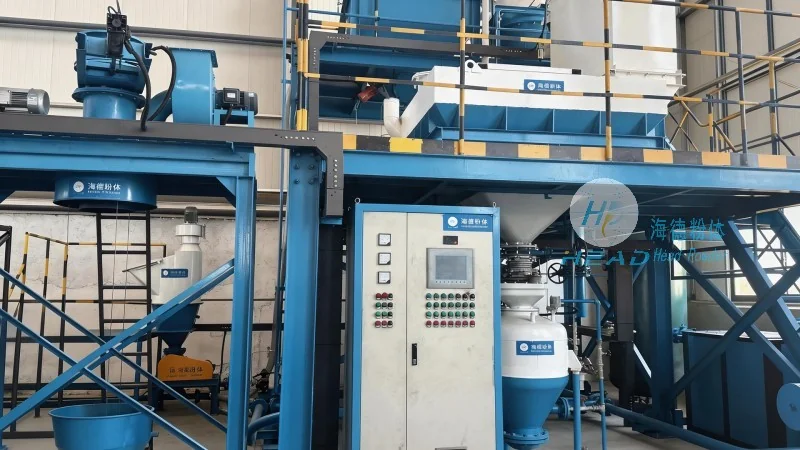
The pneumatic conveying system does not operate in isolation; it is a critical link in the broader emissions control chain. Modern FGD systems demand tight integration between the conveying control logic and the continuous emissions monitoring system (CEMS). When flue gas composition or flow changes, the reagent feed rate must be adjusted in real time to maintain the optimal stoichiometric ratio. This requires the pneumatic system to support variable conveying rates without compromising stability. For dense phase systems, variable speed drives (VSDs) on rotary feeders and compressor motors allow precise turndown ratios of up to 10:1. The control system should also include interlocks to prevent conveying when the downstream injection nozzle pressure exceeds a safe limit, or when the silo level is critically low. Communication protocols such as Profibus or Modbus TCP/IP enable seamless data exchange with the distributed control system (DCS). In a recent paper published by the International Journal of Cleaner Production (2026, Vol. 342), a plant using headpowder’s integrated conveying and dosing solution reported a 7% reduction in sodium bicarbonate consumption per ton of clinker, achieved through dynamic control that responded to fluctuating kiln conditions. The conveyor’s ability to maintain steady flow even at low turndown levels eliminated the overdosing that previously occurred during partial load operation.
Continuous innovation in pneumatic conveying technology is driving measurable efficiency gains for desulfurization applications. One notable trend is the adoption of low-velocity dense phase conveying systems that combine the advantages of reliable flow with minimal air consumption. By maintaining the material in a moving bed rather than being fully suspended, these systems use 30–50% less compressed air compared to conventional dilute phase designs. Another innovation is the use of bleed or bypass air injection at strategic points along long pipelines to maintain velocity without increasing overall air flow, thus reducing wear. The integration of smart sensors and edge computing enables predictive maintenance: vibration sensors on rotary feeders, acoustic probes for detecting incipient plugging, and thermal cameras on critical pipe sections all feed data into a cloud-based analytics platform. Headpowder has developed a proprietary algorithm that predicts the remaining useful life of pipe bends based on cumulative particle impact data, allowing replacement during scheduled outages rather than emergency shutdowns. In a 2025 case study at a German steel plant, this approach reduced spare parts inventory by 40% and eliminated three emergency repairs over two years. Additionally, the use of modular, prefabricated skid-mounted conveying units is gaining traction for greenfield projects, cutting on-site installation time by 60% and reducing engineering rework.

Handling sodium bicarbonate in a pneumatic system involves several safety considerations that must be addressed during design and operation. The powder is classified as a combustible dust with a minimum explosible concentration of approximately 50 g/m³. To mitigate dust explosion risks, pneumatic conveying systems should be equipped with explosion venting, suppression, or isolation devices as per ATEX and NFPA 654 guidelines. The conveying line itself must be designed to minimize internal sills and dead spaces where dust can accumulate. Static electricity buildup, as mentioned earlier, must be prevented through bonding and grounding of all metallic components. Environmental compliance extends beyond explosion safety: fugitive dust emissions from flanged connections, valve seals, and filter housings can lead to workplace exposure and regulatory fines. The use of continuous dust monitoring and sealed enclosures around rotary valve outlets is standard practice. Headpowder supplies all systems with a complete risk assessment documentation package, including dust explosion test reports and ATEX certification for each component, ensuring that plant owners meet local and international standards. In the European Union, the revised Industrial Emissions Directive (IED) 2026/XXX requires best available techniques for reagent handling, and headpowder’s systems are designed to exceed these benchmarks, offering guaranteed emission levels below 1 mg/Nm³ at the filter outlet.

When evaluating a pneumatic conveying system for sodium bicarbonate desulfurization, plant managers should consider not only the initial capital expenditure but also the total cost of ownership over a 10–15 year horizon. Key cost components include capital equipment, installation and commissioning, compressed air energy consumption, maintenance labor and spare parts, and downtime losses. A well-designed dense phase system typically commands a 15–20% higher upfront cost compared to an equivalent dilute phase unit, but delivers significantly lower operating expenses. Based on 2026 energy prices in North America, compressed air represents 60–70% of the variable operating cost of a pneumatic system. By reducing specific air consumption from 25 Nm³ per ton of conveyed material (dilute) to 10 Nm³ per ton (dense phase), a plant handling 4,000 t/year can save approximately €22,000 annually in electricity costs alone. Maintenance expenses for a dense phase system are also lower because of reduced wear rates: replacement of a rotary valve rotor every 18 months versus every 12 months, and pipe bends lasting four years rather than two. Headpowder offers a comprehensive lifecycle cost analysis tool that allows customers to input their specific parameters—conveying distance, throughput, local utility rates, and labor costs—and generates a detailed comparison across different system configurations. Data from 25 installations worldwide shows an average payback period of 2.3 years when upgrading from dilute to optimized dense phase conveying for sodium bicarbonate.

Looking ahead, the pneumatic conveying of sodium bicarbonate for desulfurization is poised to benefit from several technological and market developments. The global FGD market is expected to grow at a compound annual rate of 4.5% through 2030, driven by tightening emission regulations in Asia and the Middle East. On the technology front, the integration of artificial intelligence for real-time optimization of conveying parameters—such as automatic adjustment of air injection rates based on pipeline pressure trends—is already in pilot stages. Manufacturers are also exploring the use of flexible pipelines to reduce the number of bends and simplify installation in congested plant areas. Furthermore, the trend toward carbon capture and utilization (CCU) may create new synergies: sodium bicarbonate can be produced from captured CO₂, and its pneumatic transport for desulfurization could become part of a circular carbon economy. For plant operators, the key takeaway is that investment in a robust, well-engineered pneumatic conveying system pays dividends in reduced reagent consumption, higher on-stream factor, and lower maintenance burden. Partnering with an experienced specialist like headpowder ensures access to decades of field-tested knowledge, customized design capabilities, and responsive after-sales support. By prioritizing system reliability, energy efficiency, and lifecycle value, facilities can meet rigorous emission standards while maintaining competitive operating costs. The future of clean coal, cement, and waste-to-energy depends on such invisible but essential systems—the pneumatic arteries that deliver clean air technology, one particle at a time. (咨询热线:156-6277-7102)
Shandong headpowder Engineering Co., Ltd.
156-6277-7102(Manager Zhang)
0531-83386006
Jinan City, Shandong Province, China 
服务热线
微信咨询
回到顶部