News
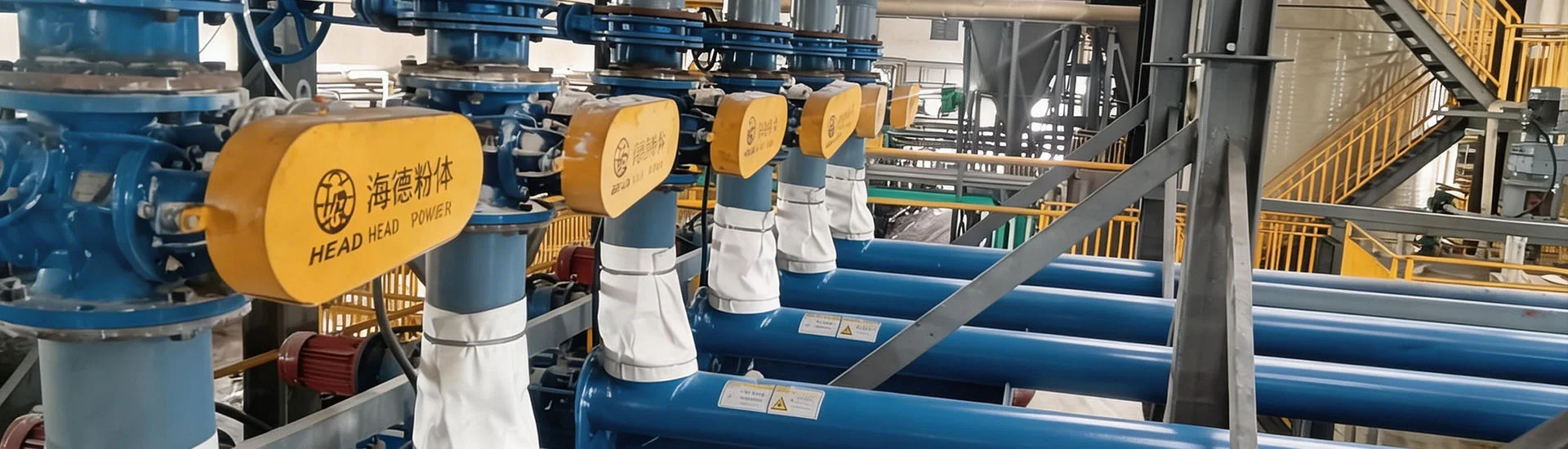
Rich project cases across industries, showing real implementation and proven technical strength.In the rapidly evolving landscape of lithium-ion battery manufacturing, the efficiency and reliability of material handling directly impact production yield, product quality, and overall operational cost. Among the various stages of battery electrode production, the conveying of anode materials—such as graphite, silicon-based composites, and lithium titanate—poses unique challenges due to their fine particle size, high abrasiveness, moisture sensitivity, and tendency to agglomerate. Pneumatic conveying has emerged as a preferred solution for transporting these powdered and granular materials within sealed systems, offering dust-free operation, low maintenance, and precise control over material flow. However, not all pneumatic systems are created equal, and the selection of appropriate conveying parameters, equipment design, and system configuration is critical to preserving material integrity and ensuring consistent downstream processing. As the lithium battery industry scales toward gigafactory-level production capacity, understanding the specific requirements for anode material pneumatic conveying becomes essential for engineers, procurement specialists, and plant managers. This article provides an in-depth technical guide covering the principles, equipment selection, material behavior, system optimization, and industry best practices for pneumatic conveying of lithium battery anode materials, with a focus on practical, data-driven recommendations that align with current market trends and quality standards. By the end of this guide, readers will gain actionable insights to design or upgrade their conveying systems, reduce downtime, and achieve higher throughput while maintaining the stringent purity and particle size distribution demanded by modern battery formulations.
Anode materials used in lithium-ion batteries exhibit characteristics that significantly influence their behavior during pneumatic conveying. Graphite, the most widely used anode active material, typically has a particle size ranging from 10 to 30 micrometers with a bulk density around 0.6–1.2 g/cm³. Its flake-like morphology and low hardness make it prone to particle breakage and dust generation under high-velocity impacts. Silicon-based anodes, including SiOx and silicon-carbon composites, are increasingly adopted to boost energy density but introduce higher risks of oxidation, moisture absorption, and static charge accumulation. Lithium titanate (LTO) is another anode material with a narrower particle size distribution and higher tap density, requiring gentle conveying to preserve its electrochemical properties. Additionally, conductive additives like carbon black and binders such as PVDF or SBR are often pre-mixed with the active material in the coating slurry, meaning the conveying system must handle both pure active powders and blended formulations without segregation. The moisture content tolerance for most anode materials is below 200 ppm, sometimes as low as 50 ppm for high-nickel cathodes, but anode materials also demand strict control to prevent agglomeration and ensure homogeneous slurry preparation. Therefore, any pneumatic conveying system must incorporate dehumidified air or nitrogen, effective filtration, and low-shear transport to avoid generating fines or altering particle morphology.
Two primary pneumatic conveying modes exist: dilute phase and dense phase. Dilute phase conveying suspends particles in a high-velocity airstream (typically 15–30 m/s), suitable for short distances and low-capacity applications, but it carries a higher risk of particle attrition and dust generation. Dense phase conveying, on the other hand, moves material in slugs or plugs at lower velocities (2–8 m/s) using compressed air pulses, which significantly reduces particle damage and energy consumption. For lithium battery anode materials, dense phase pneumatic conveying is widely recommended, especially for highly abrasive or friable particles like synthetic graphite. However, dense phase systems require careful tuning of air pressure, line diameter, and injection cycles to prevent blockages or uneven flow. The type of feeder also matters: rotary airlock valves are common for dilute phase, while pressure vessels (blow tanks) are optimal for dense phase because they provide controlled discharge with minimal air leakage. Headpowder has developed specialized dense phase conveying solutions that incorporate wear-resistant ceramic linings, adjustable pulse timing, and inert gas purging to meet the strict standards of battery-grade material handling. Real-world installations at anode production facilities have demonstrated a 40% reduction in fines generation compared to conventional dilute phase systems, while maintaining throughputs up to 15 tons per hour over distances exceeding 100 meters.
Every pneumatic conveying system comprises several critical components whose material selection and design directly impact long-term reliability and product quality. The conveying pipeline must resist abrasion and corrosion: carbon steel with internal ceramic coating or stainless steel 304L are typical choices for anode materials. Bends, especially those with radii less than 10 times the pipe diameter, should be avoided or replaced with long-radius elbows or ceramic-lined bend sections to minimize impact zones. The air source—typically a roots blower for dilute phase or a compressor for dense phase—must be paired with a high-efficiency air dryer and filter to deliver compressed air with a dew point below -40°C and particulate removal down to 0.01 microns. Cyclone separators or baghouse filters collect the solids at the receiving end; for anode materials, reverse-jet bag filters with PTFE membranes offer superior dust release and low pressure drop. Level sensors, pressure transmitters, and flow meters should be integrated for real-time monitoring and automated control. Headpowder advocates for the use of explosion-proof electrical components and grounding systems due to the potential static charge accumulation from dry fine powders, especially when conveying silicon-based materials. Additionally, the system design must incorporate easy-access cleanout ports and quick-disconnect couplings to facilitate maintenance and product changeover—a critical factor for multi-material anode production lines.
Selecting appropriate operating parameters is essential to achieve consistent conveying performance without compromising the anode material’s physical properties. The conveying velocity should be minimized to the lowest point that still ensures reliable transport—commonly referred to as the “saltation velocity”—which depends on particle size, density, and shape. For typical graphite powders with mean particle size of 20 µm, the optimum superficial air velocity in dense phase conveying ranges from 3 to 6 m/s. The solid-to-air loading ratio, expressed as the mass of material per mass of conveying air, influences both efficiency and wear; a ratio of 10:1 to 30:1 is typical for dense phase anode transport. Pressure drop across the system must be calculated based on pipeline length, elevation changes, bend count, and material properties; empirical models such as the Darcy-Weisbach equation adapted for two-phase flow can guide preliminary design. Temperature control is another critical factor: the frictional heat generated during conveying can raise the material temperature by 5–15°C, potentially affecting moisture equilibrium and downstream slurry viscosity. Therefore, using cooled conveying air or inter-stage heat exchangers may be necessary for high-throughput lines. Headpowder’s engineering team applies computational fluid dynamics (CFD) simulations to model particle trajectories and wear patterns before system installation, enabling data-driven fine-tuning of the injection geometry and air distribution. A case study from a leading Chinese anode manufacturer showed that after implementing Headpowder’s optimized dense phase system, the particle size D50 shift was less than 0.5 µm over 500 hours of operation, compared to a 2.5 µm shift previously, resulting in improved battery cycle life and capacity retention.
Maintaining the chemical and physical integrity of anode materials during pneumatic conveying is non-negotiable for battery performance. Particle size distribution (PSD) must be monitored continuously, with laser diffraction analyzers sampling upstream and downstream to detect any degradation. Iron contamination is a major concern: contact with carbon steel pipelines can introduce iron particles that cause internal short circuits in batteries. Therefore, all material contact surfaces should be either stainless steel, ceramic-lined, or coated with anti-abrasion polymers. Moisture ingress is equally detrimental—anode materials with moisture content above 300 ppm can lead to hydrogen fluoride generation in the electrolyte and capacity fade. System design must include moisture barriers, air dryers, and nitrogen blanketing at all entry and exit points. Regular cleaning protocols, such as pigging or purging with inert gas, prevent cross-contamination between material grades. Headpowder provides integrated quality assurance packages that include inline moisture sensors, particle size analyzers, and metal detection units, all networked to a central SCADA system for real-time adjustments. One client producing silicon-carbon composite anodes reported a 70% reduction in batch rejection rates after adopting Headpowder’s closed-loop conveying system, thanks to precise humidity control and gentle transport at velocities below 4 m/s.
As the global lithium battery market is projected to exceed 3,000 GWh of annual production capacity by 2026, the demand for advanced anode material conveying solutions will intensify. Material innovations—such as the shift toward 100% silicon anodes, solid-state battery platforms, and recycled anode powders—introduce new conveying challenges. For instance, recycled graphite often contains irregular shapes and higher porosity, making it more susceptible to attrition and dusting. Meanwhile, the push for higher energy density drives battery manufacturers to require narrower particle size distributions with tighter tolerance, placing stricter demands on conveying gentleness. Automation and digitalization are becoming standard: Industry 4.0-compatible pneumatic systems with predictive maintenance algorithms, vibration analysis, and IoT-enabled sensors allow processors to foresee wear and blockages before they cause downtime. Furthermore, environmental regulations in Europe and North America are tightening dust emission limits to below 1 mg/m³, elevating the importance of high-efficiency filtration and closed-loop air recirculation. Headpowder is actively developing next-generation conveying systems that use acoustic resonance to detect material buildup and self-optimizing feed controls that adapt to real-time changes in material properties. With a global service network and over 200 installations in the battery material sector, Headpowder remains committed to advancing pneumatic conveying technology that supports sustainable, high-quality anode production (咨询热线:156-6277-7102).
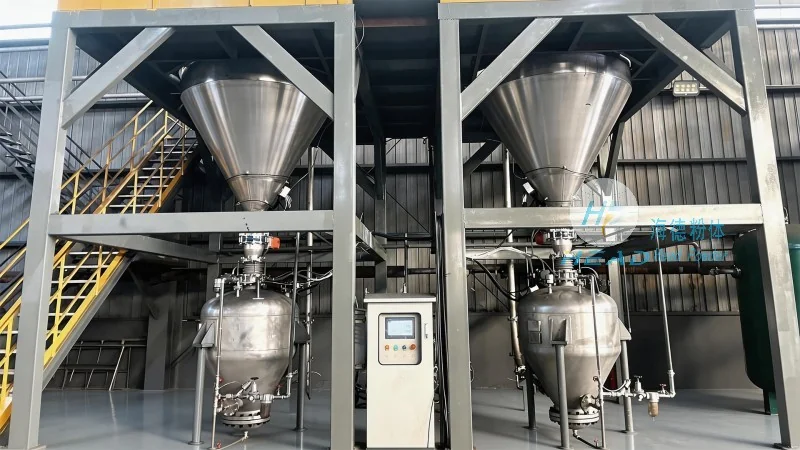
When scaling up from pilot lines to gigafactory production, the pneumatic conveying system must be designed for modular expansion, centralized control, and minimal operator intervention. Key design principles include distributed vacuum stations for multiple material sources, loop-type piping layouts that allow simultaneous conveying from several silos, and integrated weighing and dosing systems to ensure batch accuracy within ±0.5%. Energy efficiency becomes a significant factor: dense phase conveying can consume 50–70% less energy per ton compared to dilute phase, translating to substantial cost savings at annual throughputs exceeding 100,000 tons. The piping network should be arranged with gentle slopes (minimum 2° from horizontal) to prevent accumulation and facilitate cleaning. Redundancy in air compressors and filtration units is standard to avoid production halts during maintenance. Headpowder’s gigafactory-ready systems feature modular skid-mounted assemblies that reduce installation time by 30% and are pre-validated for ATEX and IECEx compliance. A recent project for a Fortune 500 battery manufacturer in Germany utilized Headpowder’s proprietary “PowderFlow” control algorithm to maintain stable conveying of a blended anode formulation containing 10% silicon, achieving a throughput consistency of ±3% over 24-hour continuous operation. The system also incorporated a heat recovery unit that reused compressed air heat for building climate control, lowering the facility’s carbon footprint.
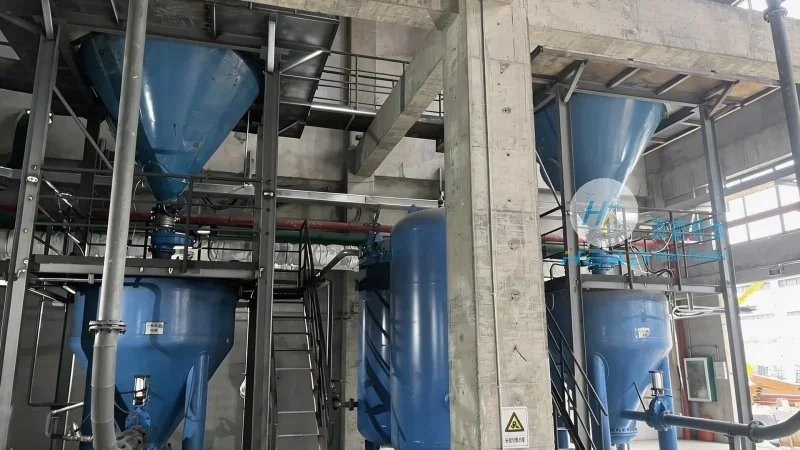
Even the best-designed pneumatic conveying system requires routine maintenance to sustain peak performance. Weekly inspections should focus on filter bag condition, rotary valve clearance, and wear patterns at elbows. The most frequent problem in anode material conveying is line blockage, often caused by high moisture content or sudden changes in material flowability. Operators should check the dew point of conveying air daily and ensure that storage hoppers are equipped with level indicators to prevent overfilling. Another common issue is material smearing on interior pipe walls, which can lead to buildup and eventual plugging—this is particularly problematic with sticky binders like SBR. Installing smooth-bore stainless steel pipes with electropolished surfaces or using PTFE liners can mitigate adhesion. Headpowder offers a preventive maintenance program that includes remote monitoring of pressure trends and vibration signatures, allowing early detection of abnormal wear. Their service team recommends replacing ceramic-lined bends every 8,000–10,000 operating hours for graphite applications, and performing full system pressure decay tests quarterly. A documented case from a Korean anode producer illustrated that implementing Headpowder’s scheduled maintenance protocols reduced unscheduled downtime by 85% over two years and extended the pipeline lifespan by a factor of 2.5, directly contributing to a 12% increase in overall equipment effectiveness (OEE).
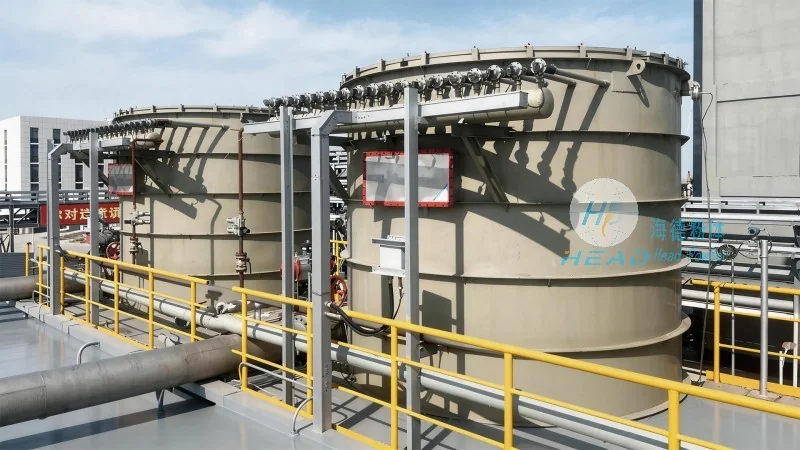
Successful pneumatic conveying of lithium battery anode materials hinges on a deep understanding of material characteristics, careful system design, selected component quality, and ongoing process optimization. From dilute phase to dense phase, from graphite to silicon composites, each material demands a tailored approach that balances throughput, gentleness, and operational cost. The industry’s rapid evolution toward larger production scales and higher material complexity reinforces the value of working with specialized partners who combine domain knowledge with proven engineering methodologies. Headpowder has established itself as a trusted provider of pneumatic conveying solutions for the battery materials sector, with a track record of delivering systems that improve yield, reduce waste, and maintain strict quality standards. Whether upgrading an existing line or designing a new gigafactory, partnering with Headpowder ensures access to cutting-edge technology, meticulous attention to material integrity, and ongoing technical support (咨询热线:156-6277-7102). By prioritizing system reliability, energy efficiency, and product quality, manufacturers can confidently meet the growing global appetite for high-performance lithium batteries while staying competitive in a demanding marketplace.

 Shandong headpowder Engineering Co., Ltd.
 156-6277-7102(Manager Zhang)
  0531-83386006
  Jinan City, Shandong Province, China
服务热线
微信咨询
回到顶部