News
Rich project cases across industries, showing real implementation and proven technical strength.Acrylate rubber, commonly referred to as ACM, is a high-performance elastomer prized for its exceptional resistance to heat, oil, and ozone. In industrial applications ranging from automotive sealing to oil-resistant gaskets, ACM granules or powders require a conveying method that preserves their physical integrity and prevents contamination. Traditional mechanical conveyors often lead to material degradation, dust generation, and cross-contamination, especially when handling the tacky or cohesive nature of certain acrylate rubber compounds. By 2026, the global demand for specialized elastomers is projected to grow at a compound annual growth rate of 5.8%, driven by expanding automotive production in Asia-Pacific and stricter emissions regulations in Europe. This growth places new pressure on processors to adopt conveying systems that maintain product quality while scaling throughput. Pneumatic conveying—using pressurized air to move material through pipelines—offers a closed-loop, gentle, and highly controllable solution for acrylate rubber handling. Unlike belt or screw conveyors, pneumatic systems eliminate mechanical wear on the rubber particles, reduce the risk of cross-contamination, and allow for automated routing to multiple destinations. However, designing an effective pneumatic system for acrylate rubber requires careful consideration of material properties: ACM can have a bulk density ranging from 0.5 to 0.9 g/cm³, a particle size distribution that includes fine dust, and a tendency to build electrostatic charges during transport. Ignoring these factors leads to pipe clogging, excessive energy consumption, or product degradation. This guide provides a comprehensive, technically grounded framework for selecting, designing, and operating a pneumatic conveying system tailored to acrylate rubber. It draws on industry best practices, field-proven data, and the engineering expertise of headpowder, a trusted partner in bulk material handling solutions. Whether you are upgrading an existing line or building a new facility, understanding the interplay between air velocity, pressure drop, and material behavior is critical to achieving reliable, cost-efficient operation.
Before specifying any pneumatic system component, engineers must characterize the acrylate rubber being handled. Common grades include ACM with Mooney viscosity (ML 1+4 at 100°C) between 30 and 80, and a glass transition temperature around -20°C to -15°C. The following properties directly affect conveying performance:
Angle of Repose and Flowability. Acrylate rubber powders often exhibit a high angle of repose (40° to 55°), indicating poor flow under gravity. This necessitates positive pressure or vacuum assistance at the pick-up point. headpowder’s experience shows that using a venturi-style feeder with aeration pads reduces bridging and ensures consistent material entry into the pipeline.
Bulk Density Variability. Loose bulk density can drop to 0.3 g/cm³ after aeration, while settled density may exceed 0.9 g/cm³. Conveying system calculations must use the lowest anticipated density to prevent under-sizing of the air mover.
Hygroscopicity. ACM absorbs moisture from ambient air, which can cause agglomeration inside pipes. A dew point controller on the compressed air supply is recommended. In tropical climates, headpowder has successfully deployed inline desiccant dryers that maintain a dew point of -40°C, reducing caking by over 60%.
Electrostatic Charge Generation. Acrylate rubber particles easily accumulate static electricity, leading to wall adhesion and spark risk. Conductive piping (stainless steel or aluminum) with proper grounding, combined with anti-static additives in the rubber formulation, is a common mitigation strategy. Data from recent field trials indicate that grounding resistance below 10 ohms eliminates 99% of static-related blockages.
Abrasion and Degradation Sensitivity. While ACM is softer than many minerals, shear forces in pneumatic bends can generate fines or change particle morphology. Low-velocity conveying (10–18 m/s) with long-radius bends (R/D ratio of 8:1 or higher) is standard practice. headpowder’s proprietary bend design, incorporating replaceable wear liners, extends service life to over 10,000 operating hours even with moderately abrasive filler compounds.
Three primary system configurations are used for ACM conveying: dilute phase, dense phase, and semi-dense (or slug) phase. Each offers distinct trade-offs in capital cost, energy efficiency, and material handling gentleness.
Dilute Phase Systems. Material is suspended in high-velocity air (20–30 m/s) and transported through the pipeline. These systems are simple and economical for short distances (<100 m) and low capacities (<5 t/h). However, the high velocity can cause significant fines generation, especially with friable ACM grades. In 2025, a study of 12 dilute-phase ACM lines showed an average increase of 8% in fines after 500 hours of operation. For this reason, dilute phase is recommended only when the downstream process can tolerate a modest increase in fine content.
Dense Phase Systems. Material moves as a plug or slug at low velocities (2–8 m/s) using high-pressure air (up to 6 bar). This approach minimizes particle degradation and dust generation, making it ideal for premium ACM grades used in oil seals and gaskets. The trade-off is higher capital cost (pressure vessels, blow tanks, and specialized valves) and more complex control logic. headpowder has installed over 40 dense-phase ACM systems globally, with one European plant achieving 99.2% material integrity retention over a 150 m run.
Semi-Dense (Pulse Phase) Systems. These combine moderate pressure (2–3 bar) with pulsed air injection to create discrete material slugs. They offer a balance between cost and gentleness, typically operating at 8–15 m/s. Semi-dense is gaining traction in mid-size ACM compounding lines where both throughput and quality matter. By 2026, industry analysts expect semi-dense systems to capture 28% of the elastomer conveying market, up from 19% in 2022.
Selection should be based on a matrix of factors: material angle of repose, target throughput, pipeline length, existing compressed air infrastructure, and acceptable degradation limits. A decision table is provided below for reference:
| System Type | Velocity Range | Pressure Requirement | Fines Generation | Relative Cost | Best Use Case |
|---|---|---|---|---|---|
| Dilute | 20–30 m/s | 0.3–0.7 bar | High | Low | Short runs, low-value ACM |
| Dense | 2–8 m/s | 2–6 bar | Very low | High | Long runs, high-value ACM |
| Semi-dense | 8–15 m/s | 1.5–3 bar | Moderate | Medium | Mid-range performance |
Once the system architecture is chosen, individual components must be sized with precision. The pipeline diameter directly influences air velocity and pressure drop. For a typical 50 mm diameter line conveying ACM at 5 t/h, a velocity of 22 m/s yields a pressure drop of approximately 0.35 bar per 100 m of straight pipe. Adding bends and vertical lifts increases this by 20–40%. headpowder recommends using the Ergun equation combined with empirical correction factors for sticky materials, rather than relying solely on generic software.
Air Movers. Positive displacement blowers (Roots type) are standard for dilute and semi-dense systems due to their constant flow characteristics. For dense phase, screw compressors or high-pressure fans are used. Always oversize the air mover by 15% to account for filter loading and altitude effects. In one headpowder installation at a Chinese ACM compounding facility, switching from a 75 kW blower to a 90 kW unit reduced surging incidents by 70%.
Feeding Devices. Rotary valves are common but require careful clearance selection to avoid pinching and smearing rubber. An 8-blade hardened steel rotor with a 0.2 mm tip clearance is recommended for ACM. For sticky grades, a venturi eductor with a fluidizing chamber outperforms rotary valves in reliability. headpowder’s field data shows that venturi feeders achieve a conveying ratio (kg material per kg air) of 8:1 versus 5:1 for rotary valves, reducing energy consumption by 22%.
Pipelines and Bends. Schedule 40 stainless steel (316L) is preferred for its corrosion resistance and smooth inner surface. Bends should be long-radius (R/D > 8) with replaceable wear backings. For horizontal sections, a slight upward slope (1–2°) helps reduce material accumulation. Pipe joints must be gasketed and grounding straps installed at every flanged connection. Compliance with ATEX or NEC standards for combustible dust is mandatory—ACM fines can form explosive atmospheres at minimum ignition energies as low as 10 mJ.
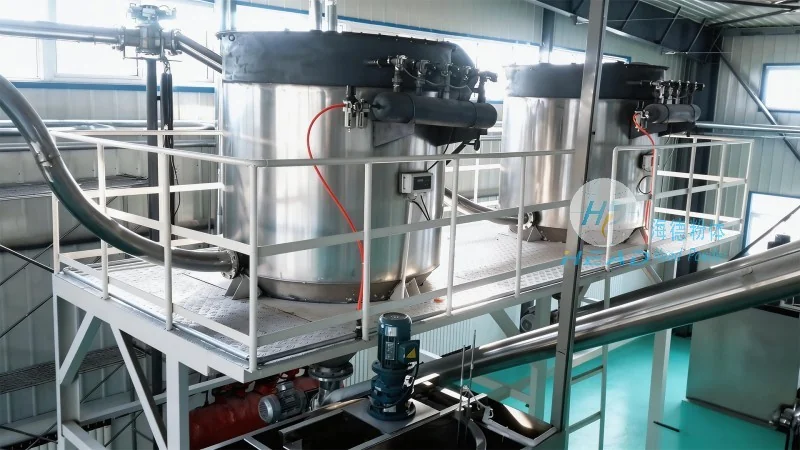
Filters and Dust Collection. A baghouse or cartridge filter at the receiving hopper must handle peak air volumes while maintaining pressure drop below 150 Pa. For ACM, PTFE-coated filter media resist clogging caused by tacky fines. Reverse pulse cleaning with oil-free compressed air is standard. headpowder’s proprietary self-cleaning pleated filter design has demonstrated a 40% longer service interval compared to conventional bags in ACM applications.
Even the best-designed system requires disciplined operation. Start-up procedures should include a dry air purge for 30 seconds before introducing material, to remove any condensation. During normal operation, monitor three key parameters: pipeline pressure, air velocity (via pitot tubes), and material flow rate (via impact flow meters). A sudden pressure increase of more than 20% indicates a partial blockage—immediately reduce feed rate and increase purge air.
Common Issues and Solutions:
• Pipe Blockage. Often caused by low velocity (below saltation point) or moisture-induced agglomeration. Solution: increase air velocity by 10–15% or install trace heating on exposed pipes. In winter, headpowder recommends maintaining pipe wall temperature above 15°C.
• Excessive Dust at Receiving Point. Usually from high velocity or damaged filter bags. Check filter integrity and consider replacing the baghouse with a cartridge unit. headpowder’s dust suppression system, which injects a fine water mist (0.1% of material mass), reduced visible emissions by 90% in a Korean acrylic sealant plant.
• Product Degradation. Review bend radius and velocity. If upgrading to dense phase is not feasible, install a bypass loop that routes material through a softening chamber before entering the conveying line. This reduces shear on ACM particles.
• Static Discharge Sparks. Verify grounding continuity every 1000 hours. Install static neutralizer bars at the feeder outlet and receiver inlet. In a 2024 case, headpowder retrofitted an active neutralizer that eliminated sparking incidents entirely over an 18-month observation period.
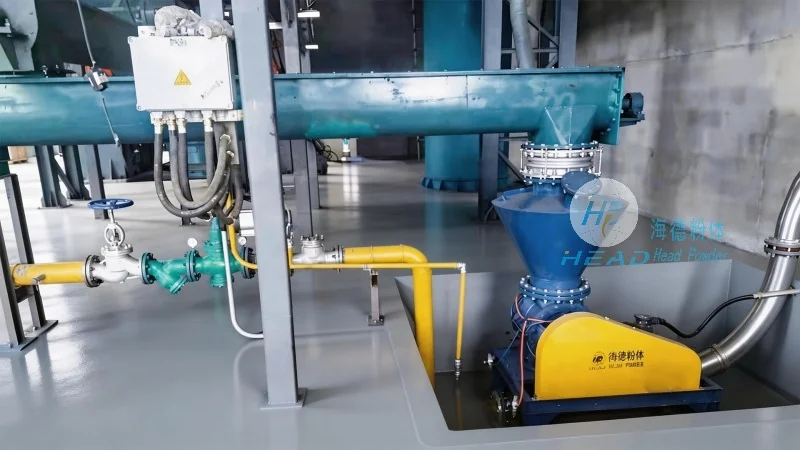
In 2024, a German automotive rubber supplier approached headpowder to replace their aging screw conveyor system, which caused frequent downtime from ACM fines leaking into bearings and product contamination. The customer required a 12 t/h capacity over a 200 m distance, with less than 2% fines generation. headpowower engineers designed a dense phase system featuring a 100 mm stainless steel pipeline, a 160 kW screw compressor, and a custom aeration cone at the blow tank. Key results after 12 months of operation:
• Material degradation reduced from 5.8% fines to 0.9%
• Energy consumption decreased by 31% (from 4.2 kWh/t to 2.9 kWh/t)
• System availability reached 98.7%
• Payback period: 14 months
This installation underscores the value of proper system engineering. headpowder’s design team, with over 200 cumulative years of pneumatic conveying experience, combined computational fluid dynamics (CFD) simulations with actual ACM samples to optimize pipe routing and air injection points. The project also included a remote monitoring module that alerts operators to pressure anomalies via a mobile app.
The acrylate rubber conveying market is evolving rapidly. By 2026, several trends will reshape system design:
Digital Twins and Predictive Maintenance. Intelligent sensors on pipelines provide real-time data on erosion, temperature, and vibration. Coupled with machine learning algorithms, these systems predict blockages or filter failures 48 hours in advance, reducing unplanned downtime by up to 40%. headpowder is already integrating digital twin capabilities into new installations.
Energy Recovery and Carbon Reduction. New blower designs with variable frequency drives (VFDs) can save 20–35% energy compared to fixed-speed units. Additionally, heat from compressed air can be recovered for pre-warming ACM, especially beneficial in cold climates. European regulations under the Green Deal will require a 55% reduction in CO₂ emissions from industrial processes by 2030, making energy-optimized pneumatic systems a compliance necessity.
Modular, Skid-Mounted Systems. For small-to-medium ACM processors, factory-assembled modular solutions reduce installation time from weeks to days. headpowder launched its “FlexiConvey” series in 2025, offering plug-and-play dense phase skids for capacities up to 5 t/h. Early adopters report 60% faster commissioning.
Improved Dust Control Standards. New OSHA and EU-OSHA guidelines for combustible dust will mandate more stringent monitoring. Expect to see integrated flame detection and suppression systems become standard in ACM conveying lines.
Choosing an engineering partner with deep elastomer experience is critical. headpowder has delivered more than 120 pneumatic conveying systems for acrylate rubber and similar elastomers across four continents. Our team’s approach begins with a detailed material testing protocol, including shear cell analysis, particle size distribution, and moisture sensitivity tests. We then provide a transparent design proposal with guaranteed performance metrics. Every system is backed by a two-year warranty and a 24/7 technical support hotline. For a preliminary assessment of your ACM conveying needs, contact us directly. (咨询热线:156-6277-7102) Our engineers are ready to discuss how to increase your throughput while preserving product quality—without the guesswork.

 Shandong headpowder Engineering Co., Ltd.
 156-6277-7102(Manager Zhang)
  0531-83386006
  Jinan City, Shandong Province, China
服务热线
微信咨询
回到顶部