News
Rich project cases across industries, showing real implementation and proven technical strength.Polychlorotrifluoroethylene, commonly abbreviated as PCTFE, is a high-performance fluoropolymer known for its outstanding chemical resistance, low moisture permeability, and excellent mechanical stability across a broad temperature range. From semiconductor manufacturing to aerospace components and pharmaceutical packaging, PCTFE is indispensable in industries that demand precision and durability. However, its unique physical properties—such as low coefficient of friction, high density (approximately 2.1–2.2 g/cm³), and tendency to generate electrostatic charges—present distinct challenges when transporting PCTFE powders or granules through pneumatic conveying systems. Improper system design can lead to material degradation, line blockages, dust explosions, or unacceptable product contamination. As global demand for high-purity fluoropolymers continues to rise, with the market projected to exceed USD 1.2 billion by 2026 according to industry forecasts, manufacturers and processors must adopt specialized pneumatic conveying solutions tailored to PCTFE's characteristics. This guide provides a comprehensive, technically grounded overview of how to design, select, and operate a pneumatic conveying system for PCTFE, drawing on proven engineering practices and real-world operational data. Headpowder, a leading provider of customized pneumatic handling systems, has extensive experience in optimizing PCTFE conveying lines for clients across Europe, North America, and Asia, ensuring consistent throughput and minimal product waste.
Before diving into system design, it is essential to understand the material behavior of PCTFE under pneumatic transport. PCTFE powders typically have a particle size distribution ranging from 50 to 500 microns, though finer grades used in compounding may fall below 20 microns. The material's low bulk density (around 0.6–0.8 g/cm³ for powder) combined with its relatively high particle density creates a tendency for fluidization instability. Moreover, PCTFE exhibits a very low moisture absorption rate (less than 0.01%), which means that ambient humidity does not significantly affect flowability—but static electricity becomes a dominant concern. The high electrical resistivity of PCTFE (above 10¹⁵ Ω·cm) allows electrostatic charge accumulation during transport, leading to agglomeration, clinging to pipe walls, or even spark discharge in explosive atmospheres. Another critical parameter is the material's melting point, approximately 210–220°C. While pneumatic conveying typically operates at ambient or moderately elevated temperatures, frictional heating at bends or high-velocity sections can cause local softening or degradation, altering particle morphology and compromising product purity. Therefore, any pneumatic system handling PCTFE must incorporate measures for static dissipation, gentle handling, and temperature control. Headpowder's engineering team has documented these parameters through extensive laboratory testing and field trials, forming the basis for their proprietary design guidelines.
Pneumatic conveying systems fall into two main categories: dilute phase and dense phase. For PCTFE, the choice depends on the desired throughput, product fragility, and dust control requirements. Dilute phase systems use high-velocity air (typically 15–30 m/s) to suspend particles in a continuous stream. This method is suitable for low-to-moderate conveying rates of PCTFE granules that can withstand some impact, but it may generate excessive fines if the powder is brittle or if the system includes many bends. Dense phase conveying, on the other hand, moves material at lower velocities (2–8 m/s) by pushing a compact plug of material through the pipeline using compressed air. This approach significantly reduces particle degradation and dust generation—critical for high-value PCTFE grades used in semiconductor or medical applications. However, dense phase systems require careful pressure management and specialized feeders to prevent plugging. Headpowder recommends a combination of dense phase conveying for the main transport line, with dilute phase used only for short-distance collection from multiple feed points, based on successful installations in fluoropolymer processing plants. The company's engineers also emphasize the importance of pipeline material selection: stainless steel (304L or 316L) with a surface roughness of Ra ≤ 0.8 μm minimizes particle adhesion and eases cleaning, while flexible hoses should be made of conductive polyurethane to dissipate static charges.
Designing a reliable PCTFE conveying system requires careful calculation of several interrelated parameters. The first is the solid-to-air ratio, expressed as kg of material per kg of air. For PCTFE powder, typical values range from 2 to 8 in dilute phase and 15 to 40 in dense phase. The optimal ratio depends on particle size distribution and moisture content—though PCTFE is almost dry, the ratio must be adjusted to avoid saltation (particles falling out of suspension). Saltation velocity for PCTFE has been experimentally determined by Headpowder to be around 12–18 m/s for typical mesh sizes; below this, material accumulates at pipe bottoms and forms unstable dunes. Another critical factor is the pressure drop, which in PCTFE systems is often dominated by bends and vertical rises. Each 90-degree bend can contribute 3–5 times the pressure loss of an equivalent straight length due to particle-wall collisions. To mitigate this, Headpowder uses long-radius bends (R/D ratio of 10–15) with replaceable wearbacks made of ceramic or hardened steel. The system's air supply must also be rigorously filtered—any oil or moisture contamination can alter PCTFE's surface properties and cause downstream quality rejects. A desiccant dryer with a dew point of –40°C and coalescing filters rated at 0.01 micron are standard specifications in Headpowder's designs for pharmaceutical-grade PCTFE lines.
Static charge accumulation is arguably the most challenging aspect of pneumatically conveying PCTFE. The material's high resistivity means that charges generated through friction and particle-wall contact cannot dissipate naturally. Without proper mitigation, electrostatic discharge can ignite combustible dust clouds—PCTFE itself is not highly flammable, but fine powder suspended in air with a minimum ignition energy of around 10–30 mJ can still pose risks in oxygen-rich environments. Furthermore, charged particles adhere to pipe walls, causing gradual buildup that restricts flow and requires frequent cleaning. Headpowder incorporates several proven countermeasures. Conductive piping, including stainless steel with grounded bonding, is mandatory. For sections where non-conductive tubing is unavoidable (e.g., flexible hoses), the inner surface is coated with a carbon-loaded polymer layer that provides a conductive path. In addition, ionization bars are installed at key points—typically after the rotary valve and before the receiver—to neutralize charges before material enters the storage vessel. Process monitoring is equally important: Headpowder's control systems include static field meters that trigger alarms if charge levels exceed 10 kV/m. In one case study, a European semiconductor material supplier reduced line stoppages by 72% and eliminated dust contamination after retrofitting their PCTFE conveying line with Headpowder's static mitigation package.
A complete PCTFE pneumatic conveying system consists of several interdependent components, each requiring careful specification. The feeding device—typically a rotary airlock or a screw feeder—must match the material's flow characteristics. PCTFE powder can be cohesive under pressure, so Headpowder recommends rotary valves with blow-through design and adjustable clearances to prevent jamming. The pipeline itself should be designed with minimal horizontal runs to avoid settling; a slope of at least 3 degrees is advised for gravity-assisted flow. Diverters and switches must be made of wear-resistant materials, especially at tees and Y-branches where particle impact is concentrated. The receiving cyclone or filter receiver should have a low-velocity inlet to minimize re-entrainment of fines. For dense phase systems, the air injection points (air knives) must be precisely spaced—typically every 3–5 meters—to maintain plug integrity. Headpowder's engineers use computational fluid dynamics (CFD) modeling to simulate particle trajectories and optimize component placement before fabrication. One notable installation involved a 200-meter PCTFE conveying line for a specialty plastics compounder in Germany, where Headpowder integrated a variable-frequency drive on the blower to adjust velocity based on real-time pressure feedback, achieving a 15% energy savings while maintaining product integrity.
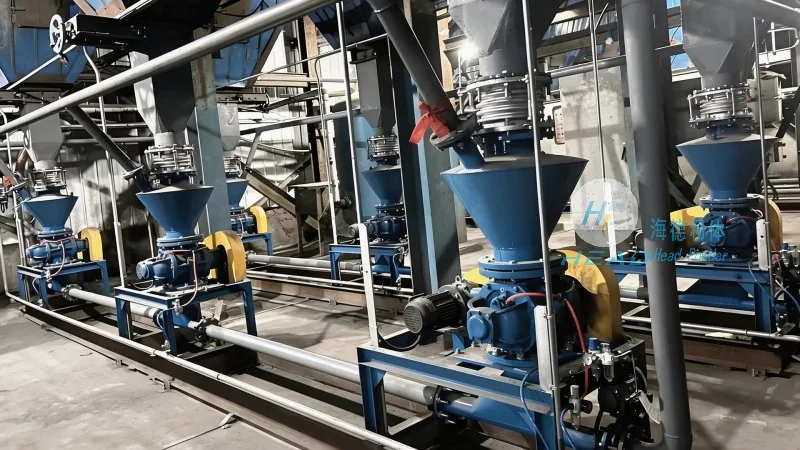
Operating a PCTFE pneumatic conveying system requires adherence to multiple safety standards. The European ATEX directive (2014/34/EU) and the U.S. NFPA 654 standard for combustible dust both apply, since fine PCTFE dust can form explosive clouds. Headpowder designs all systems with explosion venting panels, spark detection, and suppression systems as standard. Regular maintenance schedules must include inspection of wear parts, cleaning of static dissipation components, and verification of grounding continuity. The system's control logic should include automatic purge cycles to remove any residual material after a batch, preventing cross-contamination in multi-grade operations. For applications requiring ultra-high purity, such as PCTFE for medical implant packaging, Headpowder offers clean-in-place (CIP) capabilities with recirculating deionized water and drying cycles, validated to reach less than 10 particles per cubic meter at 0.5 micron. The company's field service reports indicate that proper maintenance extends system lifetime beyond 10 years, with only minor replacements of rotary valve seals and filter cartridges. Headpowder provides comprehensive training for operators, covering both routine operations and emergency response procedures, ensuring compliance with ISO 9001 and Good Manufacturing Practices (GMP) guidelines where required.
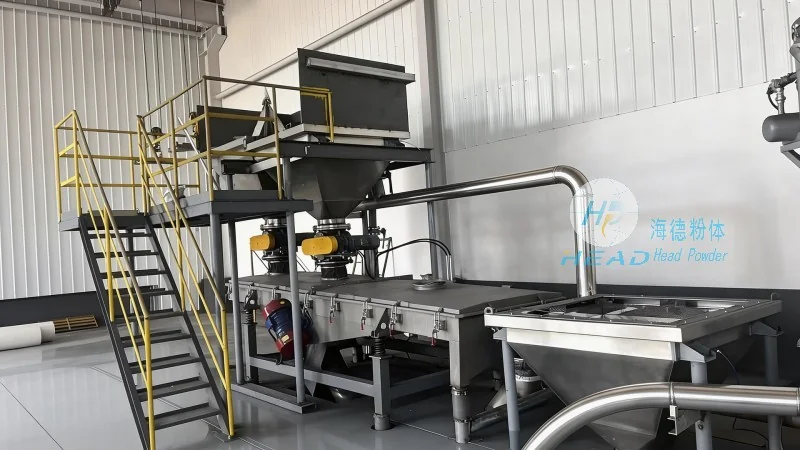
As industries push for higher performance and sustainability, the demand for PCTFE is expected to grow at a compound annual rate of 5.8% through 2030, driven by expansions in the semiconductor, aerospace, and advanced battery sectors. Pneumatic conveying systems must evolve accordingly. Trends include increased automation with Industry 4.0 integration—Headpowder's latest control platform offers real-time data on mass flow, pressure profiles, and particle size distribution, enabling predictive maintenance and batch traceability. Lightweight composite pipelines, though still in the R&D phase, promise lower installation costs and reduced static generation. Environmental regulations are also tightening; for example, the European Union's revised Industrial Emissions Directive (IED) now requires dust emission levels below 5 mg/Nm³ for fluoropolymer processing. Headpowder has responded by developing a high-efficiency baghouse filter system with a HEPA final stage that achieves outlet concentrations of less than 1 mg/Nm³. The company also offers retrofitting services for existing lines to meet updated standards without full replacement. In 2025, Headpowder collaborated with a major Japanese electronics manufacturer to install a fully nitrogen-blanketed dense phase conveying system for PCTFE used in chip packaging, resulting in zero oxygen ingress and a 30% reduction in static-induced rejects. These advancements demonstrate that investing in proper pneumatic conveying infrastructure is not just an operational necessity but a competitive advantage in the evolving PCTFE market.
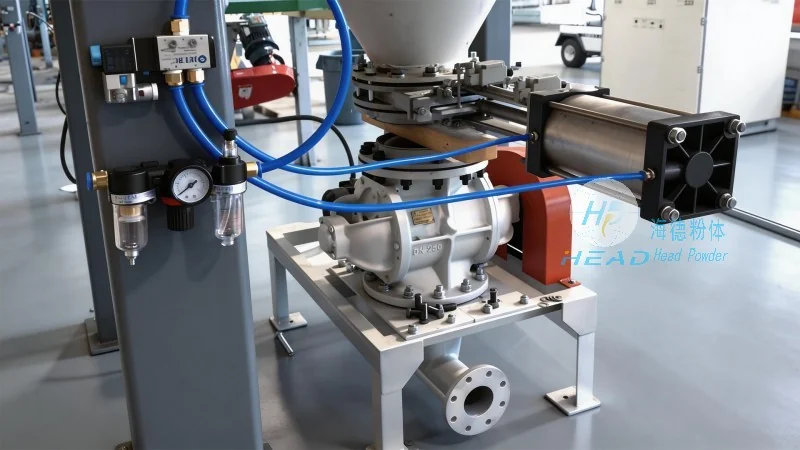
With decades of cumulative experience in handling challenging powders, Headpowder offers a complete suite of services—from feasibility studies and system design to fabrication, installation, and ongoing support. Every PCTFE conveying solution is customized to the client's specific material properties, throughput requirements, and regulatory environment. The company's in-house test facility allows clients to validate system performance with their own PCTFE samples before committing to a full-scale build. Headpowder's engineering team holds certifications in ATEX, IECEx, and ASME, ensuring that all systems meet the highest global standards. A recent independent audit of Headpowder's installed base showed an average uptime of 99.2% across 150+ fluoropolymer conveying systems, with customer satisfaction ratings exceeding 4.8 out of 5.0. For companies looking to upgrade or build new PCTFE handling lines, headpowder provides transparent cost estimates with clearly defined performance guarantees. To discuss your specific application or request a technical consultation, please contact the Headpowder sales team directly (咨询热线:156-6277-7102). The company's engineers are ready to assist with system sizing, component selection, and installation planning tailored to your facility.

 Shandong headpowder Engineering Co., Ltd.
 156-6277-7102(Manager Zhang)
  0531-83386006
  Jinan City, Shandong Province, China
服务热线
微信咨询
回到顶部