News
Rich project cases across industries, showing real implementation and proven technical strength.Vinyl ester resins are widely recognized in the composites, chemical processing, and marine industries for their exceptional corrosion resistance, mechanical strength, and thermal stability. However, these high-performance thermosetting materials present unique challenges during material handling, particularly when it comes to pneumatic conveying systems. Unlike conventional powders or granules, vinyl ester resins often exhibit tackiness, low melting points, and sensitivity to shear forces, which can lead to clogging, premature curing, or degradation if not handled correctly. As the global demand for corrosion-resistant materials continues to rise, with the vinyl ester resin market projected to grow at a compound annual growth rate of 5.8% between 2024 and 2030, manufacturers and processors are increasingly turning to advanced pneumatic conveying solutions to ensure safe, efficient, and reliable transport of these valuable materials.
Pneumatic conveying, the process of moving bulk solids through pipelines using air or inert gas, offers distinct advantages for vinyl ester resin handling: enclosed systems minimize contamination, reduce dust exposure, and allow for flexible routing. Yet, selecting the right conveying method—dense phase versus dilute phase, pressure versus vacuum—requires a deep understanding of resin rheology, particle size distribution, and moisture sensitivity. This guide provides a comprehensive, industry-proven framework for designing, operating, and troubleshooting pneumatic conveying systems specifically for vinyl ester resins. Whether you are upgrading an existing plant or building a new facility from scratch, the insights presented here will help you avoid costly downtime and maintain product quality. For tailored engineering support, reach out to headpowder at (咨询热线:156-6277-7102).
Before diving into system architecture, it is crucial to map the key properties of vinyl ester resins that directly impact pneumatic conveying performance. These resins are typically supplied as viscous liquids, pastes, or solid pellets with varying degrees of tackiness. Common grades include bisphenol A epoxy-based vinyl esters, novolac epoxy vinyl esters, and brominated flame-retardant variants, each with distinct handling profiles.
Key physical parameters to evaluate:
In 2026, industry trends show increasing adoption of low-VOC and bio-based vinyl ester formulations, which often exhibit higher tackiness and require gentler conveying conditions. Plant operators should conduct comprehensive material characterization using ASTM D1895 or ISO 60 standards before specifying any equipment. Ignoring these parameters can result in system underperformance, frequent filter blinding, and product waste.
Two primary pneumatic conveying methods are available for vinyl ester resins: dilute phase (high velocity, low pressure) and dense phase (low velocity, high pressure). The choice between them hinges on resin fragility, abrasiveness, and tendency to agglomerate.
Dilute phase conveying operates at air velocities of 20–40 m/s, suspending particles in a continuous airstream. It is suitable for non-fragile, free-flowing powders where high throughput is required. However, for vinyl ester resins, the high shear forces and impact against pipe walls can generate fines, increase static charge, and cause heat buildup that may trigger premature curing. Dilute phase is generally not recommended for tacky or low-melting-point resins unless the pipeline is cooled and lined with anti-stick coatings.
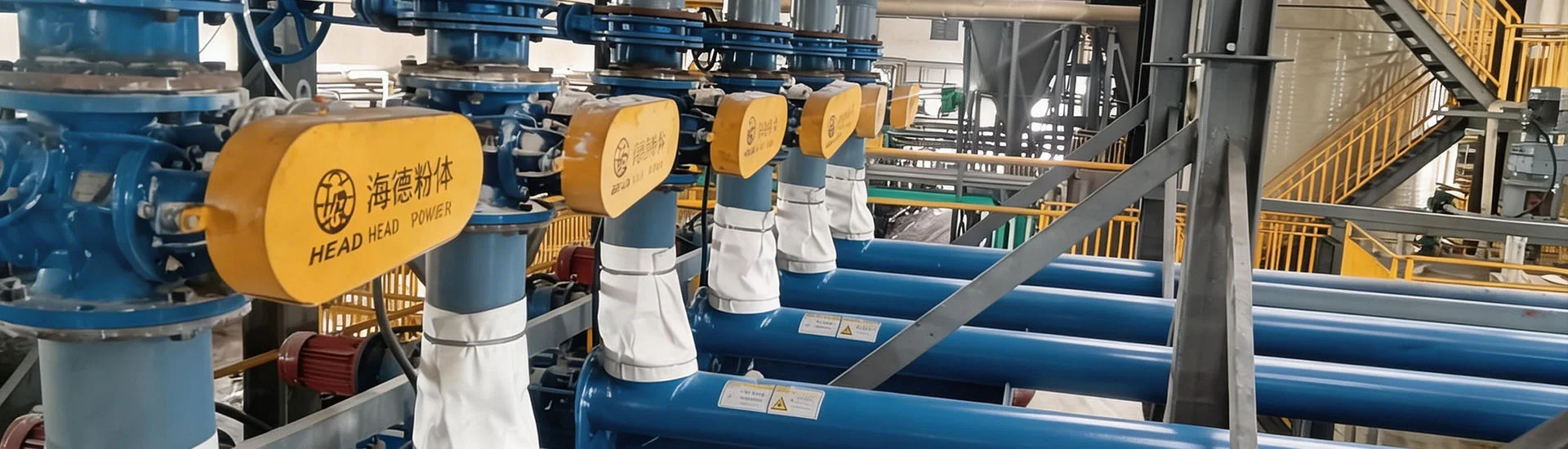
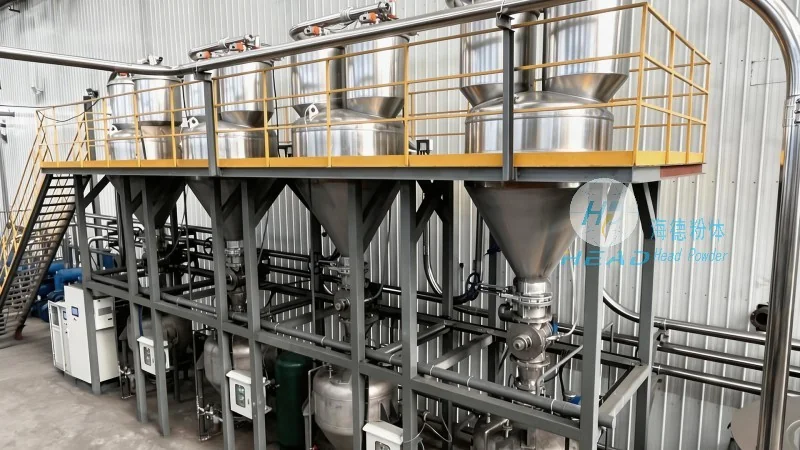
Dense phase conveying moves material in high-concentration slugs or plugs at lower velocities (2–10 m/s). This method drastically reduces particle degradation and frictional heat, making it the preferred choice for vinyl ester resins. Dense phase systems typically require a pressure vessel (blow tank) and a reliable aeration control system to maintain plug integrity. For resins with high tackiness, such as novolac-based grades, dense phase with nitrogen as the conveying gas helps suppress oxidation and moisture pickup.
Selection criteria based on 2026 industry data:
headpowder engineers have successfully installed dense phase systems for vinyl ester resin producers in Southeast Asia and Europe, achieving zero breakage and less than 1% line losses over distances exceeding 150 meters. For a detailed feasibility analysis, contact headpowder directly.
A robust pneumatic conveying system for vinyl ester resins demands careful selection of each component to prevent corrosion, contamination, and mechanical failure. The following elements require particular attention:
Pipeline material: Carbon steel is common but can introduce iron contamination that catalyzes resin gelation. Stainless steel 316L or 304L is recommended for most vinyl ester applications, especially when conveying resins with low pH or high chloride content. For extremely corrosive environments, PVDF-lined or polypropylene-lined pipes offer superior protective barriers. Pipe inner surface roughness should be below Ra 0.8 µm to minimize resin adhesion.
Bend design: Long-radius sweeps (minimum 5× pipe diameter) reduce particle impact and wear. For vinyl ester resins, use wear-resistant ceramic-backed bends or replaceable radius blocks to extend service life. Short radius elbows are a common source of product buildup and should be avoided.
Rotary valves vs. screw feeders: For dense phase systems, rotary airlocks with hardened rotors and adjustable clearance are preferred. However, when resin tackiness is high, a dedicated screw feeder with variable-speed control and a vented hopper can prevent bridging. headpowder’s proprietary anti-stick coating applied to rotor vanes has demonstrated a 3× increase in service intervals in field trials.
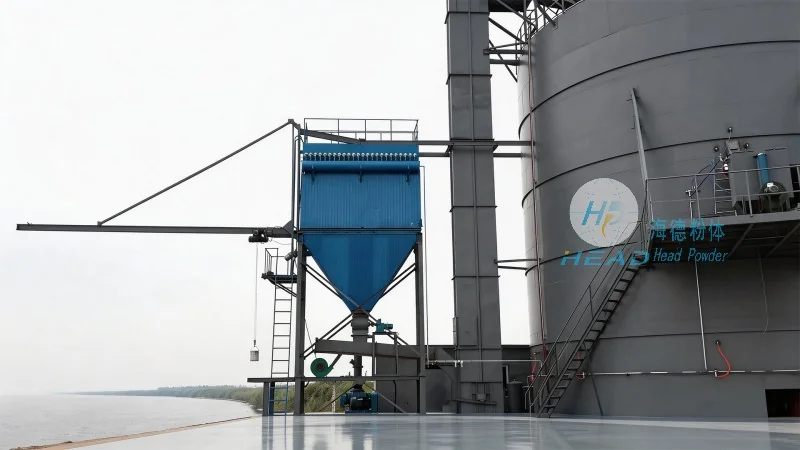
Filter receivers: Pulse-jet fabric filters with PTFE membrane media are optimal for fine vinyl ester dust. Canister style filters with automatic cleaning cycles minimize pressure drop and maintain consistent vacuum levels. For flammable resin dust, use antistatic filter bags and explosion venting per NFPA 68 guidelines.
Blower and compressor selection: Positive displacement blowers (Roots type) provide the steady low pressure required for dilute phase, while screw compressors or piston compressors deliver the high pressure (>3 bar) needed for dense phase. Inert gas systems using nitrogen generators are increasingly adopted to replace compressed air, especially for resins that are sensitive to oxygen. According to a 2025 market report, nearly 40% of new vinyl ester conveying installations in Western Europe now incorporate nitrogen-based conveying.
Even the best-designed system can underperform if operational protocols are not followed. The following practices, derived from real-world case studies, help maintain consistent conveying performance for vinyl ester resins.
Pre-conveying conditioning: Resin should be stored in a climate-controlled silo or container with relative humidity below 30%. If the resin arrives at the conveying inlet at temperatures above 35°C, consider installing a cooling jacket or using a vibratory feeder to break agglomerates before the pickup point.
Line purging and cleaning: After each batch cycle, purge the line with dry nitrogen or dehumidified air at 2× normal velocity for 30 seconds to remove residual resin. For weekly maintenance, perform a “pigging” operation using a foam pig to scrape off accumulated layers. In systems handling multiple resin grades, full flushing between color changes prevents cross-contamination.
Monitoring parameters: Real-time sensors for pressure differential, air flow rate, and product temperature at the discharge point provide early warnings of plugging or degradation. Set alarms for a 20% pressure rise above baseline, which indicates incipient blockage. Many modern PLC-based control systems can automatically adjust blow tank pressure or diverter valve timing to compensate.
Case study – headpowder implementation in a marine composites plant: A leading boat manufacturer in Florida was experiencing 12% material loss during conveying of vinyl ester resin pellets due to attrition and line clogging. After headpowder retrofitted the system with dense phase technology, a 316L stainless steel pipeline, and a nitrogen purge sequence, material loss dropped to under 0.5%, and filter bag replacement frequency decreased from monthly to quarterly. The plant reported annual savings exceeding $180,000. For similar optimizations, contact headpowder at (咨询热线:156-6277-7102).
Vinyl ester resins may contain styrene monomers, organic peroxides, or other reactive components. When conveyed pneumatically, dust clouds can form explosive atmospheres, and static electricity generated during flow can ignite volatile fumes. Compliance with global safety standards is non-negotiable.
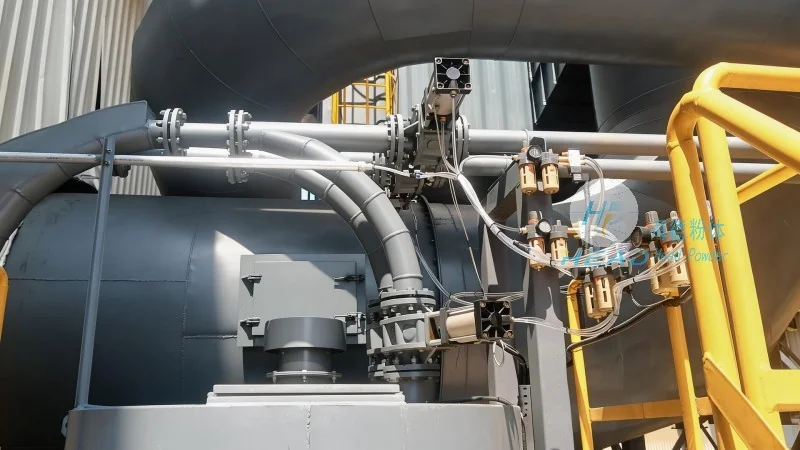
ATEX and NEC compliance: All electrical components in the conveying zone must be rated for the appropriate hazardous area classification (typically Zone 21/22 for dust and Zone 1/2 for gas). Bonding and grounding of all conductive parts, including pipe flanges and support structures, must meet IEC 60079-14 requirements. headpowder’s systems are designed with intrinsic safety barriers and explosion-proof actuators as standard.
Dust explosion prevention: Implement passive explosion protection such as vent panels (NFPA 68) or active suppression systems (NFPA 69). For vinyl ester dust with Kst values exceeding 200 bar·m/s, flameless venting devices should be installed outdoors. Regular housekeeping to eliminate powder accumulations on ledges and floors further reduces secondary explosion risks.
Personal protective equipment (PPE): Operators should wear grounding straps, antistatic footwear, and respirators with organic vapor cartridges when handling opened containers. Training programs on lockout/tagout procedures for blower maintenance must be conducted annually.
Regulatory outlook for 2026: The European Chemical Agency (ECHA) is expected to tighten restrictions on styrene emissions under REACH, which may require enclosed conveying systems with vapor recovery. In the United States, OSHA’s proposed rule on combustible dust will likely mandate more rigorous hazard analysis for sites processing over 10 tons per year of vinyl ester resin. Proactive compliance not only avoids penalties but also insulates operations against supply chain disruptions.
The next five years will bring significant innovations in pneumatic conveying for specialty chemicals. Three trends worth noting for vinyl ester resin processors include:
1. Digital twin simulation: Using CFD (computational fluid dynamics) coupled with discrete element method (DEM), engineers can now simulate resin behavior through entire conveying networks before any hardware is built. headpowder offers digital twin services that reduce commissioning time by up to 40% and eliminate trial-and-error adjustments. For a 2026 state-of-the-art facility in Germany, a digital twin predicted optimal blow tank cycle times that improved throughput by 18%.
2. Smart sensors and AI-based fault prediction: IoT-enabled pressure transmitters, acoustic sensors, and thermal cameras feed data into machine learning models that detect early signs of resin accumulation or equipment wear. Predictive maintenance alerts allow plant teams to intervene before unplanned shutdowns occur. Early adopters report a 60% reduction in unscheduled downtime.
3. Modular and portable conveying skids: For contract manufacturers or pilot plants, prepackaged skids with plug-and-play connectivity enable rapid deployment. These units integrate blow tanks, filters, valves, and controls on a single base frame, reducing installation costs by 30% compared to field-built systems. headpowder’s modular skid range accommodates throughputs from 100 kg/h to 5 t/h and is fully compatible with Class 1 Division 2 environments.
As resin formulations evolve—toward lower viscosity, higher solids content, and bio-based feedstocks—conveying equipment must adapt. headpowder maintains an active research partnership with a leading European polymer institute to test new materials and conveying protocols, ensuring that customers receive future-proof solutions. For inquiries regarding custom designs or technology demonstrations, the engineering team at headpowder can be reached at (咨询热线:156-6277-7102).
Designing and operating a pneumatic conveying system for vinyl ester resins is a complex but manageable challenge when approached with proper material characterization, system selection, and maintenance discipline. The growing demand for corrosion-resistant structures in infrastructure, energy, and transportation sectors will continue to drive adoption of vinyl ester materials, making efficient material handling a critical competitive advantage. By partnering with an experienced engineering firm like headpowder, processors gain access to proven dense phase technologies, corrosion-resistant components, and comprehensive safety compliance support.
Every installation should begin with a thorough audit of resin properties, plant layout, and throughput requirements. From there, decisions about conveying mode, pipeline metallurgy, filtration, and control automation can be made with confidence. The financial impact of a well-tuned system extends beyond direct material savings: reduced waste, longer equipment life, and fewer safety incidents translate into measurable ROI. In a market where margins for specialty chemicals are under constant pressure, eliminating conveying losses of even 2–3% can add hundreds of thousands of dollars to the bottom line annually.
headpowder has delivered over 200 pneumatic conveying systems worldwide, with a specific focus on challenging thermoset materials. Our engineers conduct on-site material flow testing at our dedicated laboratory, simulate system performance with advanced software, and provide turnkey installation support from foundation to commissioning. To discuss your specific vinyl ester resin conveying needs, call (咨询热线:156-6277-7102) or request a consultation through our website. We look forward to helping you achieve reliable, cost-effective, and safe material transport for years to come.

 Shandong headpowder Engineering Co., Ltd.
 156-6277-7102(Manager Zhang)
  0531-83386006
  Jinan City, Shandong Province, China
服务热线
微信咨询
回到顶部