News
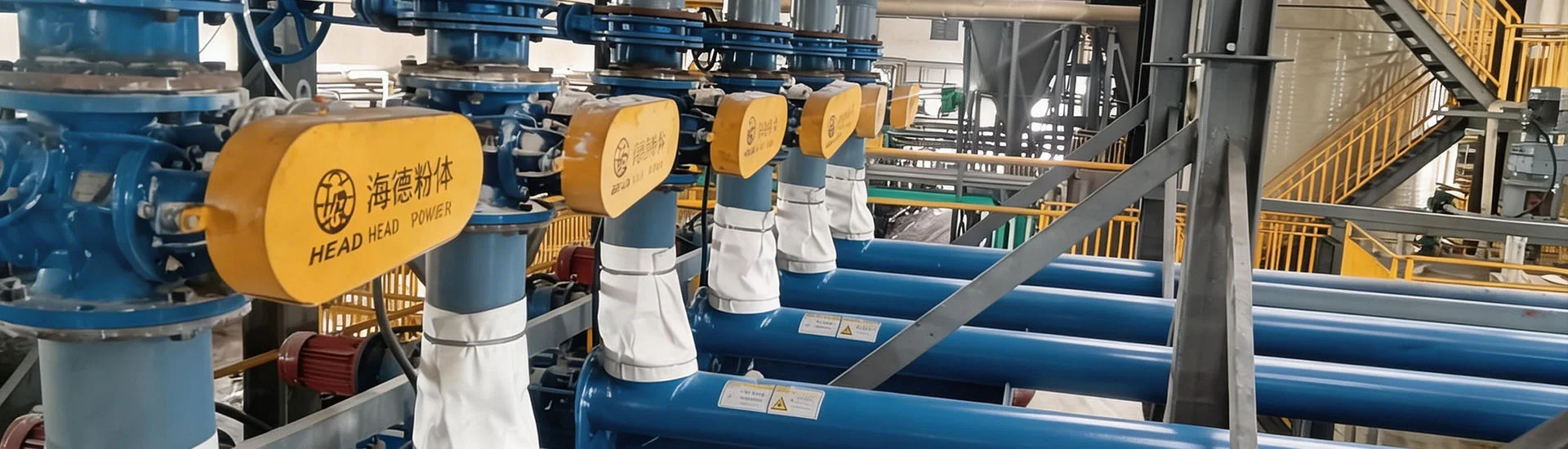
Rich project cases across industries, showing real implementation and proven technical strength.In the rapidly evolving landscape of industrial material handling, the efficient and reliable transfer of fine powders remains one of the most critical challenges for manufacturers across sectors such as pharmaceuticals, advanced chemicals, battery materials, food processing, and specialty minerals. Micropowder conveying, specifically through pneumatic systems, has emerged as a cornerstone technology that addresses these challenges with precision, safety, and scalability. At Headpowder, we have dedicated over a decade to mastering the nuances of dense-phase pneumatic conveying for micropowders, ensuring that our clients achieve consistent throughput, minimal degradation, and dust-free operations. This comprehensive overview will explore the fundamental principles of pneumatic conveying tailored to micropowders, the engineering parameters that govern system performance, and the practical considerations for selecting the right configuration for your production line. Whether you are scaling up from laboratory trials or upgrading an existing facility, understanding the underlying mechanics and trade-offs of pneumatic conveying systems is essential to realizing operational excellence and long-term cost efficiency.
Micropowders, typically defined as particles with a median diameter below 100 micrometers, exhibit unique flow behaviors that deviate significantly from bulk solids. Their high surface-area-to-volume ratio leads to strong interparticle forces—van der Waals, electrostatic, and capillary—which can cause agglomeration, bridging, and rat-holing in hoppers and conveying lines. The flowability of a micropowder is often quantified by its angle of repose, compressibility index, and Hausner ratio. For example, materials with a Hausner ratio above 1.4 are considered cohesive and require special attention in system design. Additionally, the particle size distribution (PSD) affects both the pressure drop across the conveying line and the tendency for segregation. A narrow PSD is generally more predictable, but many industrial micropowders, such as fine silica, titanium dioxide, or lithium-ion battery cathode precursors, have a wide PSD that includes fines below 10 micrometers. These fines can become airborne easily, creating dust hazards and potential losses. Therefore, any pneumatic conveying system intended for micropowders must incorporate dust collection, inert gas blanketing if the material is reactive, and gentle handling mechanisms to preserve particle integrity. Headpowder’s engineering team routinely conducts material characterization in our in-house laboratory, measuring parameters like deaeration rate, permeability, and wall friction to simulate actual conveying conditions before a single pipe is installed.
Pneumatic conveying systems operate by using a gas stream—typically air or nitrogen—to transport solid particles through a pipeline. Two primary regimes exist: dilute-phase (also called suspension flow) and dense-phase (non-suspension flow). In dilute-phase conveying, particles are fully suspended in the gas stream at high velocities, usually between 15 and 35 m/s. This method is simple and well-suited for non-friable, free-flowing materials, but for micropowders, high velocity can lead to severe erosion of pipes, particle attrition, and excessive dust generation. Conversely, dense-phase conveying moves material at lower velocities—typically 2 to 8 m/s—by pushing a compacted slug or plug of powder through the line using compressed gas. This approach minimizes particle breakage and wear, making it the preferred choice for fragile or cohesive micropowders. Dense-phase systems can be further subdivided into plug-flow and fluidized dense-phase types. Plug-flow systems rely on a series of discrete slugs separated by gas pockets, ideal for cohesive powders that form stable plugs. Fluidized dense-phase, often implemented with a blow tank or pressure vessel, uses continuous gas injection to fluidize the powder bed, reducing friction and enabling longer distances. Headpowder has developed proprietary blow-tank geometries and discharge nozzles that achieve stable dense-phase flow for materials with bulk densities as low as 0.2 g/cm³ and as high as 2.5 g/cm³, providing consistent feed rates without surging.
A well-engineered micropowder pneumatic conveying system comprises several critical components: the feeding device (rotary valve, screw feeder, or blow tank), the conveying pipeline (including bends, diverter valves, and couplings), the gas supply (compressor, blower, or nitrogen source), and the receiving vessel with a reliable filter or cyclone. Each component must be selected and sized based on the material’s specific properties. For example, rotary valves are common for dilute-phase systems but often face leakage and bridging issues with micropowders. Headpowder recommends using a pressure-tight blow tank for dense-phase conveying of fine powders, equipped with a bottom discharge cone and aeration pads to prevent arching. Pipeline diameter, length, and routing also play decisive roles. A general rule is to maintain a straight pipeline wherever possible, as each 90-degree bend can increase pressure loss equivalent to 5 to 10 meters of straight pipe. For micropowders, the bend radius should be at least 10 times the pipe diameter to reduce particle impact and wear. Additionally, the conveying gas velocity must be carefully controlled above the saltation velocity—the minimum velocity required to keep particles moving without settling. For micropowders, saltation velocity can be as low as 1.5 m/s in dense-phase but may climb to 8 m/s for larger fines. Headpowder’s design software, validated against thousands of field trials, calculates these parameters with an accuracy margin within ±5%, ensuring that the system operates in the optimal regime even when material properties fluctuate.
One of the most significant concerns when conveying micropowders is particle degradation. Brittle materials like active pharmaceutical ingredients (APIs), ceramic powders, or battery electrode precursors can break down at high velocities, altering the particle size distribution and negatively impacting downstream processes such as compaction, sintering, or electrochemical performance. Studies have shown that even a 2% reduction in mean particle diameter can reduce the tap density of lithium-ion cathode powders by up to 8%, leading to lower energy density in cells. To mitigate degradation, Headpowder employs several strategies: reducing conveying velocity to the lowest feasible level, using wear-resistant linings such as UHMWPE or ceramic tiles in pipe bends, and implementing gentle acceleration zones at the feeder outlet. In one documented application for a specialty chemical manufacturer, our dense-phase system reduced particle attrition by 70% compared to their previous dilute-phase setup, while also cutting nitrogen consumption by 35%. The system was designed with a series of flow-control valves that maintain constant plug velocity regardless of pipeline backpressure, a feature that has proven essential for maintaining product quality in high-value micropowder applications.
Modern micropowder conveying systems are rarely standalone units; they are integrated into larger production lines that include mixing, milling, drying, and packaging equipment. Effective integration requires careful consideration of material flow continuity, batch tracking, and clean-in-place (CIP) capabilities. Headpowder provides fully automated control solutions based on PLC and SCADA platforms, enabling real-time monitoring of mass flow rate, line pressure, gas consumption, and filter differential pressure. These systems can be programmed to adjust conveying parameters automatically based on feedback from weigh cells or laser level sensors, ensuring consistent performance even when feed material properties vary. Safety is paramount when handling micropowders, particularly those that are combustible, toxic, or hygroscopic. The National Fire Protection Association (NFPA) standards, such as NFPA 652 and NFPA 654, provide guidelines for dust hazard analysis, explosion protection, and inerting. For combustible micropowders like aluminum or carbon black, Headpowder recommends using nitrogen as the conveying gas with oxygen monitoring and purging systems. Additionally, all electrical components in the conveying area should be rated for the appropriate Class II hazardous location. Our team routinely conducts dust explosion testing for client materials and designs systems with explosion venting, suppression, or containment measures as required. (For further consultation on system configuration and safety compliance, please contact Headpowder directly at 156-6277-7102.)
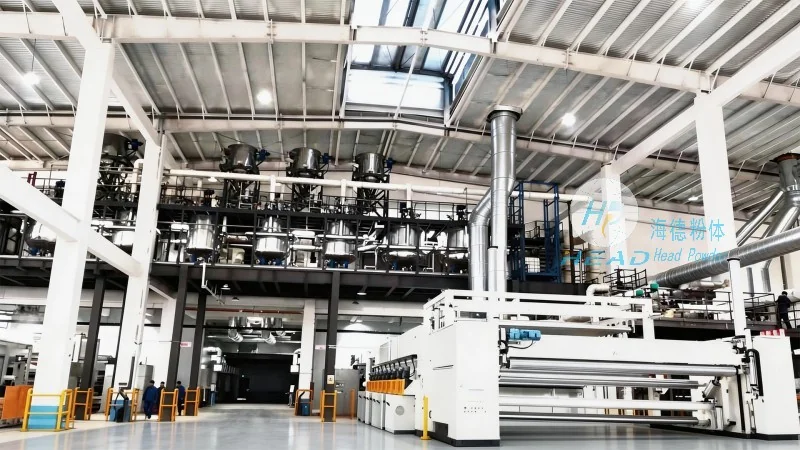
Choosing between dilute-phase and dense-phase, or between pressure and vacuum systems, depends on multiple factors including plant layout, material characteristics, throughput requirements, and budget constraints. For short-distance transfers (under 50 meters) with moderate throughputs (under 5 t/h), dilute-phase pressure systems are often cost-effective if the material is not abrasive or friable. However, for micropowders, the total cost of ownership usually favors dense-phase systems because of reduced wear, lower maintenance, and preserved product value. Vacuum systems are ideal for multiple pick-up points and for applications requiring dust-free loading from bags or drums, but they are less efficient over long distances due to pressure limitations. Headpowder offers a modular platform that allows customers to start with a single conveying line and expand later without replacing core components. For example, a lithium-ion battery material producer recently deployed a Headpowder dense-phase system to convey NMC cathode powder over 120 meters with a throughput of 3 t/h, achieving a conveying ratio (mass of powder per mass of gas) of 24:1—well above the industry average of 15:1 for such materials. This efficiency translates directly into lower energy costs and smaller compressed gas generation equipment.
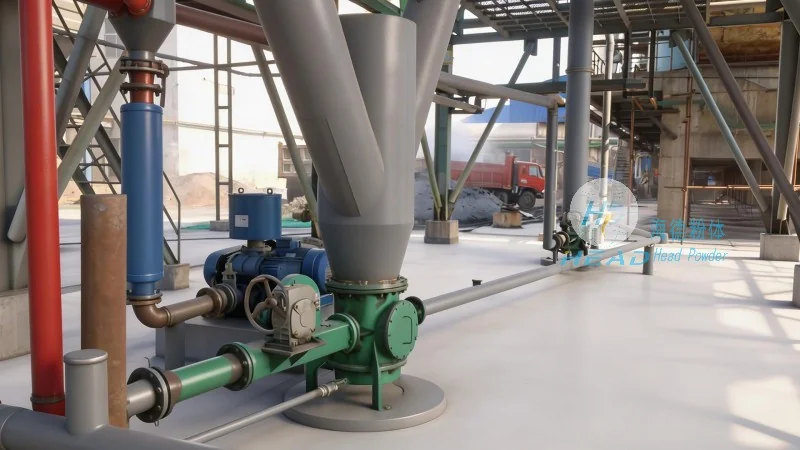
Even the best-designed pneumatic conveying system requires regular maintenance to sustain peak performance. Common issues with micropowder systems include filter blinding, pipe blockages due to moisture condensation, and wear at bend sections. Implementing a predictive maintenance program based on pressure trend analysis can identify developing problems before they cause downtime. Headpowder provides remote monitoring services that alert operators to deviations in line pressure, gas flow, and filter condition. For troubleshooting, a systematic approach should begin with checking the material’s moisture content—as little as 0.5% moisture can cause severe flow problems in hygroscopic micropowders. Next, verify that the gas flow rate and pressure are within the design range; a drop in pressure often indicates a leak or a partial blockage. Pipe wear can be inspected using ultrasonic thickness measurements, and bends should be rotated or replaced periodically based on actual wear rates. Headpowder’s aftermarket team stocks critical spares for all our systems and can provide on-site training to your maintenance staff, ensuring that your conveying line operates reliably for years.
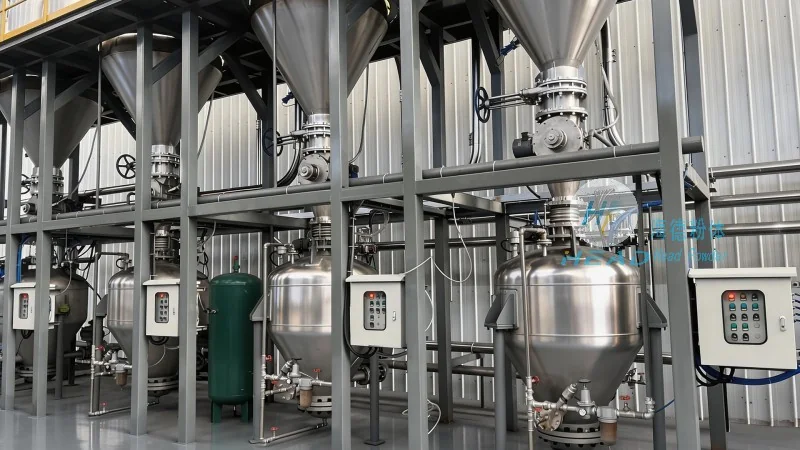
As global industrial production moves toward higher precision and zero waste, the demand for sophisticated micropowder conveying systems is projected to grow at a compound annual rate of 6.8% through 2026, driven by expansions in battery manufacturing, additive manufacturing (3D printing powders), and advanced ceramics. Key technology trends include the adoption of digital twins for real-time simulation, the use of artificial intelligence to optimize conveying parameters dynamically, and the development of self-cleaning filters that reduce downtime. Additionally, sustainability pressures are pushing manufacturers to minimize compressed air usage and recover conveying gas for reuse. Headpowder is actively participating in these developments, having recently introduced a proprietary energy recovery module that captures kinetic energy from exhaust gas to pre-compress incoming supply air, achieving up to 18% reduction in overall energy consumption. With a track record of over 500 successful installations worldwide, we continue to invest in research and development to meet the evolving needs of the micropowder industry. Contact our engineering team today to discuss how we can help you optimize your powder handling operations with a tailored pneumatic conveying solution.

 Shandong headpowder Engineering Co., Ltd.
 156-6277-7102(Manager Zhang)
  0531-83386006
  Jinan City, Shandong Province, China
服务热线
微信咨询
回到顶部