News
Rich project cases across industries, showing real implementation and proven technical strength.In modern industrial material handling, dust conveying via pneumatic systems has become a cornerstone technology for moving bulk powders and granular materials safely, cleanly, and efficiently. Pneumatic conveying uses air or gas flow to transport materials through pipelines, eliminating many of the limitations associated with mechanical conveyors such as belts, screws, or elevators. For industries ranging from food processing and pharmaceuticals to mining and chemical manufacturing, the ability to move fine dusts without spillage, contamination, or environmental exposure is critical. As global manufacturing continues to scale through 2026, the demand for reliable, energy-optimized pneumatic conveying solutions is rising sharply, driven by stricter emissions regulations, labor shortages, and the need for automated, closed-loop processes. This article provides a comprehensive overview of pneumatic conveying system basics, focusing on dust conveying applications, system types, key components, selection parameters, and practical considerations for industrial operations.
Whether you are a plant engineer evaluating a new system or a maintenance professional troubleshooting an existing line, understanding the fundamental principles of pneumatic conveying is essential. The technology relies on creating a pressure differential — either positive or negative — to propel particles through a sealed pipe. This method offers significant advantages in terms of hygiene, space utilization, and flexibility of routing. However, system design must carefully account for material characteristics such as particle size distribution, moisture content, abrasiveness, and explosibility. Misapplication can lead to pipeline blockages, excessive wear, high energy consumption, or even safety hazards. By grounding your knowledge in the basics, you can make informed decisions that improve throughput, reduce downtime, and extend equipment life.
At its simplest, a pneumatic conveying system consists of a material source, a motive gas supply (typically air), a conveying pipeline, a separator (or receiver), and a dust collection system. The material is introduced into the pipeline, where the gas stream accelerates it and carries it to the destination. Two principal modes govern particle movement: dilute-phase and dense-phase. In dilute-phase conveying, particles are suspended in the gas stream at high velocity, typically exceeding 15–30 m/s, which keeps them apart and prevents settling. This method is suitable for fine, free-flowing dusts and materials that are not excessively abrasive. In dense-phase conveying, the gas velocity is lower — often below 10 m/s — and the material moves as a fluidized bed or as discrete plugs, sliding along the pipe bottom. Dense-phase is gentler on fragile materials and requires less energy for certain applications, but it demands precise control of air pressure and material feeding.
For dust conveying specifically, the choice between dilute and dense phase depends heavily on particle characteristics. Fine powders with low terminal velocities are easily airborne, making dilute-phase a natural fit. However, many industrial dusts, such as cement, fly ash, or carbon black, are cohesive and prone to agglomeration, which can cause plugging in dilute-phase lines if not properly aerated. In such cases, dense-phase systems using pulsed air injection or bypass valves can maintain stable flow. Understanding the aerodynamics of particles — especially the saltation velocity (the speed at which particles begin to drop out of suspension) and the minimum conveying velocity — is critical for pipeline sizing and fan or compressor selection. A robust system design will incorporate safety margins for variations in material density, moisture, and batch consistency.
Every pneumatic conveying system comprises several essential components, each contributing to reliable and efficient operation. The air mover — typically a positive displacement blower, compressor, or fan — provides the motive force. For dilute-phase systems, centrifugal fans or regenerative blowers are common, while dense-phase applications often require screw compressors or rotary vane compressors to generate higher pressures (up to 2–6 bar). The material feeding device regulates the introduction of dust into the pipeline. Rotary airlocks, screw feeders, venturi eductors, and pressure tanks are widely used, with the choice depending on whether the system operates under positive or negative pressure. Sealing effectiveness is paramount to prevent air loss and maintain conveying stability.
The conveying pipeline itself must be selected for wear resistance, especially when handling abrasive dusts like silica or metal oxides. Carbon steel with wear-resistant linings, stainless steel, or aluminum are common options. Elbows, which experience the highest erosion forces, benefit from long-radius bends or ceramic-lined tees. At the destination, a receiver or separator — often a cyclone, baghouse filter, or silo vent filter — separates the conveyed material from the conveying air. For dust conveying, efficient filtration is essential to meet workplace dust exposure limits and prevent emissions. A control system integrates pressure sensors, flow meters, and variable frequency drives to optimize conveying velocity and reduce energy waste. Modern systems increasingly incorporate IoT-enabled monitoring for predictive maintenance and real-time performance tracking.
Pneumatic conveying systems are broadly classified into three configurations: pressure (positive) systems, vacuum (negative) systems, and combined pressure-vacuum systems. In a pressure system, air is forced into the pipeline at the material intake, pushing the dust toward the destination. This configuration is ideal for long distances and multiple discharge points, as it can maintain consistent flow over hundreds of meters. However, material feeding into a pressurized line requires a robust rotary airlock or blow tank with careful sealing. Vacuum systems create negative pressure at the receiver, pulling material through the pipeline. They are excellent for dust conveying because any leaks aspirate inward, preventing dust escape into the environment. Vacuum systems are often used for unloading bulk tankers, transferring from multiple pickup points, or handling toxic or hygroscopic materials.
Combined systems leverage both pressure and vacuum in separate segments, enabling versatile layouts such as vacuum pick-up from multiple sources followed by pressure distribution to multiple silos. For dust conveying in facilities where material is extracted from hoppers or bag dump stations, a vacuum system with a central baghouse is often the safest solution. When selecting a system type, factors like conveying distance, number of material sources and destinations, space constraints, and dust explosibility (ATEX or NFPA compliance) must be weighed. In many modern plants, a combination of dense-phase pressure conveying and dilute-phase vacuum transfer is used to handle different material streams within the same production line.
Proper system sizing is the difference between a reliable, energy-efficient operation and a costly failure. Key parameters include conveying velocity, air flow rate, pressure drop, and material-to-air ratio. The conveying velocity must be maintained above the saltation velocity for the specific material to prevent settling, but not so high that it causes excessive wear or particle degradation. For fine dusts, minimum conveying velocities typically range from 10 to 20 m/s in dilute phase, and 2 to 8 m/s in dense phase. The air flow rate is determined by the required mass flow and the desired velocity across the pipe cross-section. Pressure drop calculations account for friction between the air and pipe walls, acceleration of solids, lift against gravity, and losses through bends and fittings. Reliable data on particle density, bulk density, particle shape, and abrasiveness must be obtained through laboratory testing or historical experience.
Industry standards such as ISO 5167, ASME PTC 19.5, and guidelines from the European Federation of Chemical Engineering (EFCE) provide methodologies for system design. In practice, many engineers use specialized software (e.g., pneumatic conveying simulation tools) to model flow behavior and iterate on pipe diameters, blower specifications, and feeder settings. A conservative approach often adds 10–15% margin to blower capacity to account for future changes in material properties or production rates. It is also wise to incorporate bypass lines, purge valves, and access points for pipe cleaning — especially in dust conveying where fine particles can accumulate and cake over time. Energy costs typically represent 30%–50% of the total operating expense for a pneumatic conveying line, so optimizing velocity and minimizing pressure drops directly impacts the bottom line.
While pneumatic conveying offers many benefits, operators frequently encounter issues such as pipeline blockages, excessive wear, material degradation, and dust leakage. Blockages often occur at elbows, vertical risers, or when material moisture increases suddenly. Solutions include installing air injection at strategic points, using flexible hoses at transition zones, and maintaining consistent feed rates. Wear is accelerated by high velocity and abrasive particles; using wear-resistant materials like alumina ceramics in high-impact areas can extend pipe life by three to five times. Material degradation is a concern for friable products (e.g., food powders, catalysts, pigments). Switching from dilute to dense-phase conveying at lower velocities reduces breakage and preserves particle morphology.
Dust leakage at flanges, rotary valves, or filter bags poses both safety and regulatory risks. Proper sealing materials, regular inspection of gaskets, and employing HEPA baghouse filters can reduce emissions to near-zero levels. For combustible dusts, grounding and bonding of all system components is mandatory, and explosion venting or suppression devices should be integrated per local codes (e.g., NFPA 652, 654). A well-designed system includes pressure relief valves and rupture discs to protect equipment. Additionally, implementing automated purge sequences and differential pressure monitoring can alert operators to developing blockages before they cause downtime.
With the increasing adoption of Industry 4.0 technologies, many conveying systems now incorporate smart sensors that track real-time material flow, filter differential, energy consumption, and vibration patterns. These data streams enable predictive maintenance, reducing unplanned outages by up to 40% according to recent industry studies. In 2026, the global pneumatic conveying equipment market is projected to exceed USD 45 billion, with dust conveying applications representing a significant segment driven by expanding construction, pharmaceutical, and food sectors. Companies that invest in advanced system design and control infrastructure gain a competitive edge through higher uptime and lower total cost of ownership.
To illustrate the practical application of these principles, consider a cement plant operating a dilute-phase pressure system to transfer fly ash and limestone dust from storage silos to a blending tower. The original system experienced frequent blockages at a 90-degree elbow and high energy bills due to an oversized blower running at constant speed. After a thorough audit, the plant replaced the elbow with a long-radius ceramic-lined bend and installed a variable frequency drive on the blower. The conveying velocity was reduced from 25 m/s to 18 m/s, staying above the saltation threshold but significantly lowering wear and energy consumption. A flow control loop with pressure sensors was added to modulate the air volume based on material feed rate. The result: blockages dropped by 85%, energy usage decreased by 22%, and annual maintenance costs fell by over $50,000. This example highlights how systematic analysis and targeted upgrades — grounded in pneumatic conveying fundamentals — deliver measurable improvements.
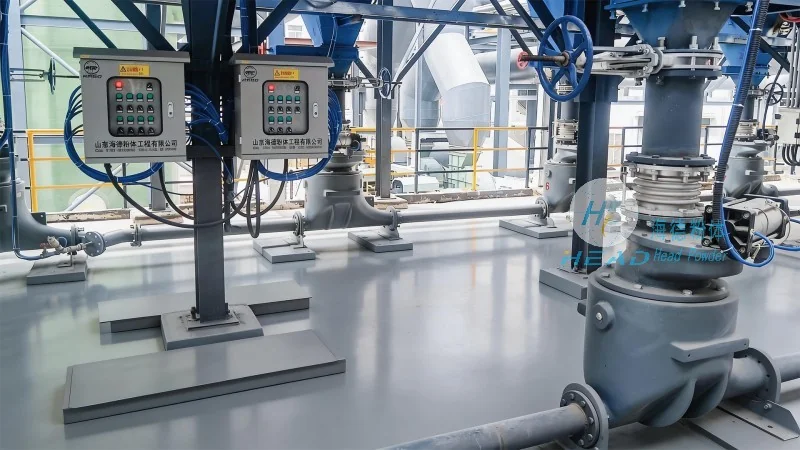
For more than a decade, headpowder has been at the forefront of pneumatic conveying technology, providing engineered systems that address the toughest dust conveying challenges across industries. Our team of application engineers works closely with clients to analyze material properties, define performance targets, and design systems that balance throughput, energy efficiency, and safety. From single-line dilute-phase blowers to multi-point dense-phase networks with integrated controls, our solutions are built to withstand harsh industrial environments while maintaining regulatory compliance. Whether you are handling abrasive minerals, hygroscopic food powders, or combustible fine dusts, headpowder offers customized equipment including rotary airlocks, blow tanks, baghouses, and control panels. We also provide retrofitting services to upgrade existing lines with modern sensing and automation. For a no-obligation consultation on your dust conveying project, contact our technical sales team directly (咨询热线:156-6277-7102) to discuss your requirements.
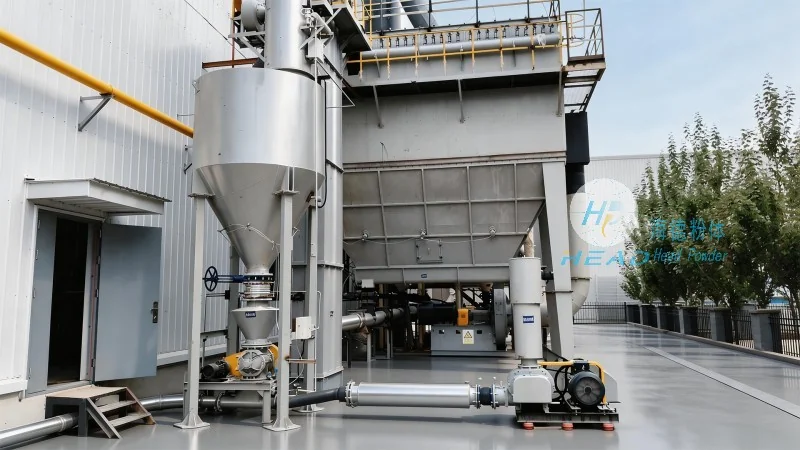
Looking ahead, several trends are shaping the evolution of pneumatic conveying for dust applications. Energy optimization remains a top priority — systems increasingly incorporate multiple blowers operating in cascade, variable speed drives, and waste heat recovery to lower carbon footprints. Digital twin technology allows operators to simulate conveying behavior under different material and flow conditions, reducing the need for physical trials. Modular and portable conveying units are gaining traction in construction and mining for temporary or mobile dust handling. Meanwhile, advancements in filter media (e.g., nanofiber technology) enable higher filtration efficiency with lower pressure drop, improving both environmental compliance and equipment longevity. The push for zero-emission plants in Europe and North America is accelerating adoption of closed-loop pneumatic systems that recycle conveying air, further reducing energy and environmental impact.
In the context of dust explosion safety, new standards such as ATEX 2014/34/EU and updated NFPA 652 guidelines continue to evolve, requiring more rigorous hazard analysis and system design documentation. Manufacturers that invest in certified components and thorough risk assessments will be better positioned to meet these requirements. As automation and remote monitoring become more affordable, even small and medium-sized operations can harness data-driven insights to improve reliability. By staying informed about these developments and partnering with experienced providers like headpowder, industrial facilities can ensure their dust conveying operations remain efficient, safe, and competitive well into the next decade.
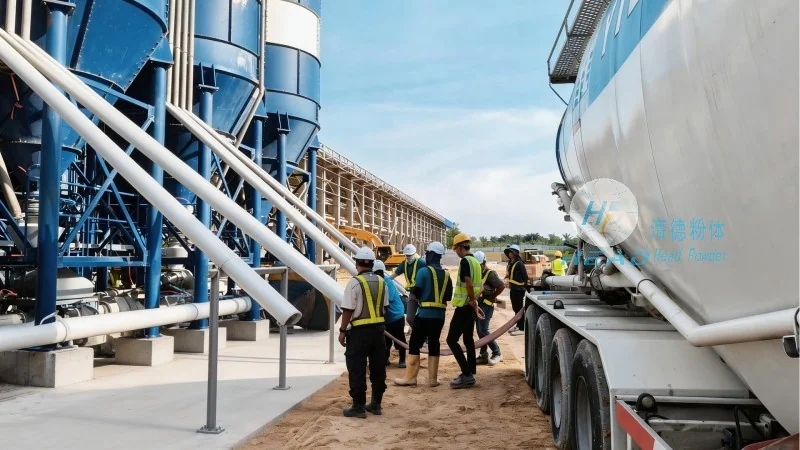
Consistent maintenance is vital to sustain the performance of any pneumatic dust conveying system. Daily inspections should include checking air filter condition, rotary valve clearances, pipeline pressure readings, and dust collection bag integrity. A weekly schedule of cleaning or replacing filter cartridges prevents excessive pressure drop that can starve the system of air. Monthly, inspect elbows and straight pipe sections for internal wear using ultrasonic thickness gauges or borescopes, especially in areas known to experience high erosion. Lubrication schedules for blowers and compressors must be followed strictly, and drive belts should be checked for tension and wear. Quarterly, perform a complete system audit: verify pressure and flow sensors are calibrated, test safety valves and rupture discs, and review energy consumption data for anomalies. Proper record-keeping of all inspections and repairs enables trend analysis, helping to predict component life and schedule replacements before failure occurs.
Training operators on correct startup and shutdown procedures also reduces wear. For example, many dust conveying systems should be purged with air for a few minutes after material feeding stops to clear residual dust that could settle and bridge. In cold climates, ensure that air dryers or moisture separators are functioning to prevent ice formation in the pipeline. By combining a proactive maintenance culture with well-designed equipment, companies can achieve trouble-free dust conveying for many years. For assistance in developing a customized maintenance plan or sourcing replacement parts, headpowder’s aftermarket service team provides fast support and genuine components. Reach out to us (咨询热线:156-6277-7102) with any technical inquiries.
In summary, mastering the basics of pneumatic conveying for dust applications empowers facility managers and engineers to make informed decisions that enhance productivity, safety, and sustainability. From understanding the physics of particle transport to selecting the right system type and sizing components, every detail matters. As the industry moves toward smarter, greener, and more reliable solutions, staying educated on best practices and collaborating with experienced partners ensures your operations remain at the cutting edge. The fundamentals covered in this article provide a solid foundation for anyone involved in dust conveying — whether you are designing a new line or optimizing an existing one. Use this knowledge as a starting point, and do not hesitate to consult with specialists when confronting unique material behavior or challenging site conditions.
```
 Shandong headpowder Engineering Co., Ltd.
 156-6277-7102(Manager Zhang)
  0531-83386006
  Jinan City, Shandong Province, China
服务热线
微信咨询
回到顶部