News
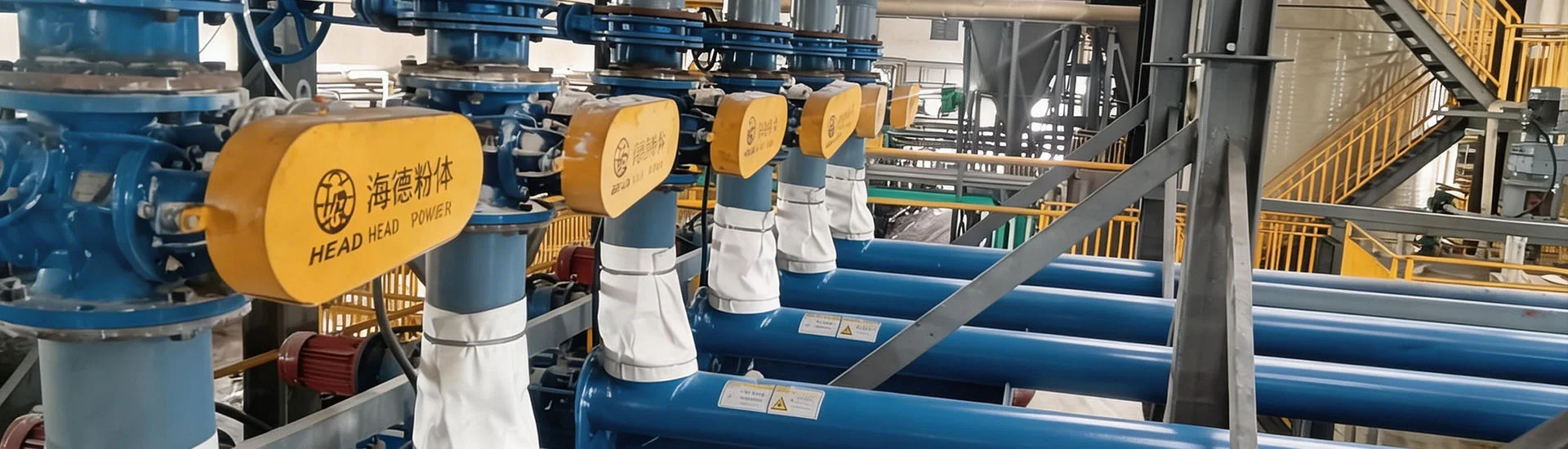
Rich project cases across industries, showing real implementation and proven technical strength.In modern industrial environments, the efficient handling of smoke dust—fine particulate matter generated from processes such as smelting, cement production, chemical synthesis, and biomass combustion—has become a logistical and environmental priority. Smoke dust, typically characterized by particle sizes ranging from sub-micron to several hundred microns, poses unique challenges: it is often abrasive, hygroscopic, electrostatically charged, and potentially explosive. Traditional mechanical conveyors, such as screw conveyors or belt systems, frequently fail to contain these fine particles, leading to fugitive emissions, equipment wear, and safety hazards. This is where pneumatic conveying systems emerge as the preferred solution. By using an air stream to transport smoke dust through enclosed pipes, pneumatic systems offer complete containment, flexible routing, and low maintenance requirements. This guide provides a detailed examination of pneumatic conveying for smoke dust, covering fundamental principles, system configurations, equipment selection criteria, operational best practices, and emerging trends. Whether you are designing a new waste-to-energy facility or upgrading an existing baghouse discharge line, understanding the nuances of smoke dust conveying can substantially reduce downtime, improve air quality compliance, and lower total cost of ownership. Industry data indicates that by 2026, the global market for pneumatic conveying systems in dust handling applications is expected to surpass USD 8.5 billion, driven by stricter emission regulations in the EU, North America, and Asia-Pacific regions. Companies that invest in properly engineered pneumatic systems not only meet regulatory requirements but also gain a competitive edge through higher process reliability. headpowder, with decades of experience in engineered powder handling solutions, provides tailored pneumatic conveying guidance for smoke dust applications, ensuring that each system is optimized for the specific material characteristics and site conditions. (咨询热线:156-6277-7102)
Pneumatic conveying relies on the differential pressure between a source and a destination to move particulate solids suspended in a gas stream—typically air, nitrogen, or other inert gases. For smoke dust, the key parameters that govern conveying behavior include air velocity, solids loading ratio, and particle properties. Understanding these fundamentals allows engineers to predict pressure drops, prevent blockages, and minimize energy consumption. The Reynolds number of the gas phase, the slip velocity between particles and air, and the inter-particle collisions all influence whether the flow regime is dilute phase (high velocity, low concentration) or dense phase (low velocity, high concentration). For smoke dust, which is often fine and light, dilute phase conveying is more common due to the risk of line plugging in dense phase systems. However, careful velocity tuning is essential: too low a velocity leads to saltation and settling, while too high a velocity causes excessive wear and energy waste. A general rule of thumb is to maintain a minimum conveying velocity of 12–18 m/s for fine smoke dust, depending on particle density and pipe diameter. The pressure drop across the system comprises three components: acceleration losses at the feed point, frictional losses along straight pipe sections, and losses through bends, fittings, and separation devices. Modern computational fluid dynamics (CFD) tools enable precise modeling of these losses, but empirical correlations such as the Zenz–Othmer chart remain widely used for preliminary design. It is also critical to account for the compressibility of air, especially in long-distance or high-pressure applications. Using an inert gas like nitrogen instead of air can mitigate explosion risks when handling combustible smoke dust, a practice that is gaining traction in industries such as aluminum recycling and carbon black production.
The choice between dilute phase and dense phase conveying is among the most consequential decisions in smoke dust handling. Dilute phase systems, where the solids-to-air mass ratio is typically below 15:1, operate at high velocities (15–30 m/s) and are ideal for transporting fine, free-flowing smoke dust over moderate distances. They are simpler in design, have lower capital costs, and are easier to clean and maintain. However, the high velocity accelerates pipe wear and particle attrition, which can alter the dust’s particle size distribution and affect downstream processes like filtration or sintering. For example, in a cement plant handling kiln dust, high-velocity dilute phase conveying may break agglomerates into finer fractions, increasing the load on baghouses. Dense phase systems, on the other hand, operate at lower velocities (3–8 m/s) and high solids loading ratios (above 30:1). They are gentler on both the product and the equipment, making them suitable for fragile, abrasive, or hazardous smoke dust. Dense phase conveying can be further divided into plug flow and fluidized bed modes. Plug flow is common for cohesive dusts, while fluidized dense phase works well for aeratable powders like fly ash. The trade-off is that dense phase systems require higher pressure (up to 6 bar) and more sophisticated controls, such as blow tanks and pulse valves. Combination systems, which use dilute phase for transport over long distances and dense phase for final injection into reactors or bins, are increasingly adopted in large-scale petrochemical and metallurgical facilities. According to a 2025 industry survey, nearly 40% of new smoke dust conveying installations in waste-to-energy plants now incorporate a combination approach to balance energy efficiency and product integrity. When specifying a system, it is vital to conduct a material characterization test, including angle of repose, wall friction angle, and deaeration rate, as these properties directly influence the achievable conveying mode. headpowder offers comprehensive pilot testing services to validate system design before installation, reducing the risk of costly field modifications.
A pneumatic smoke dust conveying system comprises several critical components, each requiring careful selection to match the specific dust properties. The rotary airlock valve, often positioned at the hopper discharge, is responsible for metering the dust into the conveying line while minimizing air leakage. For fine smoke dust, a drop-through rotary valve with hardened tips and adjustable rotor speed is recommended to prevent bridging and wear. The blow tank (or pressure vessel) system is the heart of dense phase configurations, with options for top or bottom discharge depending on dust flowability. The conveying pipe should be constructed of abrasion-resistant materials such as ceramic-lined steel or duplex stainless steel, especially at bends where impact erosion is most severe. Long-radius bends (R/D ratio of 10–20) reduce wear and pressure drop compared to standard bends. The air mover, typically a positive displacement blower for low-pressure systems or a screw compressor for high-pressure dense phase, must be sized to deliver the required airflow at the necessary pressure while maintaining energy efficiency. Variable frequency drives (VFDs) on blowers can cut energy consumption by up to 30% when the system is operated at partial loads. Downstream separation is achieved via cyclone separators, baghouse filters, or cartridge collectors. For smoke dust with a high proportion of sub-micron particles, a high-efficiency particulate air (HEPA) filter may be required after the primary collector to meet emission limits of 1 mg/Nm³ or lower, as mandated by the EU Industrial Emissions Directive (IED) 2026 revision. Additionally, safety equipment such as explosion vents, flame arresters, and isolation valves must be integrated into the line when handling combustible dusts. National Fire Protection Association (NFPA) 652 and ATEX directives provide guidelines for explosion protection, and a hazard analysis (e.g., DHA per NFPA 61) should be performed during the design phase. Neglecting these safety aspects can lead to catastrophic dust explosions, with recent incidents in grain silos and metal powder facilities underscoring the importance of proactive risk management.
The behavior of smoke dust in a pneumatic system is highly dependent on its physical and chemical characteristics. Particle size distribution (PSD) dictates the minimum conveying velocity: fines below 10 µm tend to agglomerate and require higher shear to keep them suspended, while coarse particles above 100 µm settle more quickly. The moisture content is another critical factor: smoke dust with >5% moisture can become sticky, leading to coatings on pipe walls and rotary valve clogging. In such cases, heated air or air knives at the feed point can help reduce adhesion. Abrasivity, measured by the Mohs hardness of constituent particles, influences pipe lifetime: silica-rich fly ash with a hardness of 7 can wear a standard steel pipe by 0.5 mm per 1000 operating hours, whereas softer limestone dust causes negligible erosion. For highly abrasive dusts, using ceramic bends or replaceable wear sleeves extends system life substantially. Electrostatic charge buildup is common in fine dry dusts due to triboelectric charging during transport, which can cause preferential deposition on pipe walls or even sparking in explosive atmospheres. Grounding the entire pipeline, using conductive rubber hoses, and maintaining a minimum relative humidity of 40% in the conveying air are effective countermeasures. Finally, the explosibility of smoke dust must be assessed: the minimum ignition energy (MIE), dust explosion class (St1, St2, or St3), and explosion pressure rise rate all inform the choice of inert gas blanketing, suppression systems, and venting design. A 2024 study in the Journal of Loss Prevention found that for metal smoke dust (e.g., aluminum, magnesium), replacing air with nitrogen reduced the explosion risk by over 90%. When planning a new system, sending a representative sample to a certified testing laboratory for these parameters is not merely recommended—it is a prerequisite for safe and efficient design. headpowder’s engineering team routinely collaborates with material testing labs to generate customized conveying solutions that account for every nuance of the smoke dust being handled.
Proper installation is as important as proper design. The conveying line should be routed with the fewest possible bends to minimize pressure drop and wear. Where bends are unavoidable, install them with a radius of at least 10 times the pipe diameter. Horizontal runs should be limited to 10–15 meters before a vertical lift to prevent settling, and vertical sections should have a slightly larger diameter to accommodate the reduced conveying velocity. The air supply line should include a moisture separator and aftercooler if the blower discharge is hot, as condensation can cause dust caking. During commissioning, a stepwise procedure is recommended: first, run the system with only air to verify branch flows and pressure profiles; then introduce dust at low feed rates, gradually increasing to design rates while monitoring pressure, temperature, and power draw. Automated control systems, typically based on PLC with HMI, should log these parameters for ongoing performance optimization. A common pitfall is underestimating the time required to purge the system after shutdown: residual smoke dust in horizontal sections can absorb moisture and harden, leading to blockages at next start-up. Implementing an automated purge cycle with increased air velocity for 2–3 minutes after each conveying batch can prevent this issue. Additionally, all joints and flanges must be sealed against leakage—even a small pinhole can create a visible dust plume and violate workplace exposure limits. Using gaskets made of EPDM or silicone for high-temperature applications ensures long-term sealing integrity.
Even well-designed pneumatic systems can develop issues over time. The most frequent problems include line plugging, excessive pressure drop, and abnormal wear. Line plugging is often caused by a sudden surge of dust, changes in moisture content, or a drop in air velocity due to a failing blower filter. Monitoring differential pressure across sections of the pipeline can provide early warning: a rapid rise in pressure indicates the beginning of a blockage, allowing operators to initiate a reverse air pulse or reduce feed rate before the line completely chokes. For persistent plugging in dense phase systems, adjusting the blow tank cycle timing or reducing the conveying pressure may restore stable flow. Excessive wear is most common at pipe bends and after rotary valves. Inspecting bends with ultrasonic thickness gauging every six months helps schedule replacements before catastrophic failure occurs. If energy costs are a concern, retrofitting with a VFD on the blower motor can yield payback in under two years for systems that operate at variable throughput. A 2025 case study in a German incineration plant showed that installing a VFD on a 75 kW blower reduced annual electricity consumption by 120 MWh while maintaining the same conveying capacity. Regular preventive maintenance—including cleaning blow tank screens, lubricating rotary valve seals, and replacing air filters—should be documented in a computerized maintenance management system (CMMS) to ensure compliance and traceability.
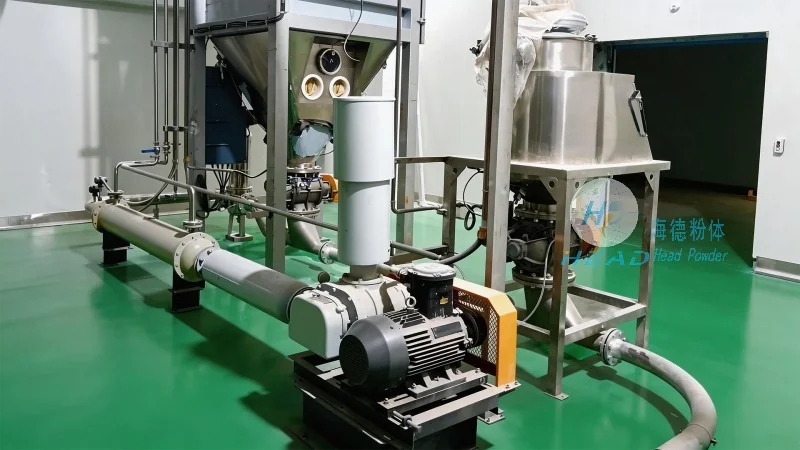
Looking ahead to 2026 and beyond, the smoke dust conveying industry is converging with Industry 4.0. Smart sensors embedded in the conveying line can measure real-time particle velocity, dust concentration, and pipe wall thickness. Machine learning algorithms analyze historical data to predict component wear and optimize air-to-solid ratios dynamically. For example, a neural network trained on pressure fluctuation patterns can detect incipient blockages with 95% accuracy, enabling corrective action before production stops. Another trend is the integration of low-carbon energy sources: solar-powered blowers and heat recovery from compressor cooling loops are being piloted in regions with abundant sunlight and stringent carbon taxes. The European Union’s Carbon Border Adjustment Mechanism (CBAM) is motivating heavy industries to reduce direct and indirect emissions, and pneumatic conveying systems are not exempt. Using larger diameter pipes, reducing air velocity via dense phase conversion, and recovering energy from blow tank depressurization are all viable pathways to lower the carbon footprint. Additionally, modular and mobile pneumatic conveying units are gaining popularity for temporary operations, such as disaster cleanup or decommissioning projects, where quick deployment and minimal civil works are essential. headpowder stays at the forefront of these developments by collaborating with academic research groups and continuously updating its design practices based on field data from hundreds of smoke dust installations worldwide.
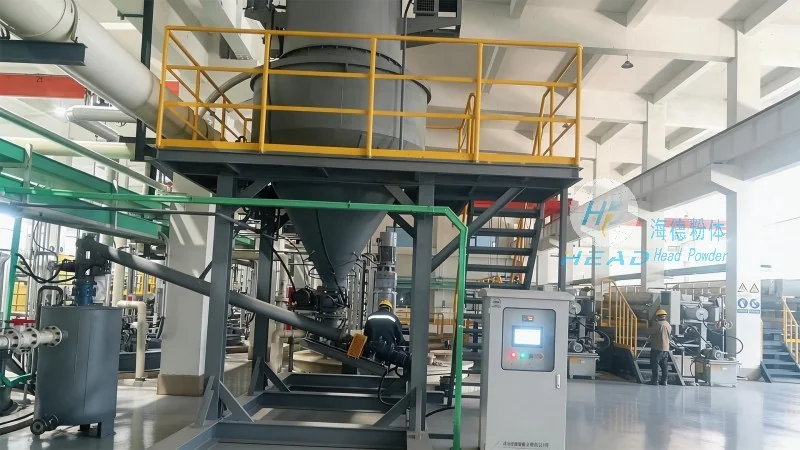
To illustrate the practical application of these principles, consider a secondary aluminum smelter in the Midwest United States that generates approximately 15 tons per day of salt cake and dross dust. The original system used a bucket elevator and manual dumping, resulting in frequent worker exposure to airborne particulates and a high rate of equipment failures. After a comprehensive audit, headpowder designed a dense phase pneumatic conveying system with a nitrogen blanketing loop to prevent aluminum dust explosion. The system uses a 150 mm ceramic-lined pipe with 400-meter horizontal runs and six 90° bends. A blow tank with a 5,000-liter capacity operates at 4 bar, feeding the dust into a closed-loop inert circuit. Since commissioning in 2024, the system has achieved a 99.8% uptime and reduced worker exposure to below 0.5 mg/m³, meeting OSHA’s stringent PEL for aluminum dust. The client reported a 40% reduction in maintenance costs and a 25% decrease in energy consumption compared to the previous pneumatic system from another vendor. This case underscores the value of a customized, safety-first approach to smoke dust conveying—one that headpowder consistently delivers.
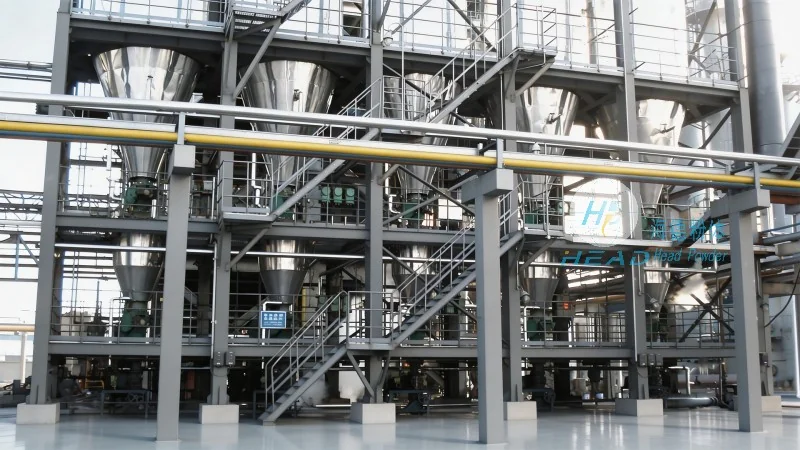
Effective smoke dust conveying is not merely a matter of moving material from point A to point B; it is a complex engineering discipline that requires careful consideration of material properties, system dynamics, safety regulations, and operational economics. From the initial selection between dilute and dense phase, through detailed equipment specification, to ongoing monitoring and smart optimization, each step demands expertise and a commitment to quality. As global emission standards tighten and industries seek to minimize waste and energy consumption, pneumatic conveying will remain an indispensable technology. For companies navigating these challenges, partnering with a knowledgeable provider can make the difference between a system that merely functions and one that excels in performance, safety, and sustainability. headpowder’s team of conveying specialists offers end-to-end support—from conceptual design and pilot testing to installation supervision and aftermarket service—ensuring that your smoke dust handling system meets the highest standards of reliability and compliance. (咨询热线:156-6277-7102)

 Shandong headpowder Engineering Co., Ltd.
 156-6277-7102(Manager Zhang)
  0531-83386006
  Jinan City, Shandong Province, China
服务热线
微信咨询
回到顶部