News
Rich project cases across industries, showing real implementation and proven technical strength.In the rapidly evolving landscape of bulk material handling, mining slag conveying has emerged as a critical operation that directly influences plant efficiency, environmental compliance, and total cost of ownership. Mining slag—the byproduct generated during smelting, refining, or pyrometallurgical processing—poses unique challenges due to its abrasive nature, high temperature, variable particle size distribution, and potential for dust generation. Traditional mechanical conveying methods such as belt conveyors, drag chains, and screw conveyors often struggle with slag’s harsh characteristics, leading to frequent maintenance, spillage, and safety hazards. Pneumatic conveying methods, by contrast, offer a closed-pipe, low-maintenance, and highly adaptable solution that is gaining traction across mineral processing and steelmaking industries worldwide. As of 2026, industry data indicates that more than 35% of new slag handling system installations in Asia-Pacific and Europe favor pneumatic systems over mechanical alternatives, driven by stricter emission regulations and the need for remote monitoring capabilities. This article provides an in-depth technical exploration of pneumatic conveying methods tailored for mining slag, covering system classifications, design parameters, wear mitigation strategies, energy efficiency considerations, and real-world implementation insights. Throughout the discussion, we will highlight how professional engineering approaches—such as those adopted by headpowder—can significantly improve system reliability and operational economics.
Before selecting a pneumatic conveying method, it is essential to understand the physical and chemical properties of mining slag. Slag may contain remnants of iron, copper, nickel, or other base metals, along with silicates, oxides, and sulfides. Its particle size can range from fine dust (below 10 microns) to coarse granules (up to 30 mm), depending on the granulation process. Bulk density typically varies between 1.0 and 2.5 t/m³, and the material can be hot (sometimes exceeding 400°C immediately after tapping) or pre-cooled. The abrasive index of slag is high, often ranking between 6 and 8 on the Mohs scale, which demands robust system components. Additionally, slag tends to be hygroscopic in some cases, causing caking if exposed to moisture. These characteristics mean that any pneumatic conveying system must incorporate wear-resistant bends, heavy-duty rotary valves, and controlled air velocities to avoid pipeline erosion. Failure to match these parameters results in accelerated component replacement, increased energy consumption, and unplanned downtime. A professional system design—like those engineered by headpowder—begins with a detailed material analysis to determine appropriate conveying phase (dilute, dense, or strand) and pipeline routing.
Pneumatic conveying can be classified into three primary modes based on air velocity and material-to-air ratio: dilute phase, dense phase, and strand phase. Each has distinct advantages and limitations when handling mining slag. Below is a structured comparison:
To select the most appropriate method, engineers must evaluate not only the slag's physical properties but also plant layout, available compressed air infrastructure, and environmental constraints. In many greenfield projects today, dense phase systems are being installed as the baseline, with provisions to convert to hybrid operation if needed.
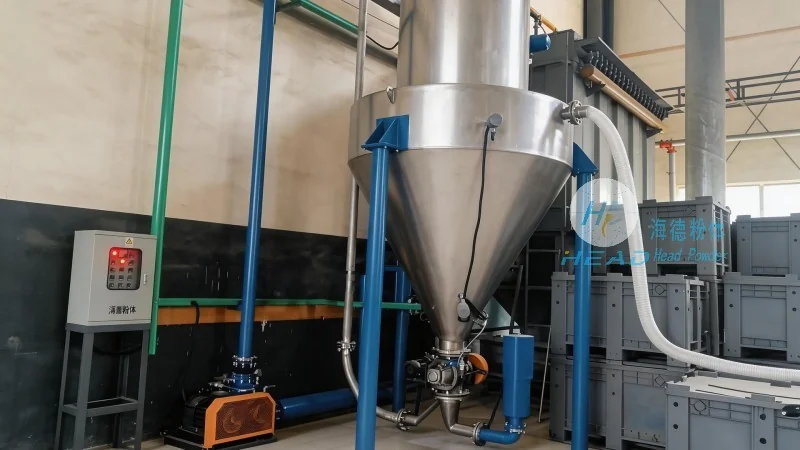
A well-engineered pneumatic conveying system for mining slag consists of several critical components, each requiring careful specification:
Design parameters such as conveying distance, pipe diameter (typically 80–150 mm), and air velocity must be calculated using standardized algorithms (e.g., Zenz, Kalman, or tailored empirical models). For example, a system conveying 50 t/h of granulated copper slag over 300 m with a bulk density of 1.8 t/m³ would typically require a 125 mm pipe, dense phase operation at 4 m/s, and a blow tank volume of 3 m³. These specifications should be validated through pilot tests or computational fluid dynamics modeling to avoid costly errors.
Abrasive wear is the single greatest operational challenge in pneumatic slag conveying. Industry data from 2025 shows that unmanaged wear can reduce pipe wall thickness by 2–3 mm per year in dilute phase systems, leading to rupture risks. Effective strategies include:
A case study from a South American copper smelter illustrates the impact: after switching from dilute phase to dense phase with ceramic-lined bends, their annual maintenance cost for slag conveying dropped by 55%, and pipe replacement frequency decreased from every 8 months to over 3 years.
The mining industry is under increasing pressure to reduce carbon emissions and energy consumption. Pneumatic conveying systems typically consume 0.02–0.08 kWh per ton of material per 100 meters of distance, depending on phase and pressure. Dense phase systems are inherently more energy-efficient because they require lower air mass flow. In 2026, leading operators are adopting variable frequency drives (VFDs) on compressor motors and using waste heat from slag to preheat conveying air, achieving up to 15% energy savings. Additionally, closed-loop air recirculation with dehumidification is being implemented in arid regions to reduce moisture-related blockages. Environmental regulations, particularly in the European Union and China, now mandate that fugitive dust emissions from slag handling not exceed 10 mg/Nm³. Pneumatic conveying with high-efficiency bag filters easily meets this standard, while mechanical systems often require extensive dust collection retrofits. headpowder has supplied systems to several steel mills in Jiangsu province, where emissions were measured at below 5 mg/Nm³, well within local limits.
When planning a new slag conveying system, engineers should follow a structured decision framework:
headpowder utilizes a proprietary database of over 200 slag conveying projects globally to expedite the sizing process, ensuring that clients receive a system optimized for their specific slag type and plant constraints.
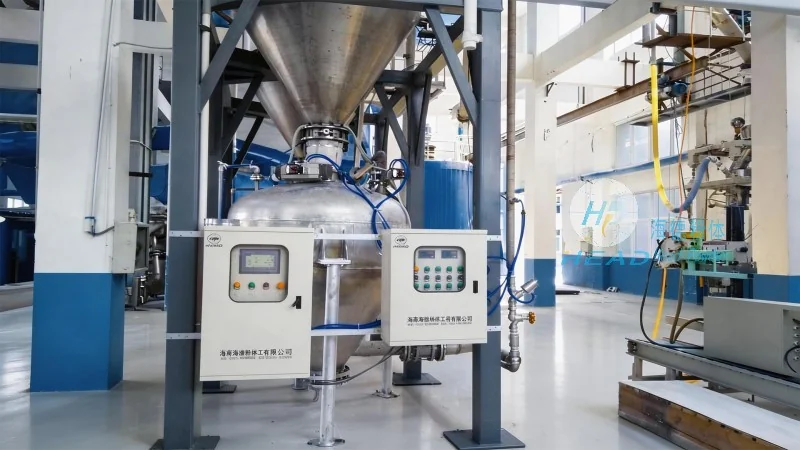
To illustrate the tangible benefits of pneumatic conveying for mining slag, consider the following scenario typical of a large copper smelter in the Democratic Republic of Congo. The plant originally used belt conveyors to transport granulated slag from the slag granulation basin to a stockpile 400 m away. Frequent belt alignment issues, spillage, and dust generation led to productivity losses of 120 hours per year. After converting to a dense phase pneumatic system designed by headpowder, the following improvements were recorded:
Another example involves a steel slag processing plant in Turkey handling hot slag (300–400°C). The use of water-cooled rotary valves and a unique pressure vessel design allowed safe conveying without cooling prior to transport, preserving thermal energy for subsequent recovery processes. The system has been operating for over 5 years with only routine wear part replacements.
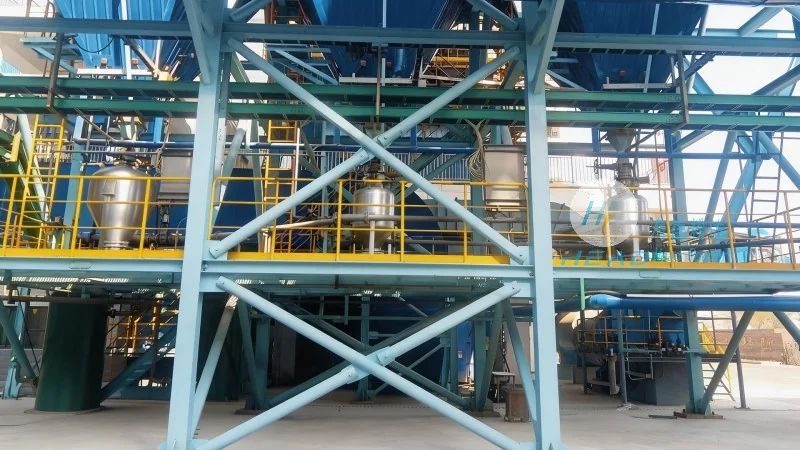
Mining slag conveying via pneumatic methods represents a mature yet continuously improving technology that addresses the core challenges of abrasion, temperature, dust control, and operational efficiency. As industry trends toward automation, environmental stewardship, and lower total cost of ownership, dense phase pneumatic conveying has become the preferred choice for new installations and retrofits. The key to successful implementation lies in rigorous material testing, proper system sizing, and selection of high-quality components that can withstand the demanding conditions of slag transport. Companies seeking to upgrade their slag handling infrastructure should partner with experienced engineering firms that offer full lifecycle support—from feasibility study and design to commissioning and aftermarket service. headpowder, with its decades of expertise in bulk material handling and a dedicated slag conveying product line, has helped numerous clients achieve reliable, low-maintenance operations. For more information on custom-tailored solutions for your mining slag conveying needs, contact our technical team at (咨询热线:156-6277-7102). We welcome the opportunity to discuss your specific requirements and provide a detailed performance estimate based on your material data. By investing in a properly designed pneumatic conveying system, you can reduce operational risks, enhance workplace safety, and improve the overall profitability of your mineral processing operations.

 Shandong headpowder Engineering Co., Ltd.
 156-6277-7102(Manager Zhang)
  0531-83386006
  Jinan City, Shandong Province, China
服务热线
微信咨询
回到顶部