News
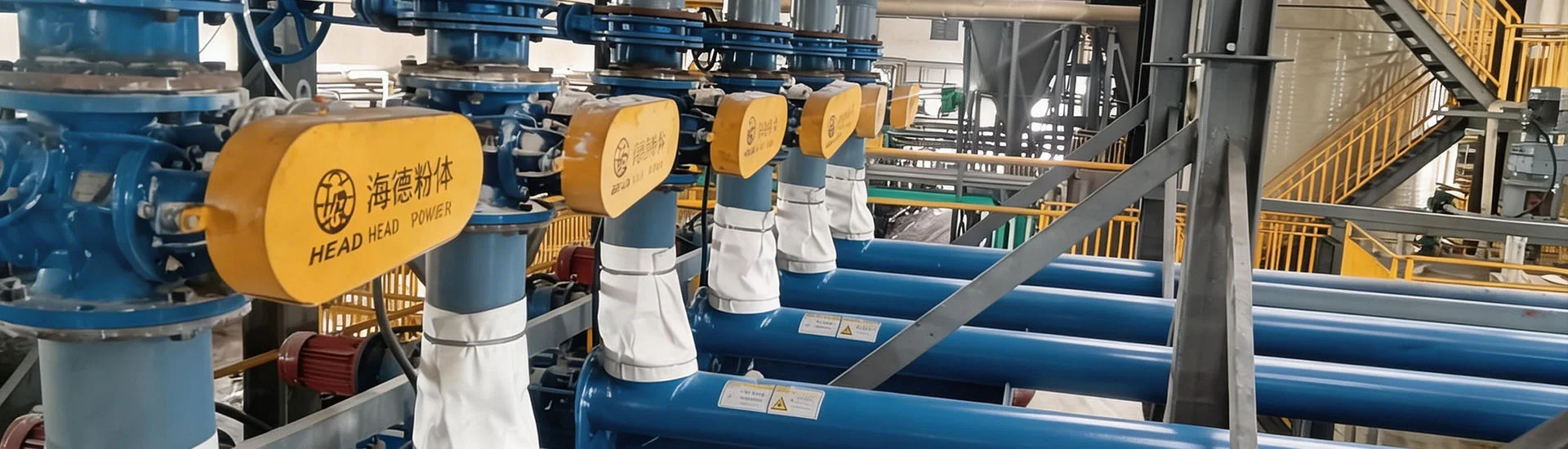
Rich project cases across industries, showing real implementation and proven technical strength.Stone processing industries—including quarrying, countertop fabrication, and dimensional stone cutting—generate substantial volumes of fine particulate residue. This residue, often composed of silica dust, granite particles, marble fines, and abrasive slurry, presents significant handling challenges. Traditional mechanical conveying methods, such as belt conveyors or screw augers, frequently encounter problems with dust emissions, material buildup, and equipment wear when dealing with abrasive stone residues. Pneumatic conveying has emerged as a reliable, enclosed, and efficient alternative that addresses these pain points while offering operational flexibility. This guide provides an in-depth technical exploration of pneumatic conveying for stone residue, focusing on system design, component selection, performance parameters, and real-world implementation strategies. The information presented here is intended for plant engineers, production managers, and facility planners who seek to optimize their material handling processes with minimal downtime and maximum safety. With the stone industry expanding steadily—global production of dimension stone is projected to exceed 350 million metric tons by 2026—the need for robust residue handling solutions has never been greater. Pneumatic conveying systems, when properly engineered, can reduce labor costs, improve workplace air quality, and extend equipment lifecycle. As a specialist in this field, Headpowder has accumulated extensive experience in designing custom pneumatic systems for stone residue applications. This article draws on practical engineering data and industry standards to deliver actionable insights for professionals evaluating or upgrading their conveying infrastructure.
Pneumatic conveying utilizes air or gas flow to transport particulate materials through a pipeline. For stone residue, two primary modes are employed: dilute phase and dense phase. In dilute phase conveying, particles are suspended in a high-velocity airstream (typically 18–35 m/s), which keeps the material airborne and moves it efficiently over long distances. This method is suitable for fine, dry residues with low moisture content, such as polished stone dust. Dense phase conveying, on the other hand, operates at lower velocities (3–8 m/s) and higher pressure, pushing a slug or plug of material through the pipe. This approach minimizes particle attrition and pipe wear, making it ideal for abrasive materials like granite chips or marble granules. The selection between these phases depends on particle size distribution, bulk density, moisture level, and the required throughput. For stone residue, typical bulk densities range from 800 to 1600 kg/m³. Particle sizes vary from sub-micron fines (less than 10 µm) to coarse grits up to 10 mm. A thorough material characterization, including angle of repose, cohesion, and abrasion index, is essential before system design. Industry standards such as the CEMA (Conveyor Equipment Manufacturers Association) guidelines provide reference tables for air velocity and pressure drops, but site-specific testing remains the gold standard for reliable performance.
A well-designed pneumatic system comprises several interconnected modules, each optimized for stone residue handling. Below is a breakdown of the core components and their critical features:
Designing a pneumatic conveying system for stone residue requires calculation of several key parameters. The material loading ratio (mass of material per mass of conveying air) is a fundamental metric. For dilute phase conveying of stone dust, typical loading ratios range from 1 to 10. Lower ratios (around 2–4) are preferred for highly abrasive residues to minimize collision frequency. For dense phase, loading ratios can exceed 20, reducing air consumption and energy costs. Conveying velocity must be maintained above the saltation velocity—the speed at which particles begin to settle out of the airstream. For fine stone dust in a 75 mm pipe, saltation velocity is approximately 12 m/s, while for coarse particles up to 5 mm, it rises to 20 m/s. Pressure drop calculations follow the Darcy-Weisbach equation adapted for two-phase flow, with additional terms for particle acceleration and bend resistance. A typical 100-meter horizontal dilute phase line handling 5 tons per hour of marble dust (bulk density 1100 kg/m³) requires a pressure drop of about 0.8–1.2 bar. Empirical data from Headpowder's project database shows that system efficiency (tonnes conveyed per kWh) ranges from 0.15 for fine, sticky residues to 0.45 for dry, free-flowing materials. Regular audits of these metrics help identify opportunities for energy savings and throughput improvements.
As the stone industry moves toward greater automation and sustainability, pneumatic conveying is evolving in several directions. By 2026, industry analysts predict a compound annual growth rate of 6.8% for industrial pneumatic systems, driven by stricter environmental regulations and labor shortages. Key trends include the adoption of smart sensing for real-time wear monitoring—using acoustic emission sensors to detect pipe thinning before failure. Another advance is the integration of artificial intelligence for adaptive control: systems that automatically adjust air velocity based on moisture content fluctuations in stone residue. Headpowder has developed a proprietary algorithm that reduces specific energy consumption by up to 18% in field trials. Additionally, modular skid-mounted designs are gaining traction for mobile stone processing plants, allowing quick relocation of conveying infrastructure. The use of sustainable filtration media, such as nanofiber-coated cartridges that offer lower pressure drop and longer service life, is also becoming standard. For facilities processing engineered stone, where resin-coated dust can be sticky, the trend is toward vibration-assisted feed hoppers and anti-clogging rotary valves. These innovations not only improve reliability but also reduce maintenance intervals, a critical factor for operations aiming for 24/7 production schedules.
To illustrate real-world application, consider a mid-sized countertop fabrication plant producing approximately 800 kg per hour of granite residue (particle size 90% below 2 mm, moisture content 3–5%). The facility faced frequent downtime due to abrasive wear on belt conveyors and airborne dust exceeding OSHA permissible exposure limits. Headpowder conducted a site survey and recommended a dense phase pneumatic system with ceramic-lined pipes and a pressure vessel feeder. The system was designed for a conveying distance of 80 meters with two 90-degree bends. Air consumption was 15 Nm³/min at 2.5 bar(g). After commissioning, the plant reported a 40% reduction in maintenance cost, a 70% decrease in dust emissions, and consistent throughput of 1.2 tons per hour—exceeding the initial requirement. The payback period was under 14 months, factoring in reduced labor for cleanup and lower replacement part costs. This case demonstrates how proper system design, tailored to material characteristics, delivers measurable operational benefits. Headpowder's engineering team continues to refine such solutions, drawing on decades of cumulative experience across hundreds of stone residue installations worldwide.
To maximize the lifespan and performance of a stone residue pneumatic conveying system, operators should follow proven maintenance protocols. Daily inspections should focus on filter bag condition, rotary valve clearance, and pipe wear at bends. Ultrasonic thickness testing every six months at critical wear points helps schedule proactive replacement. Air leakage is a common source of inefficiency; regular leak detection using ultrasonic sensors can reduce energy waste by up to 12%. For residue with moisture content above 6%, a pre-drying step or heated purge air may be necessary to prevent wall buildup. Headpowder recommends using a dedicated desiccant dryer for compressed air in dense phase systems to avoid condensation issues. Additionally, keeping a log of conveying pressure and throughput trends allows early detection of blockages or filter blinding. Training operators to recognize abnormal sounds or pressure fluctuations reduces emergency downtime. A well-maintained system can achieve over 8,000 operating hours between major overhauls, with ceramic-lined pipes lasting three to five times longer than standard steel.
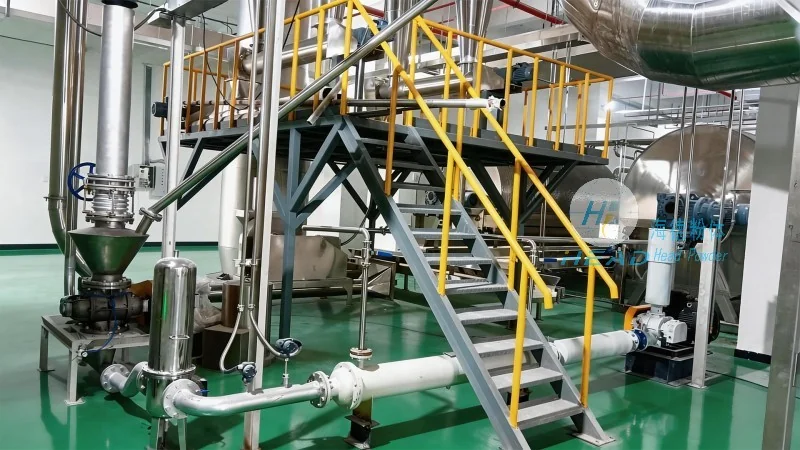
Investing in pneumatic conveying for stone residue brings measurable return on multiple fronts. Environmentally, enclosed systems eliminate fugitive dust, protecting worker health and complying with increasingly stringent air quality standards such as the EU's Industrial Emissions Directive and US EPA NESHAP for stone products. Economically, automated conveying reduces manual handling labor by 60–80%, minimizes product spillage, and allows reclamation of valuable stone fines for use as filler in concrete or asphalt. A 2024 lifecycle cost analysis for a 10-ton-per-hour granite quarry operation showed that converting from mechanical to pneumatic conveying reduced total cost of ownership by 23% over a ten-year period, driven by lower maintenance and energy efficiency improvements. Headpowder's systems are engineered with energy-optimized blowers and smart controls that lower electricity consumption per tonne conveyed. As the industry moves toward circular economy models, pneumatic conveying enables efficient collection and recycling of stone residue, turning a waste stream into a secondary raw material. This aligns with global sustainability goals and can enhance a company's corporate social responsibility profile.
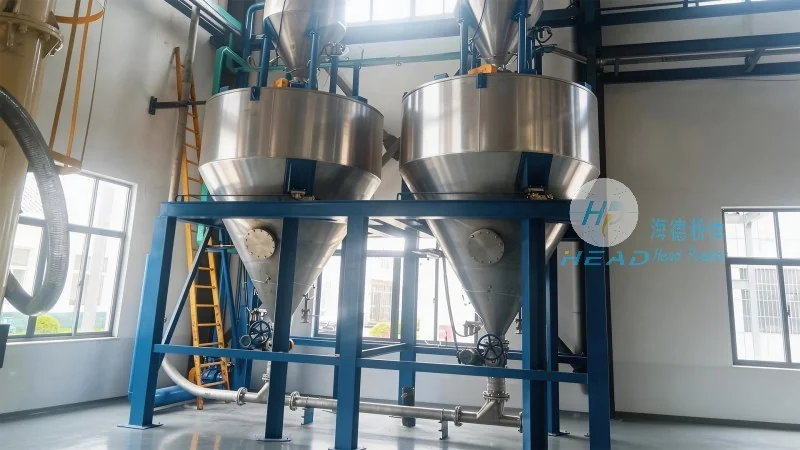
Choosing an experienced system integrator is critical for project success. Headpowder, as a specialized provider of pneumatic conveying technology, brings deep expertise in handling the unique properties of stone residue—from abrasive granite to sticky engineered stone composites. Our engineering team performs comprehensive material testing, computational fluid dynamics simulations, and site-specific layout planning to ensure optimal performance. We offer turnkey solutions including system design, fabrication, installation, and commissioning, backed by a responsive support network. For facilities seeking to upgrade existing lines or design greenfield installations, our consultation process includes a no-obligation feasibility study using actual residue samples. To discuss your specific conveying challenges and learn how pneumatic technology can transform your operations, reach out to our technical team at 156-6277-7102. Headpowder remains committed to advancing the efficiency and safety of stone residue handling through innovation and practical engineering excellence.
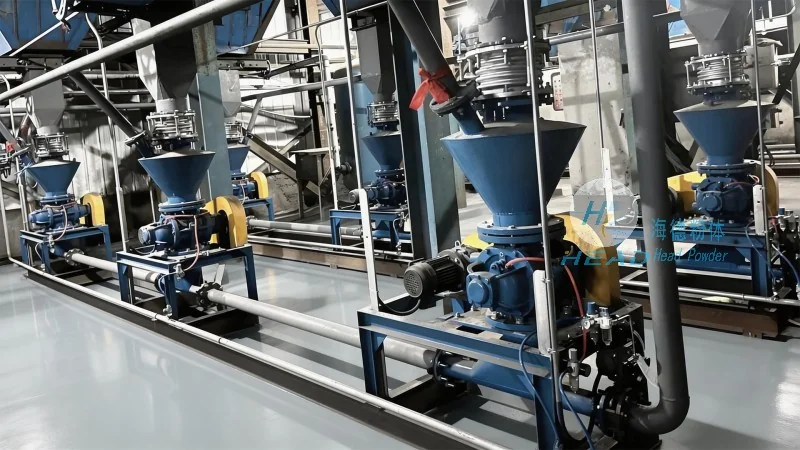
Pneumatic conveying represents a mature yet continuously evolving technology for managing stone residue. Its ability to provide dust-free, low-maintenance, and scalable material transport makes it an indispensable component in modern stone processing facilities. By understanding the fundamental principles—material characterization, system sizing, and component selection—decision-makers can deploy solutions that yield tangible improvements in productivity, safety, and cost control. The trends toward digitalization, energy efficiency, and sustainable practices will further enhance the value proposition of pneumatic systems in the coming years. Whether you are expanding capacity, retrofitting an existing plant, or starting a new facility, a well-engineered pneumatic conveying system is an investment that pays dividends over decades. The information in this guide provides a solid foundation for evaluating your options. For those ready to take the next step, partnering with an experienced specialist like Headpowder ensures that your system is not only technically sound but also aligned with your operational goals and budget. With the right approach, stone residue becomes a manageable resource rather than a persistent challenge, contributing to a cleaner, safer, and more profitable production environment.

 Shandong headpowder Engineering Co., Ltd.
 156-6277-7102(Manager Zhang)
  0531-83386006
  Jinan City, Shandong Province, China
服务热线
微信咨询
回到顶部