News
Rich project cases across industries, showing real implementation and proven technical strength.The efficient and reliable transportation of ash slag is a critical operational requirement for modern power plants, cement kilns, steel mills, and various industrial facilities that generate solid residues from coal combustion or industrial processes. Traditional mechanical conveying methods, such as belt conveyors and screw conveyors, often face limitations in terms of dust control, maintenance costs, space utilization, and long-distance delivery. As the global industry moves toward higher environmental standards and automation in 2026, pneumatic conveying technology has emerged as the preferred solution for handling ash slag in a closed, dust-free, and energy-efficient manner. This article provides a comprehensive introduction to the ash slag pneumatic conveying equipment system, covering its core components, working principles, system configurations, selection parameters, and operational benefits. It is designed for plant engineers, project managers, and procurement professionals seeking an in-depth understanding of this technology to make informed decisions for their facilities. Headpowder, as a specialized provider of pneumatic conveying systems, integrates decades of engineering expertise with advanced control technologies to deliver reliable and customized solutions that meet the unique demands of each application.
An ash slag pneumatic conveying system comprises several key components that work in synergy to transport bulk materials through a pipeline using a gas stream—typically air or inert gas. Understanding each component is essential for system design, troubleshooting, and optimization. The primary elements include the feed hopper, rotary airlock valve, conveying pipeline, blow tank (or pressure vessel), compressed air source, separation and filtration equipment, and control system.
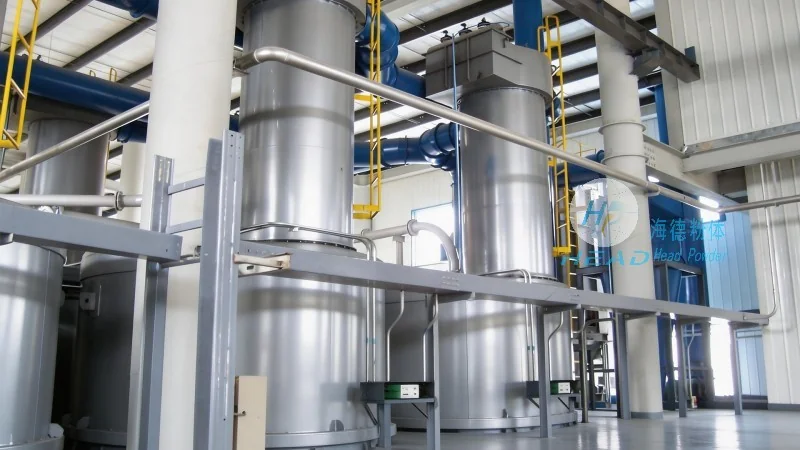
The feed hopper collects ash slag from the source, such as a boiler economizer hopper, baghouse hopper, or precipitator. It is often equipped with aeration pads or vibrators to prevent bridging and ensure uniform material flow into the conveying line. The rotary airlock valve serves as a metering device that introduces the material into the pressurized conveying pipe while minimizing air leakage. For larger particles or higher pressure requirements, a blow tank system is preferred. The blow tank is a pressure-rated vessel that charges with material and then releases it into the pipeline with compressed air, enabling dense-phase conveying over long distances. The conveying pipeline itself must be designed with appropriate bends, wear-resistant materials (e.g., ceramic-lined elbows), and proper sizing to minimize pressure drop and erosion. At the receiving end, a cyclone separator or bag filter separates the ash slag from the conveying air, with the air then cleaned and vented or recirculated. Modern systems also include programmable logic controllers (PLCs) and human-machine interfaces (HMIs) to automate operation, monitor pressures, flow rates, and material levels, and provide real-time diagnostics. Headpowder’s systems are engineered with heavy-duty components that comply with international standards such as ASME, DIN, and GB, ensuring long service life and reliable performance in harsh environments.
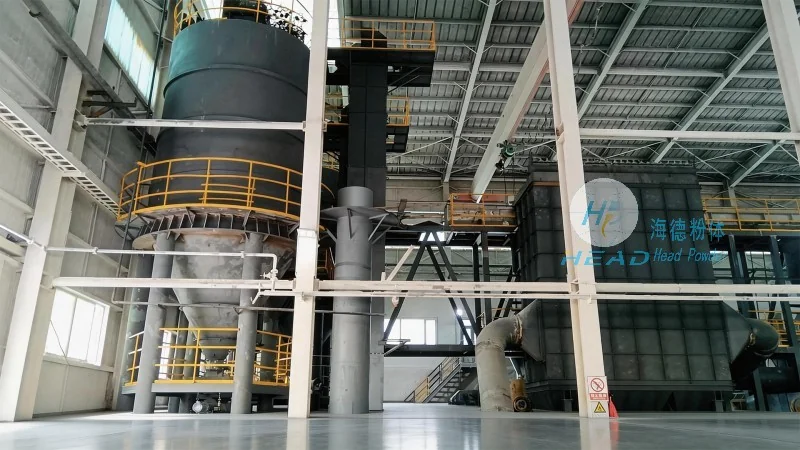
Pneumatic conveying of ash slag operates on the principle of moving solid particles within a gas stream. The system can be classified into two main flow regimes: dilute phase and dense phase. In dilute phase conveying, the material is suspended in the gas stream at relatively high velocities (typically 15–30 m/s), and the solid-to-air ratio is low. This method is suitable for fine ash and short distances but requires high air volume and energy consumption. For ash slag, which often contains abrasive particles and requires gentle handling, dense phase conveying is more commonly employed. Dense phase conveying uses high pressure and low velocity (below 5 m/s) to push a plug or slug of material through the pipeline, minimizing particle degradation and pipe wear. The pressure difference across the system is the driving force, with typical pressures ranging from 0.2 to 0.6 MPa, depending on the distance and material characteristics.
The process begins when ash slag enters the blow tank from a surge hopper. After filling, the inlet valve closes, and compressed air is introduced into the tank at a controlled rate. When the tank reaches the required pressure, the discharge valve opens, and the material is propelled through the pipeline. In a typical dense-phase system, a series of air injection points along the line (called boosters) help maintain flow and prevent blockages. The conveying pressure is monitored by sensors, and the PLC adjusts the air supply to maintain consistent transport. At the destination, the material-air mixture enters a receiver tank where the air velocity drops dramatically, causing the solid particles to settle. The filtered air is then released or returned to the compressor for recycling, which can recover up to 30% of the energy consumed. This closed-loop design significantly reduces fugitive dust emissions and aligns with stringent environmental regulations being enforced globally in 2026.
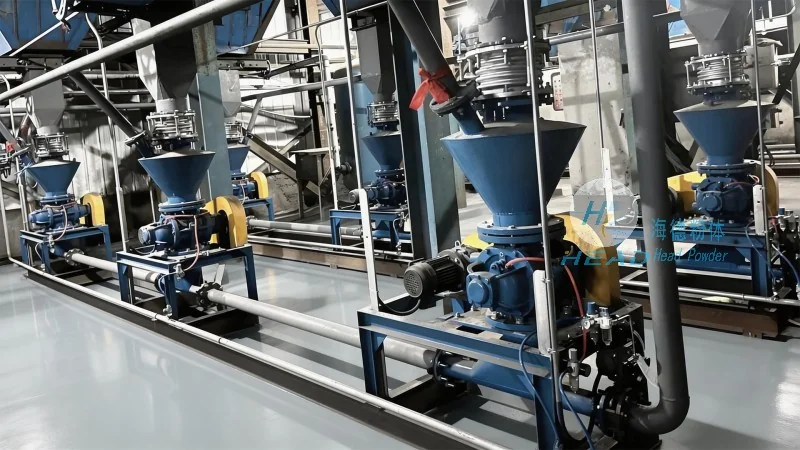
Ash slag pneumatic conveying systems can be tailored to suit different plant layouts, material properties, and capacity requirements. The three most common configurations are negative pressure (vacuum) systems, positive pressure systems, and combined vacuum-pressure systems. Vacuum systems use a suction fan or vacuum pump to draw material from multiple pickup points into a central receiver. They are ideal for applications where dust containment is critical, such as transferring ash from multiple hoppers in a single line. However, vacuum systems are limited in conveying distance (typically under 200 meters) and material size. Positive pressure systems, as described earlier, are capable of conveying over longer distances (up to 1,000 meters or more) and can handle higher capacities, making them the preferred choice for central ash silos or off-site disposal.
Combined systems are used when material must be collected from multiple points under vacuum and then transferred under pressure to a remote storage or disposal area. For example, a power plant might use a vacuum system to gather ash from electrostatic precipitator hoppers into a small buffer tank, which then feeds a blow tank for dense-phase transport to a large storage silo 500 meters away. Headpowder offers modular designs that allow easy integration with existing plant infrastructure, including retrofitting older mechanical conveyors into pneumatic systems. Selection of pipe diameter, bend radius, and lining material is based on the abrasivity of the ash slag. For high-silica content slag, ceramic-lined pipes are recommended to extend service life beyond five years. The control system can be integrated with the plant’s distributed control system (DCS) for seamless operation, remote monitoring, and predictive maintenance alerts. Industry trends in 2026 show increasing adoption of IoT-enabled sensors and digital twins to optimize energy usage and reduce downtime, and Headpowder’s latest SmartFlow™ platform provides these capabilities out of the box.
Proper selection and sizing of an ash slag pneumatic conveying system require careful analysis of material properties and operational parameters. Key material characteristics include particle size distribution, bulk density, moisture content, angle of repose, and abrasiveness. For typical fly ash, the bulk density ranges from 0.6 to 1.0 t/m³, and the mean particle size is often between 20 and 100 microns. Bottom ash and slag are coarser and denser, with bulk densities up to 1.6 t/m³ and particle sizes up to 10 mm. The pneumatic conveying system must be designed to handle these variations without plugging or excessive wear. The pressure drop calculation involves the gas-solid flow dynamics, where the Darcy-Weisbach equation is modified to account for the additional pressure loss due to particle acceleration and friction. For dense-phase systems, the dimensionless pressure gradient is typically between 5 and 20 kPa per meter of pipe length, depending on the solid-to-air ratio.
The required air flow rate is determined by the conveying velocity and pipe cross-sectional area, while the compressor power is a function of the mass flow rate and pressure ratio. As a rule of thumb, dense-phase conveying consumes roughly 60–70% less energy than dilute-phase systems for the same throughput. The pipeline routing must minimize the number of bends and keep the bend radius at least 6 to 10 times the pipe diameter to reduce wear. Headpowder provides free preliminary sizing using proprietary software that models the system based on the customer’s site survey data. In 2026, the market sees a growing preference for systems that can handle variable feed rates, as many plants operate with fluctuating boiler loads. Variable-frequency drives (VFDs) on compressors and smart valve controllers allow the system to adapt in real time, achieving energy savings of up to 25% compared to fixed-speed designs. Additionally, the selection of materials for valves and pipework should comply with relevant industry norms such as ISO 13821 for pneumatic transport systems, ensuring safety and reliability under pressure.
Adopting a modern ash slag pneumatic conveying system brings multiple operational advantages over mechanical alternatives. First, the fully enclosed nature of pneumatic transport eliminates dust emissions, improving workplace safety and simplifying compliance with environmental permits. Second, the system requires significantly less floor space—a single pipeline can replace multiple belt conveyors and elevators, freeing valuable real estate for other equipment. Third, maintenance requirements are lower because pneumatic systems have fewer moving parts, and wear can be managed through proper material selection and periodic inspection of elbows and receiver filters. Typical scheduled maintenance intervals are once every three to six months, depending on operating hours and material abrasivity.
In terms of reliability, automatic controls ensure consistent conveying regardless of operator intervention. Many plants report uptime exceeding 98% after the initial commissioning period. The ability to convey over long distances and around obstacles makes pneumatic systems ideal for retrofits in congested plant layouts. For example, a cement plant in Zhejiang Province replaced its mechanical slag conveyors with a headpowder dense-phase system, reducing dust levels by 90% and cutting annual maintenance costs by 40%. Furthermore, the system can be equipped with a nitrogen or inert gas source for handling high-temperature or reactive ash slag, expanding its application range. Engineers should plan for predictive maintenance by monitoring pressure differentials, air consumption trends, and pipe wall thickness using ultrasonic sensors. Headpowder offers annual service contracts including remote diagnostics and spare parts kits, ensuring that the system continues to perform at peak efficiency throughout its 15- to 20-year design life.
When selecting a system, start by defining the required capacity (tons per hour), conveying distance, and elevation change. Materials with high moisture content (above 5%) may require hot air drying or mechanical dewatering prior to pneumatic conveying. Headpowder recommends conducting a material flowability test in a lab-scale pneumatic rig to validate the design parameters. For projects with budget constraints, a phased implementation strategy can be adopted: install a vacuum system for collection initially, then add a blow tank later once storage needs expand. All systems come with a standard one-year warranty and optional extended coverage. Contact headpowder for a detailed feasibility study and quotation (咨询热线:156-6277-7102). With a proven track record of over 300 installations across Asia, headpowder delivers systems that meet the most stringent safety and performance requirements.
The year 2026 marks a turning point in industrial automation and sustainability. Ash slag pneumatic conveying systems are increasingly integrated with IIoT platforms that provide real-time data on energy consumption, component health, and material flow rates. Machine learning algorithms can predict blockages or wear before they cause downtime, reducing unplanned outages by up to 30%. Battery-powered or hybrid compressors are emerging for temporary installations and remote sites. Furthermore, the circular economy drives interest in conveying systems that separate different fractions of ash slag for reuse—for example, extracting cenospheres for lightweight construction materials. Headpowder’s research and development team is actively working on a novel multi-stage dense-phase system that can handle three different particle size ranges in a single pipeline, reducing capital expenditure for plants that produce multiple grades of slag. The push toward carbon neutrality also influences system design: energy-efficient blowers with variable speed drives and heat recovery from compressor exhausts can lower the carbon footprint of the conveying process by 15–20%. These innovations ensure that pneumatic conveying remains at the forefront of material handling technology for decades to come.
In conclusion, the ash slag pneumatic conveying equipment system is a robust, environmentally friendly, and flexible solution for bulk solid handling in heavy industries. Its ability to operate in tight spaces, execute long-distance transport with minimal dust, and integrate with smart control systems makes it indispensable for modern plants aiming for operational excellence and compliance with future emission standards. Headpowder offers end-to-end services from system design and fabrication to installation and after-sales support, backed by extensive field experience and continuous innovation. For more information or to discuss your specific application requirements, contact headpowder’s engineering team (咨询热线:156-6277-7102) for a free consultation.

 Shandong headpowder Engineering Co., Ltd.
 156-6277-7102(Manager Zhang)
  0531-83386006
  Jinan City, Shandong Province, China
服务热线
微信咨询
回到顶部