News
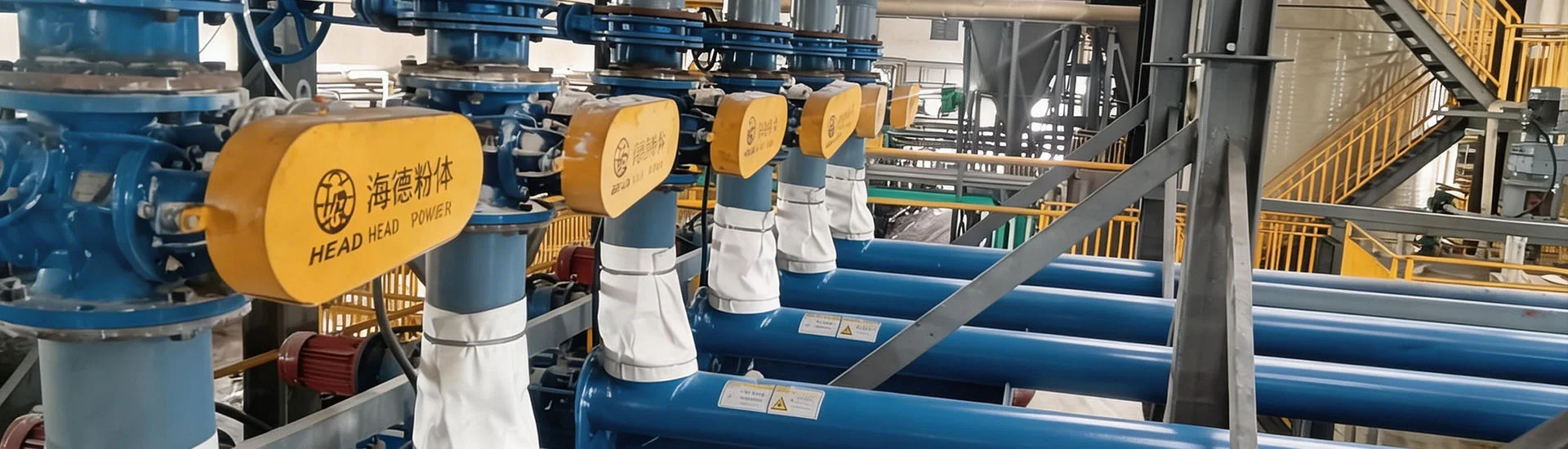
Rich project cases across industries, showing real implementation and proven technical strength.Resin pneumatic conveying equipment systems have become a cornerstone of modern material handling in the plastics and chemical processing industries. As manufacturers face increasing pressure to improve operational efficiency, reduce material waste, and maintain stringent quality standards, the adoption of automated conveying solutions continues to accelerate. By 2026, global demand for pneumatic conveying systems in polymer processing is projected to grow at a compound annual rate of approximately 7.2%, driven by the expansion of injection molding, blow molding, and extrusion operations across Asia, Europe, and North America. This growth reflects an industry-wide shift toward closed-loop, contamination-free material transport that minimizes labor dependency and enhances process repeatability. Understanding the core components, operational principles, and selection criteria of resin pneumatic conveying equipment is essential for plant engineers and procurement professionals seeking to modernize their production lines.
At its core, a resin pneumatic conveying system uses air pressure or vacuum to transport granular or powdered materials through sealed pipelines from storage silos, drying hoppers, or railcars directly to processing machines. The technology eliminates manual handling, reduces dust emissions, and prevents material degradation during transfer. A well-designed system can handle a wide range of thermoplastics including ABS, polypropylene, polyethylene, polycarbonate, and nylon, with bulk densities ranging from 400 to 1000 kg/m³ and particle sizes from 200 microns to 10 millimeters. The fundamental distinction between dilute phase and dense phase conveying determines the system’s air velocity, material-to-air ratio, and wear characteristics, making it crucial to match the conveying mode with the specific resin properties and throughput requirements.
A complete resin pneumatic conveying system integrates multiple sub-assemblies that work in sequence to ensure reliable, continuous material flow. The primary components include material intake devices such as hopper loaders, venturi eductors, or rotary airlocks; a conveying pipeline network constructed from stainless steel or aluminum; a power source comprising either a positive displacement blower for pressure systems or a vacuum pump for vacuum systems; and a receiver or separator at the destination point to decelerate the material and filter conveying air. Each component must be selected based on material characteristics, conveying distance, elevation changes, and required throughput, which typically ranges from 100 kg/h for small dosing applications to over 10,000 kg/h for central distribution systems serving multiple processing stations.
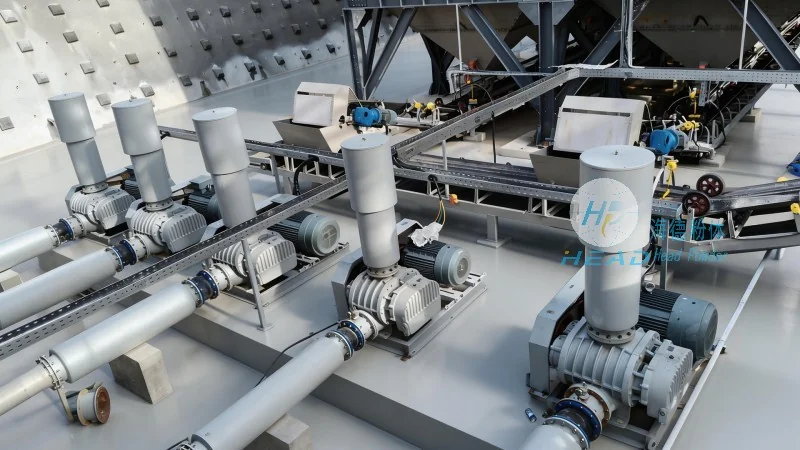
The rotary airlock valve is one of the most critical components in pressure conveying systems. It meters the resin into the air stream while maintaining pressure differentials that can reach 1.5 bar. For abrasive fillers or fragile regrind materials, a drop-through design with hardened rotor tips minimizes wear and preserves particle integrity. In vacuum conveying systems, the material pick-up point utilizes a specially designed suction probe that creates a high-velocity air stream capable of lifting granules from bulk bags, gaylords, or silo outlets. The pipeline network must be laid out with minimal bends and gradual radius curves to prevent material buildup and pressure drop; standard practice limits the number of 90-degree elbows to no more than six in a single conveying line to maintain consistent flow velocity above the saltation point.
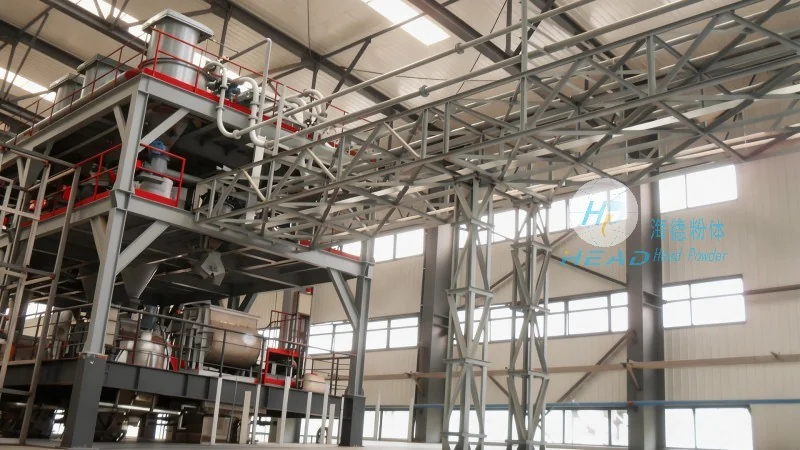
Dilute phase conveying, the most widely adopted method for resin transport, operates at air velocities between 15 and 35 m/s. The resin particles are suspended in the air stream and carried in a relatively low-density mixture, typically with a material-to-air ratio of 5:1 to 15:1 by weight. This approach works well for free-flowing pellets and granules over short to medium distances up to 200 meters. However, the high air velocity can cause particle degradation in soft resins or generate fines in brittle materials such as polycarbonate or nylon. For these sensitive polymers, dense phase conveying offers a gentler alternative. Operating at air velocities below 10 m/s and material-to-air ratios exceeding 30:1, the resin moves in plugs or slugs along the pipe, minimizing impact and abrasion. Dense phase systems require higher pressure differentials, often between 2 and 6 bar, and specialized blow tanks or pressure vessels that feed the material into the pipeline in controlled pulses.
Recent advancements in sensor technology and PLC-based control have enabled hybrid systems that switch between dilute and dense phase modes based on real-time material conditions. By 2026, approximately 35% of new resin conveying installations are expected to incorporate adaptive flow control that adjusts air pressure and velocity to maintain optimal conveying conditions while reducing energy consumption by up to 20%. For headpowder, the ability to customize system configurations for both virgin resins and recycled content—which often exhibits irregular particle shapes and higher moisture variability—has become a key differentiator in serving sustainability-focused processors. The integration of inline moisture measurement and automatic purge sequences further ensures that hygroscopic resins remain dry during transport, a critical factor for applications in medical molding, optical grade components, and food packaging.
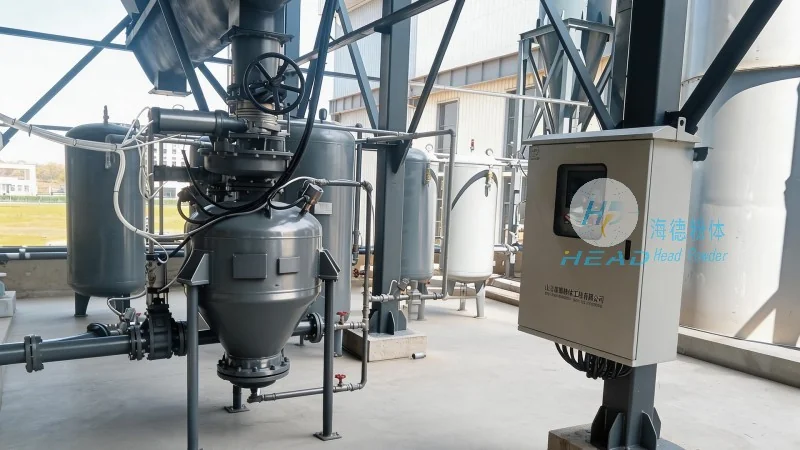
Selecting the appropriate resin pneumatic conveying system begins with a comprehensive materials analysis. Key parameters include bulk density, particle shape, angle of repose, moisture content, and friability. For example, spherical pellets with a bulk density of 600 kg/m³ and low moisture sensitivity can be efficiently conveyed in dilute phase over 150 meters using a 7.5 kW blower. In contrast, irregularly shaped regrind flakes with high aspect ratios and a bulk density of only 350 kg/m³ often require dense phase technology with a 15 kW screw compressor to prevent bridging or backflow. The conveying distance is equally important; beyond 300 meters, multiple booster stations or intermediate vacuum receivers may be needed to maintain velocity and avoid clogging. Elevation changes also impact system performance—every meter of vertical lift adds approximately 0.1 bar of pressure loss, which must be factored into blower sizing calculations.
Industry standards such as ISO 14129 for pneumatic conveying safety and ANSI/ASME B31.3 for process piping provide guidelines for system design and material selection. In 2026, regulatory pressure around dust explosion prevention is prompting many facilities to adopt intrinsically safe conveying components including antistatic hoses, explosion venting flanges, and ATEX-rated control panels. headpowder has integrated these safety features as standard in its standard system packages, reducing deployment risk for clients operating in powder handling environments. The company’s engineering team follows a six-step design methodology: material characterization, route mapping, air requirement calculation, component sizing, control system architecture, and commissioning validation. Each project is supported by computational fluid dynamics (CFD) modeling to predict flow patterns and pressure profiles, ensuring that the final system delivers the specified throughput with less than 2% variation.
One of the most compelling advantages of modern resin pneumatic conveying systems is their ability to lower overall energy consumption compared to mechanical conveyors like belt elevators or screw conveyors. While an equivalent mechanical system might draw 30-40 kW for a 5-ton-per-hour installation, a well-tuned dense phase pneumatic system can achieve the same throughput with only 18-25 kW. This efficiency is further enhanced by variable frequency drives (VFDs) on blowers and pumps, which modulate air flow in response to actual demand rather than running at full speed continuously. headpowder’s typical implementation for a central conveying network serving 20 injection molding machines achieves total installed power of 55 kW, delivering material at an average rate of 3,500 kg/h over a 120-meter loop with eight pick-up stations. Over a 7,000-hour annual operating cycle, the energy cost savings relative to legacy vacuum systems amounts to approximately EUR 28,000 at European industrial electricity rates.
Beyond direct power savings, pneumatic systems reduce labor costs by eliminating manual material handling. A study published in the Journal of Polymer Engineering in 2024 reported that facilities converting from bag dumping and manual hopper loading to automated pneumatic conveying saw a 68% reduction in operator interventions and a 42% decrease in workplace ergonomic injuries. For headpowder clients in the automotive and packaging sectors, these improvements translate into payback periods of 14-18 months on the conveying equipment investment. The systems also support lean manufacturing initiatives by enabling just-in-time material delivery, reducing floor space dedicated to material staging, and providing real-time consumption data that feeds into ERP systems for inventory optimization.
A mid-sized plastic conversion facility in the Midwest United States approached headpowder with the challenge of supplying three different resin types—HDPE, PP, and ABS—to 12 injection molding cells and 6 extrusion lines across two floors. The existing manual hopper feeding system caused frequent production interruptions, material cross-contamination, and significant spillage waste estimated at 3.5% of total throughput. After a detailed site survey and material flow analysis, headpowder designed and installed a centralized vacuum conveying system with 14 pick-up stations connected to four bulk silos and two drying hoppers. The system uses a 30 hp vacuum pump with a VFD, a network of 4-inch diameter aluminum pipelines totaling 280 meters, and automatic purge valves that clean the lines between material changeovers. The receiver hoppers at each machine are equipped with level sensors and load cells, allowing the PLC to prioritize replenishment based on consumption rate. Since commissioning, the plant has achieved 99.8% material availability, reduced waste to under 0.5%, and eliminated manual lifting tasks. The installation was completed in 12 weeks with zero production downtime, and the customer recorded a full return on investment within 15 months.
This implementation demonstrates the importance of proper system sizing, pipeline layout, and control logic integration. The headpowder team utilized its proprietary simulation tool to model the pressure drop and velocity distribution for each branch line, ensuring that the farthest machine received the same air flow as the nearest. The PLC program includes a priority queuing function that prevents two machines on the same branch from requesting material simultaneously, reducing the risk of line plugging. The system also incorporates a preventive maintenance module that tracks blower run hours, filter differential pressure, and rotary valve current draw, alerting maintenance staff when service is due. This level of operational intelligence is increasingly expected by plant managers who aim to achieve OEE (Overall Equipment Effectiveness) targets above 85%.
As the plastics industry moves toward Industry 4.0, resin pneumatic conveying systems are evolving into smart, interconnected assets that communicate with downstream processing equipment and centralized manufacturing execution systems (MES). By 2026, leading conveying equipment manufacturers are embedding IoT sensors that monitor vibration, temperature, and wear in conveying pipes, enabling predictive maintenance that can reduce unplanned downtime by up to 60%. headpowder has invested in developing a digital twin platform that mirrors the physical conveying network, allowing operators to simulate material changeovers, test new recipes, and identify bottlenecks without impacting production. This technology is particularly valuable for contract manufacturers that run multiple material grades daily and need rapid switchover times.
Another emerging trend is the integration of cyclic conveying technology for hybrid systems that combine pressure and vacuum functions in a single network. This approach reduces capital costs by eliminating separate blower installations for different zones, while enabling more flexible routing. The compatibility of pneumatic conveying with additive manufacturing processes is also gaining attention, as 3D printing filaments and powders require extremely gentle handling to retain particle morphology. headpowder is actively piloting systems that maintain product integrity for high-value engineering plastics such as PEEK, PEKK, and carbon fiber-reinforced polymers, with conveying velocities below 5 m/s and controlled acceleration profiles. For processors looking to enhance their sustainability profiles, the ability to convey post-industrial regrind and post-consumer recycled (PCR) materials without degrading their properties is a critical capability that drives both operational and environmental performance.
Choosing the right resin pneumatic conveying equipment system is a strategic decision that impacts production reliability, product quality, and total cost of ownership. From initial material characterization through system design, installation, and ongoing support, partnering with an experienced supplier ensures that the system is optimized for specific process demands. headpowder has delivered more than 600 resin conveying installations globally, serving customers in automotive, packaging, electronics, medical devices, and consumer goods industries. Our team of application engineers works closely with clients to define the exact conveying parameters, select the most efficient power sources, and integrate control systems that provide actionable data for continuous improvement. Whether you are retrofitting an existing facility or commissioning a greenfield plant, understanding the nuances of dilute vs. dense phase conveying, proper air velocity control, and pipeline geometry will help you achieve the material handling performance your production line requires. For a detailed feasibility analysis and equipment recommendation tailored to your resin types and throughput targets, reach out to our technical sales team (consultation hotline: 156-6277-7102). headpowder is committed to advancing material handling efficiency through innovation, precision engineering, and responsive service, ensuring that your investment delivers lasting value in an increasingly competitive market.

 Shandong headpowder Engineering Co., Ltd.
 156-6277-7102(Manager Zhang)
  0531-83386006
  Jinan City, Shandong Province, China
服务热线
微信咨询
回到顶部