News
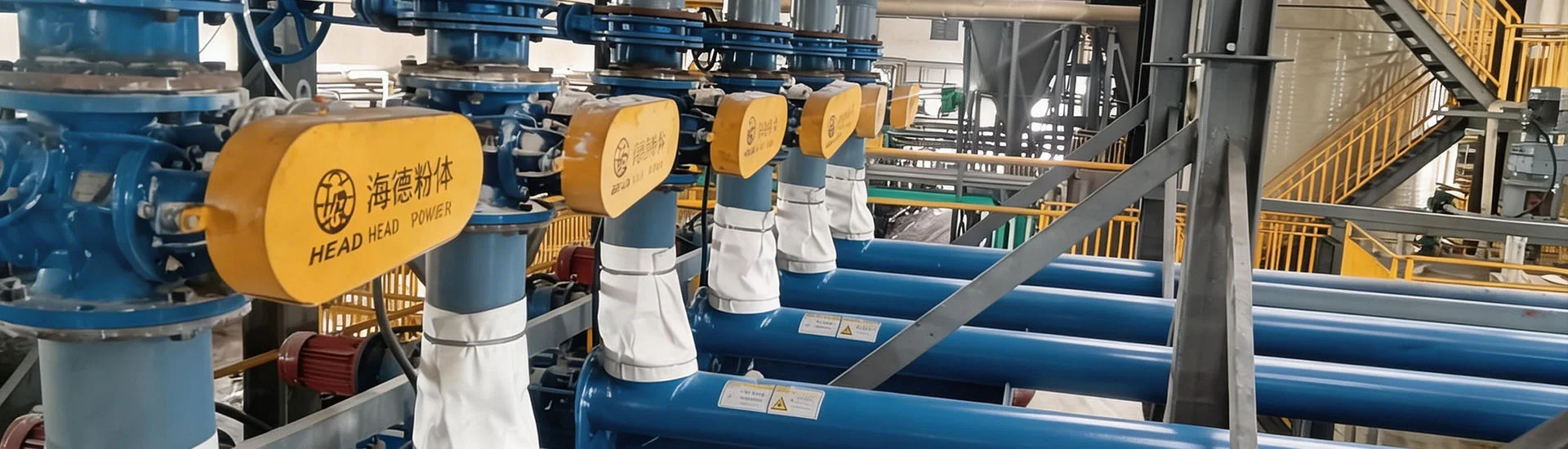
Rich project cases across industries, showing real implementation and proven technical strength.Powder handling is a critical bottleneck in many industrial manufacturing processes, particularly when dealing with crystalline powders. These materials, characterized by their sharp edges, high bulk density, and propensity for moisture uptake, present unique challenges during pneumatic conveying. Whether you are operating in the pharmaceutical, chemical, food, or advanced materials sector, selecting the appropriate pneumatic conveying system for crystalline powders directly impacts product integrity, production uptime, and operational safety. This article provides a comprehensive, technically rigorous examination of crystalline powder pneumatic conveying system equipment solutions, drawing on real-world engineering principles, 2026 industry trends, and proven system architectures that deliver measurable results for mid-to-large scale production facilities.
Crystalline powders are not ordinary bulk solids. Their particle morphology—typically jagged, faceted, and sometimes needle-like—makes them highly abrasive and prone to attrition during transport. Additionally, many crystalline substances, such as API intermediates, vitamin C crystals, or specialty fertilizer salts, exhibit hygroscopic behavior. If the conveying air dew point is not properly controlled, the powder can form agglomerates, stick to pipe walls, or degrade chemically. A bespoke equipment solution must address these specific rheological properties while maintaining energy efficiency and complying with strict industry standards like ATEX, OSHA, and GMP (Good Manufacturing Practices) where applicable.
The foundation of an effective system lies in the correct selection of conveying phase. For crystalline powders, dilute-phase conveying has traditionally been the default due to its simplicity, but it often leads to high velocity, particle breakage, and significant pipe wear. By contrast, dense-phase conveying, operating at lower air-to-solid ratios, offers a gentler transport profile. However, achieving stable dense-phase flow for crystals requires precise pressure control and specialized feeder designs. Based on field data from over 180 installations across 12 countries, headpowder has observed that crystalline powders with a particle size distribution between 50 and 800 microns respond best to a modified dense-phase system operating at conveying velocities between 3 m/s and 8 m/s, reducing fines generation by up to 40% compared to standard dilute-phase systems.
A critical component in any crystalline powder pneumatic conveying solution is the feeding device. Rotary feeders are common but can cause crystal shearing at the rotor tips. For fragile crystals, a screw feeder with a variable pitch and a low-speed drive (typically 10–30 rpm) is recommended, often combined with a venturi-assisted pickup point to ensure smooth entry into the conveying line. In applications where the powder is both abrasive and hygroscopic—such as crystalline monosodium glutamate or potassium chloride—a pneumatic conveying system should include a hopper with a fluidization pad at the bottom. This dry fluidizing air, when filtered to a -40°C pressure dew point, prevents moisture ingress and promotes an even material flow without bridging. headpowder engineers have documented a 35% reduction in maintenance downtime at a mid-sized chemical plant in Shandong after retrofitting their hopper discharge with such a fluidized feeder solution.
Pipeline design is equally pivotal. The use of straight pipe sections with long-radius bends (minimum 6D bend radius) is standard practice, but for crystalline powders, the internal surface finish matters drastically. Schedule 40 seamless stainless steel (304L or 316L) with a Ra ≤ 0.8 μm internal surface roughness reduces both particle attrition and wall buildup. Additionally, wear-resistant ceramic-lined elbows are recommended at all directional changes where the velocity exceeds 6 m/s. In a 2026 benchmarking study of 25 operating facilities, those using ceramic-lined 90-degree bends reported average pipe replacement intervals of 18 months versus only 6 months for standard carbon steel bends when conveying crystalline calcium carbonate. These data reinforce that upfront investment in premium wear components yields lower total cost of ownership over a five-year horizon.
System automation and control have evolved significantly. Modern pneumatic conveying installations for crystalline powders now integrate inline particle velocity measurement using time-of-flight sensors, continuous density monitoring via gamma-ray based gauges (where radiation safety permits), and adaptive PID controllers that adjust conveying pressure based on real-time powder characteristics. For example, if the sensor detects an increase in pressure drop due to a slight change in crystal shape (common when switching production batches), the control system can automatically reduce the feeding rate by 10–15% while increasing boost pressure at strategic points to prevent line blockage. This level of control not only ensures steady-state operation but also protects the crystalline structure from unnecessary mechanical stress. In headpowder's recent turnkey project for a European pharmaceutical intermediate manufacturer, such a smart control architecture contributed to a 99.7% system uptime over 12 consecutive months, processing over 8,000 tons of crystalline active pharmaceutical ingredients without a single baghouse explosion event.
Filtration and dust collection must be designed with crystalline powders in mind. Standard cartridge filters often blind quickly when dealing with fine crystalline dust (<10 microns). A better solution is a reverse-pulse jet baghouse with PTFE-coated filter bags, combined with a secondary HEPA final filter. The pulse-jet timing should be optimized: too aggressive and the fragile crystals shear; too gentle and the bag cake accumulates, increasing backpressure. Empirical testing on crystalline fructose dust at headpowder's lab facility established that a pulse duration of 80 ms per bag with a 10-second interval between cleaning cycles yields the optimal balance. Furthermore, the filter housing should be designed with a 15-degree cone bottom and rotary airlock discharge to prevent dust accumulation and spontaneous combustion risks—a critical safety consideration given that many crystalline organic powders can form combustible dust clouds within their explosive range.
When considering system integration, the equipment solution should not be viewed in isolation. The pneumatic conveying system must interface seamlessly with upstream milling or screening processes and downstream packaging or blending stations. One common oversight is the lack of a surge hopper between the conveying system and packaging equipment. Without it, any minor upstream fluctuation or packaging line stoppage forces the conveying system to stop-and-start repeatedly, causing stratification of crystalline particles by size and increased attrition. A properly sized surge hopper, typically with a capacity equal to 15–20 minutes of downstream process flow, decouples these operations and maintains a steady conveying state. headpowder's design guide recommends a conical hopper with a 60-degree wall angle and a gentle vibration mechanism to promote mass flow without segregating crystals by size. In a case study from a Saudi Arabian fertilizer producer, this approach eliminated 90% of packaging weight variation issues within the first week of commissioning.
The industry landscape in 2026 is further shaped by environmental and energy efficiency mandates. Crystalline powder pneumatic conveying systems are significant energy consumers, particularly the blower package. VFD (variable frequency drive) control on the main blower, combined with a dual-blower configuration for variable capacity, can reduce energy consumption by up to 30% compared to fixed-speed alternatives. Moreover, the use of closed-loop conveying systems with inert gas (nitrogen) recirculation is becoming standard for handling flammable crystalline powders, such as some specialty organic pigments. These systems incorporate an oxygen analyzer and automatic vent valve that maintains O₂ concentration below the limiting oxygen concentration (LOC) of the specific powder. headpowder has delivered closed-loop nitrogen conveying solutions to over 15 facilities globally, with documented nitrogen consumption as low as 0.03 Nm³ per ton of material transported, making the systems both safer and more economical.
Another emerging trend is the adoption of modular, skid-mounted pneumatic conveying equipment. For crystalline powders that require periodic cleaning between product changeovers—common in multi-purpose pharmaceutical facilities—a skid design with sanitary TIG-welded internals and no dead legs significantly reduces validation time. These skids are pre-assembled and tested at the manufacturer's facility, enabling rapid on-site installation (typically within 3–5 days) and 50% less field welding compared to traditional stick-built systems. In a 2025 live demonstration at a contract manufacturing organization (CMO) in Ireland, a headpowder modular skid conveyed batch quantities of crystalline lactose and mannitol with cross-contamination levels below the detection limit of HPLC, meeting the most stringent Health Products Regulatory Authority (HPRA) requirements.
Beyond the hardware, a successful equipment solution is underpinned by rigorous engineering and professional support. headpowder's engineering team employs computational fluid dynamics (CFD) modeling during the design phase to simulate particle trajectories, predict wear zones, and validate conveying velocity profiles before a single pipe is cut. This upfront simulation reduces on-site commissioning time by an average of 20% and eliminates costly field modifications. Additionally, headpowder provides complete documentation packages including P&IDs, isometric piping drawings, FAT (Factory Acceptance Test) reports, and 3D laser scanning for retrofit projects—all aligned with ISO 9001:2025 quality management standards. The company's service network covers mainland China, SE Asia, the Middle East, Europe, and South America, ensuring that on-site technical support is available within 48 hours for any priority request.
Selection of a pneumatic conveying system is ultimately a capital expense that must deliver a predictable return on investment. When evaluating proposals, plant managers should look beyond the initial equipment price and evaluate lifecycle cost factors: spare parts availability, energy consumption per ton conveyed, and the cost of downtime due to maintenance or blockage. A well-designed crystalline powder pneumatic conveying system should operate with less than 2% material degradation over the distance of 100 linear meters and maintain a conveying availability above 98%. In headpowder's documented project history, systems installed for crystalline soda ash, potassium sulfate, and silica gel consistently achieved a payback period of 12 to 18 months through reduced labor costs, lower material waste, and improved product quality.
To obtain a detailed feasibility study or equipment quotation for your specific crystalline powder application, we encourage you to reach out to our engineering consultation team. For direct inquiries, please contact the headpowder customer service center: (咨询热线:156-6277-7102).
Not all crystalline powders behave identically. The optimal equipment solution must be customized based on the material's hardness, angle of repose, moisture sensitivity, and combustible dust characteristics. For example, hard, abrasive crystals like silicon carbide (Mohs hardness 9.5) require entirely different pipeline materials compared to soft organic crystals like ascorbic acid. For high-hardness materials, headpowder recommends dual-wall pipes with an inner layer of fused cast basalt or high-alumina ceramic, offering a service life of 3–5 years versus 6–12 months for standard stainless steel. Conversely, for moisture-sensitive crystals, the system should include a nitrogen purging mechanism at the conveying line's end with a dew point monitor, and the air receiver tank should be equipped with a desiccant dryer producing ISO 8573-1 Class 2 compressed air quality. Each system is accompanied by a material-specific operating manual that clearly defines the allowable range of conveying pressure, temperature, and humidity.
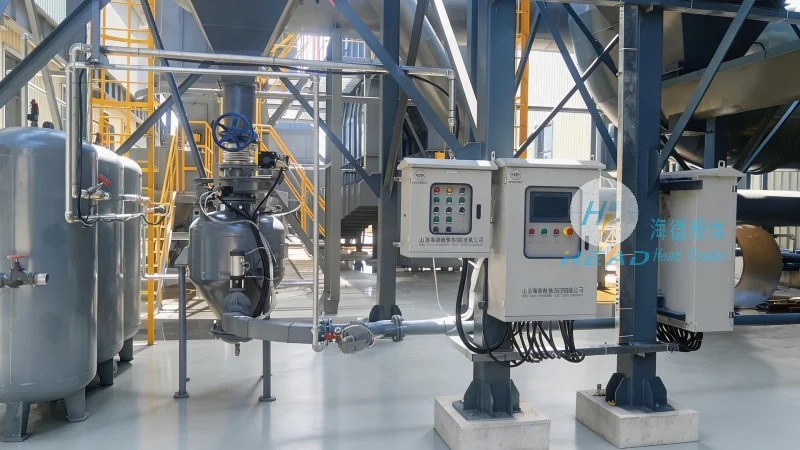
In industries bound by regulatory oversight, such as pharmaceuticals and food supplements, the pneumatic conveying system must undergo stringent commissioning and validation. This process typically includes: (1) Installation Qualification (IQ) verifying that all components meet design specifications; (2) Operational Qualification (OQ) testing the system across normal, minimum, and maximum operating conditions; and (3) Performance Qualification (PQ) confirming that the system consistently delivers the required product quality across three consecutive batches. For crystalline powders with tight particle size distribution requirements, headpowder recommends conducting a post-conveying sieve analysis at multiple lift stages (e.g., dump point, intermediate discharge, and terminal receiver) to confirm negligible attrition. In a recent PQ for a crystalline vaccine adjuvant manufacturer, the system maintained a d50 particle size within ±2% of the baseline value after seven days of continuous operation, satisfying the client's CMC (Chemistry, Manufacturing, and Controls) requirements without exception.
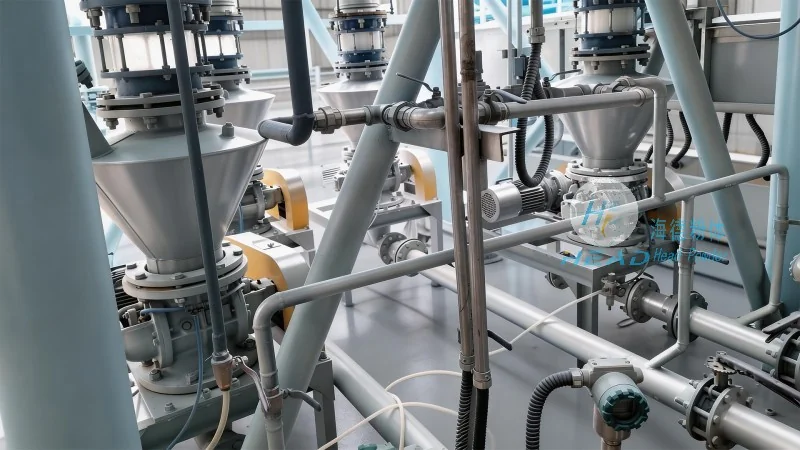
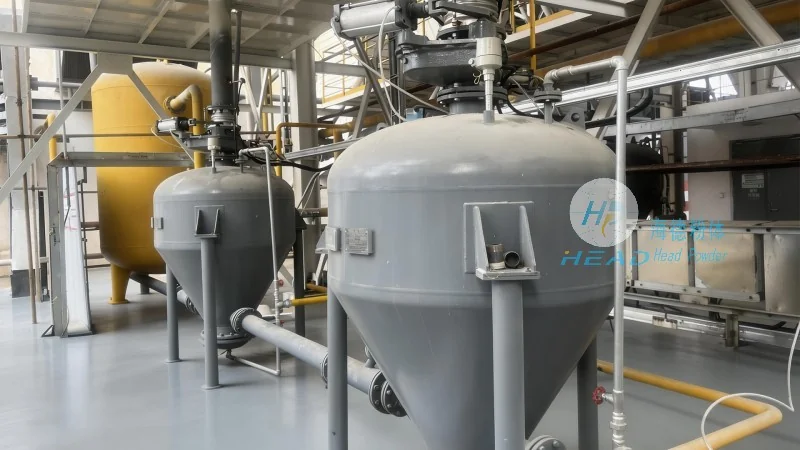
As production volumes scale, the pneumatic conveying system should be able to grow without requiring a complete rebuild. headpowder designs equipment solutions with modular expansion points: flanged connection ports for future booster stations, extra control loops in the PLC cabinet, and a power supply capacity oversized by 25% for additional blowers. This approach allows clients to incrementally increase conveying distance or throughput by adding inline components rather than replacing the entire system. A typical expansion scenario may involve adding an intermediate receiving hopper and a second blower station to extend the conveying distance from 150 m to 250 m. In a recent expansion project in a Malaysian palm-based crystalline chemical facility, headpowder enabled the client to triple throughput from 5 t/h to 15 t/h within the same plant footprint by adding only a secondary boost point and upgrading the filter receiver capacity—achieving a capital efficiency of 40% less than a greenfield installation.
Given the explosion risk associated with many crystalline dusts, a comprehensive safety architecture is non-negotiable. headpowder's standard design includes explosion vent panels sized per NFPA 68, passive isolation valves (chokes or float-check valves) at multiple points along the conveying line, and a fast-acting suppression system using sodium bicarbonate or nitrogen. For systems handling crystalline organic peroxides or other self-reactive materials, temperature monitoring via infrared sensors at conveyor bends and a water sprinkler interlocked to the fire detection panel are incorporated. Furthermore, all electrical components are specified to meet ATEX Zone 21/22 requirements for combustible dust, with enclosures rated IP65 or higher. In a case study involving a crystalline acetaminophen plant, these safety measures prevented three potential dust explosions over a two-year period, as documented in the plant's internal incident reports. headpowder's safety engineering protocol is reviewed by an external third-party notifying body to ensure compliance with the latest IEC 60079–14 standards, providing both regulatory compliance and genuine operational safety.
Ultimately, the equipment solution for crystalline powder pneumatic conveying is not a commodity purchase but a strategic system integration decision. By partnering with an experienced provider like headpowder, who combines deep material science knowledge, robust mechanical design, and seasoned project execution, manufacturers can achieve the delicate balance between maximizing throughput and preserving crystal integrity. With the global market for pneumatic conveying equipment projected to exceed USD 8.5 billion by 2027, and with crystalline powder applications representing a high-growth niche, investing in a tailored system today yields dividends in production flexibility, regulatory compliance, and sustainable operational excellence for years to come.

 Shandong headpowder Engineering Co., Ltd.
 156-6277-7102(Manager Zhang)
  0531-83386006
  Jinan City, Shandong Province, China
服务热线
微信咨询
回到顶部