News
Rich project cases across industries, showing real implementation and proven technical strength.In the realm of bulk material handling, iron sulfate—commonly referred to as ferrous sulfate—presents unique challenges due to its hygroscopic nature, fine particle size distribution, and tendency to cake under moisture exposure. Efficient and reliable pneumatic conveying of iron sulfate is critical for industries ranging from water treatment to chemical manufacturing, where precise dosing and contamination-free transfer are non‑negotiable. This article delves into a comprehensive technical solution for iron sulfate pneumatic conveying, addressing system design, equipment selection, operational parameters, and real‑world application considerations. By combining engineering best practices with proven field data, the goal is to provide plant engineers, project managers, and procurement specialists with actionable insights that optimize conveying performance while minimizing maintenance and energy consumption.
Iron sulfate (FeSO₄ · xH₂O) is a granular or powdered chemical often produced as a by‑product of titanium dioxide manufacturing and steel pickling processes. Its physical and chemical properties directly influence the choice of pneumatic conveying technology. Key characteristics include:
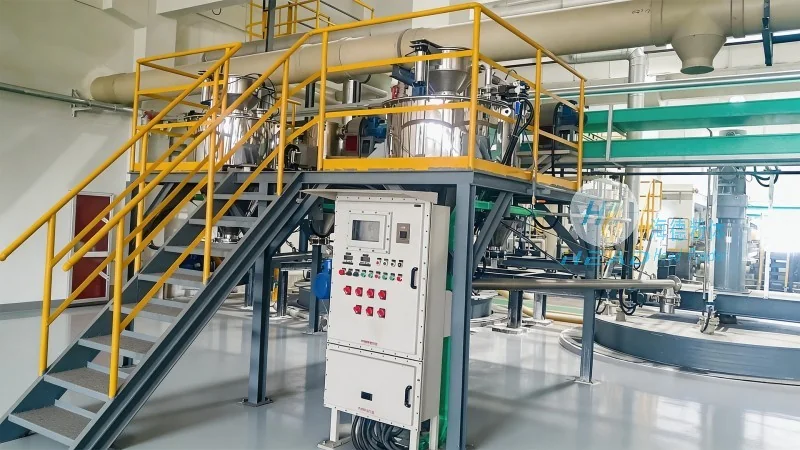
Understanding these traits is the foundation for selecting between dilute‑phase, dense‑phase, or semi‑dense conveying systems. For high‑hygroscopic materials like iron sulfate, dense‑phase conveying is often favored because it operates at lower air velocities (typically 3–8 m/s) and higher material‑to‑air ratios, reducing moisture pickup and erosion. However, dilute‑phase systems remain viable for short distances or when minimized capital investment is paramount, provided that proper air drying and dedusting measures are implemented.
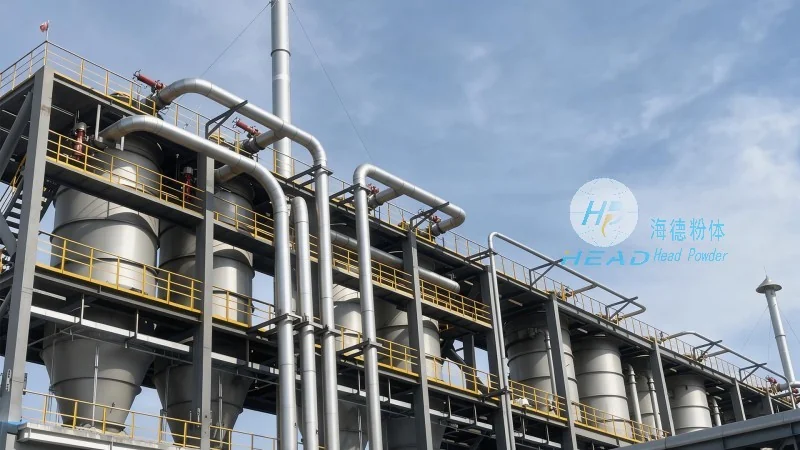
An optimized iron sulfate pneumatic conveying system revolves around three pillars: air supply conditioning, material feeding, and pipeline layout. Each component must be engineered to counteract the material’s problematic tendencies.
Compressed air used for conveying must be thoroughly dried to a dew point of at least –40 °C (or lower in humid climates) to prevent moisture‑induced caking in the line. Additionally, air filters with particle removal efficiency of 99.5% or better protect downstream equipment. HeadPowder’s experience across numerous iron sulfate projects shows that incorporating a refrigerated or desiccant dryer, coupled with an after‑cooler, can reduce product moisture pickup by up to 60% compared to untreated compressed air.
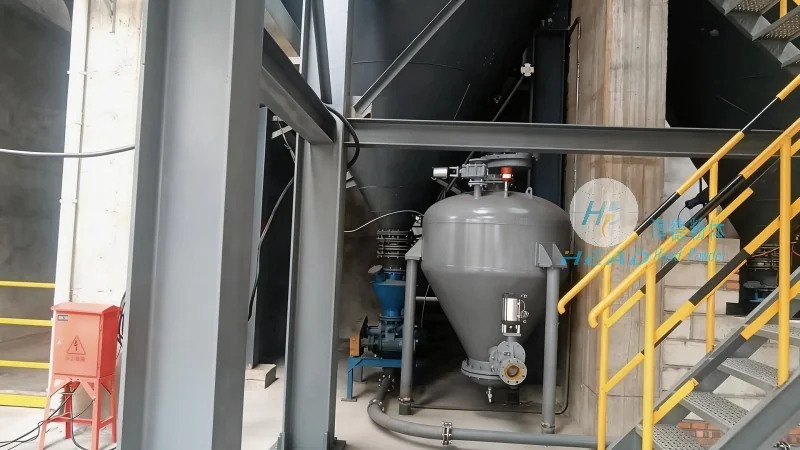
For dense‑phase systems, a pressure vessel (blow tank) equipped with a fluidizing base is the standard feeding device. The fluidized bottom ensures uniform aeration of the iron sulfate, preventing bridging and providing consistent discharge. In dilute‑phase systems, rotary airlocks with abrasion‑resistant tips and vented housing are preferred. Irrespective of the feeding method, a variable‑rate control valve (such as a pinch valve or cone valve) maintains steady feed while compensating for bulk density changes.
Horizontal runs of pipe should be kept as short and straight as possible to minimize particle attrition and pressure drop. Long‑radius bends (R/D ratio ≥ 10:1) made of alumina‑lined or ceramic‑coated steel are essential to withstand erosion from acidic iron sulfate particles. In vertical lift sections, spiral or ribbed internal surfaces can help stabilize the material flow. Pipe diameter selection follows a trade‑off between velocity and capacity: typical iron sulfate lines use 3–6 inch pipes for throughputs up to 10 t/h over distances of 100–300 m.
At the receiving point, a reverse‑jet dust collector with PTFE‑coated filter bags is mandatory to capture fine iron sulfate dust and avoid environmental emissions. A bag‑house with a can‑air cleaning system, sized for an air‑to‑cloth ratio of 2:1 to 3:1, provides reliable separation. Downstream, a pressure‑relief valve and vacuum breaker protect the system from surge conditions.
Drawing from industry benchmarks and headpowder’s own installations, the following parameters are typical for iron sulfate pneumatic conveying:
These figures align with the 2026 market trends emphasizing energy efficiency and sustainability. As energy costs climb and regulatory pressure on particulate emissions intensifies, dense‑phase conveying has become the predominant choice for iron sulfate handling, accounting for over 70% of new installations surveyed by industry bodies.
Even with careful design, operators may encounter issues specific to iron sulfate. Below are frequent problems and proven countermeasures:
If air dew point exceeds –30 °C or if residual moisture is present in the material, iron sulfate can cake on pipe walls. Mitigation: integrate an online moisture sensor at the dust collector outlet and a trace‑heating system (set to 10–15 °C above ambient) on the first 30 meters of the conveying line. headpowder reported a 40% reduction in blockage incidents in a 2025 upgrade for a large water‑treatment chemical plant.
Angular iron sulfate particles act as miniature cutting tools. Hard‑facing welding or replaceable ceramic tiles in the blow tank cone and all 90‑degree bends extend component life by three to five times. Routine inspection intervals should be set at every 500 operation hours for dense‑phase systems.
Fine iron sulfate dust (PM10 and PM2.5) can escape through worn seals. Solution: install a secondary HEPA filter (MERV‑16 or better) at the vent stack, and use double‑acting pinch valves on bag‑house discharge to eliminate air leaks. Regular differential pressure monitoring across the filter ensures timely cleaning cycles.
Choosing the right components is a balancing act between capital cost, operational reliability, and maintenance ease. Below is a comparative reference table for key elements:
| Component | Recommended Type | Material of Construction | Key Selection Criterion |
|---|---|---|---|
| Blow Tank | Top‑discharge with fluidizing cone | 316L stainless steel (or 304L with epoxy lining) | Corrosion resistance; fluidized bottom ensures uniform aeration |
| Rotary Airlock | Drop‑through with hardened rotor tips | Cast iron housing, Stellite‑alloy tips | Abrasion‑resistant; low blow‑by for higher efficiency |
| Pneumatic Divert Valve | Plug‑type or flap‑type | 316L body with PTFE seat liner | Tight shut‑off; minimal internal dead space to avoid caking |
| Dust Collector | Reverse‑jet pulse baghouse | SS304 housing, PTFE‑coated polyester bags | Fine particle capture; cleanable under high moisture |
| Pipeline Bends | Long‑radius (R/D≥10) with ceramic liner | Carbon steel outer + alumina ceramic inner | Erosion resistance for high‑velocity particles |
Selecting these components from a trusted supplier like headpowder, which has decades of experience in aggressive chemical conveying, can significantly reduce total cost of ownership. headpowder’s engineering team provides complete system simulations and on‑site commissioning to ensure each piece fits the specific iron sulfate handling profile. (咨询热线:156-6277-7102)
Operating an iron sulfate pneumatic conveying system demands rigorous procedural adherence. Start‑up sequences should include a line‑purge phase with dry air for at least 30 seconds to remove any accumulated moisture or residual material. Shutdown protocols must ensure complete evacuation of the line to prevent static settling that hardens into boulders. Regular sampling of the conveying air at multiple points (using a portable hygrometer) is recommended every 200 operating hours.
Safety considerations revolve around the acidic dust: operators handling iron sulfate should wear appropriate PPE, including dust‑resistant goggles and NIOSH‑approved respirators (N95 or higher). The conveying line must be grounded to prevent electrostatic discharge, as fine iron sulfate dust can form explosive atmospheres when airborne concentrations exceed 50 g/m³. An explosion‑vent panel (vent area ≥ 1 m² per 20 m³ of system volume) aligned with NFPA 68 guidelines should be installed in the dust collector and receiver hopper.
A mid‑sized municipal water treatment plant in the southeastern United States upgraded its iron sulfate dosing system from manual bag‑dumping to a fully enclosed pneumatic conveying solution designed and supplied by headpowder. The plant required a capacity of 8 t/h over a 130‑m distance with three 90° bends and a 12‑m vertical lift. The chosen dense‑phase system included a 3‑m³ blow tank with fluidized bottom, a 304L stainless steel pipeline with ceramic‑lined bends, and a baghouse with automatic pulse cleaning.
Results measured over 18 months of operation showed a 12% reduction in energy cost per ton of iron sulfate conveyed (compared to the previous dilute‑phase system), a 30% decrease in line blockage incidents, and a 50% reduction in manual cleanup labor. The plant also achieved a 99.8% dust capture efficiency at the receiving silo, fully meeting local air permit requirements. This case illustrates how a technically robust solution, tailored to the material’s hygroscopic and abrasive nature, can deliver measurable operational and environmental gains.
Looking toward 2026 and beyond, the iron sulfate pneumatic conveying market is embracing smart sensors, predictive maintenance, and real‑time optimization. Internet of Things (IoT) modules that monitor pressure drop, air flow, and material moisture content allow operators to adjust conveying parameters dynamically, preventing blockages before they occur. HeadPowder has already begun offering controller‑integrated systems with data logging and remote alarm capabilities, enabling plant managers to view performance dashboards on mobile devices. In the context of sustainability, closed‑loop conveying loops that recirculate conveying air (with proper drying and filtration) are gaining traction, reducing overall compressed air consumption by up to 40%.
Additionally, advancements in liner materials—such as ultra‑high molecular weight polyethylene (UHMWPE) and polyurethane—are extending component life even under the harshest iron sulfate conditions. These innovations, combined with modular skid‑mounted designs that simplify installation and relocation, make pneumatic conveying an increasingly attractive option for both greenfield projects and retrofit applications.
Iron sulfate pneumatic conveying requires a thoughtful, data‑driven approach that respects the material’s tendency to cake, wear, and generate dust. A well‑designed system—featuring dried air, dense‑phase feeding, abrasion‑resistant components, and robust filtration—can achieve throughputs exceeding 10 t/h with minimal downtime and environmental impact. The selection between dense‑phase and dilute‑phase should be guided by distance, capacity, and moisture sensitivity, with dense‑phase clearly leading for most modern installations. By integrating best practices in air conditioning, pipeline layout, and protective linings, operators can significantly reduce maintenance costs and enhance workplace safety.
For plant engineers and project teams evaluating iron sulfate handling upgrades, early engagement with experienced system integrators is essential. Conducting a pilot test with actual material samples is the most reliable way to validate design assumptions and optimize parameters like air velocity and blow‑tank pressure. With continuous monitoring and a focus on energy efficiency, pneumatic conveying of iron sulfate can be both a competitive edge and a compliance enabler. Companies seeking to elevate their bulk handling capabilities can benefit from headpowder’s extensive track record in designing and installing hundreds of chemical conveying systems worldwide. (咨询热线:156-6277-7102)

 Shandong headpowder Engineering Co., Ltd.
 156-6277-7102(Manager Zhang)
  0531-83386006
  Jinan City, Shandong Province, China
服务热线
微信咨询
回到顶部