News
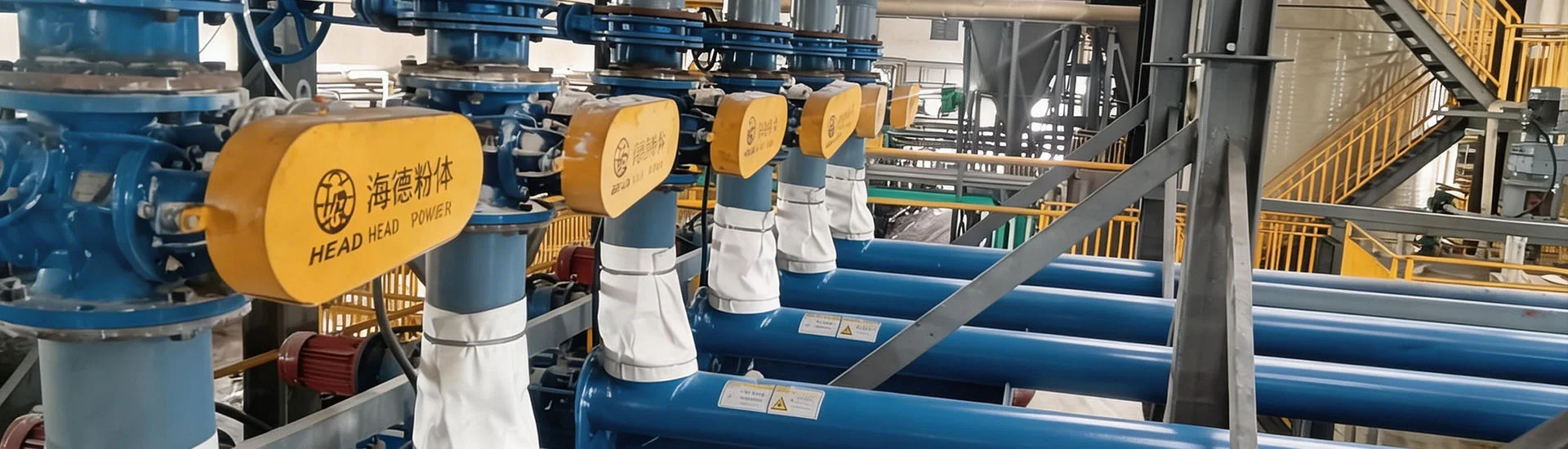
Rich project cases across industries, showing real implementation and proven technical strength.The efficient and reliable handling of bulk solid powders is a critical challenge across numerous industrial sectors, from fine chemicals and pharmaceuticals to food processing, plastics, and mineral processing. Traditional mechanical conveying methods, such as belt conveyors, screw feeders, and bucket elevators, often present limitations in terms of dust control, maintenance requirements, layout flexibility, and product degradation. As manufacturing processes become increasingly automated and stringent environmental regulations take effect, the demand for enclosed, hygienic, and versatile solutions has grown substantially. Among these solutions, the solid powder pneumatic conveying system has emerged as a cornerstone technology, enabling the safe, clean, and high-speed transfer of powdered and granular materials through pipelines using a controlled air stream. This article provides an in-depth, professional introduction to the equipment that constitutes a modern pneumatic conveying system, examining fundamental operating principles, key components, system classifications, selection parameters, and industry trends projected for 2026 and beyond. Our objective is to equip plant engineers, project managers, and procurement specialists with actionable technical knowledge that supports informed decision-making. Throughout the discussion, we will highlight how robust equipment design and tailored system engineering—such as that delivered by headpowder—can address real-world operational pain points, improve overall equipment effectiveness, and contribute to a lower total cost of ownership. Whether you are upgrading an existing line, commissioning a new facility, or simply exploring the feasibility of pneumatic transport for a specific powder, this comprehensive guide serves as a reliable reference grounded in engineering practice and industry data.
At its core, pneumatic conveying harnesses the kinetic energy of a gas—typically air or an inert gas like nitrogen—to suspend and transport particles through a sealed pipeline system. The gas stream, generated by a blower, fan, or compressor, enters the system at a controlled velocity, picking up material introduced via a feeding device and carrying it to a designated destination—often a storage silo, process hopper, or packaging station. The two primary modes of operation are dilute phase and dense phase conveying. In dilute phase systems, particles are fully suspended in the gas stream at relatively high velocities (often exceeding 15–25 m/s). This mode is well-suited for free-flowing, non-friable, and low-to-medium density powders. In dense phase conveying, material moves as a slug or plug at much lower velocities (typically 1–8 m/s), which reduces particle degradation, minimizes pipeline wear, and lowers energy consumption. Dense phase is particularly advantageous for fragile, abrasive, or cohesive powders. The choice between these modes depends on material characteristics such as particle size distribution, bulk density, moisture content, flowability, and abrasiveness. A thorough material characterization test—including shear cell analysis for cohesive strength and permeability tests—is essential before designing any system. Modern equipment now incorporates real-time pressure and velocity monitoring sensors that feed into programmable logic controllers (PLCs) to dynamically adjust airflow, ensuring consistent transport even when bulk properties fluctuate.
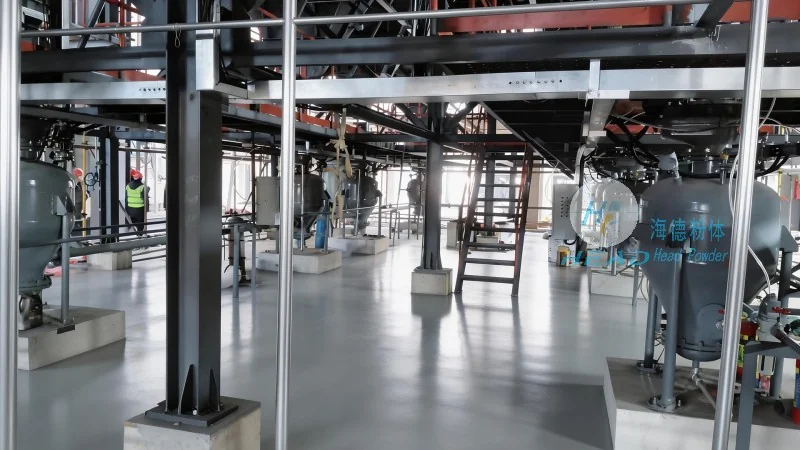
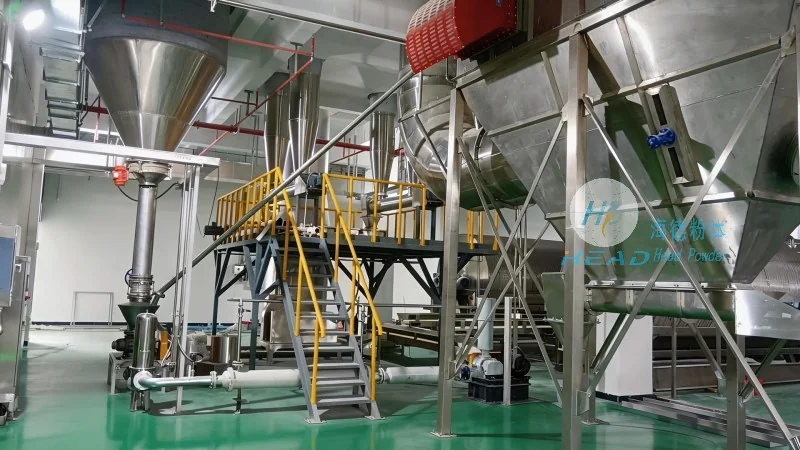
A complete solid powder pneumatic conveying system comprises several interconnected subsystems, each engineered to perform a specific function. Understanding these components helps in specifying a system that meets throughput, reliability, and safety requirements. The primary equipment categories include material feeding devices, conveying pipelines, gas movers, separation and filtration units, and control instrumentation.
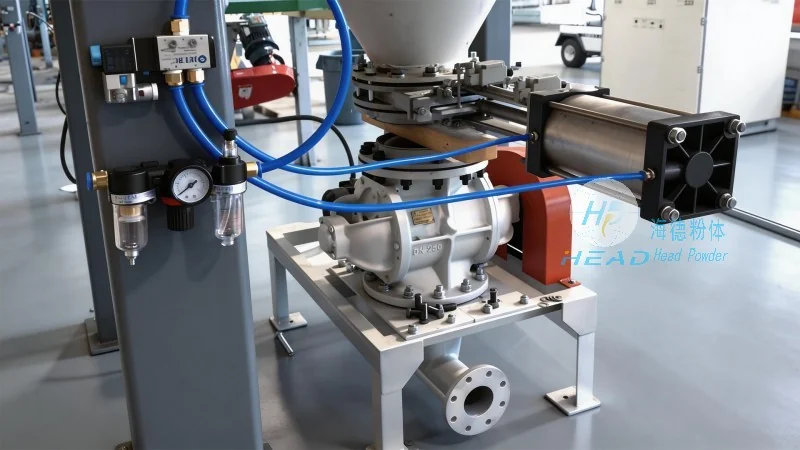
Feeding Devices: The interface between the storage vessel and the conveying line is critical. Rotary valves (also known as airlocks) are the most common feeders for dilute phase systems, offering positive displacement of material while minimizing air leakage. For dense phase applications, pressure vessels—often termed blow pots or pressure tanks—are used. These batch-wise feeders pressurize material with compressed air before discharging it as a slug. Screw feeders and venturi injectors are also employed for specific low-pressure, high-throughput scenarios. Proper feeder selection directly impacts system stability; an incorrectly sized rotary valve can cause bridging, blow-by, or starvation, leading to production interruptions. Headpowder's engineering team routinely evaluates feeder geometry and material contact surfaces, offering options like hard-faced vanes or ceramic coatings for abrasive powders to extend service life.
Conveying Pipelines: The pipeline network must withstand internal pressure, abrasion, and potential chemical corrosion. Standard materials include schedule 10–40 carbon steel for dry, non-corrosive powders, and 304/316 stainless steel for food-grade, pharmaceutical, or highly corrosive applications. Pipe bends—especially those with a radius of 5 to 10 times the pipe diameter—are critical wear points. Long-radius bends and ceramic-lined elbows significantly extend longevity. Straight sections should be minimized or properly supported to prevent sagging and vibration. For high-temperature powders (above 150°C), expansion joints and heat-resistant alloys may be necessary. Pipe diameter is calculated based on conveying velocity, material density, and desired throughput; incorrectly sized lines can lead to saltation (particles falling out of suspension) or excessive pressure drop.
Gas Movers: The heart of the system is the air mover. Positive displacement blowers (Roots-type) are widely used for dilute phase systems, delivering constant volume over varying pressure conditions. Centrifugal fans are suitable for low-pressure, high-volume applications. Dense phase systems typically rely on screw compressors or reciprocating compressors that can generate higher pressures (2–6 bar). Energy efficiency is a growing priority; variable frequency drives (VFDs) can modulate motor speed to match actual demand, reducing power consumption by up to 30% compared to fixed-speed operation. Industry data from 2025–2026 indicates that nearly 60% of new pneumatic conveying installations in Europe and North America now incorporate VFD-controlled air movers, driven by both sustainability goals and operational cost savings.
Separation and Filtration: At the destination point, the conveying gas must be separated from the solid material. Cyclone separators are used for coarse particle recovery, while baghouse filters or cartridge dust collectors capture fine fractions and ensure clean exhaust gas. For pharmaceutical or food applications, high-efficiency particulate air (HEPA) filters may be mandated. Reverse-pulse jet cleaning systems automatically dislodge accumulated dust from filter elements, maintaining low pressure drop across the filter. Sizing the filter area based on air-to-cloth ratio (typically 1.5:1 to 3:1 for finely divided powders) is a key engineering step. Under-sized filters cause frequent cleaning cycles, high residual pressure, and eventual emissions non-compliance.
Control Instrumentation: Modern systems are equipped with pressure transmitters, flow meters, level sensors, and PLC-based control panels that enable automatic start-up, shutdown, and fault detection. A human-machine interface (HMI) provides operators with real-time visualizations of line pressure, air velocity, motor current, and material flow rate. Integration with plant-wide distributed control systems (DCS) is common. Additionally, safety features such as pressure relief valves, burst discs, and nitrogen purge systems are mandatory for combustible powders (e.g., starch, aluminum powder, coal dust) to prevent dust explosions. Headpowder offers customized control logic that adapts to batch or continuous processes, with remote monitoring capability via secure cloud connectivity—an increasingly requested feature in 2026 industrial IoT ecosystems.
Pneumatic conveying systems are not one-size-fits-all. They are typically classified into four broad categories, each with distinct equipment configurations and operational parameters. Understanding these classifications helps buyers match the system to their specific material and production environment.
Each classification involves different equipment selection criteria, capital costs, and operational complexities. For instance, a dense phase system for a specialty chemical plant handling abrasive zinc oxide powder may require ceramic-lined blow pots and hardened steel pipelines, with an upfront investment 20–40% higher than a dilute phase alternative. However, the extended equipment life and reduced maintenance downtime often justify the premium within 18–24 months. Headpowder engineers conduct a comprehensive feasibility study—including bulk material testing in their dedicated laboratory—before recommending a system architecture. A real-world case involved a major bakery ingredient processor that switched from dilute phase to dense phase for their milk powder line, achieving a 70% reduction in fine generation and a 12% increase in overall yield, with a payback period of 14 months.
Selecting the appropriate pneumatic conveying system requires a systematic evaluation of several technical parameters, combined with an understanding of evolving industry standards and market conditions. The following factors should be considered in any equipment specification:
Adherence to recognized standards such as ISO 2419 (pneumatic conveying vocabulary), ISO 1524 (test methods for particle size), and CEMA standards for screw feeders ensures design consistency and facilitates supplier evaluation. By 2026, the global pneumatic conveying equipment market is projected to exceed USD 8.2 billion, driven by expansion in the lithium battery, specialty chemicals, and alternative protein sectors. Material handling professionals are increasingly demanding systems that offer digital twin simulation capability for predictive maintenance—an area where headpowder has invested heavily. Their proprietary modeling software allows customers to simulate conveying performance under various material batches and pipeline configurations before committing to hardware purchase.
Even the most carefully engineered pneumatic conveying system will underperform without proper operation and preventive maintenance. Plant teams should establish a routine checklist that includes daily visual inspection of gaskets, seals, and filter bags; weekly monitoring of pressure differentials across filters and blowers; monthly calibration of pressure transmitters and level sensors; and quarterly checks on rotary valve tip clearance (wear can increase air leakage by 5–10% over a year, directly reducing conveying efficiency). For dense phase systems, blow pot valve seats should be inspected every 500 operating hours. Lubrication schedules for blowers and compressors must follow OEM guidelines, using only approved lubricants to avoid contamination.
A common mistake in the field is operating the system at a higher conveying velocity than necessary—often because operators are reluctant to adjust setpoints—which accelerates pipe erosion and product degradation. Modern PLC-based controls with adaptive algorithms can automatically reduce airflow when pressure drop drops, maintaining stable operation. For systems handling food or pharmaceutical powders, clean-in-place (CIP) capability is increasingly requested. Headpowder offers sanitary pneumatic conveying systems with 3A-certified components, smooth internal surfaces (Ra < 0.8 μm), and orbital welded joints that eliminate dead zones. One notable project involved a major probiotic manufacturer that required fully automated CIP between product changeovers; the integrated system reduced sanitation downtime from 8 hours to 1.5 hours, increasing effective production capacity by 30%.
In addition to hardware care, maintaining a library of material properties is recommended. When a new powder grade is introduced, retesting flow characteristics can prevent unexpected blockages. The use of IoT-based vibration sensors on pipelines and blower bearings provides early warning of developing faults, enabling condition-based maintenance rather than time-based. Data from 2025 industry surveys indicates that predictive maintenance programs reduce unplanned downtime by 35–50% and extend equipment lifespan by 20–30%.
The selection and implementation of a solid powder pneumatic conveying system is a multi-faceted engineering decision that directly influences production reliability, product quality, operational costs, and regulatory compliance. From understanding whether dilute or dense phase best suits your material, to specifying the correct feeders, air movers, filters, and control architecture, every choice carries downstream implications. The market landscape in 2026 continues to push toward digital integration, energy efficiency, and safety compliance—requiring equipment suppliers to demonstrate not just hardware excellence but also system engineering expertise and lifecycle support. A thorough evaluation of your material's properties, production targets, and facility constraints, combined with benchmarking against standards, will guide you to a system that performs consistently.
Working with a partner that combines deep application knowledge with a proven track record can significantly de-risk the process. Headpowder, with decades of specialized experience in pneumatic conveying for fine solids, provides end-to-end services including material testing, system design, equipment fabrication, installation supervision, commissioning, and after-sales support. Their engineers collaborate closely with clients to tailor solutions—whether for a compact pilot plant or a multi-line bulk transfer facility. By focusing on robust construction, precise control, and maintainability, headpowder helps operators achieve the dual goals of maximum uptime and minimum total cost of ownership. For further technical discussion or project evaluation, reach out to the headpowder team to explore how their systems can address your specific needs. (咨询热线:156-6277-7102)

 Shandong headpowder Engineering Co., Ltd.
 156-6277-7102(Manager Zhang)
  0531-83386006
  Jinan City, Shandong Province, China
服务热线
微信咨询
回到顶部