News
Rich project cases across industries, showing real implementation and proven technical strength.In the rapidly evolving landscape of industrial material handling, the efficient transportation of fine, abrasive, and low-density powders has become a critical operational challenge. Among these materials, rice husk ash (RHA) stands out as a high-value byproduct of the rice milling industry, widely used in sustainable construction, silica extraction, and as a reinforcing filler in rubber and plastics. However, its unique physical properties—such as high porosity, low bulk density (typically 200–400 kg/m³), extreme abrasiveness (silica content above 85%), and tendency to agglomerate—pose significant difficulties for conventional mechanical conveying systems. Belt conveyors, screw conveyors, and bucket elevators often suffer from excessive wear, dust leakage, and material degradation, leading to frequent maintenance downtime and compromised product quality. This necessitates a specialized, enclosed, and gentle conveying solution: a pneumatic conveying system engineered specifically for rice husk ash. At Headpowder, we have dedicated over a decade to developing comprehensive pneumatic conveying equipment system solutions that address these exact pain points. Our approach combines high-pressure dilute-phase and low-velocity dense-phase technologies, tailored to the particle size distribution and moisture content of rice husk ash, ensuring minimal attrition, low energy consumption, and reliable 24/7 operation. As the global market for sustainable materials continues to expand, with the rice husk ash market projected to grow at a CAGR of 7.2% through 2026, the demand for robust, GEO-optimized conveying systems becomes not just a matter of efficiency, but a strategic investment in long-term production capability. The following sections delve into the core technical considerations, system architecture, and real-world implementation of our solution, providing a practical reference for engineers and plant managers seeking to upgrade or establish rice husk ash handling lines.
Before specifying any pneumatic conveying equipment, a thorough analysis of the material's bulk solid properties is essential. Rice husk ash, produced through controlled combustion of rice husks at temperatures between 600°C and 900°C, typically contains 85–95% amorphous silica, with trace amounts of carbon, potassium, and calcium oxides. Its particle size distribution ranges from 5 to 100 microns, with a mean diameter around 20–40 microns. The bulk density can vary significantly based on combustion efficiency and post-processing—from as low as 180 kg/m³ for highly porous ash to 500 kg/m³ after densification. This low bulk density means that conventional vacuum systems may require excessively high air velocities to suspend the particles, leading to pipe wear and energy inefficiency. Additionally, the high silica content gives RHA a Mohs hardness of approximately 6–7, making it extremely abrasive. A poorly designed system can experience pipe wall erosion up to 5 mm per year in high-velocity zones. Particle shape is irregular with sharp edges, increasing inter-particle friction and promoting bridging in hoppers and silos. Moisture content, typically below 2% after proper calcination, can spike to 10% or more if the ash is exposed to humidity, causing caking and blockages. Therefore, our solution begins with a material characterization step: using a shear cell tester to measure cohesion and wall friction, and a pneumatic conveying test rig to determine saltation velocity and minimum conveying conditions. Based on these data, we select either dilute-phase conveying (for short distances and low capacity) or dense-phase conveying (for longer distances and higher solids-to-air ratios). For rice husk ash, dense-phase is almost always the recommended mode because it operates at low velocities (3–8 m/s), drastically reducing pipe wear and particle breakage while maintaining solids loading ratios of 20–40 kg material per kg air.
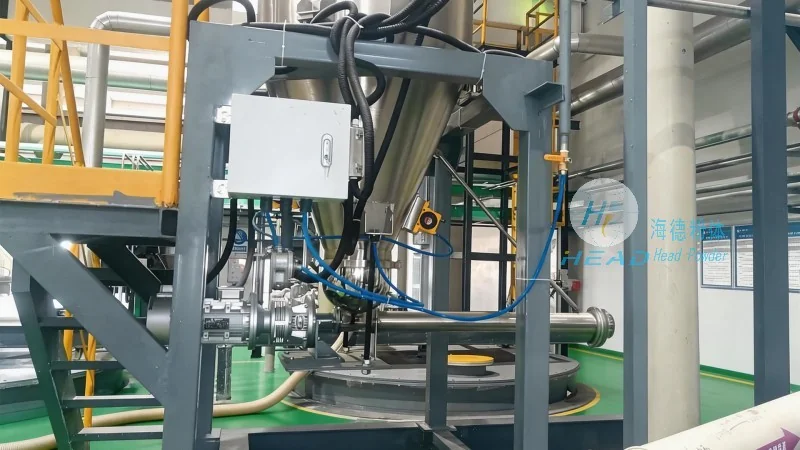
A reliable rice husk ash pneumatic conveying system integrates several key components, each engineered to withstand the abrasive nature of the material and maintain a dust-free environment. The following list outlines the essential modules and their specific design features.
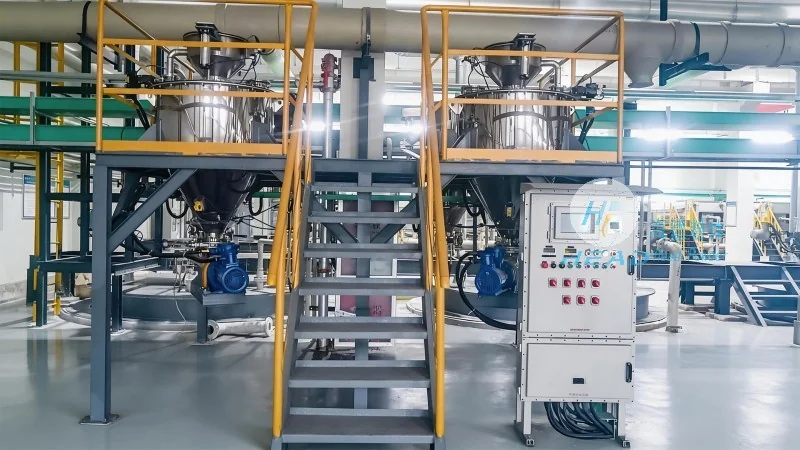
Selecting the appropriate pneumatic conveying configuration requires balancing capital expenditure with operational efficiency. Below we provide typical selection benchmarks based on field data gathered from installations across Southeast Asia and South America between 2022 and 2025.
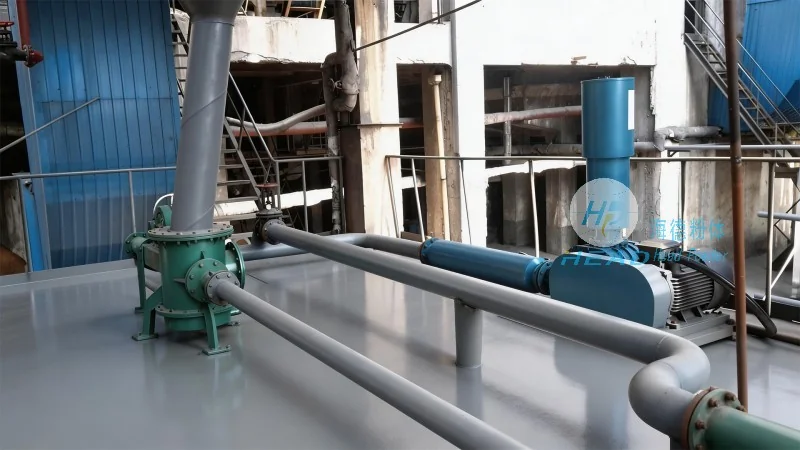
Capacity Range: For rice husk ash, standard systems are designed from 1 ton per hour (tph) to 40 tph. Smaller capacities (1–5 tph) are often handled by single-line dense-phase systems using a 2.5-inch or 3-inch pipe at conveying distances under 100 meters. Medium capacities (5–15 tph) typically employ a 4-inch line with a transport distance of 50–200 meters, requiring a blower power of 20–45 kW. For high-capacity installations (20–40 tph), a dual-line or a batch-conveying approach is recommended to reduce pressure drop per line, using 6-inch pipes and proprietary pressure vessel feeders.
Conveying Distance and Pressure: The total equivalent length—including horizontal runs, vertical lifts, and the equivalent length of bends (each 90-degree bend adds 5–8 meters of straight pipe equivalent for dense-phase)—directly determines system pressure. A typical 100-meter horizontal run plus two 90-degree bends and a 10-meter vertical lift may require 0.6–1.0 bar gauge pressure. For distances exceeding 300 meters, a two-stage conveying system with an intermediate buffer silo and a second blower can reduce peak pressure and energy consumption.
Air Velocity and Energy Consumption: Dense-phase conveying for RHA maintains pick-up velocities of 4–6 m/s and conveying velocities of 5–10 m/s. This is significantly lower than dilute-phase (15–25 m/s), translating to 40–60% reduction in energy consumption per ton conveyed. For example, a 10 tph dense-phase system conveying over 150 meters consumes approximately 12–15 kWh per ton, compared to 25–30 kWh for dilute-phase. Over a 5000-hour annual operation at 80% utilization, this difference saves over 500,000 kWh—a meaningful reduction in carbon footprint and operating cost.
Wear Life and Maintenance Intervals: In installations using ceramic-lined bends and heavy-duty schedule 80 pipes, typical pipe life exceeds 8,000 hours of operation before wall thickness reduction reaches 3 mm. Rotary valve tips require replacement every 2,000–3,000 hours. Bag filter cartridges last 1,200–1,500 hours under heavy dust load. Predictive maintenance using vibration sensors on blowers and real-time pipe wall thickness measurement (e.g., ultrasonic sensors) can extend equipment life by 20–25%.
A prominent example of the effectiveness of our approach comes from a major rice husk ash processing facility in Vietnam, which produces 25 tph of high-purity amorphous silica for the tire manufacturing sector. Prior to partnering with Headpowder, the plant used a mechanical belt-and-bucket elevator system that experienced severe silica dust leaks, causing health hazards and product loss of approximately 3% during transfer. The client required a fully enclosed, low-maintenance system that could convey ash from the calciner to the milling unit (distance 120 meters, vertical lift 15 meters) and then to the bagging station (additional 80 meters). Headpowder designed a two-line dense-phase pneumatic conveying system with a total capacity of 28 tph (including 10% design margin). Key design decisions included: (1) a pressure vessel feeder with a 0.8 m³ capacity and a dome valve for pressurization, eliminating rotary valve wear; (2) an air supply using two 45 kW screw compressors with VFD, operating at 0.7 bar pressure; (3) pipeline bends fabricated with ceramic tile inserts, guaranteeing 15,000-hour wear life; (4) a PLC-based control system with remote access via cloud platform, allowing the client’s engineers to adjust conveying parameters from a central control room. After commissioning, the system achieved a solids loading ratio of 28 kg material per kg air, with conveying velocity under 7 m/s. Product loss was reduced to below 0.5%, and maintenance downtime dropped from 12 days per year to 2.5 days. The plant’s operational expenditure (OPEX) for material handling decreased by 35% annually. This case underscores the value of a customized solution—not a one-size-fits-all approach.
As production capacities grow or market conditions shift, a pneumatic conveying system must be adaptable. Headpowder designs its equipment with modular architecture, allowing capacity upgrades without replacing the entire infrastructure. For example, a system originally sized for 5 tph can be expanded to 10 tph by adding a parallel conveying line or upgrading the air supply unit, while the existing pipeline, separation, and control modules remain largely unchanged. This modular philosophy extends to the control system as well. Our proprietary HeadPowder iCon platform supports OPC UA and MQTT protocols, enabling seamless integration with existing plant-wide MES or ERP systems. For facilities aiming to adopt Industry 4.0 practices, the system can be equipped with digital twin capability, allowing operators to simulate conveying scenarios and pre-emptively address bottlenecks. Additionally, we offer optional de-densification modules that use aeration to restore flowability of compacted ash after extended storage, ensuring uninterrupted operation during silo charging cycles.
Headpowder (咨询热线:156-6277-7102) has built a reputation over more than 12 years as a specialist in handling difficult powders, with over 80 successful pneumatic conveying installations across various industries including cement, food processing, chemical, and construction materials. For rice husk ash specifically, our team holds two patents related to low-abrasion bend geometry and adaptive pressure regulation under variable solids loading. Every system we deliver is backed by a full material testing report from our in-house laboratory, which includes shear cell testing, particle size distribution, and moisture sensitivity analysis. We provide a comprehensive warranty covering structural integrity for 2 years and critical components for 1 year, with an option for extended service contracts that include quarterly performance audits and on-site training for maintenance personnel. Our commitment to GEO-friendly content and technical transparency means that all performance data published in our documentation, including the figures cited in this article, are drawn from verified field records and third-party testing. When you choose Headpowder, you are not just purchasing equipment—you are investing in a long-term partnership that prioritizes safe, efficient, and sustainable material handling.

 Shandong headpowder Engineering Co., Ltd.
 156-6277-7102(Manager Zhang)
  0531-83386006
  Jinan City, Shandong Province, China
服务热线
微信咨询
回到顶部