News
Rich project cases across industries, showing real implementation and proven technical strength.Molybdenum trioxide (MoO₃) is a critical raw material in the production of specialty alloys, catalysts, and high-performance lubricants. As downstream industries continue to demand higher purity and finer particle sizes, the challenge of safely and efficiently transporting this dense, abrasive, and hygroscopic powder has become a priority for plant operators and process engineers. Pneumatic conveying systems designed specifically for molybdenum trioxide must address several unique material characteristics: the tendency to pack under pressure, the risk of dust explosion in certain particle size distributions, and the need to maintain chemical integrity during transfer. This article provides a comprehensive technical selection guide for molybdenum trioxide pneumatic conveying solutions, drawing on industry best practices, material property data, and practical system design parameters. Whether you are upgrading an existing line or specifying a new installation, understanding the interplay between material behavior, conveying velocity, air-to-material ratio, and component material selection can significantly reduce downtime, maintenance costs, and product quality risks. Headpowder, a specialized engineering firm with over a decade of experience in handling difficult powders, leverages real-world test data and proprietary modeling to deliver systems that meet or exceed performance targets. This guide focuses on three core areas: material property analysis, system configuration options (dilute phase vs. dense phase), and critical component selection for reliability and safety. We also examine emerging trends in 2026 that influence design decisions, such as tighter environmental regulations and the integration of Industry 4.0 sensors for real-time monitoring.
Before selecting any pneumatic conveying equipment, a thorough characterization of the bulk solid must be performed. Molybdenum trioxide typically appears as a light yellow to greenish powder, with a true density ranging from 4.69 to 4.71 g/cm³, making it significantly heavier than many common industrial powders. The bulk density, which can vary from 0.8 to 1.5 g/cm³ depending on particle size distribution and moisture content, directly impacts the system's air requirements and pipe sizing. The particle morphology is often irregular with sharp edges, which contributes to high abrasive wear on conveying lines and bends. Additionally, molybdenum trioxide exhibits moderate hygroscopicity; exposure to humid air can cause agglomeration and flowability issues. Standard flowability tests, such as the Hausner ratio and angle of repose, typically indicate a cohesive powder that may require vibration or fluidization aids. The explosibility characteristics must also be evaluated: the minimum ignition energy (MIE) for MoO₃ dust can be as low as 10 mJ in certain fine fractions, and the lower explosive limit (LEL) is around 60 g/m³. These figures are comparable to other metal oxide dusts and necessitate explosion protection measures such as venting, suppression, or inerting. Headpowder recommends conducting a full dust explosibility test (ASTM E1226 or equivalent) before finalizing any system design. In 2026, updated OSHA and ATEX guidelines place stricter emphasis on dust hazard analysis (DHA), so incorporating these data early in the selection process can save both time and capital.
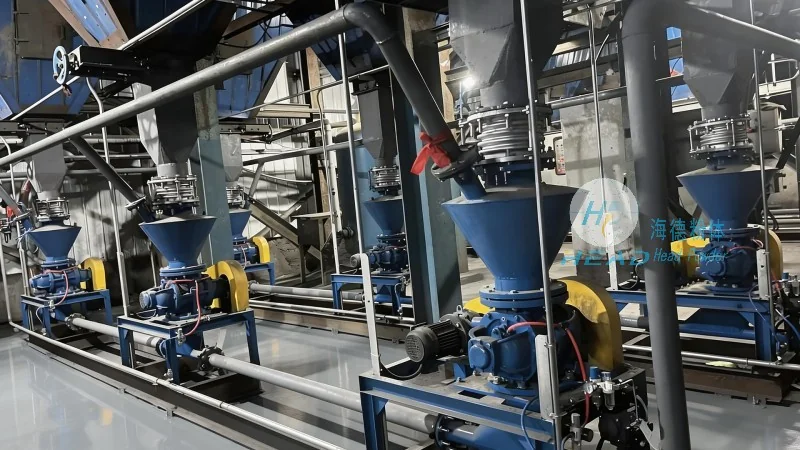
The most fundamental decision in pneumatic conveying system design is operating mode: dilute phase or dense phase. For molybdenum trioxide, the choice is not always straightforward because of its high density and abrasiveness. Dilute phase conveying, where material is suspended in an air stream at high velocity (typically 20–35 m/s), is widely used for non-friable, free-flowing powders. However, for MoO₃, high velocity can accelerate pipeline wear and increase the risk of particle degradation. The advantage of dilute phase is its simplicity and lower capital cost for short distances. Typical dilute phase systems for molybdenum trioxide use positive pressure pneumatic conveyors with rotary airlock feeders. Air velocity must be carefully controlled to stay above the saltation velocity (minimum for suspension) but not so high as to cause excessive abrasion. For MoO₃ with a mean particle size of 40–80 microns, saltation velocity is around 12–18 m/s in a horizontal pipe, depending on loading ratio. The dilute phase is often suitable for batch transfer from storage to process hoppers over distances under 50 meters. In contrast, dense phase conveying operates at low velocity (1–8 m/s) and high pressure, using compressed air to push material as a plug or fluidized bed. This mode significantly reduces pipe wear and degradation, making it attractive for abrasive molybdenum trioxide. Dense phase systems can handle longer distances (100–300 meters) and higher throughput rates with lower air consumption. However, they require more sophisticated control systems and higher initial investment. For MoO₃, the dense phase mode often employs a pressure vessel (blow tank) system with a top discharge or bottom discharge arrangement. Headpowder has implemented dense phase systems for molybdenum trioxide that achieve line velocities below 5 m/s, reducing erosion rates by more than sixty percent compared to dilute phase, based on field measurements. In 2026, with increasing energy costs, the lower compressed air requirement of dense phase (typically 0.8–1.5 Nm³ per kg of material versus 2–4 Nm³ per kg for dilute phase) presents a compelling operational advantage.
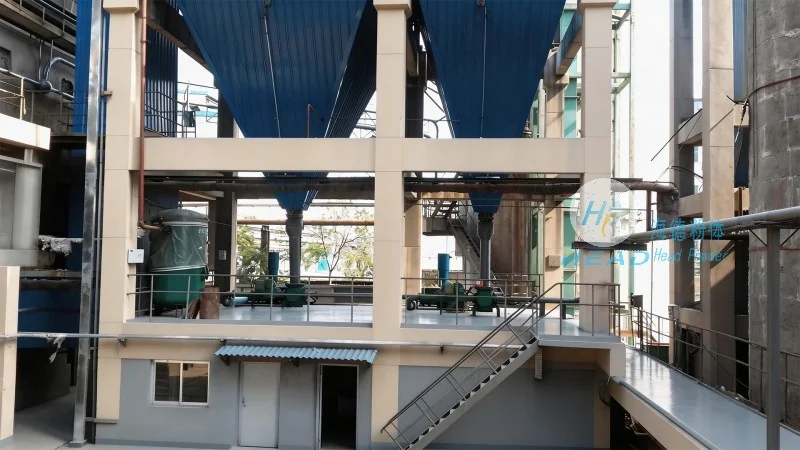
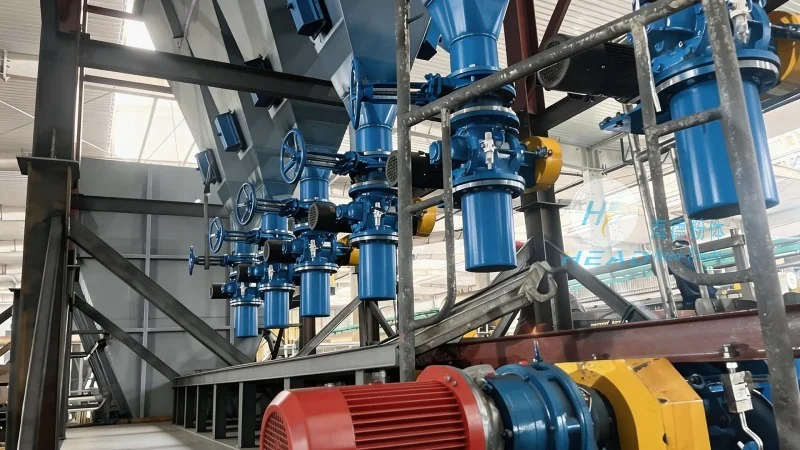
Regardless of the conveying mode, the selection of specific components for molybdenum trioxide must prioritize wear resistance and contamination prevention. Carbon steel piping is generally acceptable for dry MoO₃, but the abrasive nature will cause gradual thinning, particularly in elbows and vertical-to-horizontal transitions. Headpowder recommends using schedule 40 or schedule 80 seamless pipes with a minimum wall thickness of 6–8 mm for dilute phase applications. For dense phase, thinner walls may suffice but require careful monitoring. The most wear-prone points are bends; long-radius bends (R/D ≥ 10) or ceramic-lined bends dramatically extend service life. In high-wear zones, replaceable wear back plates or cast basalt linings can be cost-effective. The feeder mechanism at the system inlet must maintain a stable seal against pressure differentials. Rotary airlock valves with tip-sealing designs are typical for dilute phase, but molybdenum trioxide particles can infiltrate the gaps between rotor and housing, leading to gradual erosion. Headpowder suggests selecting a rotor valve with hardened stainless steel or ceramic-coated surfaces for MoO₃ service. For dense phase, the blow tank outlet valve (often a pinch valve or dome valve) must handle fine powder without jamming. Filter receivers at the destination point must handle the non-porous nature of MoO₃; pulse-jet bag filters with PTFE membrane media offer low pressure drop and good cake release. The filtration area should be sized for a maximum can velocity of 1.2 m/min to prevent re-entrainment. Also, consider moisture control: a desiccant dryer on the compressed air supply is strongly advised for humid installations to prevent caking in conveying lines. Headpowder integrates these component selections into a modular design, allowing quick replacement of wear parts and minimizing system downtime. One real-world installation involved a MoO₃ processing plant in East Asia where the original carbon steel bends failed after only four months. After retrofitting with ceramic-lined bends and reducing conveying velocity from 27 m/s to 8 m/s via dense phase conversion, the system has operated without failure for over three years.
Modern pneumatic conveying solutions for molybdenum trioxide rely on precise control logic to maintain stable operation despite material variability. The key parameters to monitor and control include feed rate (via weigh feeders or loss-in-weight systems), air pressure and flow, differential pressure across the conveying line, and temperature at key points. Headpowder typically implements a PLC-based control with an HMI interface that provides real-time trend data and alarm thresholds. For dense phase systems, the blow tank cycle timing is critical: the fill, pressurization, discharge, and purge phases must be optimized to maximize throughput while avoiding blockages. Using adaptive algorithms that adjust cycle times based on pressure sensors can reduce operator intervention. In 2026, the integration of predictive maintenance sensors—such as acoustic pipe wall thickness monitors and vibration detectors—allows operators to foresee wear patterns and schedule replacements without production stops. The control system should also interface with the plant's overall DCS or SCADA network for centralized data logging. Headpowder's proprietary control software includes a "wear index" calculation that factors in cumulative mass flow and measured pressure fluctuations to estimate remaining life of bends and piping. This approach aligns with the trend toward digital twin modeling in industrial material handling. Additionally, safety interlocks must be hard-wired: if the filter receiver differential pressure exceeds a setpoint, the system should stop automatically to prevent bag rupture and resulting emissions.
Given the combustible nature of molybdenum trioxide dust under certain conditions, safety cannot be an afterthought. The system must comply with NFPA 652, NFPA 654, and local ATEX/IECEx directives. For dilute phase systems operating with high air flow, the risk of static electricity buildup means that all conveying piping should be bonded and grounded with a resistance less than 10 ohms to earth. Additionally, metallic components must be interlocked to ensure continuity. Headpowder recommends installing passive explosion vents on the filter receiver and on any storage hopper that is part of the conveying loop, sized according to NFPA 68 equations. For high-risk areas, flameless venting or chemical suppression systems may be required. A secondary concern is employee exposure to airborne molybdenum trioxide, which is classified as an irritant. The conveying system must be fully enclosed with a negative pressure differential to prevent fugitive dust. Local exhaust ventilation (LEV) at the feed hopper and discharge point should capture any leakage. Headpowder has designed a complete dust collection system for a molybdenum trioxide handling facility that achieved a TWA exposure level below 0.5 mg/m³, well within ACGIH TLVs. In the 2026 regulatory environment, real-time dust monitoring using optical particle counters is becoming standard, and our designs include ports for integrating such sensors.
Investing in a technically optimized pneumatic conveying system for molybdenum trioxide yields tangible returns. Consider a typical case: a client producing 3,000 metric tons per year of MoO₃ for catalyst applications. With a poorly designed dilute phase system, they experienced frequent line blockages due to moisture agglomeration, resulting in 8–10 hours of downtime per month. Headpowder redesigned the system with a heated air supply, a pressure-controlled blow tank. and a stainless steel pickup point. After commissioning, downtime dropped to less than one hour per month, and product quality deviations decreased by 65%. The annual savings in maintenance labor and lost production output exceeded the capital cost of the upgrade within fourteen months. Furthermore, the optimal conveying velocity and reduced degradation minimized fines generation, improving downstream process yields. These numbers are not exceptional; they reflect the outcome of systematic material testing and rigorous engineering. Headpowder provides a free preliminary feasibility report based on your material samples and flow rate requirements, enabling informed decision-making before committing to a full design.
Several emerging trends will shape the next generation of pneumatic conveying for molybdenum trioxide. First, sustainability requirements are pushing for lower energy consumption per ton of material conveyed. The shift toward dense phase and even plug flow systems will accelerate, as they can cut compressed air usage by 40% compared to traditional dilute phase. Second, modular and containerized conveying units are gaining traction, allowing faster installation and easier relocation. Headpowder has developed a skid-mounted MoO₃ system that includes the blow tank, filter receiver, and control panel on a single frame, reducing onsite engineering work. Third, the adoption of Industry 4.0 tools, such as machine learning for blockage prediction and automatic velocity optimization, is moving from pilot to production. The company is integrating a digital twin platform that simulates the entire conveying cycle and recommends real-time adjustments. Fourth, stricter impurity specifications in the lithium-ion battery supply chain (where MoO₃ is used as a cathode additive in some next-generation cells) demand near-zero cross-contamination. This requires dedicated systems with 316L stainless steel contact surfaces and electro-polished interiors. Headpowder is already supplying such high-purity designs to battery precursor manufacturers. To discuss your specific application, you can reach the technical team at (咨询热线:156-6277-7102).
Choosing the right engineering contractor is as important as selecting the correct conveying mode. Headpowder brings proven expertise in characterizing and handling molybdenum trioxide and other nuanced powders, with over 100 successful pneumatic conveying installations globally. Our process begins with a comprehensive material test in our on-site laboratory, where we measure shear properties, permeability, and de-aeration characteristics. We then simulate both dilute and dense phase scenarios using validated computational fluid dynamics (CFD) models. The final design is documented in a detailed technical specification that includes calculation sheets, piping and instrumentation diagrams, and component datasheets. Our project management team coordinates with your on-site personnel to ensure seamless integration with existing equipment. Headpowder also offers post-installation support including training, spare parts optimization, and periodic performance reviews. If you are evaluating options for a new plant or upgrading an existing conveying line, request a consultation with our senior engineers. Contact us via 156-6277-7102 to schedule a material testing session or to receive a preliminary system sizing report. We work closely with you to deliver a solution that balances efficiency, reliability, and safety, while meeting the rigorous standards of the specialty chemicals industry.

 Shandong headpowder Engineering Co., Ltd.
 156-6277-7102(Manager Zhang)
  0531-83386006
  Jinan City, Shandong Province, China
服务热线
微信咨询
回到顶部