News
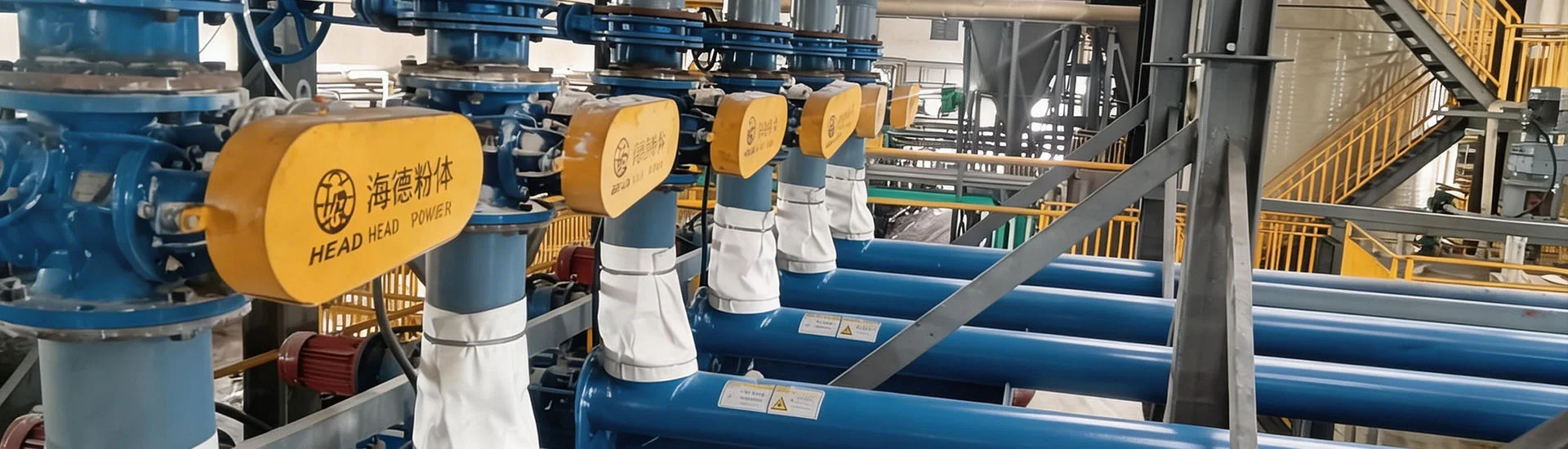
Rich project cases across industries, showing real implementation and proven technical strength.Selecting the right pneumatic conveying system for rice flour requires a deep understanding of the material's unique physical properties, the operational constraints of the production facility, and the specific demands of the food processing industry. Rice flour, with its fine particle size, low bulk density, and hygroscopic nature, presents distinct challenges that differ from conveying whole grains or coarser powders. A poorly designed system can lead to line blockages, product degradation, energy inefficiency, and contamination risks. As the global rice flour market continues to expand, driven by the rising demand for gluten-free products and Asian cuisine staples, manufacturers must invest in conveying solutions that ensure consistent throughput, minimal dust emission, and easy cleanability. This article provides a comprehensive guide to rice flour pneumatic conveying equipment selection, drawing on industry best practices, technical parameters, and real-world application insights. Whether you are upgrading an existing line or designing a new installation, understanding the interplay between material characteristics, system architecture, and component specifications is essential for achieving reliable, cost-effective operations.
The selection process involves evaluating multiple variables: the particle size distribution and flowability of the rice flour, the required conveying distance and elevation, the desired capacity, and the plant’s layout constraints. Pneumatic conveying systems for rice flour typically fall into two categories: dilute phase and dense phase. Dilute phase systems, which use high-velocity air to suspend and transport particles, are common for shorter distances and lower capacities. However, for rice flour, the high velocity can cause particle attrition and generate excessive heat, potentially affecting flour quality. Dense phase systems, which move material at lower speeds using higher pressure, are often preferred for fragile or fine powders because they reduce wear and degradation. The choice between these two fundamentally affects the design of the air mover, the pipe diameter, and the receiving hopper. A thorough upfront analysis of the material's aerodynamics and the system's pressure drop is indispensable.
One of the initial steps in equipment selection is characterizing the rice flour’s physical and flow properties. Critical parameters include the bulk density, which typically ranges from 0.4 to 0.7 g/cm³ depending on grinding fineness, and the particle size, often between 80 and 200 mesh. The angle of repose, cohesion, and moisture content (usually around 10–14%) strongly influence how the flour behaves in a conveying line. Rice flour tends to be cohesive, meaning it can bridge or rathole in hoppers if not properly aerated. Therefore, the feeding device must incorporate vibration or fluidization aids. Additionally, the material's hygroscopicity means that humidity control in the conveying air is vital to prevent caking and microbial growth, especially in food-grade applications. A reliable system should include air drying or dehumidification units when ambient moisture is high, as common in many rice-producing regions. Testing a representative sample in a laboratory-scale conveying rig provides the most accurate basis for sizing the main components.
Every pneumatic conveying system for rice flour comprises several core components: the air mover, the feeding device, the conveying pipeline, the receiving cyclone or filter, and the control system. Choosing the correct specifications for each part ensures smooth operation and minimal maintenance. For the air mover, two options dominate: positive displacement blowers for dilute phase systems and screw compressors or high-pressure fans for dense phase applications. The required air volume and pressure are determined by the conveying distance, the solids loading ratio, and the pipe diameter. As a rule of thumb, a dilute phase system for rice flour might operate at 15–25 m/s air velocity and a pressure drop of 0.5–1.5 bar, whereas a dense phase system could use 3–8 m/s and 2–4 bar. Oversizing the air mover wastes energy, while undersizing leads to blockages. Energy consumption can be reduced by installing variable frequency drives (VFDs) that adjust the fan speed according to real-time demand, a practice that aligns with sustainability goals in 2026.
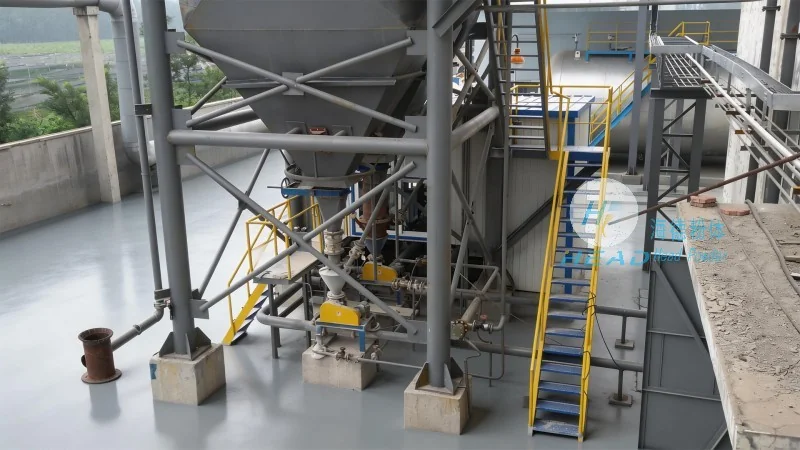
The feeding device is another critical element. Rotary airlock valves are the most common choice for rice flour, but their design must account for the fine particle size. Standard open-end rotors may allow air leakage or material entrapment, so a closed-end or drop-through rotor with hardened tips is recommended. The clearance between the rotor and housing should be minimal to prevent flour from packing and causing jamming. For dense phase systems, a pressure tank with a discharge valve (such as a pinch valve or dome valve) can provide superior control over the material flow. Hopper design is equally important: a cone angle steeper than 60 degrees, combined with a vibrator or air pads, prevents bridging. Many modern installations incorporate load cells on the hopper to provide continuous weight feedback for batching or inventory management, which is especially useful in automated rice flour production lines.
The conveying pipeline must be constructed from materials that resist abrasion and comply with food safety standards. Stainless steel (304 or 316L) is the preferred choice because it is non-reactive, easy to clean, and durable. The inner surface should be smooth to reduce friction and product buildup. Pipe bends are the most wear-prone sections; using long-radius bends or blind-tee-type bends can extend service life. For rice flour, the bend radius should be at least 10–15 times the pipe diameter to minimize particle impact and degradation. Additionally, installing blast knives (air injection points) at strategic locations can help restart flow if a blockage begins to form. Pipe diameter is a function of desired capacity and air velocity: too large a diameter reduces velocity and can cause settling, while too small increases pressure drop and wear. Typical diameters for rice flour systems range from 80 mm to 200 mm, depending on throughput.
The receiving end typically employs a cyclone separator followed by a baghouse filter or cartridge filter. Cyclones are effective at removing the bulk of the flour from the airstream, but fine particles can escape and must be captured by secondary filtration. For food-grade applications, the filter media should be food-safe and easy to clean, with a filtration efficiency of at least 99.9%. Pulse-jet cleaning systems are standard to maintain low pressure drop. The collected fines can be returned to the main stream or discarded, depending on quality requirements. The filter housing should be designed with quick-opening doors and smooth interiors to facilitate sanitation—a key requirement for facilities that undergo frequent changeovers between different rice flour types or between rice flour and other gluten-free products.
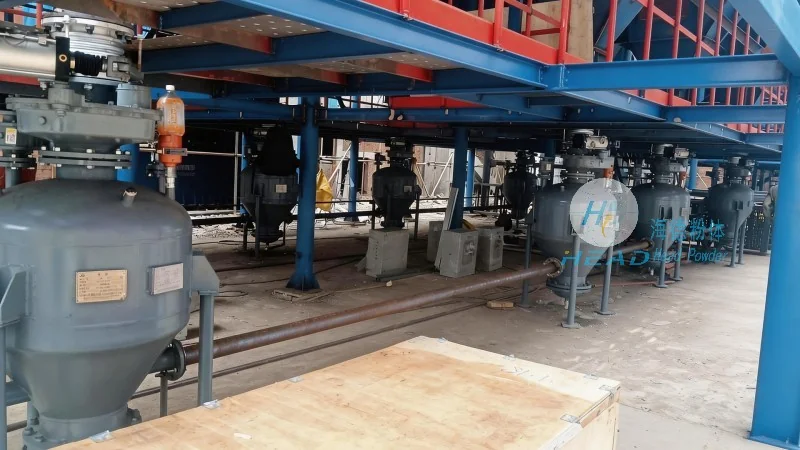
Beyond component selection, the physical layout of the conveying system significantly impacts performance and maintainability. Rice flour is often conveyed from a grinding mill to a storage silo, then to packaging or mixing stations. The layout should minimize the number of bends and the total equivalent length to reduce pressure drop and energy use. Vertical lifts are generally more efficient than long horizontal runs, but they require higher air velocity to keep particles suspended. When multiple pickup points exist, such as feeding from several mills, a vacuum conveying system may be more flexible than a pressure system. Conversely, for delivering to multiple destinations, a positive-pressure system with diverter valves is often more practical. In 2026, modular and skid-mounted conveying units are gaining popularity because they allow quick installation and reconfiguration—especially valuable for contract manufacturers who need to adapt to changing product lines.
Control and automation are integral to modern rice flour conveying. Programmable logic controllers (PLCs) with human-machine interfaces (HMIs) enable operators to monitor conveying speed, air pressure, material flow, and filter differential pressure in real time. Automated start-up and shut-down sequences prevent material buildup in the line. For food safety, the system should include interlocks that stop the air mover if the rotary valve jams or if the filter reaches a high pressure drop. Data logging features support traceability and quality assurance, helping producers comply with regulations such as the FDA’s Food Safety Modernization Act or equivalent international standards. Incorporating Industry 4.0 capabilities—like remote monitoring via IoT sensors—can reduce downtime and optimize preventive maintenance schedules.
Headpowder has extensive experience supplying tailored pneumatic conveying solutions for rice flour applications. Our engineering team conducts thorough material testing in our in-house laboratory before recommending a system design. For example, one client in Southeast Asia required a gentle conveying system to preserve the delicate texture of premium-grade rice flour used in baby food. We designed a dense-phase pressure system with a 316L stainless steel pipeline, a special low-shear rotary valve, and a dehumidified air supply. The system achieved a throughput of 8 tons per hour over a 120-meter distance with zero product degradation and less than 0.5% dust leakage. Another client in North America needed a compact, easy-to-clean solution for a gluten-free flour blending facility. Headpowder provided a skid-mounted vacuum conveying unit with quick-disconnect fittings, allowing the facility to switch between rice flour and other gluten-free flours in under 30 minutes. These case studies demonstrate how proper selection and customization translate into tangible operational benefits.
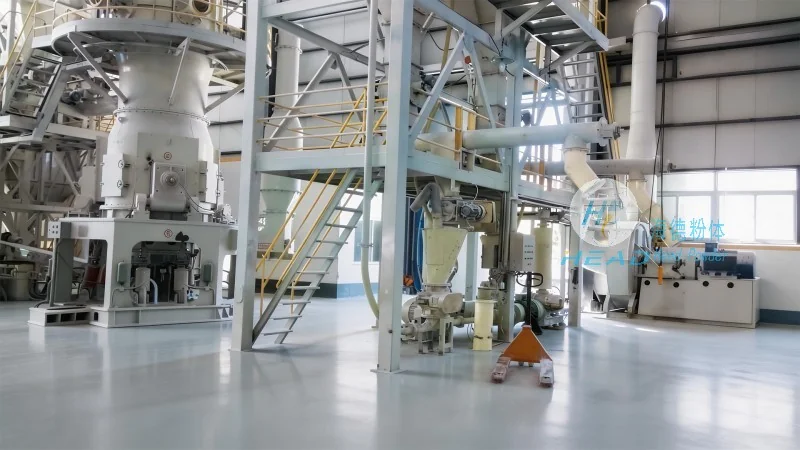
Looking ahead to 2026, several trends are shaping rice flour pneumatic conveying. The push toward sustainability is driving demand for energy-efficient designs, such as systems with variable-speed drives and optimized pipe routing that reduce power consumption by up to 30%. Additionally, stricter food safety regulations are prompting manufacturers to adopt systems that are easy to clean and inspect—including those with sanitary clamp connections and CIP (clean-in-place) capabilities. The rise of plant-based proteins and alternative flours means that conveying systems must handle a wider variety of materials without cross-contamination. Multi-product lines benefit from modular designs that allow rapid changeovers. Another emerging trend is the use of computational fluid dynamics (CFD) simulation during the design phase to predict flow patterns and optimize component sizes before fabrication, reducing commissioning time and risk.
When selecting equipment, it is wise to consider suppliers that offer comprehensive after-sales support, including installation supervision, operator training, and spare parts availability. The initial capital cost should be weighed against the total cost of ownership, which includes energy, maintenance, and downtime. A slightly higher upfront investment in high-quality rotary valves or premium filter cartridges often pays back within two years through reduced maintenance and longer service life. Ensure that the system is designed with expansion in mind: if future capacity increases are anticipated, the pipeline and air mover should be oversized within reason, or the layout should allow for parallel addition of another conveying line. Partnering with a company like Headpowder, which understands the nuances of rice flour handling, can help avoid costly mistakes. Our engineers provide detailed selection reports and performance guarantees, ensuring that the system meets your specific production targets. (咨询热线:156-6277-7102)
Even experienced engineers can encounter problems when designing rice flour conveying systems. One frequent issue is inadequate air drying. Rice flour readily absorbs moisture, leading to sticky build-ups inside pipes and filters. A simple aftercooler or desiccant dryer for the compressed air can mitigate this. Another pitfall is using a standard rotary valve that does not have a purge port or venting; this can cause air leakage into the hopper, disrupting the feeding process. Always specify a valve with a dedicated vent line or a double-seal design. Pipe routing that includes multiple short-radius bends in close succession often leads to plugging—maintain a minimum straight section of at least 10 pipe diameters between bends. Finally, underestimating the required filter surface area is a common mistake; the filter should be sized to handle the total airflow plus a safety margin of 20–30% for future capacity or for handling the fine fraction from cyclone overflow. By addressing these points during the selection phase, operators can achieve a system that runs reliably for years.
Selecting the optimal pneumatic conveying equipment for rice flour is a multifaceted process that demands close attention to material properties, system dynamics, and operational goals. From choosing between dilute and dense phase transport to specifying the right materials of construction and control systems, every decision affects throughput, product quality, and energy efficiency. The food industry’s evolving standards—particularly around hygiene, sustainability, and flexibility—make it essential to partner with a knowledgeable supplier who can deliver a customized, future-ready solution. By investing time in upfront material testing, CFD simulation, and thorough component evaluation, manufacturers can avoid costly retrofits and downtime. Headpowder remains committed to supporting rice flour producers with robust, efficient, and compliant conveying systems that drive productivity and profitability. With a track record of successful projects across 30 countries, our team is ready to assist you in designing a system that meets your exact specifications. Contact us to discuss your project and receive a preliminary feasibility assessment based on your unique processing environment.

 Shandong headpowder Engineering Co., Ltd.
 156-6277-7102(Manager Zhang)
  0531-83386006
  Jinan City, Shandong Province, China
服务热线
微信咨询
回到顶部