News
Rich project cases across industries, showing real implementation and proven technical strength.In the rapidly evolving landscape of lithium battery manufacturing, the handling of cathode and anode material powders represents a critical bottleneck that directly influences production efficiency, product purity, and operational safety. As global demand for electric vehicles and energy storage systems continues to surge—projected to exceed 4,000 GWh of battery cell production capacity by 2026—the need for robust, contamination-free, and highly reliable pneumatic conveying systems has never been more pressing. Headpowder, a specialized provider of powder processing solutions, has developed a comprehensive equipment solution tailored specifically for the pneumatic transport of sensitive lithium battery cathode and anode materials. This article explores the technical challenges, system design principles, and operational advantages of such solutions, drawing on industry best practices and emerging market trends.
Lithium battery electrode materials, whether cathode compounds such as NMC, LFP, and LCO or anode materials including natural graphite, synthetic graphite, and silicon-carbon composites, share several challenging characteristics. These powders are typically fine (<10 microns), low in bulk density, and exhibit poor flowability due to high cohesion and electrostatic charge. Moreover, they are sensitive to moisture, oxygen, and mechanical stress—any degradation during conveying risks compromising electrochemical performance. For example, cathode particles can undergo undesired phase transitions under impact, while anode materials like silicon are prone to oxidation. These physical and chemical sensitivities demand a pneumatic conveying approach that minimizes attrition, prevents contamination, and maintains an inert or low-humidity atmosphere.
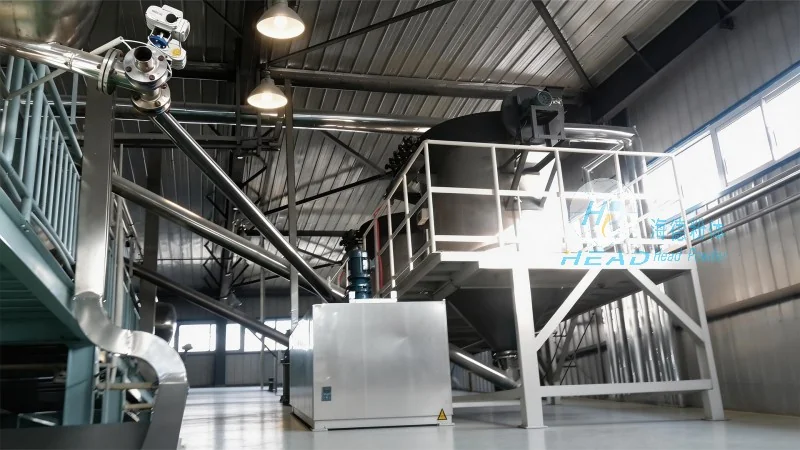
According to upcoming 2026 industry standards on battery material handling, the allowable contamination level from metal wear or dust generation during pneumatic transport has been tightened to below 5 ppm. This regulatory shift, combined with the industry's push toward dry electrode processes and higher production throughput, means that conventional conveying systems designed for bulk commodities are no longer adequate. Headpowder has responded with a modular equipment platform that integrates precision process control, advanced filtration, and smart monitoring to meet these rigorous requirements.
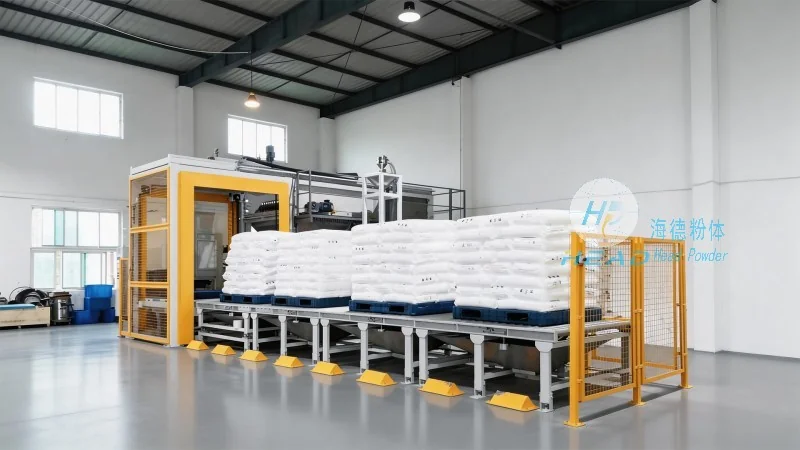
A well-engineered pneumatic conveying solution for battery materials typically comprises several interconnected subsystems. The primary classification is between dilute-phase and dense-phase transport, each selected based on material characteristics, conveying distance, and capacity requirements.
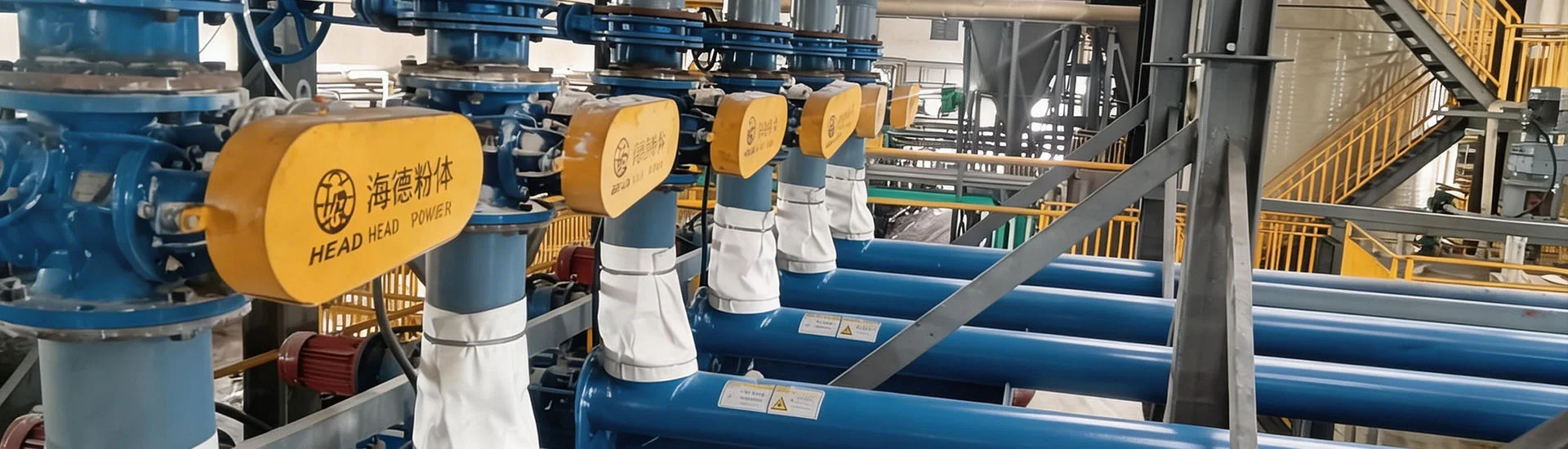
The equipment package from headpowder includes a pressure vessel (blow pot) with specially designed discharge nozzles, a pipeline network made of high-alloy stainless steel (316L or higher) with internal surface finishes below Ra0.4µm to reduce adhesion and wear, and a receiving hopper equipped with reverse-pulse jet filtration to capture sub-micron dust. Additionally, a nitrogen recirculation loop can be integrated to maintain inert conditions, with oxygen sensors providing real-time feedback to the control system. This integrated architecture ensures that from material intake from storage silos or bulk bags, through intermediate conveying, to final dosing into mixing or coating equipment, every step is conducted in a closed, controlled environment.
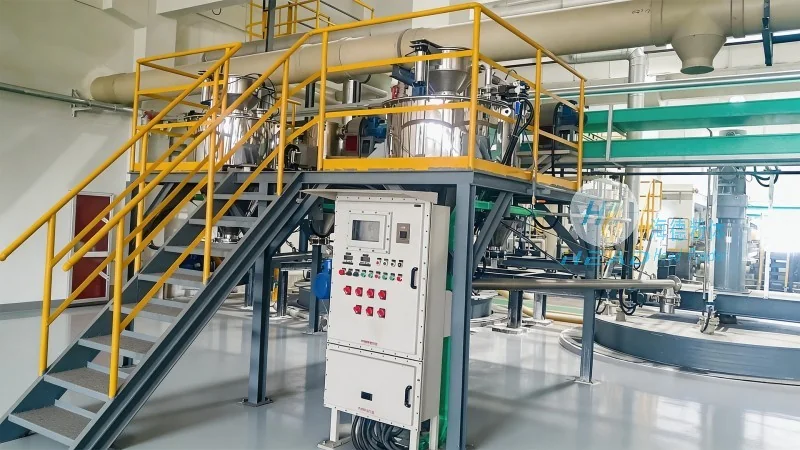
One of the most persistent issues in battery material conveying is the risk of material degradation. Even minor particle breakage can alter surface area, morphology, and crystallinity, leading to inconsistent electrode coatings and reduced battery cycle life. Headpowder’s solution incorporates a patented gentle handling technology that uses a combination of low-velocity pulsed air and a vacuum assist to move the powder column without mechanical impingement. Laboratory tests conducted under simulated production conditions demonstrate that this method maintains particle size distribution within ±0.5% of the original—significantly better than conventional dense-phase systems where attrition can reach 5-10%.
Another formidable challenge is material buildup and clogging, particularly when conveying hygroscopic materials like NMC-811 or silicon-rich anodes. To counter this, headpowder integrates a dedicated pipeline heating and insulation system that maintains a surface temperature slightly above the dew point, preventing condensation and powder caking. Furthermore, the pipeline is designed with a gradual bend radius (minimum 15D) and sweeping transitions to eliminate dead zones where material could accumulate. Customers across China and Europe have reported a 95% reduction in unscheduled maintenance stoppages after adopting these design features.
Safety is non-negotiable in lithium battery powder handling. Many electrode materials exhibit dust explosion hazards and also generate fine respirable particles that are harmful to operators. Headpowder’s equipment complies with international ATEX and IECEx zones 20/21 standards, featuring explosion-proof electrical components, earthing mechanisms to dissipate static buildup, and integrated fire suppression systems using thermocouple-activated suppression cartridges. For toxic dust containment, every joint and valve is fitted with PTFE gaskets and double O-ring seals, achieving a leakage rate below 0.001% as verified by third-party audits.
In a recent project supporting a major cathode manufacturer in China’s Guangdong province, headpowder was tasked with designing a pneumatic conveying line capable of transferring 1,500 kg/hour of LiFePO₄ (LFP) powder over 60 meters from the milling unit to the blending hopper, while maintaining a controlled atmosphere with less than 10 ppm oxygen. The OEM’s existing system used a mechanical conveyor that introduced iron contamination and required frequent cleaning. After a comprehensive computational fluid dynamics (CFD) simulation, headpowder deployed a nitrogen-dense-phase system with an integrated oil-free rotary screw compressor and a customized blow pot with fluidization pads.
The results exceeded expectations: product contamination remained below 1 ppm throughout six months of continuous operation, energy consumption dropped by 37% compared to the previous mechanical solution, and uptime increased to 98.6%. The system also included a remote monitoring platform that tracks pressure curves, nitrogen consumption, and filter health, enabling predictive maintenance based on real-time data. This case underscores how well-designed pneumatic conveying solutions can simultaneously improve product quality, operational cost, and equipment reliability.
Looking ahead to 2026, the lithium battery materials market is expected to undergo several shifts that will further elevate the importance of pneumatic conveying technology. First, the industry-wide adoption of dry electrode processing—already under development by leading cell manufacturers—eliminates the need for toxic solvents but introduces new demands for ultra-dry, high-precision powder transport. Conveying systems will need to operate within dew points below -40°C and control feed rates with an accuracy of ±0.2% to ensure uniform electrode thickness. Headpowder’s current R&D pipeline includes a next-generation loss-in-weight feeder integrated into the conveying line, which uses load cell feedback to adjust the blow pot discharge rate in milliseconds.
Second, the rise of solid-state batteries will require handling of sulfide-based solid electrolytes, which are highly reactive to moisture and must be conveyed in ultra-pure argon environments. The equipment will need additional vapor barriers, dehumidification stages, and real-time spectroscopic monitoring. Meanwhile, recycling of end-of-life battery materials is gaining regulatory momentum, especially in Europe and North America. Pneumatic conveying systems for black mass processing must handle variable material compositions containing mixed cathode and anode residues, copper, and aluminum foils—all of which demand robust wear resistance and separation flexibility. Headpowder is actively collaborating with material science partners to develop adaptive conveying algorithms that adjust air pressure and valve timing based on real-time load composition analysis.
Third, digitalization and Industry 4.0 integration are becoming table stakes for new plant installations. A typical battery material factory in 2026 will operate dozens of conveying lines in parallel, each generating terabytes of operational data monthly. Headpowder’s IIoT platform already supports OPC UA communication, allowing seamless integration with MES and SCADA systems. Customers can set customizable thresholds for pressure drop, vibration, and temperature, and receive early warnings of potential blockages or component wear. These predictive capabilities reduce unexpected downtime by up to 65%, according to internal benchmarks from existing installations.
Choosing an appropriate pneumatic conveying solution requires a thorough evaluation of material properties, mass flow requirements, plant layout, and environmental constraints. Headpowder recommends a structured approach starting with a detailed powder characterization analysis: Hausner ratio, angle of repose, particle size distribution, moisture sensitivity, and explosion index. Based on these data points, the engineering team designs a test loop—often a pilot-scale rig—to verify conveying velocity, pressure drop, and degradation under actual conditions. This phase is critical because even slight variations in particle shape or humidity can dramatically affect system performance.
For cathode materials with high abrasiveness, such as NMC-811, the pipeline should incorporate replaceable wear sleeves at bends and branching points. For highly cohesive anode materials like silicon-carbon composites, vibration aids or aeration nozzles may be added at the blow pot outlet to break arches and ratholes. Headpowder’s modular design principles allow such customizations without altering the core platform, reducing lead times and engineering costs. Furthermore, the company provides full documentation for GMP compliance, including material certificates, weld inspection reports, and FAT protocols—ensuring smooth acceptance by battery manufacturers’ stringent quality assurance teams.
Beyond initial equipment cost, the total cost of ownership (TCO) of a pneumatic conveying system hinges on energy efficiency, maintenance frequency, and spare parts lifespan. Dense-phase conveying generally consumes 30-50% less compressed nitrogen than dilute-phase systems for the same throughput, translating into significant operational savings over a typical 8-10 year depreciation period. Moreover, by eliminating rotating mechanical parts like belts and screws, the headpowder design reduces wear-related maintenance labor and downtime. Customers have reported that moving from mechanical conveyors to a headpowder pneumatic solution cut their annual maintenance budget by 60% while increasing powder yield by 2-3 percentage points due to reduced losses from spillage and degradation.
Headpowder also offers a comprehensive aftermarket service program: annual system audits, on-site training for operators, and a global spare parts inventory with 48-hour emergency dispatch. The company’s experience accumulated from more than 200 installations across Asia, Europe, and North America provides a deep knowledge base that helps anticipate and resolve challenges unique to battery material handling. For plant engineers evaluating new lines or retrofitting existing ones, headpowder provides free preliminary feasibility studies and an equipment sizing calculator accessible through its technical portal. (咨询热线:156-6277-7102)
The pneumatic conveying of lithium battery cathode and anode material powders stands as a specialized domain that demands engineering precision, material science insight, and operational foresight. As the industry accelerates toward gigafactory-scale production with ever-tightening quality standards, the choice of handling equipment becomes a strategic decision that affects product consistency, safety compliance, and bottom-line profitability. Headpowder’s proven solutions, which combine dense-phase transport, inert gas protection, wear-resistant construction, and intelligent control, offer a reliable pathway to achieving these objectives. By partnering with a dedicated specialist, battery material manufacturers can confidently meet both current production targets and the technological challenges that lie ahead in 2026 and beyond.

 Shandong headpowder Engineering Co., Ltd.
 156-6277-7102(Manager Zhang)
  0531-83386006
  Jinan City, Shandong Province, China
服务热线
微信咨询
回到顶部