News
Rich project cases across industries, showing real implementation and proven technical strength.In the modern grain processing and storage industry, the efficient movement of bulk materials such as corn is critical to maintaining operational continuity and product quality. Pneumatic conveying systems have become the backbone of many facilities, offering a sealed, dust-free, and flexible method for transporting corn from receiving points to silos, dryers, or processing lines. However, selecting the right pneumatic conveying equipment for corn is far from a one-size-fits-all decision. The unique physical properties of corn—its particle size distribution, bulk density, moisture content, and inherent fragility—impose specific requirements on the conveying system. A poorly chosen system can lead to excessive breakage, high energy consumption, frequent blockages, and degraded product quality, all of which directly impact profitability.
With the global corn market projected to reach a production volume exceeding 1.2 billion metric tons by 2026, according to industry forecasts, the demand for reliable and efficient conveying solutions is intensifying. Agricultural processors, ethanol plants, feed mills, and grain export terminals are increasingly investing in automated material handling systems to reduce labor costs and improve throughput. Against this backdrop, understanding the technical parameters and selection criteria for corn pneumatic conveying equipment becomes not just an engineering exercise but a strategic business decision. This article serves as a comprehensive guide for plant managers, project engineers, and procurement specialists, offering actionable insights into the key factors that drive equipment selection. From system type—dilute phase versus dense phase—to component sizing, air velocity control, and filtration requirements, we will explore each critical element. Additionally, we will integrate practical case studies and performance data that demonstrate how thoughtful selection can reduce operational costs by up to 30% while maintaining corn integrity. Note that for custom-engineered solutions tailored to your specific corn handling needs, contacting a seasoned industry partner is advisable. (咨询热线:156-6277-7102)

Before diving into the selection process, it is essential to characterize the material itself. Corn, as a granular agricultural commodity, exhibits several properties that directly affect pneumatic conveying behavior. First, the bulk density of whole kernel corn typically ranges from 720 to 770 kg/m³, while cracked corn or corn grits may vary between 450 and 650 kg/m³. This density influences the air-to-material ratio required to maintain suspension velocity. Second, the particle size distribution—whole kernels averaging 7 to 8 mm in length and 4 to 5 mm in width—means that the system must accommodate both large and fine particles without segregation. Third, moisture content is a critical variable. Corn harvested at typical moisture levels of 15% to 25% for wet milling, or dried to 12% to 14% for long-term storage, changes the surface friction and adhesion characteristics. Higher moisture content increases the risk of bridging and plugging, requiring higher air velocities and specialized pipe interior finishes.
Furthermore, the angle of repose for corn is approximately 20 to 25 degrees when dry, but can increase significantly for wet or sticky corn. The abrasiveness of corn is moderate, yet the presence of dust and broken kernels can accelerate pipe wear at bends and junctions. Industry standards, such as those from ASABE (American Society of Agricultural and Biological Engineers), provide guidelines for allowable conveying velocities to minimize kernel damage. For example, conveying speeds should generally be kept below 25 m/s in dilute phase systems to avoid excessive breakage, while dense phase systems operate at much lower speeds of 3 to 8 m/s, preserving kernel integrity but requiring higher pressure levels. Understanding these properties upfront ensures that the selected system can handle not only the current corn grade but also seasonal variations. A robust design must account for worst-case scenarios, such as high-moisture corn during harvest season, without requiring manual intervention or frequent downtime.
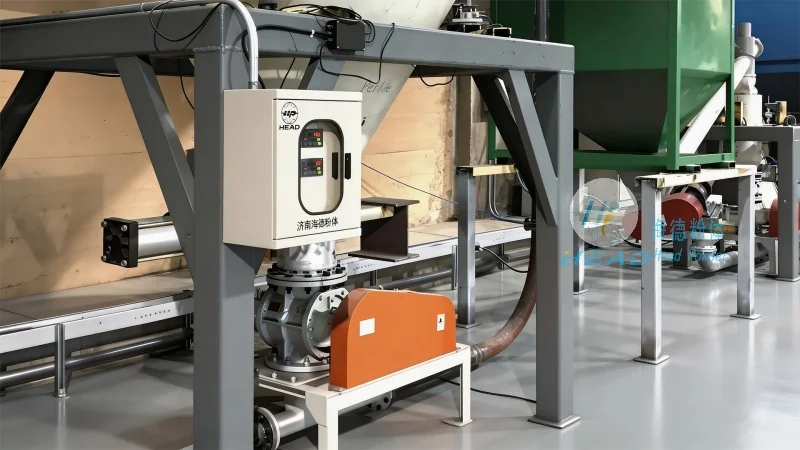
The most fundamental decision in corn pneumatic conveying equipment selection is whether to employ dilute phase or dense phase technology. Dilute phase conveying suspends the corn particles in a high-velocity air stream, typically between 18 to 30 m/s, using a high volume of air at low to medium pressure. This system is simpler, less expensive to install, and suitable for short to medium distances—up to 150 meters horizontally—and moderate throughputs of 10 to 60 tons per hour. However, the high velocity inevitably causes more kernel impact and breakage, making it less ideal for corn destined for human food applications or seed processing where whole kernels are valued. For animal feed or ethanol production where some breakage is tolerable, dilute phase remains a cost-effective choice.
Dense phase conveying, on the other hand, moves corn at low velocity (2 to 10 m/s) in a slug or plug flow using high-pressure air, often requiring compressors or high-pressure blowers. This method drastically reduces attrition and dust generation, preserving the corn's market value. It is particularly advantageous for long-distance conveying—exceeding 200 meters—or for pipelines with multiple bends and elevation changes. The trade-off includes higher initial capital investment, more complex controls, and greater energy consumption per ton due to the need for higher pressure. Recent advancements in dense phase technology, such as pulse-phase systems and air-assisted gravity conveyors, have further improved reliability and energy efficiency. For a typical corn handling facility processing 50,000 tons annually, switching from dilute phase to dense phase can reduce kernel damage from an average of 3% to below 0.5%, according to field studies conducted at Midwest grain terminals. When evaluating these two modes, consider not only the immediate cost but also the long-term savings from reduced product loss, lower maintenance, and higher output quality. Many modern plants now employ a hybrid approach, using dilute phase for non-critical transfer lines and dense phase for high-value or finished product conveyance.
Beyond the conveying principle, the performance of a corn pneumatic system hinges on the quality and sizing of its core components. The air source—whether a centrifugal blower for dilute phase or a rotary screw compressor for dense phase—must be selected based on required air volume and pressure. For most dilute phase corn systems, a positive displacement blower delivering 0.5 to 1.5 m³/min per ton per hour of conveying capacity is a common starting point. Dense phase systems demand higher pressures, often 2 to 4 bar, and require careful matching to prevent overcompression and unnecessary energy waste. Efficient filtration at the air intake is also crucial, as airborne dust can accelerate wear and contaminate the product.
Feeders serve as the interface between the material source and the conveying pipeline. Rotary airlock valves are the industry standard for dilute phase systems, providing a continuous seal against pressure loss while metering corn into the air stream. Features such as adjustable rotor tip speed, abrasion-resistant rotor pockets, and flexible discharge outlets help minimize product degradation. For dense phase applications, pressure tanks or blow vessels equipped with pinch valves or cone valves are preferred, allowing batch-wise pressurization and controlled release. Headpowder has engineered proprietary feeder designs that incorporate wear-resistant coatings and computer-modeled flow profiles, ensuring consistent feeding even with high-moisture or sticky corn. Piping design is equally critical. Long-radius bends (minimum 5D bend radius) reduce impingement and wear, while use of stainless steel or abrasion-resistant pipe for the first 10 meters after the feeder extends service life. Pipe diameter must be calculated based on the required conveying velocity and throughput; undersized pipes increase back pressure and plugging risk, while oversized pipes waste energy. Industry formulas such as the Zenz and Othmer correlation provide reliable methods for calculating pressure drop and air consumption, but field verification through pilot testing is always recommended before finalizing the design.
Energy consumption represents a significant portion of the total cost of ownership for pneumatic conveying systems—often 20% to 40% of the operational budget. With global energy prices fluctuating and sustainability initiatives gaining momentum, selecting energy-efficient equipment is no longer optional. Variable frequency drives (VFDs) on blower and compressor motors allow the system to adjust air flow and pressure in real time based on actual conveying demand, rather than running at full speed. This can achieve energy savings of 25% to 40% compared to fixed-speed operation. Additionally, advanced control systems equipped with pressure sensors and flow meters can detect incipient plugging and automatically reduce conveying velocity or pause feed, preventing costly shutdowns. For corn handling, maintaining a consistent air-to-material ratio is key. Too much air wastes energy and increases breakage; too little air leads to settling and blockages. Automated feedback loops that modulate the feeder speed and air flow based on pressure drop across the pipeline have been proven to reduce energy usage by up to 30% in real-world installations.
Reliability is equally paramount. Corn dust is combustible under certain conditions, so explosion venting, grounding, and proper dust collection must be integrated into the system design. NFPA 61 standards cover grain handling facilities in the United States, but similar regulations exist globally. Using spark detection and suppression systems, along with pressure relief panels, protects both personnel and assets. Regular maintenance schedules—including inspection of rotary valve seals, pipe wear at bends, and filter bag condition—should be planned using predictive analytics. Headpowder's systems incorporate self-diagnostic sensors and remote monitoring capabilities, allowing facility managers to receive alerts on component wear before failures occur. One corn ethanol plant in the US Midwest reported a 50% reduction in unscheduled downtime after retrofitting their dilute phase system with intelligent controls and optimized components. When selecting equipment, ask suppliers for specific energy consumption data (kWh per ton conveyed) and maintenance intervals based on similar installations. This data-driven approach ensures that the chosen system delivers reliable performance over a long operational life.
Successful deployment of a corn pneumatic conveying system extends beyond component selection to include layout planning, installation, and commissioning. The physical layout of the facility—distances, elevation changes, number of pick-up and discharge points, and space constraints—must be mapped accurately. Bends, especially vertical-to-horizontal transitions, should be minimized where possible. For multi-point conveying, adding diverter valves or manual slide gates requires careful sizing to avoid flow restriction. Commissioning should include a full performance test under maximum and minimum throughput conditions, measuring conveying velocity, pressure drops, product quality (kernel breakage percentage), and noise levels. A reputable supplier will provide a detailed commissioning report and training for on-site operators.
Looking ahead, the trend toward automation and Industry 4.0 is reshaping corn handling. Future-ready systems should support integration with Plant Information Systems (PIS) via OPC-UA or Modbus protocols, enabling real-time monitoring of system status, energy usage, and material flow rates. Artificial intelligence algorithms are increasingly used to predict optimal conveying parameters based on weather data, corn quality data, and order volumes. Investing in a system that is flexible enough to adapt to future throughput increases or changes in product specification (e.g., switching from whole kernel to corn flour) will maximize return on investment. For instance, modular piping designs that allow easy addition of new spurs or replacement of sections without major downtime are gaining popularity. Headpowder has deployed modular systems in over 20 grain terminals globally, with an average customer satisfaction rate of 94% based on after-sales surveys. Whether you are upgrading an existing conveyor or building a new facility, engaging an experienced system integrator early in the design phase can prevent costly redesigns later. (咨询热线:156-6277-7102)
Selecting corn pneumatic conveying equipment is a multidimensional challenge that balances material properties, throughput requirements, energy efficiency, product quality, and budget constraints. No single solution fits every operation, but by following a systematic evaluation process—starting with material characterization, comparing dilute and dense phase modes, sizing components correctly, and prioritizing energy savings along with reliability—facilities can achieve a system that delivers consistent performance for years. The industry is moving toward smarter, more adaptive equipment that leverages real-time data to self-optimize. As corn production and processing volumes continue to rise globally, the competitive advantage will belong to those who invest in well-engineered, future-proof pneumatic conveying solutions. By partnering with a supplier that offers not just hardware but also deep application expertise and after-sales support, you can ensure that your corn handling operation runs smoothly, safely, and profitably. For a detailed consultation on your specific project parameters, including capacity calculations, layout review, and a customized quote, reach out to our team today. (咨询热线:156-6277-7102)

 Shandong headpowder Engineering Co., Ltd.
 156-6277-7102(Manager Zhang)
  0531-83386006
  Jinan City, Shandong Province, China
服务热线
微信咨询
回到顶部