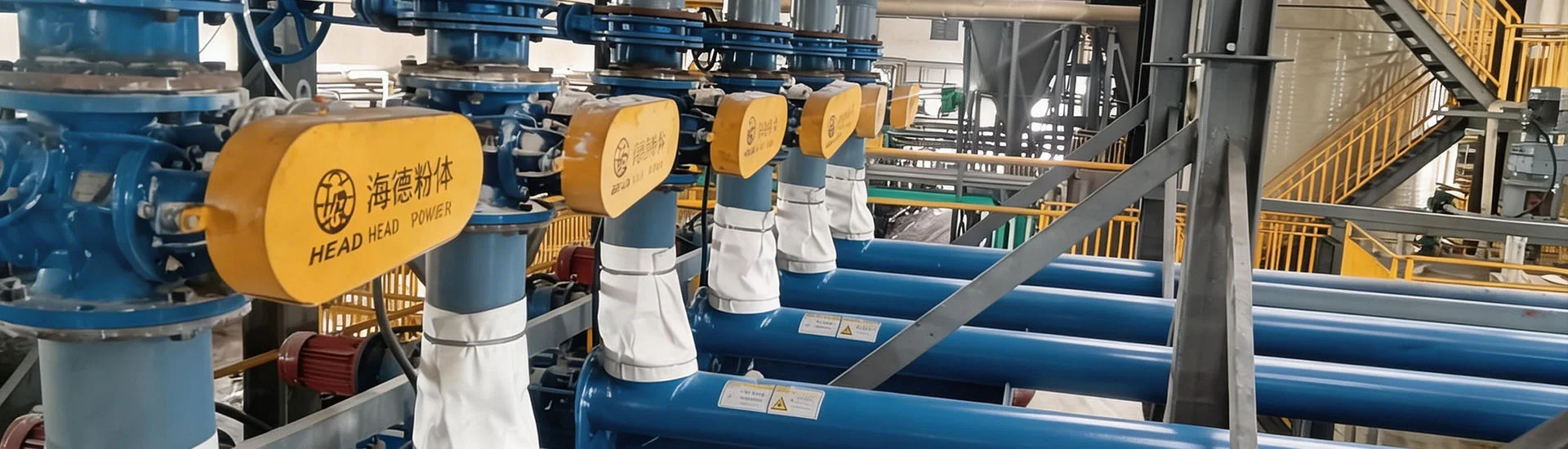
News
Rich project cases across industries, showing real implementation and proven technical strength.Polyethylene resin powder, a lightweight and free-flowing thermoplastic material, is widely used in rotational molding, pipe coating, masterbatch production, and various compounding applications. Its fine particle size, typically ranging from 30 to 500 microns, presents unique handling challenges. Traditional mechanical conveyors—such as screw conveyors, belt conveyors, or bucket elevators—often struggle with issues like material degradation, dust generation, cross-contamination, and maintenance complexity. As the global polyethylene market continues to expand—projected to reach a valuation of approximately USD 145 billion by 2026, according to industry analyses—the demand for efficient, hygienic, and low-loss conveying solutions has never been greater. Pneumatic conveying systems have emerged as the preferred technology for moving polyethylene resin powder safely and reliably. By leveraging air or inert gas as the conveying medium, these systems eliminate many drawbacks of mechanical alternatives while offering superior flexibility in plant layout, reduced labor costs, and consistent product quality. This article provides an in-depth examination of pneumatic system design, selection criteria, operational advantages, and real-world implementation strategies for polyethylene resin powder handling, with a focus on delivering actionable insights for plant engineers and procurement managers.
In the polyethylene processing industry, the choice of conveying method directly impacts production efficiency, material yield, and total cost of ownership. Pneumatic systems can be configured for dilute phase or dense phase operation, each suited to specific material characteristics and throughput requirements. For polyethylene resin powder, which is often hygroscopic and prone to electrostatic charging, careful attention must be paid to air velocity, pressure drop, filtration, and moisture control. A well-designed pneumatic system not only minimizes particle attrition but also prevents blockages and ensures a steady feed to downstream equipment such as extruders, mixers, or silos. Moreover, the integration of automation and real-time monitoring has transformed modern pneumatic conveying into a data-driven discipline, enabling predictive maintenance and energy optimization. As sustainability goals intensify across the plastics supply chain, manufacturers are also evaluating closed-loop conveying designs that reduce emissions and reclaim fines. This article will guide readers through the fundamental principles, component selection, and best practices for polyethylene resin powder pneumatic conveying, while highlighting how a reputable system integrator like headpowder can deliver tailored solutions that align with each facility’s unique operational parameters.
Pneumatic conveying operates on the principle of using a gas stream—typically compressed air—to transport bulk solid materials through a pipeline. For polyethylene resin powder, the system generally consists of a feeding device (e.g., rotary valve, venturi injector, or screw feeder), a transport line, a gas mover (blower, compressor, or vacuum pump), and a separation unit (cyclone, bag filter, or silo vent filter). The gas velocity must be carefully selected to keep particles suspended while avoiding excessive wear or degradation. Polyethylene resin powder, with its low bulk density (often between 350 and 550 kg/m³) and relatively low hardness, is well-suited for pneumatic conveying, but its tendency to generate static electricity requires grounding and antistatic measures. The choice between positive pressure (blow) and negative pressure (vacuum) systems depends on plant layout, distance, and the need to control fugitive dust. In positive pressure systems, the blower pushes material from a single source to multiple destinations, ideal for long-distance transfer. Vacuum systems, on the other hand, are preferred for feeding multiple sources into a single collection point, often used for unloading railcars or trucks. For polyethylene resin powder, dilute phase conveying—where material-to-air ratios are low (typically 1:10 to 1:20 by weight) and velocities range from 15 to 35 m/s—is common for short distances and when gentle handling is less critical. However, for fragile or expensive grades, dense phase conveying (low velocity, high pressure) can reduce velocity to 2–8 m/s, significantly minimizing particle breakage and attrition.
Every pneumatic conveying system for polyethylene resin powder relies on a coordinated set of components. The feeding device must provide a consistent, metered flow into the pipeline. Rotary valves are the most prevalent, offering positive sealing and accurate feed control. For high-accuracy applications, weigh feeders or loss-in-weight systems are integrated upstream. The pipeline itself is typically constructed from carbon steel or stainless steel, with smooth internal surfaces and appropriate wall thickness to withstand pressure and abrasion. Bend design is critical—long-radius bends, and specially lined elbows reduce wear and prevent material buildup. The gas mover must deliver adequate pressure or vacuum while maintaining energy efficiency. For dilute phase conveying, centrifugal blowers or positive displacement blowers are common; for dense phase, screw compressors or high-pressure Root-type blowers may be required. At the receiving end, separators remove the powder from the air stream. Cyclone separators are efficient for coarser fractions, while cartridge or bag filters capture fine dust, achieving collection efficiencies above 99.9%. Silo vent filters are often used to relieve pressure and capture dust during filling. Additionally, control valves, pressure sensors, flow meters, and PLC-based automation systems orchestrate the entire process, allowing remote monitoring and troubleshooting. headpowder, as an experienced system integrator, emphasizes modular design and standardized components to facilitate maintenance and scalability. For instance, in a recent installation for a masterbatch manufacturer, a dense phase system was engineered with stainless steel blow tanks and anti-static grounding kits, achieving a 40% reduction in power consumption compared to the client’s previous dilute phase setup.
Choosing between dilute and dense phase conveying for polyethylene resin powder is a pivotal decision that influences capital expenditure, operating costs, and product quality. Dilute phase systems are simpler and lower in initial investment, making them suitable for high-throughput, short-distance applications where some particle degradation is acceptable. However, for plastic powders that are sensitive to temperature or mechanical stress, dense phase conveying offers a gentler alternative. In dense phase, material moves as a moving bed or slug at low velocity, reducing dust generation and minimizing wear on pipes. The higher air pressure requirement (up to 4–6 bar) involves more robust compressors and pressure vessels, increasing upfront cost but often yielding payback through reduced fines and less frequent filter maintenance. For polyethylene resin powder with a mean particle size below 100 microns, dense phase is strongly recommended to prevent segregation and electrostatic agglomeration. Industry standards such as ISO 10628 and guidelines from the American Society of Mechanical Engineers (ASME) provide frameworks for pressure vessel design and safety. Real-world performance data indicate that dense phase conveying can achieve material-to-air ratios of 1:50 or higher, translating to lower air consumption and smaller pipeline diameters for a given capacity. headpowder’s engineering team routinely performs material characterization tests—including angle of repose, aerated density, and cohesion index—to determine the optimal phase for each client’s specific grade of polyethylene resin powder. This data-driven approach ensures that the system operates within safe velocity windows, typically between 5 and 15 m/s for dense phase and 18 to 30 m/s for dilute phase, avoiding saltation and pipeline blockages.
When designing a pneumatic conveying system for polyethylene resin powder, several critical parameters must be evaluated. Conveying distance—both horizontal and vertical—directly affects pressure drop and blower sizing. A typical rule of thumb is to add 1.5 to 2 meters of equivalent horizontal length for every meter of vertical lift. Material properties such as particle size distribution, moisture content, and bulk density must be measured accurately. For polyethylene resin powder, moisture absorption can lead to clumping; therefore, pre-drying or using dehumidified conveying air is recommended in humid climates. The system’s air-to-material ratio, pipeline diameter, and line velocity are interdependent. Oversizing the pipeline increases capital cost and reduces velocity, risking settling; undersizing raises velocity, causing erosion and degradation. Computational fluid dynamics (CFD) modeling has become a valuable tool for optimizing pipe routing and bend placement, especially in retrofitting existing plants. Energy consumption deserves close scrutiny—an efficiently designed pneumatic system can account for 10% to 15% of a facility’s total electrical power. Variable frequency drives (VFDs) on blowers and motors, along with regenerative blowers for vacuum systems, help reduce energy use by up to 30%. Maintenance access, noise levels, and floor space constraints also influence design choices. For an indoor installation, compact units with integrated filter receivers may be preferred; for outdoor silo loading, weatherproof enclosures and thermal insulation are essential. headpowder’s standard design philosophy incorporates accessibility for inspection and cleaning, with bolted flanges and quick-release couplings on filter housings. In one case, a polyethylene compounding plant replaced its mechanical bucket elevator with a headpowder dense phase system, achieving a 50% reduction in maintenance downtime and a 60% decrease in dust emissions.
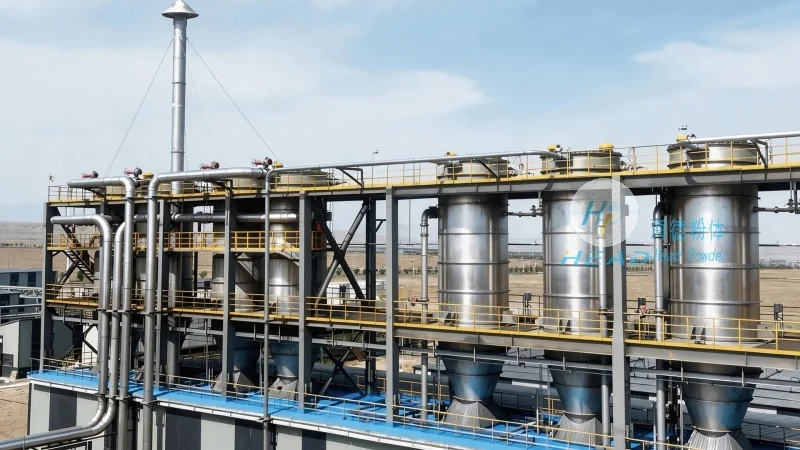
The pneumatic conveying market for plastic powders continues to evolve, driven by automation, sustainability, and regulatory pressures. By 2026, the global pneumatic conveying equipment market is expected to exceed USD 5 billion, with the plastics and rubber sectors accounting for a substantial share. Key trends include the integration of Industry 4.0 capabilities—such as real-time particle size monitoring, pressure trending, and remote diagnostics—to enable predictive maintenance. For polyethylene resin powder, explosion safety is a paramount concern. Although polyethylene dust is not classified as explosible under all conditions, tests following ASTM E1226 or ISO 6184 should be performed to determine the minimum explosible concentration and Kst value. Proper grounding, explosion venting panels, and inert gas purging (e.g., nitrogen) are common safeguards. Additionally, stringent environmental regulations in regions like the European Union and North America demand that dust emissions be kept below 1 mg/Nm³, driving the adoption of high-efficiency filters and closed-loop systems that recirculate conveying air. headpowder integrates these safety and environmental features into every design, using ATEX-certified components and providing documentation for compliance with local codes. The company also offers lifecycle support, including filter replacement, blower servicing, and system upgrades to accommodate new resin grades or capacity expansions. For clients seeking to reduce their carbon footprint, headpowder can recommend energy recovery solutions, such as using the warm exhaust air for space heating, or installing solar-powered blowers in sunny climates.
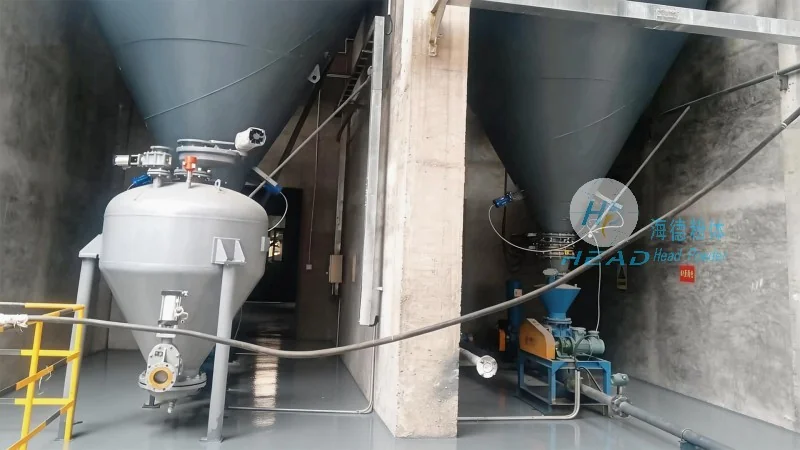
To illustrate the practical impact of a well-engineered pneumatic system, consider a medium-sized rotational molding facility that processes 500 kg/h of linear low-density polyethylene (LLDPE) powder. Previously, the plant used a manual bag dumping station and a screw conveyor to feed the molding machine, resulting in frequent blockages, inconsistent material flow, and high labor costs. After engaging headpowder, a fully automated dense phase pneumatic system was installed, featuring a rotary valve feeder, a 4-inch pipeline running 40 meters horizontally and 8 meters vertically, and a reverse-jet filter receiver. The system included a humidity sensor and a dehumidifier unit to maintain the powder’s moisture content below 0.05%. Post-installation data showed a 95% reduction in manual handling, a 12% increase in process yield, and annual energy savings of approximately USD 18,000. The client also appreciated the modular design, which allowed future expansion to a second molding line with minimal disruption. For companies evaluating pneumatic conveying for the first time, headpowder recommends conducting a feasibility study that covers material testing, route mapping, and a cost-benefit analysis. The study should compare capital costs, energy costs, maintenance costs, and anticipated ROI over a 5-year horizon. In many cases, the total cost of ownership for a dense phase pneumatic system is lower than mechanical alternatives when factoring in reduced product loss, lower labor requirements, and longer equipment life. headpowder’s team can also assist with site preparation, electrical integration, and operator training, ensuring a smooth commissioning process.
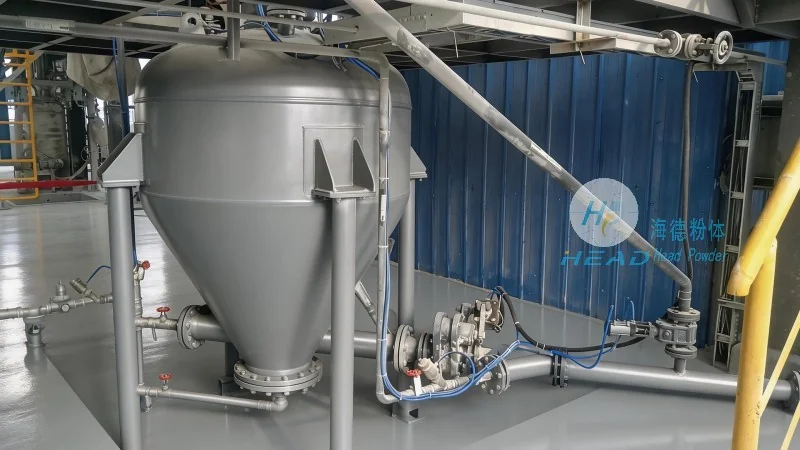
As the global demand for polyethylene resin powder continues to grow, manufacturers must invest in conveying technologies that balance efficiency, product quality, and operational safety. Pneumatic systems, when designed and implemented correctly, offer a compelling solution that addresses the inherent challenges of handling fine, cohesive, and electrostatic materials. From dilute phase blower packages to dense phase pressure vessels, each component must be selected and sized based on rigorous data and real-world operating conditions. The expertise of a specialized integrator like headpowder can make the difference between a system that merely functions and one that consistently delivers peak performance, minimal downtime, and a strong return on investment. By prioritizing material characterization, precise velocity control, predictive maintenance capabilities, and environmental compliance, plants can future-proof their powder handling operations against evolving market demands and regulatory landscapes. For any company considering a new installation or an upgrade of existing equipment, partnering with an experienced provider ensures that the final solution is not just a conveyor, but a strategic asset in the production line. headpowder (咨询热线:156-6277-7102) stands ready to assist with technical consultations, system design, installation, and ongoing support, helping clients achieve new levels of productivity and reliability in polyethylene resin powder conveying.

 Shandong headpowder Engineering Co., Ltd.
 156-6277-7102(Manager Zhang)
  0531-83386006
  Jinan City, Shandong Province, China
服务热线
微信咨询
回到顶部