News
Rich project cases across industries, showing real implementation and proven technical strength.Melamine powder is a high-value industrial raw material widely used in the production of laminates, molding compounds, adhesives, coatings, and flame retardants. Its fine particle size, low bulk density, and susceptibility to moisture absorption require specialized handling and conveying solutions. Pneumatic conveying has emerged as the preferred method for moving melamine powder safely, efficiently, and with minimal product degradation. This guide provides a comprehensive overview of pneumatic conveying principles, system design considerations, equipment selection, operational best practices, and industry trends relevant to melamine powder handling. Whether you are planning a new production line or upgrading an existing conveying system, understanding the nuances of pneumatic transport for melamine powder is essential for achieving consistent throughput, product quality, and cost-effective operations.
The global market for melamine powder continues to expand, driven by demand from construction, automotive, and consumer goods sectors. According to industry analyses, the melamine market is projected to grow at a compound annual growth rate of around 4.5% through 2026, with increasing applications in fire-resistant materials and high-pressure laminates. As production volumes rise, manufacturers face growing pressure to optimize material handling processes, reduce energy consumption, and maintain stringent safety standards. Pneumatic conveying systems offer distinct advantages in this context, including closed-loop operation that prevents dust leakage, gentle handling that preserves particle integrity, and flexibility in routing pipelines around existing plant layouts.
Melamine powder exhibits several physical and chemical properties that directly affect the selection and design of pneumatic conveying systems. The typical particle size distribution ranges from 10 to 100 microns, with a median diameter around 40 to 60 microns. This fine powder has a bulk density between 0.5 and 0.7 g/cm³, making it relatively light and prone to fluidization. The angle of repose is generally between 35° and 45°, indicating moderate flowability. However, melamine powder is hygroscopic, meaning it readily absorbs moisture from the ambient air. High humidity can cause caking, bridging, and flow obstructions in hoppers, feeders, and pipelines. Additionally, the material is abrasive to some extent, which can lead to wear in bends and pipe walls over time.
Another critical factor is the electrostatic charge generation during conveying. Fine powders like melamine can accumulate static electricity, especially in dilute-phase systems with high air velocity. This static buildup may cause particle agglomeration, clinging to pipe walls, or even spark hazards in combustible environments. Therefore, grounding and anti-static measures are integral to safe system design. The melting point of melamine powder is approximately 354°C, but thermal degradation may occur at lower temperatures if the material is subjected to prolonged friction or high-velocity impacts. Consequently, conveying velocities must be controlled to avoid excessive heat generation and product degradation.
Pneumatic conveying systems are broadly categorized into dilute-phase and dense-phase systems, each with distinct operating principles and suitability for melamine powder. Dilute-phase conveying, also known as suspension flow, employs high air velocity (typically 15 to 30 m/s) to suspend and transport particles through the pipeline. This method is commonly used for short to medium distances and for materials that are not highly fragile. However, for melamine powder, the high velocity can cause particle attrition, increased pipe wear, and higher energy consumption. Dilute-phase systems are generally simpler and less expensive to install, but they may not be optimal when product quality preservation is paramount.
Dense-phase conveying operates at lower air velocities (1 to 8 m/s) and higher material-to-air ratios. The powder is transported in slugs or plugs, moving through the pipeline with minimal turbulence. This method significantly reduces particle degradation, lowers air consumption, and decreases pipe wear. Dense-phase conveying is particularly advantageous for melamine powder because it maintains the original particle size distribution and reduces the risk of moisture pickup from compressed air. However, dense-phase systems require more sophisticated control equipment, such as pressure vessels, booster valves, and precise air injection timing. The initial capital investment is higher, but the total cost of ownership often proves lower due to reduced maintenance and energy costs.
Within these two categories, there are further variations: pressure conveying (positive pressure) and vacuum conveying (negative pressure). Pressure systems push material from a source to one or multiple destinations, ideal for long distances and high capacities. Vacuum systems pull material from multiple sources to a single collection point, commonly used for unloading railcars or bulk bags. For melamine powder, positive pressure dense-phase systems are frequently recommended for applications requiring gentle handling and consistent flow. Many facilities also incorporate a combination of both pressure and vacuum sections to optimize unloading, storage, and in-plant distribution.
A well-designed pneumatic conveying system for melamine powder comprises several key components, each requiring careful selection and sizing. The material feeding device, such as a rotary airlock, screw feeder, or venturi injector, must provide a consistent and controlled feed rate while preventing air leakage. For melamine powder, rotary airlocks with adjustable speed drives and wear-resistant rotor tips are common. The air source, typically a roots blower or compressor, should supply clean, dry, oil-free compressed air to avoid contamination. Air dryers and filters are essential to maintain low dew points and remove particulates, especially given melamine’s hygroscopic nature.
Pipelines are usually constructed from stainless steel or aluminum to resist corrosion and reduce product contamination. The inner surface finish should be smooth to minimize friction and material buildup. Bends are often designed with long radius or use ceramic-lined elbows to withstand abrasive wear. In dense-phase systems, booster valves or air injectors are strategically placed along the pipeline to maintain plug flow and prevent blockages. The receiving hopper or silo must be vented with a dust collector to capture fine particles and maintain pressure balance. Level sensors, pressure transmitters, and flow meters provide real-time monitoring and control.
When designing a pneumatic conveying system for melamine powder, engineers must evaluate several parameters to ensure reliable operation and efficiency. The conveying distance, both horizontal and vertical, directly influences air pressure requirements and pipeline sizing. For every 10 meters of vertical lift, the system may need an additional 0.1 to 0.2 bar pressure. The material flow rate, expressed in tons per hour, determines the required pipe diameter and air volume. A typical rule of thumb for dense-phase conveying of melamine powder is a solid-to-air ratio ranging from 10:1 to 30:1 by weight, depending on particle properties and pipeline configuration.
Air velocity is a critical control variable. In dense-phase systems, the velocity at the start of the line should be just above the saltation velocity (the minimum velocity to keep particles moving), typically around 3 to 5 m/s for melamine powder. As the material moves downstream and air expands, velocity increases, so booster valves are used to maintain optimal flow without causing slug collapse. Pressure drop calculations must account for pipe friction, bends, vertical sections, and component resistances. Computational fluid dynamics (CFD) modeling is increasingly used to simulate flow patterns and identify potential choke points before installation.
Energy efficiency is another top priority. The specific energy consumption for pneumatic conveying of melamine powder in a well-designed dense-phase system can be as low as 0.02 to 0.05 kWh per ton per meter. By comparison, dilute-phase systems may consume two to three times more energy for the same duty. Variable frequency drives on blowers and compressors allow fine-tuning of air volume to match actual demand, reducing waste during partial load operations. Heat recovery from compressed air systems can further lower operational costs.
As the melamine powder market evolves, several technological trends are shaping the future of pneumatic conveying. One notable development is the integration of IoT sensors and digital twin platforms. Real-time data on pressure, temperature, humidity, and vibration are collected and analyzed to predict maintenance needs and optimize conveying parameters automatically. Machine learning algorithms can detect early signs of pipeline blockage or component wear, enabling proactive interventions that reduce downtime.
Another trend is the growing emphasis on hygienic and dust-free conveying. Stricter environmental regulations in many regions require containment of fine powders to prevent fugitive emissions. Closed-loop pneumatic systems with high-efficiency particulate air (HEPA) filters and negative pressure zones are becoming standard in melamine handling facilities. Additionally, modular and compact system designs allow for easier retrofitting into existing plants, minimizing construction costs and production interruptions.
Sustainability is also driving innovation. Manufacturers are exploring the use of renewable energy sources to power conveying systems, as well as the adoption of energy recovery technologies. For example, regenerative blowers that capture and reuse kinetic energy from exhaust air are being deployed in some installations. Lightweight composite pipes are emerging as alternatives to stainless steel, offering reduced weight for overhead installations while maintaining wear resistance. These advances align with the broader industry push toward net-zero carbon emissions by 2050.
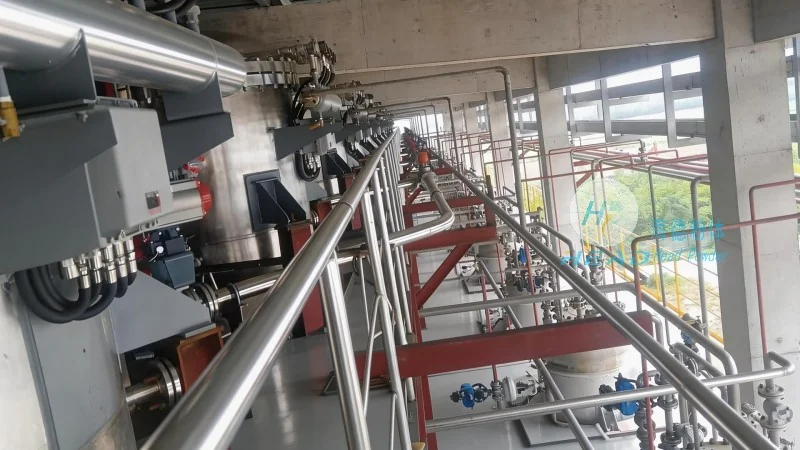
In practical scenarios, fine-tuning the conveying parameters based on site-specific conditions is essential. For instance, a melamine powder producer in Southeast Asia faced persistent blockages in a dilute-phase system when ambient humidity exceeded 80%. After switching to a dense-phase design and installing a desiccant air dryer, the system achieved 99.5% uptime and reduced product degradation by 40%. Another case involved a North American laminates manufacturer that needed to convey melamine powder over 150 meters with multiple elevation changes. By using a combination of pressure vessels and booster valves, along with a ceramic-lined bend in each 90-degree turn, the system delivered consistent flow rates of 5 tons per hour with negligible wear after two years of operation.
These examples highlight the importance of partnering with experienced system integrators who understand the specific behavior of melamine powder. headpowder has extensive hands-on expertise in designing, manufacturing, and commissioning pneumatic conveying systems for melamine and similar fine chemicals. Our engineering team evaluates each application individually, considering raw material properties, production targets, and facility constraints. We provide turnkey solutions that include system layout, equipment selection, control software, and after-sales support. (咨询热线:156-6277-7102)
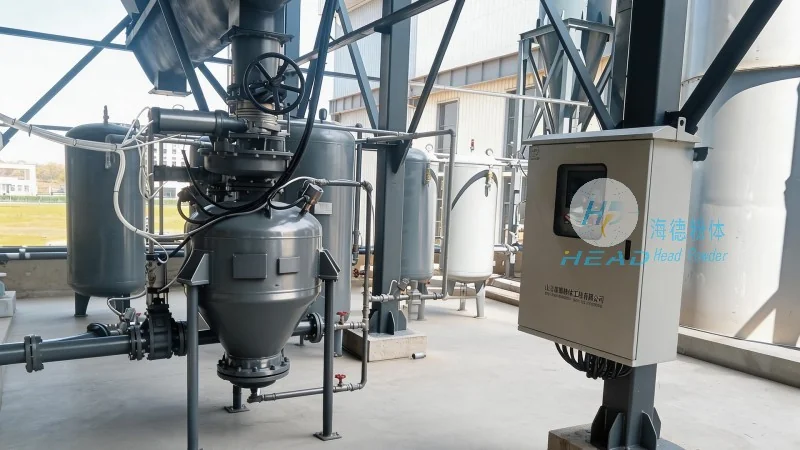
Operating a pneumatic conveying system for melamine powder requires adherence to safety protocols. Because fine melamine dust can form explosive atmospheres when suspended in air at certain concentrations, the system must be designed with explosion relief panels, spark detection, and inert gas purging capabilities where necessary. Regular inspections of pipeline integrity, airlocks, and filters help prevent leaks and pressure imbalances. Lubrication schedules for rotary valves and blower bearings should follow manufacturer guidelines to avoid premature failure. Training operators on proper startup and shutdown sequences, as well as emergency procedures, is equally important.
Maintenance planning should include periodic cleaning of hoppers and pipelines to remove compacted powder or moisture-induced cake. In humid environments, heat tracing or insulation on exposed pipes can reduce condensation. Spare parts such as seals, gaskets, and ceramic elbows should be stocked to minimize downtime. Many facilities implement condition-based maintenance using vibration analysis and infrared thermography to detect developing issues. A well-maintained pneumatic conveying system can operate reliably for 10 to 15 years or longer, providing a strong return on investment.
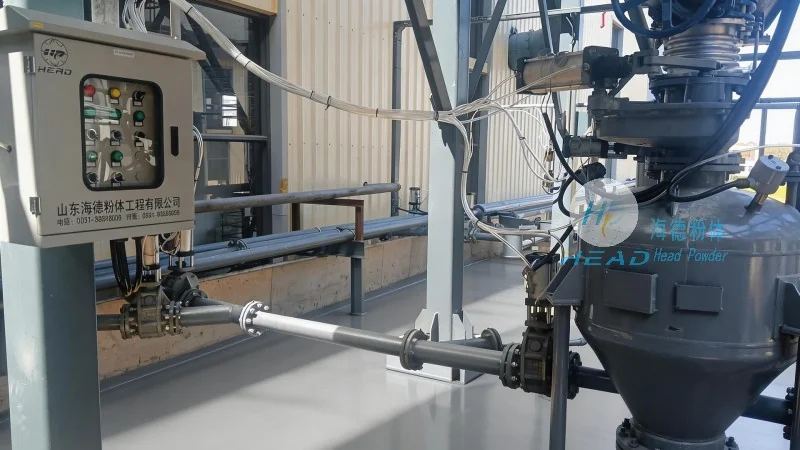
Selecting the right pneumatic conveying approach for melamine powder demands a thorough understanding of material properties, system dynamics, and operational goals. Dense-phase conveying offers significant advantages in preserving product quality, reducing energy consumption, and minimizing maintenance, making it the recommended choice for most melamine handling applications. However, every installation has unique requirements, and a detailed feasibility study should precede any investment. By staying informed about emerging technologies, incorporating smart monitoring, and working with reliable partners like headpowder, companies can achieve a conveying solution that not only meets current production demands but also adapts to future market shifts.
The growing emphasis on sustainability, digitalization, and safety will continue to drive innovation in this field. As melamine powder applications expand, the ability to convey this material efficiently, reliably, and safely will remain a competitive differentiator for manufacturers worldwide. Whether you are optimizing an existing line or starting from scratch, investing in a well-engineered pneumatic conveying system is a strategic decision that pays dividends in operational excellence and customer satisfaction. (咨询热线:156-6277-7102)

 Shandong headpowder Engineering Co., Ltd.
 156-6277-7102(Manager Zhang)
  0531-83386006
  Jinan City, Shandong Province, China
服务热线
微信咨询
回到顶部